
When you start looking into what a bathroom remodel costs, you’ll see the national average is around $12,119. That number, however, is just a starting point. Most people actually spend somewhere between $6,639 and $17,621 for a full overhaul. For a true luxury retreat, costs can easily climb past $32,000, all depending on what you choose to put in and how much work is involved.
Understanding Your Renovation Cost Tiers
I like to think of planning a bathroom remodel a lot like buying a car. You’ve got your reliable, get-the-job-done model, your comfortable and well-equipped family sedan, and your high-end luxury vehicle. Each one gets you where you need to go, but the experience, features, and price tag are worlds apart.
Breaking down your bathroom renovation costs in the same way helps you create a realistic financial plan that actually lines up with what you’re envisioning. While that $12,119 average is a useful benchmark, it doesn't tell the whole story. The final bill is really shaped by the scope of your project, the quality of materials you select, and the local labor rates.
For example, a simple cosmetic facelift—think paint and new faucets—is going to be a fraction of the cost of a full gut renovation where we're moving walls and re-routing plumbing lines. If you want to dive deeper, you can explore more detailed cost statistics and how they're calculated to get a better feel for the numbers.
Defining Renovation Levels
To avoid surprises and set a budget you can stick to, it helps to think in terms of three general tiers:
-
Low-End (Basic Refresh): This is all about getting the most bang for your buck with cosmetic fixes. We're talking a fresh coat of paint, reglazing the tub instead of replacing it, putting in a new pre-built vanity, and swapping out old faucets and light fixtures—all without changing the room’s layout.
-
Mid-Range (Standard Overhaul): This is the sweet spot for most homeowners. It involves replacing all the major fixtures, laying new tile on the floor and in the shower, and installing a new vanity, countertop, and a standard tub-shower combo. The key here is we're working within the existing plumbing footprint, which keeps labor costs in check.
-
High-End (Luxury Transformation): Here’s where you go all-out. This level often means a complete redesign of the space. We might be expanding the bathroom’s square footage, moving plumbing and electrical, and bringing in high-end features like custom cabinets, heated floors, a beautiful freestanding tub, and a spacious walk-in shower with multiple showerheads. Premium materials like natural stone are the stars of the show here.
The key to a successful budget is understanding that you are in control. Your choices in materials and scope are the primary drivers that place your project in the low, mid, or high-end category.
To give you a clearer picture, let's break down what you can generally expect to spend at each level. Think of this table as a financial roadmap for your project.
Bathroom Renovation Cost Tiers At a Glance
| Renovation Tier | Average Cost Range | Typical Scope & Materials |
|---|---|---|
| Low-End (Basic) | $5,000 – $10,000 | Cosmetic updates: new paint, stock vanity, vinyl flooring, basic ceramic tile, new fixtures in existing locations. |
| Mid-Range (Standard) | $10,000 – $25,000 | Full fixture replacement, new porcelain tile, semi-custom vanity with quartz top, new tub/shower combo. |
| High-End (Luxury) | $25,000+ | Layout changes, custom cabinetry, natural stone, freestanding tub, frameless glass shower, heated floors. |
This at-a-glance comparison should help you match your dream bathroom with a budget that feels right. It’s all about finding that perfect balance between the features you want and the investment you're comfortable making.
Where Does Your Money Actually Go in a Renovation?
Looking at a total estimate for a bathroom renovation can feel overwhelming. That one big number seems intimidating, but it’s really just a collection of smaller, individual costs. Understanding this bathroom renovation cost breakdown is the secret to getting a handle on your budget and making smart choices you feel good about.
Think of your total budget like a pie. The biggest slice, by far, is almost always labor. It's not uncommon for the skilled work of your renovation team to account for 40% to 60% of the entire project cost. This covers everyone from the plumber and electrician to the tile setter and carpenter—the pros who turn a plan into reality. The other slices are the fun parts: the fixtures, tile, and vanities you get to pick out.
The Foundation of Your Budget: Labor Costs
Labor is the invisible engine that powers your renovation. It starts with demolition—tearing out the old and hauling it away—and continues right through the precise installation of every new piece. It’s the biggest line item, sure, but quality craftsmanship is what makes the difference between a bathroom that looks good for a few years and one that you'll love for decades.
Because labor is such a huge chunk of the budget, any change that involves moving plumbing or electrical will make your costs jump significantly. For example, deciding to keep the toilet, shower, and sink in their existing spots is one of the single most effective ways to control costs. You avoid a ton of expensive and complex work behind the walls, freeing up more of your budget for the finishes you'll see and touch every day.
The image below gives you a great visual for how different budget levels—from a basic refresh to a high-end luxury project—stack up.
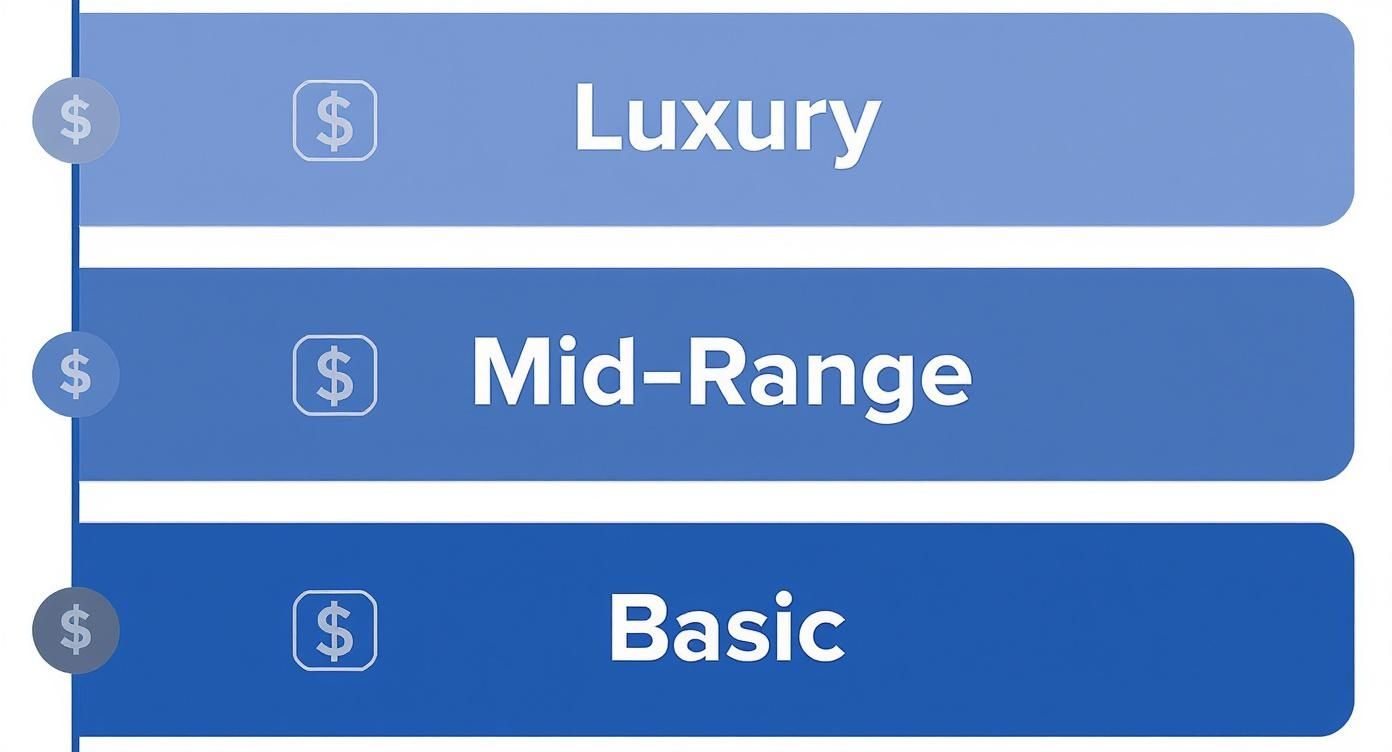
As you can see, moving up the ladder from Basic to Luxury isn't just about fancier materials; it's also about more complex labor, which drives up the final price tag.
A Closer Look at Material Costs
With labor set aside, the rest of your budget is all about the physical components of your new bathroom. Every selection you make here has a direct impact on the bottom line. Let's break down the main players.
Here’s a more detailed look at where the money goes for each component of the renovation.
Detailed Cost Breakdown by Renovation Component
| Component | Percentage of Budget | Average Cost Range |
|---|---|---|
| Labor | 40% – 60% | Varies by project scope and location |
| Cabinetry & Vanity | 10% – 20% | $1,500 – $8,000+ |
| Fixtures (Tub, Shower, etc.) | 10% – 15% | $1,000 – $7,500+ |
| Tile & Flooring | 7% – 15% | $800 – $6,000+ (materials & install) |
| Countertops | 3% – 7% | $500 – $4,000+ |
| Lighting & Electrical | 3% – 5% | $400 – $2,500+ |
| Painting & Finishes | 3% – 5% | $350 – $2,000+ |
| Permits & Fees | 1% – 4% | $200 – $1,500+ |
This table gives you a clear sense of the relative weight of each decision. A small percentage change in a big-ticket item like cabinetry can have a much larger impact on your total budget than a big change in a smaller category like painting.
The Finishing Touches and Hidden Essentials
Finally, you have the smaller details and necessary services that pull the whole project together. They might seem minor on their own, but they add up and are crucial for a complete and professional bathroom renovation cost breakdown.
-
Cabinetry and Vanity: This is often your biggest material expense, taking up 10% to 20% of the budget. A standard, off-the-shelf vanity from a home improvement store is the most economical path. Semi-custom gives you more flexibility with style and size, while fully custom cabinetry is the top-tier, built-for-you solution.
-
Fixtures (Tub, Shower, Sink, Toilet): These account for about 10% to 15% of your total spend. The price range here is massive. A standard acrylic tub is a world away from a freestanding cast iron soaking tub, just as a basic one-piece toilet is miles cheaper than a smart toilet with all the bells and whistles.
-
Tile and Flooring: Remember, tile has two costs: the tile itself and the highly skilled labor to install it. This category typically eats up 7% to 15% of the budget. Porcelain and ceramic are fantastic, durable workhorses, while natural stone like marble is a true luxury investment.
Your material choices are where you have the most power to steer your budget. For instance, you can get a stunning, high-end look by choosing a quality porcelain tile that expertly mimics marble, giving you that luxury feel for a fraction of the cost of the real deal.
By viewing your renovation as a series of individual choices instead of one giant expense, you put yourself in the driver's seat. You can decide to splurge on a statement-making vanity that you've fallen in love with, while saving money on a classic, cost-effective subway tile for the shower. This mix-and-match approach is how you create a bathroom that perfectly reflects both your personal style and your financial plan.
Visualizing Your Budget with Real Scenarios
Numbers on a spreadsheet are one thing, but it’s hard to really grasp what a bathroom renovation costs until you can picture the final result. Percentages and averages are helpful starting points, but it's the real-world examples that bring a budget to life.
Let's walk through three classic project types: a smart cosmetic refresh, a full mid-range overhaul, and a high-end spa retreat. Seeing what’s possible at different budget levels will help you figure out where your project fits and what you can realistically achieve.
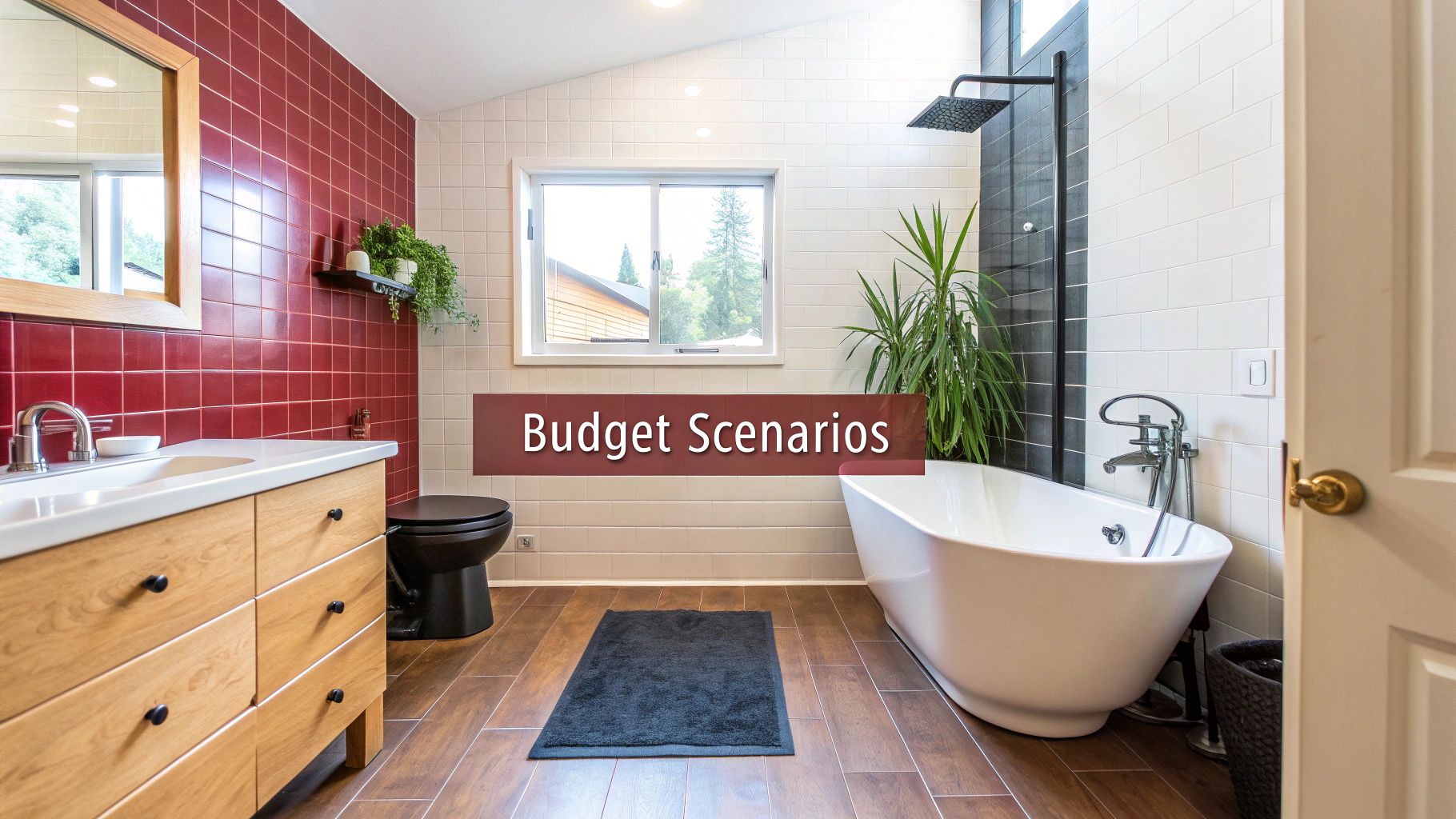
Scenario One: The Basic Refresh
Picture a small guest bathroom that’s seen better days. It works, but it's dated. The goal here isn’t a gut job but a high-impact facelift on a tighter budget, usually somewhere in the $5,000 to $10,000 range. The key is keeping the existing layout—no moving toilets or showers—to avoid expensive plumbing or electrical work.
The focus is all on smart, cosmetic upgrades.
- Vanity and Fixtures: Instead of ripping out the vanity, we might repaint the cabinet and just replace the countertop and sink. We’d swap out the old faucet, towel bars, and toilet paper holder for a new, matching set in a modern finish like matte black or brushed gold.
- Tub and Shower: The tub itself is in good shape, so we'll have it professionally reglazed. This gives it a glossy, brand-new look for a fraction of what a replacement would cost. A new showerhead and a curved shower rod can also make the space feel a lot bigger.
- Flooring and Paint: We’ll pull up the tired old vinyl and put down durable luxury vinyl tile (LVT), which gives you the look of wood or stone without the price tag. A fresh coat of moisture-resistant paint on the walls and ceiling instantly makes the whole room feel brighter and cleaner.
This "refresh" approach is all about spending money where it counts. It’s proof that you don’t need a massive budget to get a major transformation.
Scenario Two: The Mid-Range Overhaul
Now, let's think about a primary bathroom that gets heavy daily use. The homeowners are ready for a serious upgrade and have set aside a budget between $10,000 and $25,000. This is the most common renovation we see, where pretty much everything gets replaced, but we stick to the original footprint.
This project is less about a simple facelift and more about improving how the bathroom looks and works.
A mid-range renovation is the sweet spot for many homeowners. It delivers a completely new bathroom experience by focusing on quality materials and full fixture replacement, all while working within the original layout to keep labor costs manageable.
Here’s what a typical overhaul looks like:
- Full Fixture Replacement: The old tub-shower combo comes out. In its place, we install a new, deeper soaking tub with a clean, modern porcelain tile surround that goes all the way to the ceiling. A new high-efficiency toilet and a semi-custom vanity with a tough quartz countertop go in as well.
- Improved Lighting: That single, dated light bar above the mirror gets replaced with stylish sconces on either side of a new, bigger mirror. We’ll also add an exhaust fan with its own LED light over the shower to help with ventilation and brightness.
- Quality Finishes: The floor gets redone with classic, durable porcelain tile. All the fixtures, from the sink faucet to the tub spout, are upgraded to a well-known, reliable brand like Kohler or Moen.
The result is a bathroom that feels brand new, built with quality materials and a cohesive design that will look good for years to come.
Scenario Three: The Luxury Spa Retreat
Finally, imagine creating a personal sanctuary where the budget is less of a concern than the final experience. This is a high-end renovation, starting at $25,000 and easily climbing past $50,000. We aren't just swapping out old for new; we're fundamentally redesigning the space.
Luxury bathroom remodels typically fall between $30,000 and $75,000, with some ultra-luxury projects topping $100,000. The main costs are driven by design work, premium materials, and the skilled labor needed to install them. We're also seeing new tech play a bigger role, with things like smart toilets and intelligent shower systems—which have seen a 25% annual growth in adoption—adding to the cost but also to the "wow" factor. You can discover more insights about what goes into a high-end remodel and how technology shapes the budget.
A project at this level often includes:
- Layout Changes: We might move walls to make the bathroom bigger. This means re-routing plumbing to accommodate a large, frameless glass walk-in shower with multiple showerheads or to make a freestanding soaking tub the room’s stunning centerpiece.
- Premium Materials: Floors and shower walls get covered in natural stone like marble or travertine. The cabinetry is custom-built for perfect storage and topped with a high-end quartzite or granite slab.
- High-End Features: This is where the real comforts come in. Think radiant heated floors, a smart toilet with a bidet, designer lighting on dimmers, and maybe even a built-in sound system.
As you can see, a bathroom renovation cost breakdown is really a story told through choices. By understanding what’s possible at each level, you can start writing the story for your own perfect space.
Planning for the Unexpected in Your Budget
Every experienced contractor will tell you the same thing: the most successful bathroom renovations aren't just about picking beautiful tile and fixtures. They're about preparing for what you can't see. Behind your walls is a whole history of plumbing, electrical work, and construction that can hold some very expensive surprises.
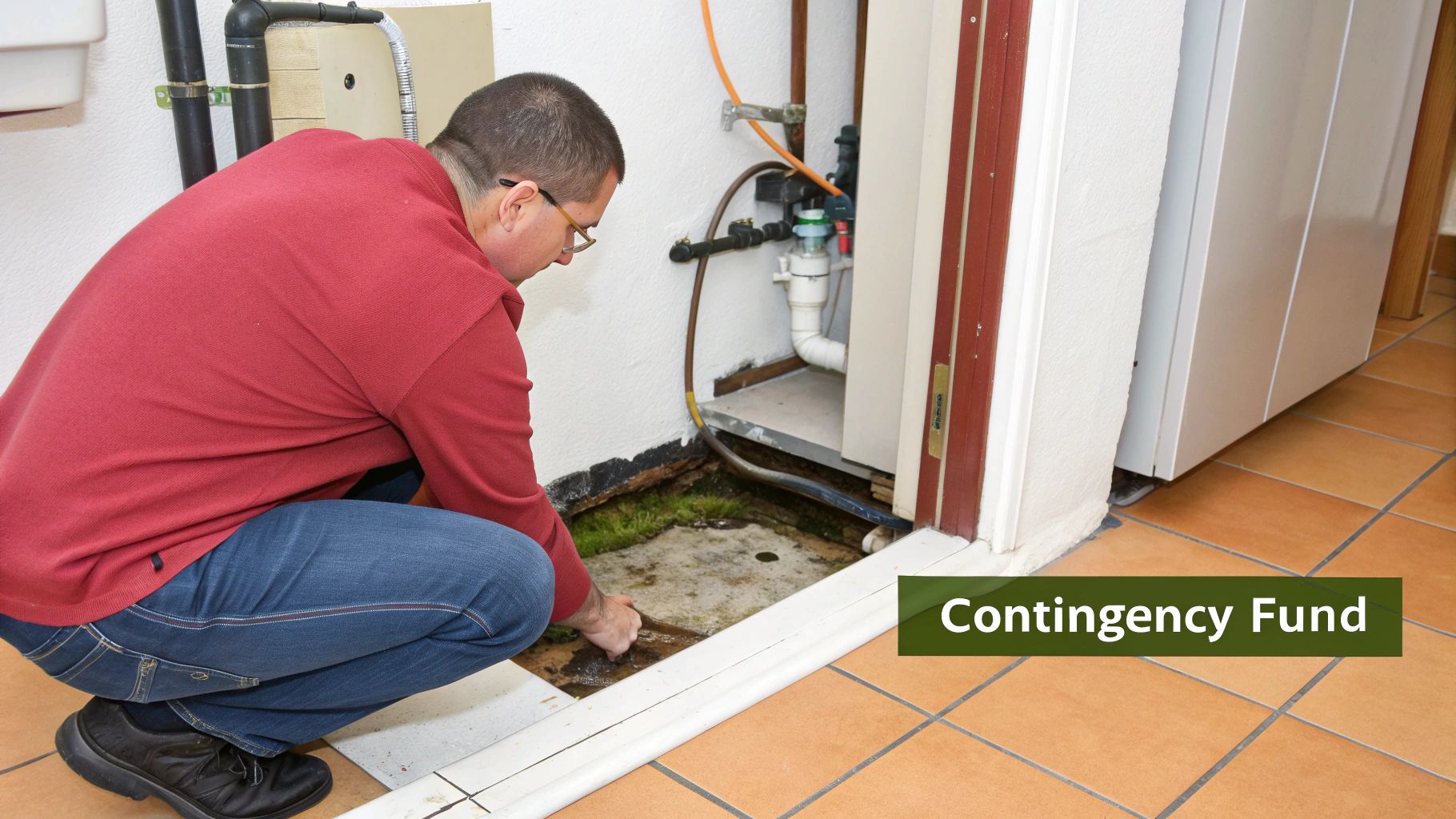
Think of demolition day as an archeological dig. Once you start pulling back the layers of drywall and flooring, you often find issues that have been hiding for years. These are the hidden costs that can completely derail a project if you haven't planned for them.
Uncovering Hidden Problems
Once the old bathroom is torn out, a few common culprits tend to rear their ugly heads. Each one comes with a price tag, and you absolutely have to address them correctly before any new work can begin. It’s the only way to protect the investment you're making.
Here’s what we often find:
- Water Damage and Mold: A slow, undiscovered leak is the classic budget-buster. It can lead to rotted subfloors, damaged joists, and serious mold growth. Professional mold remediation isn't optional—it's a must-do that can easily add several thousand dollars to your total.
- Outdated Plumbing: If you're in an older home, you might have old galvanized or polybutylene pipes just waiting to fail. Bringing everything up to modern code with reliable copper or PEX piping is a smart, necessary upgrade, but it’s often an unplanned one.
- Electrical Not Up to Code: Bathrooms have very strict electrical code requirements, especially for outlets near sinks and showers (GFCI protection). If the wiring is old or was installed improperly, a licensed electrician will need to fix it before you can move forward.
Let's be clear: these aren't "nice-to-have" fixes. They are essential for a safe, functional bathroom. Simply covering up a problem guarantees it will become a much bigger, more expensive nightmare down the road.
The Power of a Contingency Fund
So, how do you possibly budget for problems you don’t even know exist? The answer is a contingency fund. This isn't a slush fund for upgrading your faucet at the last minute; it's a dedicated financial cushion set aside specifically for these unforeseen issues.
Your contingency fund is the single most important line item in your budget. It’s the difference between a stressful, budget-breaking ordeal and a smooth, controlled project. Treat it as a non-negotiable part of your total cost.
The industry rule of thumb is to set aside 15% to 20% of your total estimated project cost for this fund. On a $20,000 mid-range renovation, that means having an extra $3,000 to $4,000 ready to go. If your home is on the older side, I’d strongly recommend leaning toward that 20% figure. It’s cheap insurance.
This fund isn't just for structural surprises, either. It helps cover other easily overlooked expenses that always seem to pop up.
Don't Forget These Overlooked Costs
Even with the most meticulous planning, some expenses just have a way of slipping through the cracks in an initial budget. Your contingency fund provides a great buffer for these, too.
- Permit Fees: Depending on where you live and the scope of your project, you'll almost certainly need building permits. These fees can run anywhere from a couple of hundred to over a thousand dollars.
- Debris Disposal: Demolition creates a mountain of waste. Renting a dumpster and paying for proper disposal is a real cost that has to be factored in from the start.
- Increased Living Expenses: If you're renovating your only full bathroom, things can get complicated. You might need to budget for temporary living arrangements or deal with other inconveniences that have a hidden price tag.
By building this financial safety net into your plan from day one, you turn potential panic into just another manageable step in the process. You’ll be prepared for whatever your walls are hiding and can move forward with confidence.
Smart Ways to Save Without Sacrificing Quality
A gorgeous bathroom remodel doesn't have to mean emptying your savings. With a little strategic thinking, you can cut costs where it makes sense without giving up the beautiful, functional space you're dreaming of. The trick is knowing where to spend for impact and where to find clever savings.
Don't Move the Plumbing
One of the biggest line items in any bathroom renovation cost breakdown is plumbing. Think of your bathroom's pipes as the roots of a tree—moving them is a major, invasive, and expensive operation.
By keeping your toilet, sink, and shower right where they are, you sidestep the need to tear up floors and walls to reroute all that complex pipework. This one decision can easily save you thousands of dollars in labor costs, freeing up your budget for the things you'll actually see and touch every day, like that perfect vanity or some show-stopping tile.
Choose High-Value Materials
You don't need to splurge on the most expensive materials to get a high-end look. While a luxury bathroom might have marble from floor to ceiling, you can capture that same elegance with modern porcelain tile for a fraction of the price. Today's look-alikes are so good, it often takes an expert to tell the difference.
Consider these smart, high-impact swaps:
- Flooring: Luxury vinyl tile (LVT) gives you the warm, inviting look of hardwood or the classic feel of stone, but it's completely waterproof, incredibly durable, and much easier on the wallet.
- Tile: You can't go wrong with ceramic and porcelain. These are the budget-friendly workhorses of the design world, available in every style imaginable, from timeless subway tile to bold, modern patterns.
- Countertops: Instead of a custom-cut slab, check out pre-fabricated quartz or granite countertops. They often come in standard vanity sizes and offer the same premium feel at a much more accessible price point.
These choices are all about finding that sweet spot where great style and long-term quality meet affordability.
Strike the Right DIY Balance
Getting your hands dirty is a fantastic way to slash labor costs, but you have to be honest about your own skill set. Some jobs are great for a weekend project, while others really need a licensed professional.
DIY-Friendly Tasks: Things like painting, carefully demolishing old fixtures, and assembling a flat-pack vanity are well within reach for most handy homeowners. Taking these on can lead to some serious savings.
Hire a Pro For: Anything involving plumbing or electrical systems is non-negotiable. A mistake here can quickly turn into a catastrophic leak, water damage, or a dangerous electrical issue—all of which will cost far more to fix than hiring a pro in the first place. Tiling is another area where an expert’s touch makes all the difference between a flawless finish and a crooked mess.
The desire for beautiful, updated bathrooms is a huge trend. The global market for bathroom remodels was valued at $17.9 billion in 2025 and is expected to grow at 8.7% annually through 2033 as more people look to blend comfort with modern style. You can discover more insights about these market trends on htfmarketinsights.com to see just how big this movement is. By making smart decisions, you can ensure your project is a valuable investment that you'll enjoy for years to come.
Common Questions About Renovation Costs
Even after you've crunched the numbers, a few practical questions always seem to pop up. Let's tackle some of the most common ones we hear from homeowners. Getting these answers sorted out is the last piece of the puzzle before you can move forward with your project confidently.
How Long Does a Typical Bathroom Renovation Take?
This is the big one, and the honest answer is: it completely depends on the scope of your project. If you're just doing a light cosmetic refresh—a new coat of paint, swapping out a faucet—you could be looking at just a few days to a week.
But for a full-gut remodel, where we're tearing out and replacing everything from the tub and toilet to the vanity and tile, you should plan for about 3 to 5 weeks. That timeline gives all the different pros—plumbers, electricians, tilers—the time they need to do their job right, plus it accounts for inspections and letting materials like mortar and grout properly cure.
If you're dreaming big with a high-end, luxury renovation that involves moving walls, reconfiguring plumbing, or adding lots of custom features, the project can easily stretch to 6-8 weeks or more. It's always smart to bake a little wiggle room into your schedule for the unexpected, like a fixture that's on backorder or a surprise we uncover behind the drywall.
What Renovation Choices Offer the Best Return on Investment?
When you're thinking about resale value, the sweet spot is almost always a mid-range bathroom remodel. These projects give you a huge visual and functional boost that appeals to the widest pool of potential buyers, all without the price tag of a top-of-the-line luxury renovation.
Wondering where to focus your budget for the best bang for your buck? Here are a few upgrades that consistently deliver a great return on investment (ROI):
- Modern, Water-Efficient Fixtures: Buyers love seeing new, practical features like updated faucets, efficient showerheads, and high-efficiency toilets.
- Updated Vanities and Countertops: A fresh, stylish vanity with a durable, modern countertop can instantly change the entire feel of the space.
- Neutral, Timeless Tile: You can't go wrong with classic porcelain or ceramic tile for the floor and shower. It has broad appeal and won't look dated in a few years.
We're also seeing that universal design elements, like a walk-in or curb-less shower, add serious value. They make a home more accessible and attractive to people at all stages of life.
Should I Hire a General Contractor or Manage Trades Myself?
Unless you’re just painting or swapping out a light fixture, hiring a qualified general contractor (GC) is the best move you can make. Think of a GC as the quarterback of your renovation. They're the one coordinating the entire project, from scheduling the plumber and electrician to pulling permits and making sure every last detail is up to code.
It can be tempting to manage the project yourself to try and save some money on labor. But that path requires a massive amount of your own time, a ton of industry knowledge, and nerves of steel. One small slip-up, like hiring the wrong person or getting the schedule out of order, can cause a domino effect of expensive delays and re-dos that will wipe out any potential savings in a heartbeat.
A professional GC brings years of experience and a vetted team of reliable trade partners to your project. That expertise is priceless for navigating the bumps in the road and ensuring the process is as smooth as possible, leading to a much better final result.
Ready to stop guessing and start planning? The team at Trademaster Construction can help you create a clear budget and a beautiful design for your Southwest Michigan home. Use our free Pricing Tool for a quick estimate, and then contact us today to discuss your project.

