
A shower bench isn't just a place to sit—it's a small change that can completely transform your daily routine. What once felt like a luxury reserved for high-end spas is now a go-to feature for homeowners looking to blend everyday comfort with smart, practical design. It turns a quick, utilitarian shower into a place where you can truly relax and unwind.
This simple addition adds a surprising amount of function and value to your bathroom, making it safer, more comfortable, and ready for whatever life throws your way.
The Modern Shower Bench: From Luxury to Necessity
It’s funny how certain features evolve. Not too long ago, a built-in shower bench was something you’d only see in a magazine or a fancy hotel. Now, it's becoming a cornerstone of modern, thoughtful bathroom design. Homeowners are looking beyond just aesthetics; they want spaces that actively support their well-being, both now and in the future.
This shift says a lot about how we view our homes. We're realizing they should adapt to us, not the other way around. A shower bench is the perfect example—it’s a simple perch for shaving your legs, a place to set your shampoo, or a stable seat for anyone who feels a bit unsteady on their feet. It just makes the bathroom easier and safer for everyone.
Why Benches Are a Smart Investment
Putting a bench in your shower is more than just an upgrade for today; it's a savvy move for the future. This one feature is central to the whole idea of "aging-in-place"—designing a home you can comfortably and safely live in for the long haul. A properly installed shower bench is a huge factor in preventing slips and falls, helping you or your loved ones maintain independence for years.
By planning for accessibility now, you’re not just remodeling a bathroom. You’re building peace of mind and creating a space that works for family members of all ages and abilities.
And it's not just a niche idea; the market is reflecting this growing demand. The global shower bench market has already hit USD 1.31 billion, largely because more people are focused on bathroom safety as they get older. It's projected to climb to USD 2.25 billion, with North America making up a huge 36% of that market. You can dive deeper into these trends over at dataintelo.com.
What You Will Learn in This Guide
So, you’re thinking about adding a bench to your shower? Great choice. This guide will walk you through everything you need to consider, from the big picture down to the small details, so you end up with a shower that’s as functional as it is beautiful.
Here’s a sneak peek at what we'll cover:
- Bench Types: We'll compare the most common options—built-in, floating, prefabricated, and even fold-down benches—to help you find the right fit.
- Material Selection: From classic tile to solid stone slabs and warm teak, we'll look at the pros and cons of different materials for durability and style.
- Design and Safety: Getting the dimensions right is key. We’ll touch on ADA guidelines for height, depth, and placement to ensure your bench is both comfortable and safe.
- Cost and Maintenance: We'll give you a realistic look at budgeting for this project and share some simple tips for keeping your bench looking great for years to come.
Finding the Perfect Shower Bench for Your Space
Picking the right bench for your shower isn't so different from choosing furniture for a living room. You have to think about the size of the room, how you're actually going to use the piece, and the overall style you're aiming for. When it comes to bathroom showers with benches, you’ll generally find three main types, and each brings something different to the table.
Ultimately, the best choice hinges on balancing your everyday needs with your bathroom's physical layout. Are you designing a personal spa retreat? Is your top priority safety and accessibility? Or are you just trying to cram as much function as possible into a tight space? Each of these goals will lead you to a different kind of bench.
This flowchart can help you zero in on what matters most to you, whether it's pure relaxation or practical mobility, guiding you to the best starting point.
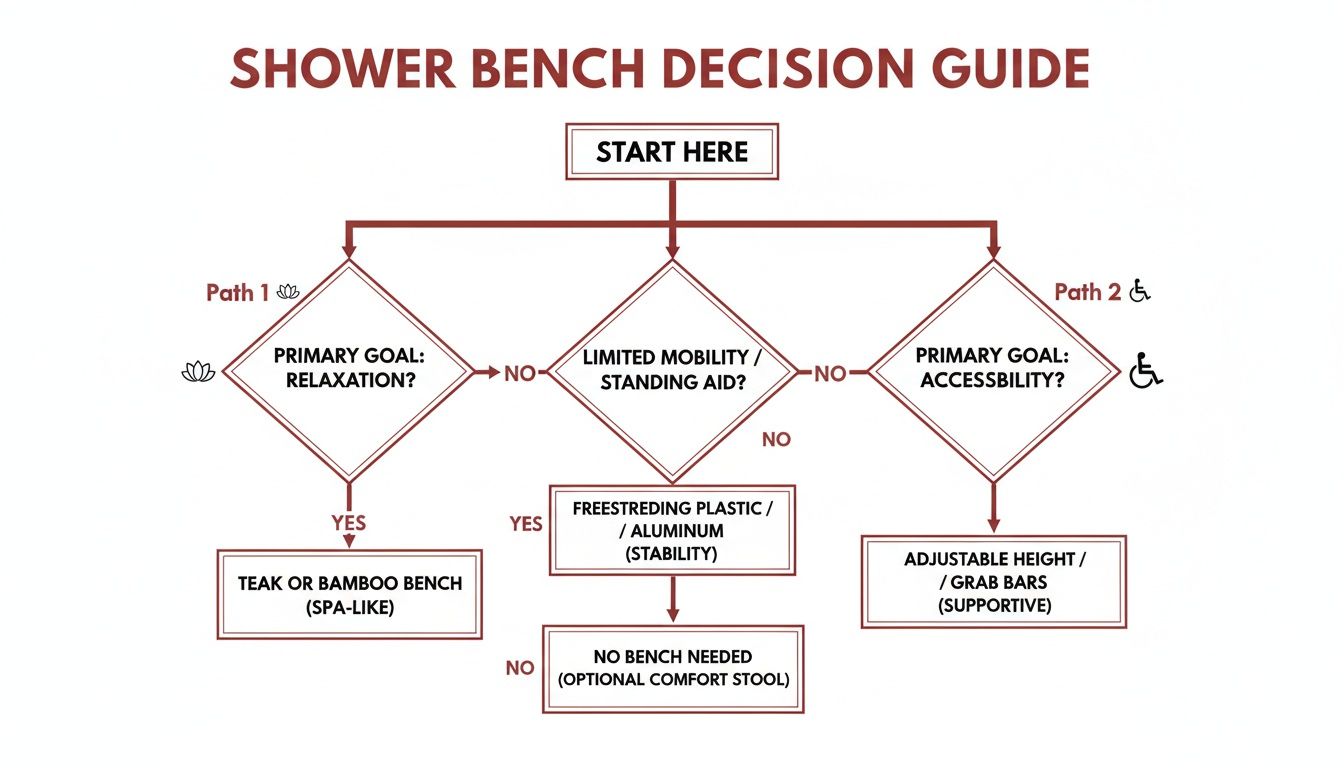
As you can see, any bench can serve multiple roles. But if you're dreaming of a spa-like feel, a built-in bench is a natural fit. If mobility and accessibility are non-negotiable from day one, a fold-down bench is often the most practical solution.
The Built-In Bench: Seamless and Solid
Think of a built-in shower bench as a truly custom piece of furniture. It’s constructed right along with the shower itself—framed, waterproofed, and then tiled to perfectly match the walls and floor. The result is a seamless, high-end look that feels completely intentional.
Because it's part of the shower's core structure, a built-in bench is incredibly sturdy and gives you total design freedom. You can go for a minimalist floating ledge, a cozy corner seat, or a grand bench that spans the entire back wall. This is your go-to for creating that custom, spa-like vibe.
That permanence, however, means you have to plan ahead. A built-in bench has to be part of the initial shower design; it's not something you can easily tack on later without tearing things apart. The construction is also more involved, requiring framing, specialized waterproofing, and careful tile work, which naturally drives up the cost.
A built-in bench is an investment in both looks and longevity. It delivers unmatched stability and a cohesive design that elevates the entire bathroom, but it requires commitment and professional installation to guarantee it's both waterproof and structurally sound for the long haul.
The Prefabricated Bench: Simple and Efficient
If a built-in bench is custom work, a prefabricated bench is more like a high-quality, ready-to-assemble piece. These benches are pre-formed structures, usually made of dense foam or a composite material, designed for quick installation before being tiled over.
Prefab models are a fantastic middle ground. They deliver the solid, integrated appearance of a built-in bench but cut down the installation complexity in a big way. Instead of building a frame from scratch, your contractor just has to secure the pre-made form, waterproof it, and start tiling. This can save a good amount of time and money on labor.
The trade-off for convenience is a bit less design flexibility. Prefab benches come in standard shapes and sizes, so while you’ll find plenty of common corner units, rectangular benches, and floating styles, you won’t be able to spec out custom curves or unique dimensions.
The Fold-Down Bench: Smart and Space-Saving
A fold-down bench is the Murphy bed of the shower world. It’s there when you need it and disappears when you don’t, making it a brilliant solution for smaller showers where a permanent bench would make things feel cramped.
These benches are mounted securely to the wall studs and engineered for serious support. They offer a stable seat for anyone who needs assistance—or just a spot to prop a leg while shaving—and then fold up neatly against the wall, keeping your shower feeling open. This makes them a great choice for multi-generational homes or for anyone planning to age in place.
The primary consideration with a fold-down bench is aesthetics. Modern designs are a world away from the old institutional models, with options in beautiful teak wood or sleek composites. Still, they don't offer that perfectly seamless, tiled-in look. Installation is also absolutely critical; it must be anchored directly into wall studs to safely support a person's weight, which can sometimes limit where you can place it in the shower.
To help you visualize the differences, here’s a quick rundown of how these options stack up against each other.
Comparing Your Shower Bench Options
This table provides a quick comparison of the most common shower bench types, helping you decide which style best fits your space, budget, and design preferences.
| Bench Type | Best For | Space Impact | Installation Complexity | Pros & Cons |
|---|---|---|---|---|
| Built-In | Custom designs, spa-like luxury, and permanent stability. | High. It's a permanent fixture that reduces shower floor space. | High. Requires framing, waterproofing, and custom tiling. Best left to pros. | Pros: Seamless look, extremely durable, fully customizable. Cons: Most expensive, requires major renovation to add or remove. |
| Prefabricated | Achieving a built-in look with a faster, more cost-effective installation. | High. A permanent fixture, similar to a built-in bench. | Medium. Simpler than custom framing but still requires proper installation and tiling. | Pros: Faster install, lower cost than built-in, solid feel. Cons: Limited to standard sizes and shapes. |
| Fold-Down | Small showers, accessibility needs, and maximizing flexibility. | Low. Folds away to keep the shower feeling open and spacious. | Medium. Must be professionally anchored into wall studs for safety. | Pros: Saves space, great for accessibility, can be retrofitted. Cons: Less integrated look, placement depends on stud location. |
Each type has its place, and the best one for you really depends on what you value most: custom aesthetics, budget-friendliness, or pure, simple function.
Choosing Materials for Style and Durability
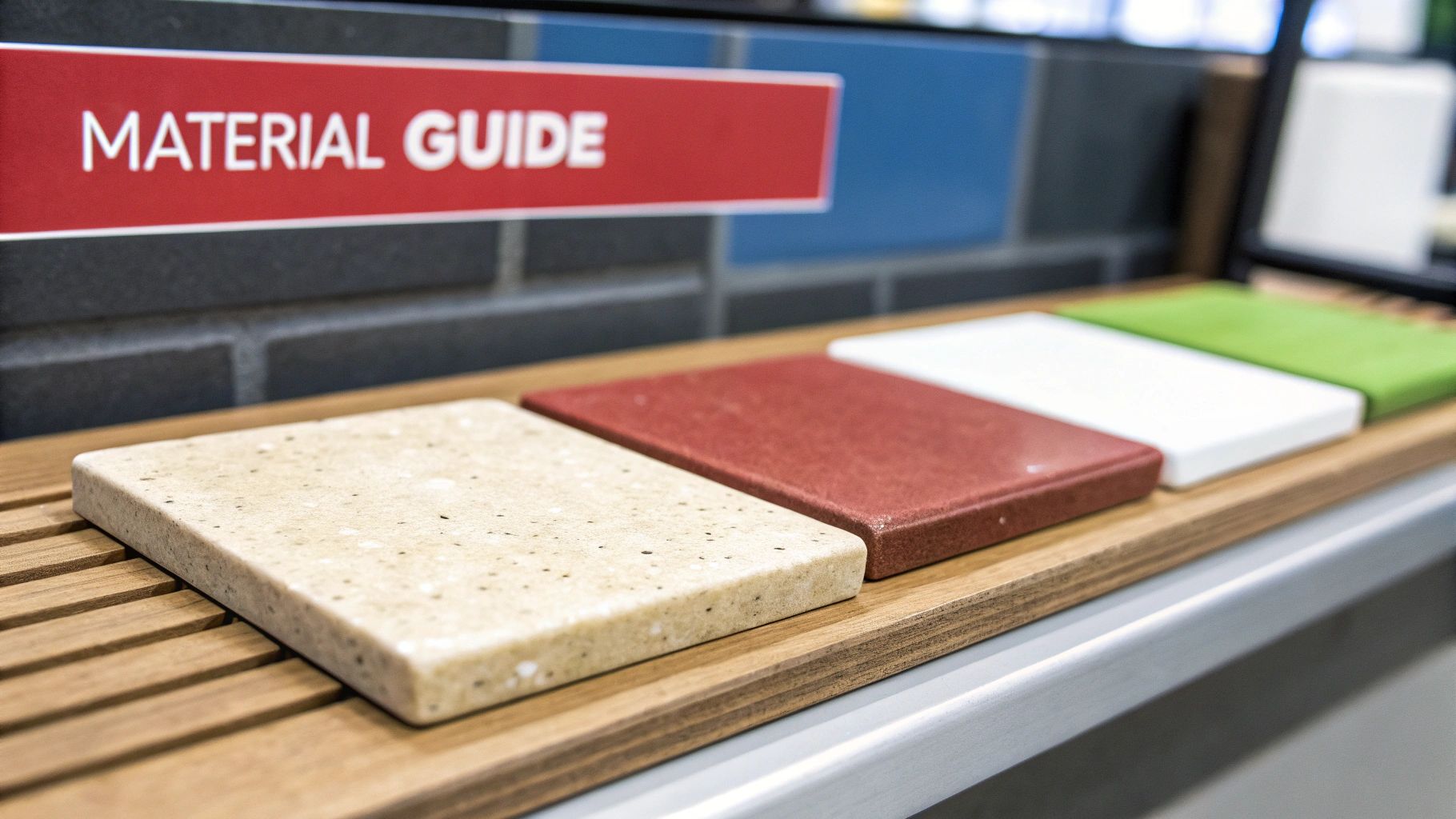
The material you choose for your shower bench is a lot like picking the right countertop for your kitchen. It has to look great, sure, but it also has to stand up to a ton of abuse—in this case, constant water, soap, and steam. A bench is more than just a place to sit; it's a major visual anchor in your shower.
Getting this choice right from the start means you’ll have a beautiful, functional feature that doesn’t become a maintenance headache down the road. Let's walk through the best options out there, weighing the pros and cons of each for aesthetics, durability, and upkeep.
Classic Tile Benches
Tiling the bench to match the rest of the shower is hands-down the most popular way to go, and it's easy to see why. This approach creates a completely unified, built-in look, making the bench feel like it was always part of the shower's design.
The design possibilities with porcelain and ceramic tiles are practically endless. You can go for anything from a classic subway pattern to an intricate mosaic. The trade-off, however, is grout lines. And grout lines are where the real maintenance challenge lies.
Key Takeaway: Grout is porous, making it a prime target for soap scum and mildew. Using larger format tiles is a smart move because it drastically reduces the number of grout lines. Pairing that with a high-performance epoxy grout will give you much better resistance to stains and moisture.
I can't tell you how many homeowners we've worked with who regret using tiny mosaic tiles on their bench. It looks stunning at first, but keeping all those grout lines clean becomes a real chore.
Solid Surface Slabs
If you're dreaming of a sleek, modern look with almost zero cleaning effort, a solid surface slab is the answer. Materials like quartz, granite, or marble are cut from a single, solid piece, which means one thing: no grout lines. None.
That "groutless" design is a game-changer for maintenance. A quick wipe is all it takes to keep the surface looking brand new. Solid surfaces also give your shower an immediate high-end, spa-like vibe.
The two main things to consider here are cost and installation. Slabs are quite a bit more expensive than tile, and they're heavy. You need to make sure the bench is properly engineered to support that weight, especially if you’re planning a floating bench design.
Natural Wood Options
For anyone wanting to bring a warmer, more organic element into their bathroom, you can't beat wood. But not just any wood. When it comes to a wet environment like a shower, teak is the undisputed king.
Teak has these incredible natural oils and a super-dense grain that make it inherently resistant to water, mold, and rot. It doesn't even need a sealant and ages beautifully, slowly developing a lovely silver patina. We typically see teak used in a few different ways:
- Fold-Down Benches: By far the most common use, giving you a warm, comfortable seat that tucks away.
- Freestanding Stools: A great, flexible option if you don't want something permanent.
- Custom Built-Ins: This is a less common but absolutely stunning choice for a truly custom, spa-inspired design.
Material Comparison at a Glance
So, how do you choose? It really comes down to balancing your personal style, your tolerance for cleaning, and your budget. Here’s a quick breakdown of how the top contenders compare:
| Material | Key Advantage | Maintenance Level | Best For |
|---|---|---|---|
| Porcelain Tile | Endless design flexibility and budget-friendly. | Medium to High | Achieving a seamless, integrated look on a budget. |
| Solid Surface | No grout lines, extremely easy to clean. | Low | Modern, minimalist designs where low maintenance is a priority. |
| Teak Wood | Natural warmth and exceptional water resistance. | Low to Medium | Adding a spa-like, organic feel, especially in fold-down or freestanding styles. |
Ultimately, the best material is the one that fits your life. Do you value unlimited design options above all else? Or does the very thought of scrubbing another grout line make you cringe? Your answer will point you straight to the perfect material for your new shower bench.
Designing for Safety and Universal Access
A gorgeous shower bench is a great start, but a truly successful one is also safe, comfortable, and easy for anyone to use. That's the whole idea behind universal design—creating spaces that work for people of all ages and physical abilities without looking like a hospital room. It’s really about making smart, forward-thinking choices that make daily life just a little bit easier.
When you weave safety features into your shower design from the get-go, you're not just remodeling a bathroom. You're creating a space that offers comfort and peace of mind for the long haul, making your home ready for whatever the future holds.
The Foundation of an Accessible Shower Bench
When we talk about safety in showers, the gold standard is the set of guidelines from the Americans with Disabilities Act (ADA). While these rules are mandatory for public and commercial buildings, they serve as a brilliant blueprint for home design. Why? Because they’re based on years of research into what actually makes a space easy and safe to navigate.
Think of ADA guidelines not as rigid rules for your home, but as a proven recipe for comfort and safety. They give us the ideal dimensions that make sitting, standing, and moving around less of a chore and much safer for everyone.
This proactive approach is catching on. More and more homeowners are planning for the long term, and the numbers back it up. The market for bathroom assist devices, which includes shower benches, is already valued at USD 1.65 billion in the U.S. and is set to grow. This isn't surprising when you consider that bathroom falls are responsible for over 234,000 injuries every single year.
Getting the Dimensions Just Right
For a shower bench to be truly comfortable and safe, two measurements are absolutely critical: its height and its depth. These numbers directly affect how easy it is to sit down and get back up.
-
Height: The sweet spot for a shower bench is between 17 and 19 inches off the finished floor. This range mirrors the height of a standard chair, which makes a world of difference when transitioning from standing to sitting, or even from a wheelchair. It just feels natural and requires less strain.
-
Depth: You'll want a bench that is at least 15 inches deep, with 15 to 21 inches being the optimal range. This gives you plenty of room to sit securely and comfortably without the bench sticking out so far that it gets in the way of moving around the shower.
Nailing these dimensions is what turns a simple ledge into a genuinely supportive and functional part of your bathroom.
Creating a System of Support with Grab Bars
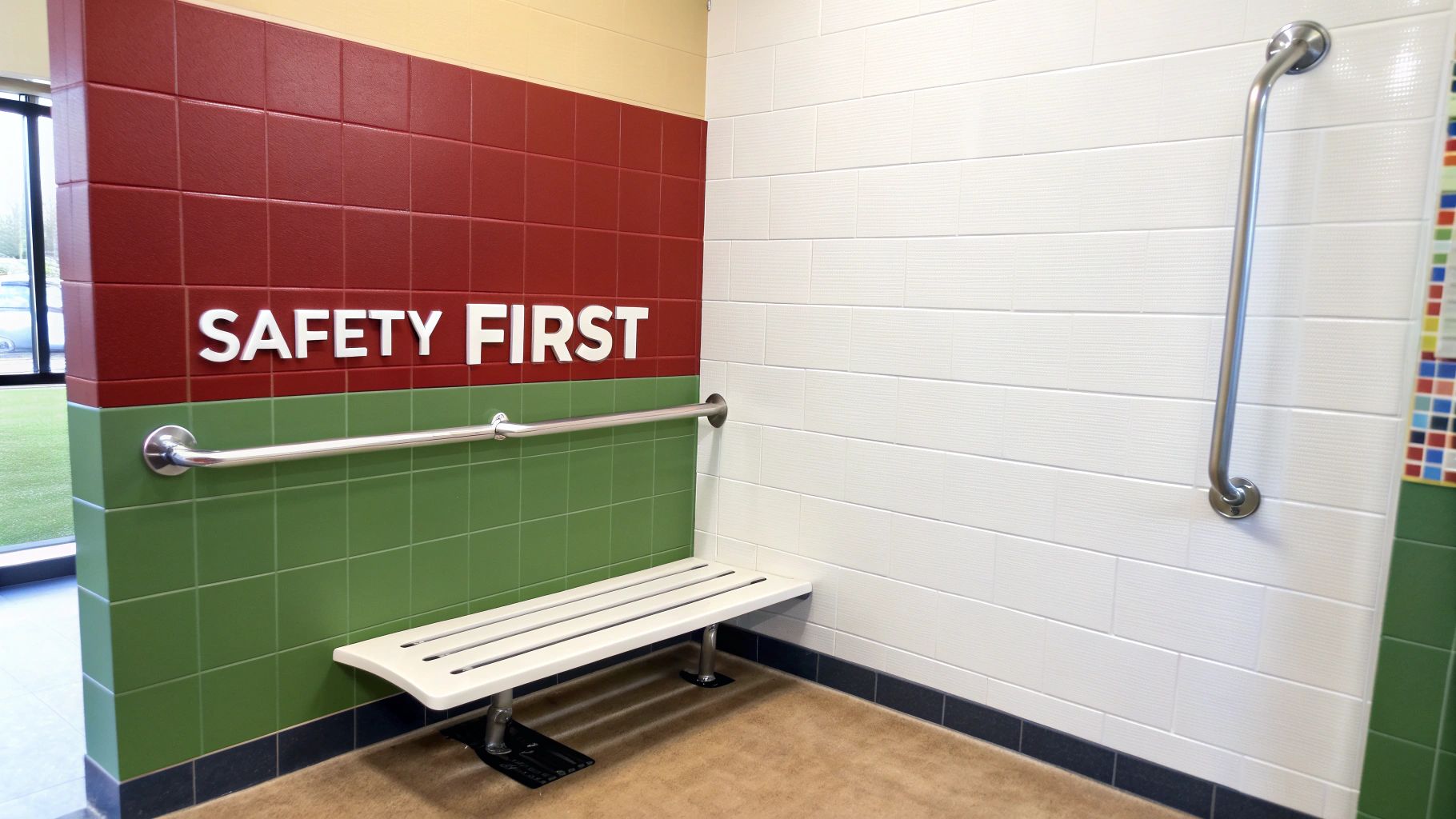
A shower bench is great, but it works even better as part of a team. Sturdy, properly placed grab bars are the bench’s essential partner, providing stable handholds for navigating a wet and potentially slippery shower.
Where you put them is just as important as having them. For maximum support, grab bars should be installed horizontally on the wall next to the bench and on the back wall, usually 33 to 36 inches from the floor. This height allows someone to easily grip the bar for support while sitting or standing up.
And here’s a critical point: make sure your contractor anchors the grab bars directly into the wall studs. This isn't a place to cut corners; it’s a non-negotiable for safety. For more ideas on making the bathroom a safer space, these fall prevention tips for the elderly are a great resource. By combining a well-designed bench with thoughtfully placed supports, you create a shower that is truly built for a lifetime of safe and comfortable use.
What Does a Shower Bench Really Cost?
Trying to budget for a new shower bench can feel a bit like guesswork. The final price isn't a single line item but a blend of the choices you make during the design process. Figuring out these key factors is the best way to plan a project that fits your dream and your budget.
The biggest things that will move the needle are the type of bench you choose, the materials you finish it with, and the complexity of the installation. A simple, freestanding teak stool might set you back a few hundred dollars. On the other hand, a custom-built, floating bench topped with a solid quartz slab can easily run into the thousands. The gap between those two comes down to product costs, structural work, waterproofing, and the skilled labor needed to pull it off perfectly.
Breaking Down the Main Cost Factors
So, what really impacts the final number? It boils down to three main components: the bench structure itself, the finishing materials, and the professional labor to put it all together. Each has its own price range.
-
Bench Type: As we've seen, a prefabricated foam bench is often a more budget-friendly starting point than a custom-framed one simply because it saves on labor time. A high-quality, wall-mounted fold-down bench has its own unique price, usually landing somewhere in the middle.
-
Materials: This is where the budget can really swing one way or the other. Tiling a bench with a classic, affordable porcelain is far easier on the wallet than cladding it in a single, seamless piece of Calacatta marble. The price of tile, stone, or wood, plus the non-negotiable waterproofing system underneath, all add up.
-
Labor: Installation is a major part of the budget, and for good reason. You're paying an expert to make sure the bench is structurally sound, completely waterproof, and beautifully finished. While labor rates vary, this is one corner you never want to cut. A poorly installed bench can lead to leaks and major water damage down the road.
Comparing Estimated Costs
To help you get a better sense of the numbers, let's walk through a few realistic cost scenarios. Keep in mind these are estimates—your final price will depend on your location, your contractor, and the specific details of your project. But they're a great starting point.
When you're planning, it's also smart to think about the bigger picture, including any plumbing requirements for bathroom remodels that might come into play and affect your overall costs.
Here’s a table that breaks down the potential costs for different types of shower benches, including both materials and professional installation.
Estimated Cost Breakdown for Shower Benches
| Bench Type | Material Cost Range (Approx.) | Installation Cost Range (Approx.) | Total Estimated Cost |
|---|---|---|---|
| Prefabricated Tiled | $200 – $500 | $500 – $1,200 | $700 – $1,700 |
| Custom Built-In Tiled | $300 – $800 | $1,000 – $2,500 | $1,300 – $3,300 |
| Solid Surface Slab | $800 – $2,000+ | $800 – $1,800 | $1,600 – $3,800+ |
| Wall-Mounted Fold-Down | $250 – $600 | $200 – $500 | $450 – $1,100 |
As you can see, the final investment varies quite a bit depending on the path you choose.
Pro Tip: Love the high-end look of a solid slab but not the price tag? Ask your designer about using a large-format porcelain tile. With rectified edges and minimal grout lines, you can create a very similar sleek, modern aesthetic for a fraction of the cost. This one decision can save you hundreds while still giving you a stunning, low-maintenance finish.
Keeping Your Shower Bench in Top Condition
Your new shower bench is a fantastic upgrade, but like anything in a bathroom, it needs a bit of attention to stay looking brand new. A little routine care goes a long way in preserving its beauty and preventing bigger headaches down the road.
The good news is, keeping your bench pristine doesn't mean hours of back-breaking work. It's really just about knowing the right tricks for your specific material.
Care for Tiled Benches
When it comes to tile, the real weak spot isn't the tile itself—it's the grout. Grout is porous, making it a perfect magnet for soap scum, mold, and mildew if you let it be.
A simple weekly spray with a pH-neutral, non-abrasive cleaner is your best friend here. For a deeper clean, you can't beat a paste made from baking soda and water; just scrub it in with a soft-bristle brush. Whatever you do, avoid harsh, acidic cleaners like vinegar. They can slowly eat away at your grout and sealant over time, causing more harm than good.
Here's a pro tip: Keep a small squeegee in your shower. A quick, five-second wipe-down of the bench after every use makes a huge difference. It stops water spots from forming and removes the moisture that mildew needs to grow.
Maintaining Solid Surface and Natural Stone
If you chose a solid surface like quartz, you're in luck—this stuff is about as low-maintenance as it gets. Because it's non-porous, a quick wipe with a soft cloth and a bit of mild soap is all it ever really needs.
Natural stone, like marble or granite, requires a little more TLC. Since these materials are naturally porous, they need to be sealed periodically (usually once a year) to prevent stains and stop water from seeping in. Always use a cleaner specifically designed for natural stone to avoid etching or dulling its beautiful finish.
Preserving a Teak Wood Bench
Teak is a fantastic choice for a shower, largely because its natural oils make it incredibly water-resistant. This makes upkeep pretty straightforward.
- Routine Cleaning: An occasional scrub with a soft brush and some soapy water is all you need to clear away any surface grime.
- Restoring Color: Over time, your teak bench will naturally weather to a distinguished, silvery-gray patina. If you prefer its original warm, honey-brown hue, just apply a specialized teak oil every few months to bring the color right back.
A few minutes of simple maintenance each week is all it takes to make sure your shower bench remains a safe, stunning, and functional part of your bathroom for many years to come.
Common Questions We Hear About Shower Benches
Even the best-laid plans can bring up a few questions, especially when it comes to the details of a shower bench. We get asked these all the time, so let's clear up some of the most common points right now.
What’s the Perfect Size for a Shower Bench?
When it comes to size, comfort and safety are king. We almost always stick to the guidelines set by the Americans with Disabilities Act (ADA) because they’ve done the research. That means aiming for a finished height between 17 and 19 inches off the shower floor. This sweet spot makes it comfortable for most adults to sit down and stand back up without a struggle.
For depth, anywhere from 15 to 21 inches is the goal. This gives you plenty of room to sit securely without feeling like you're perched on a narrow ledge. It's a balance—deep enough for comfort, but not so deep that it eats up all your standing room.
Does a Built-In Bench Really Need to Be Waterproofed Underneath?
Yes. 100%. This is the single most important step in building a bench that will last a lifetime. Before a single tile goes up, the entire shower structure—the bench frame, the walls behind it, the floor below it—has to be completely wrapped in a professional waterproofing membrane.
Think of it like the hull of a boat. If there's even a tiny breach in that waterproof shell, water will get in. Over time, that leads to mold, wood rot, and catastrophic structural damage. Skipping or skimping on this step is a recipe for disaster.
Honestly, improper waterproofing is the number one reason we see shower benches fail. It’s a beautiful feature that can turn into a very expensive problem if not done right from the start.
Can I Add a Bench to a Shower That’s Already Tiled?
You can, but your choices are a little more limited than they would be in a full remodel. Tearing out existing tile to build a permanent, fully integrated bench is a huge job. It means demolition, new framing, complex waterproofing, and then the tricky task of matching new tile to the old—which can be nearly impossible.
If you're not tearing everything out, your best bets are:
- A Freestanding Bench: A beautiful teak bench is the easiest solution. It looks great, you can move it around, and there’s zero installation required.
- A Fold-Down Bench: These are mounted directly to the wall and are a fantastic space-saving option. The key is making sure it can be anchored securely into the wall studs for support.
Is a Solid Slab Bench Top Better Than a Tiled One?
One isn't necessarily "better" than the other; it really boils down to your personal priorities—style, budget, and how you feel about cleaning grout.
A solid slab bench, typically made from a single piece of quartz or natural stone, offers a clean, seamless look. With no grout lines, it's a breeze to wipe down and keep clean. The trade-off is that it’s a premium material and comes with a higher price tag.
A tiled bench is the more common and budget-friendly route. It also gives you unlimited creative freedom to match your wall and floor tile perfectly. The only real downside is the grout, which will need regular cleaning to keep it from getting grimy or stained. It’s all about balancing that seamless look and low maintenance of a slab against the design flexibility and lower cost of tile.
Ready to stop just thinking about your perfect shower and actually start designing it? The team at Trademaster Construction is here to bring your vision to life with expert craftsmanship and a process that’s smooth from start to finish. Explore our services and get inspired today!

