
You might be picturing those old 4×4 inch tiled countertops with thick, discolored grout lines. Let’s be honest, it’s not a great look. But modern tile countertops are a completely different animal, offering a sophisticated and practical surface that can go toe-to-toe with more expensive materials like quartz or granite.
Think of today's tile as a design chameleon. It’s ready to create stunning, modern bathroom designs that are as beautiful as they are functional.
Why Modern Tile Countertops Are a Smart Choice
If the phrase "tile countertop" makes you cringe, it’s time to take another look. The entire world of tile has been transformed, with new materials and installation methods that have solved the problems of the past. What was once a high-maintenance choice is now a compelling and practical option for any bathroom remodel.
This isn’t just a niche trend. Homeowners everywhere are looking for materials that look great, stand up to moisture, and don't require a ton of upkeep. This demand is driving huge growth in the bathroom countertop market, which was valued at a whopping USD 20 billion in 2023 and is expected to soar to USD 35 billion by 2032. You can dig into more of the data in this detailed bathroom countertop market report from Dataintelo.
The Evolution of Tile Countertops
So, what's really different now? It all comes down to the tile itself and how we install it.
-
Bigger is Better: Forget those tiny squares. We now have large-format porcelain and ceramic tiles, some as big as 24×48 inches. This means fewer grout lines and a sleek, almost seamless look.
-
Grout Got a Glow-Up: Old-school cement grout was a magnet for stains and mildew. Today's epoxy and urethane grouts are game-changers—they’re non-porous, completely stain-proof, and resist mold, making cleanup a breeze.
-
Endless Design Options: This is where tile truly shines. It offers a level of design freedom that solid surfaces just can't match. Want the look of marble, wood, or even concrete without the cost or maintenance? No problem. You can even create one-of-a-kind mosaic patterns for a countertop that’s uniquely yours.
When you pair today's advanced materials with a professional installation, you get all the style and savings of a tile countertop without the headaches of the past. It's the perfect sweet spot between form, function, and your budget.
Picking the Right Tile for Your Bathroom Countertop
When you start looking at materials for a tile countertop, the sheer number of options can feel a bit overwhelming. But don't get lost in the sea of samples. The secret is to zero in on what really matters for your bathroom: your lifestyle, your design vision, and of course, your budget.
This decision is about so much more than just color. You’re choosing a surface that needs to stand up to a spilled bottle of mouthwash, deciding how much maintenance you're willing to commit to, and setting the whole tone for your personal retreat.
The Power Players: Porcelain and Ceramic
Porcelain and ceramic tiles are the undisputed champs in the bathroom, and for good reason. They just work.
Think of porcelain as the tougher, more resilient older sibling. It's fired at blistering-hot temperatures and made from super-dense clay, which makes it incredibly durable and almost completely waterproof. This is your go-to for a busy, high-moisture family bathroom that sees a lot of action.
Ceramic, on the other hand, is a fantastic choice if you're watching the budget but still want great performance and a massive selection of styles. It's a little more porous than porcelain, but once it has a quality glaze on it, it’s more than ready to handle life in most bathrooms, especially guest baths or powder rooms.
If you really want to get into the nitty-gritty, there’s a great guide covering different bathroom tile types that breaks down the pros and cons of each.
This flowchart really shows how homeowners land on tile, whether they're driven by a specific look or trying to get the most value for their money.
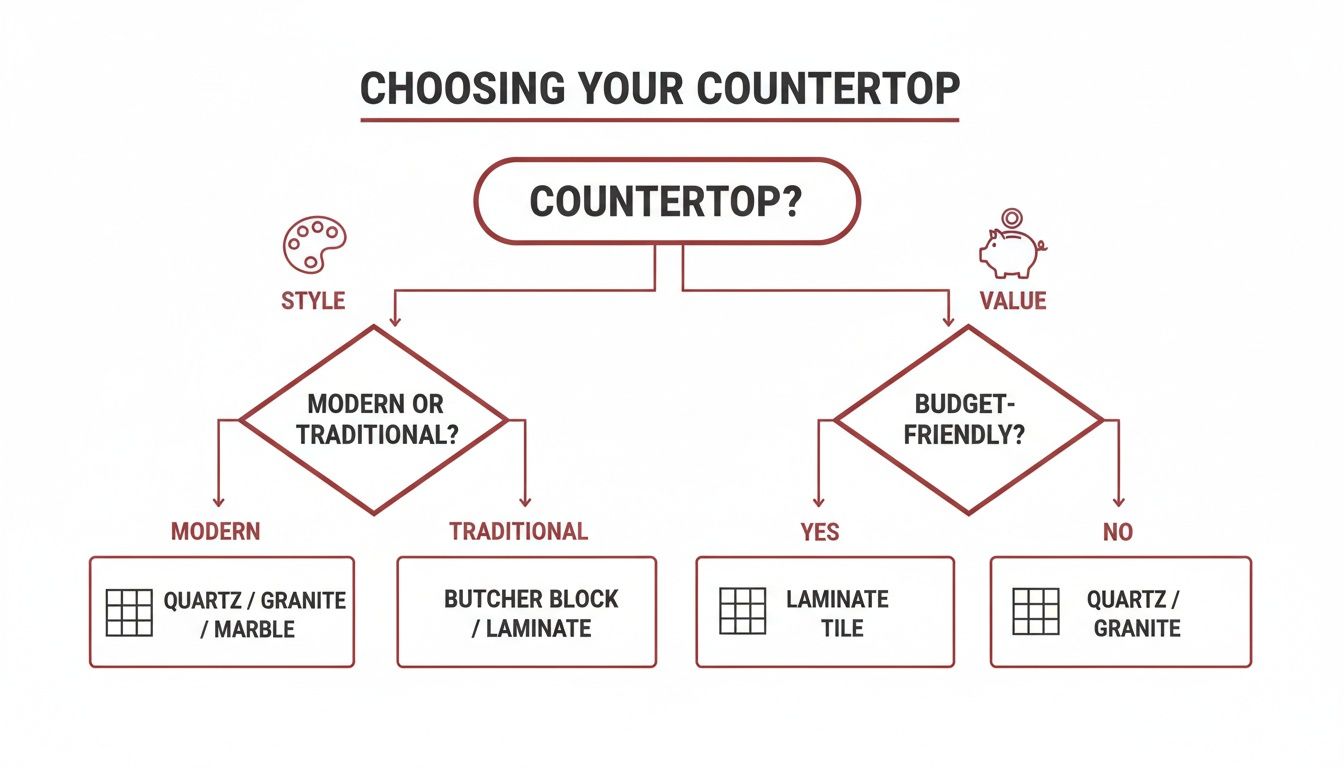
As you can see, no matter if you’re trying to achieve a sleek modern design or you're just focused on a smart renovation, tile keeps proving itself as a top choice.
Natural Elegance: Stone and Glass
Looking for something with a bit more of a "wow" factor? Natural stone and glass tiles are where you'll find it.
Natural stone options like marble, granite, or travertine bring an authentic, one-of-a-kind character to a countertop. No two tiles are ever exactly the same, giving you a surface that's a true work of art with its own unique veining and colors. The trade-off for this beauty is a bit of homework. Most natural stones are porous, so they need to be sealed regularly to fend off stains and water damage. They can also be a bit softer than porcelain, making them more prone to scratches.
Glass tiles deliver a completely different vibe—sleek, clean, and modern. Their reflective quality can make a smaller bathroom feel brighter and more spacious. Plus, they're non-porous and a breeze to clean, shrugging off makeup and soap stains without any trouble.
To help you weigh your options, this table breaks down the most popular materials side-by-side.
Comparing Popular Bathroom Countertop Tile Materials
| Tile Type | Durability & Water Resistance | Average Cost (per sq. ft.) | Maintenance Level | Best For |
|---|---|---|---|---|
| Porcelain | Excellent; virtually waterproof. Highly scratch and stain-resistant. | $5 – $35 | Low | High-traffic family bathrooms; anyone wanting maximum durability. |
| Ceramic | Good; water-resistant with proper glaze. Durable for moderate use. | $2 – $20 | Low | Budget-conscious projects, guest baths, and powder rooms. |
| Natural Stone | Varies; requires regular sealing to resist water and stains. Can scratch. | $10 – $50+ | High | Creating a luxurious, one-of-a-kind look in master suites. |
| Glass | Excellent; non-porous and impervious to water. Very stain-resistant. | $15 – $40 | Low | Modern designs, small bathrooms, and creating a bright, clean aesthetic. |
Ultimately, the best material is the one that fits your life. A stunning marble countertop is a fantastic choice for a master bath, but it demands more care than a workhorse porcelain surface would.
Making a Practical Choice for Your Home
The U.S. countertop market is a massive industry, valued at $45.4 billion in 2023, and tile holds its own against solid-surface giants for a reason. Its blend of affordability and design freedom makes it a top contender, especially in bathrooms where you might want to create a seamless look from the counter to the backsplash or shower walls.
So, how do you choose? Think about your daily routine.
- For a busy family bathroom: Go with porcelain. Its rugged durability is exactly what you need.
- For a statement powder room: This is where natural stone or a unique glass mosaic can steal the show.
- For a budget-conscious guest bath: Ceramic gives you fantastic style and solid performance without the high price tag.
When you start thinking this way, you move past just looking at samples and begin designing a countertop that’s genuinely built for you.
The Good, The Bad, and The Grout
Every countertop material has its upsides and its drawbacks, and tile is no exception. To decide if it's the right choice for your bathroom, you have to be honest about what it’s really like to live with. Let's weigh the pros and cons, starting with what makes tile so appealing in the first place.
Hands down, the biggest draw for most homeowners is the sheer creative freedom. With solid slabs like granite or quartz, you're choosing from a pre-set menu of colors and patterns. Tile, on the other hand, throws the design playbook wide open. You can mix and match different colors, create a one-of-a-kind mosaic, or even use large-format tiles to beautifully mimic the look of high-end stone without the hefty price tag. It's your chance to create something truly personal.
The Clear Advantages of Tile
Beyond the limitless design options, tile brings some serious practical benefits to the table, especially in a busy bathroom.
- Friendlier on the Wallet: Let's be real—remodels are expensive. Tile is significantly more budget-friendly than most solid surfaces, which means you can get a premium look for less. That often frees up money for other upgrades you've been dreaming of, like that spa-like showerhead or a stylish new vanity.
- Bring on the Heat: This is a big one. Ceramic and porcelain tiles are born in fire, kilned at incredibly high temperatures. You can set a hot curling iron or hair straightener right on the surface without a second thought. There's zero risk of scorching, melting, or discoloration.
- Water and Stain Proof: In a room that’s all about moisture, this is key. Glazed tiles are non-porous, creating a rock-solid barrier against water, spilled makeup, or toothpaste. A simple wipe-down is all it takes to keep them looking pristine.
Modern tile and grout technologies give you the best of both worlds. You get the creative control and affordability tile is known for, plus the durability and easy-care benefits you'd expect from a much more expensive slab countertop.
Let's Talk About Grout
Okay, let's address the elephant in the room: the grout. For years, this was the Achilles' heel of tile countertops. Old-school, cement-based grout was a porous magnet for stains, grime, and mildew, and keeping it clean felt like a never-ending chore. It was a valid concern.
But grout has evolved. Big time. The development of epoxy and high-performance urethane grouts has completely changed the game. These new-school formulas are non-porous and bomb-proof. They don't need sealing and are naturally resistant to just about anything you can throw at them—stains, mold, and mildew included.
When installed by a pro, these advanced grouts help create a seamless, waterproof surface that’s just as easy to clean as the tile itself. By simply pairing quality tile with the right modern grout, the single biggest headache of tile countertops is practically a non-issue. You get all the style without any of the old-school hassle.
Bringing Your Countertop Design to Life
Once you've nailed down the perfect tile material, the real fun starts. This is where you get to move past the practical stuff and really start to craft the look and feel of your bathroom tile countertops. The size, shape, and even the color of your grout play a huge role in the final result, turning a simple surface into a genuine design statement.
The tile size itself is one of the first big decisions. Are you picturing something sleek and modern? Large-format tiles, sometimes as big as 24×48 inches, are your answer. They create a clean, almost seamless look with very few grout lines, which can make a smaller bathroom feel bigger and less busy. On the flip side, small mosaic tiles let you get creative with intricate patterns and bold colors, essentially turning your counter into a piece of functional art.
The Finishing Touches That Matter
What really separates a so-so job from a professional one? It’s all in the details. How you finish the edges and the grout color you pick are small choices that make a massive difference in the overall design. These are the elements that give your countertop a polished, custom-made feel.
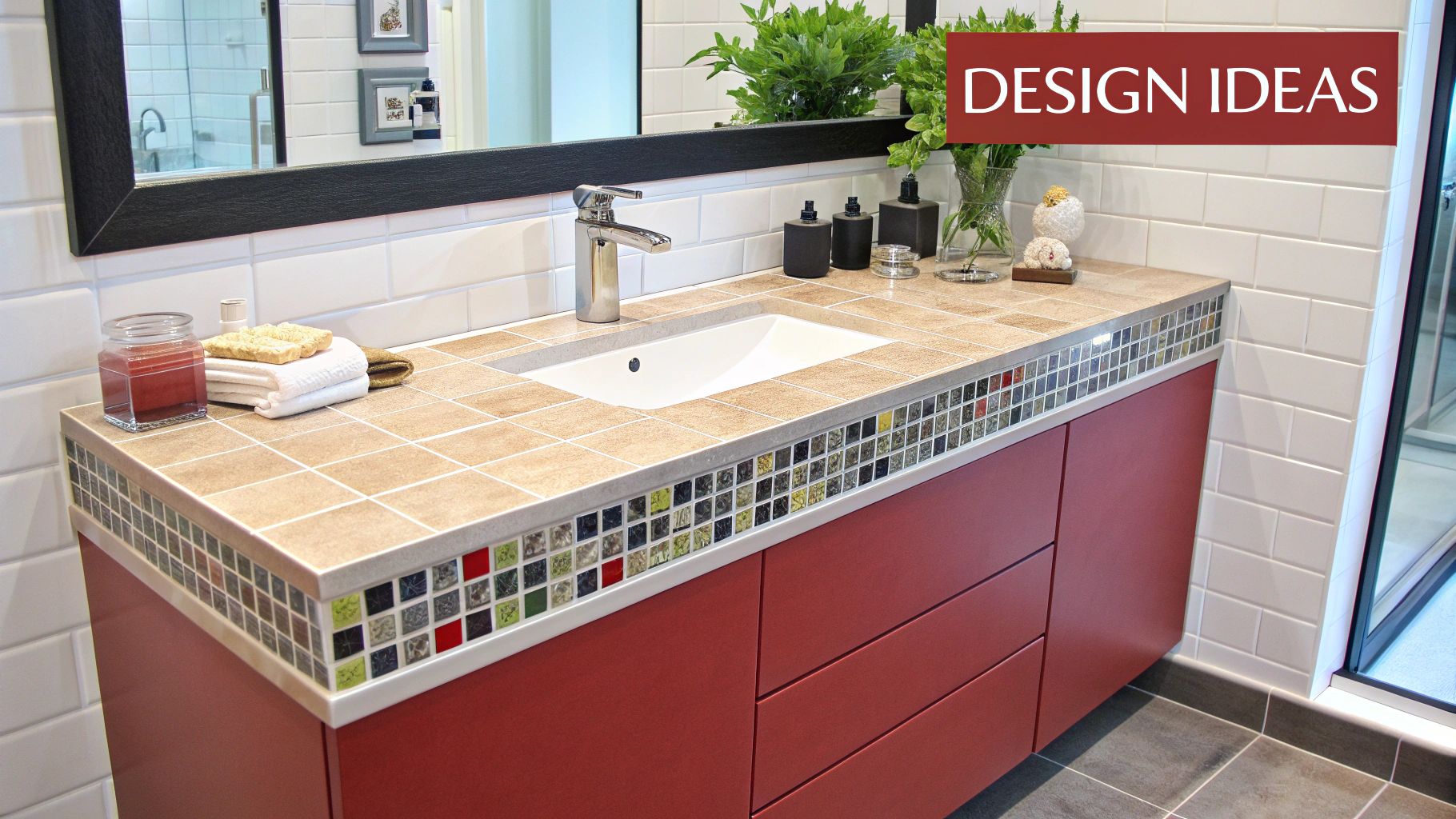
First, think about the edges. A bullnose edge, which has a smooth, rounded trim, offers a soft, classic finish that’s comfortable to lean on. For something a bit more modern, a crisp metal or Schluter-style trim frames the tile perfectly and creates a very clean, defined line.
Grout color is one of the most powerful tools in your design arsenal. Using a contrasting color makes each tile pop, creating a bold, graphic pattern. A matching color, however, blends in for a more unified, monolithic look.
Creating a Cohesive Bathroom Design
Your countertop is a major player, but it’s still part of a team. A great tiled surface can be the inspiration that ties the rest of your bathroom together. Think beyond the counter—making simple updates like painting bathroom vanities and cabinets can create a completely new, cohesive vibe. Just imagine a crisp white subway tile countertop paired with a freshly painted navy blue or deep sage green vanity. It’s a classic, sophisticated look that never goes out of style.
This desire for beautiful, functional bathrooms is a huge force in the remodeling world. In fact, the global countertops market is expected to hit USD 155.14 billion by 2025, and residential projects make up over 62% of that market. Homeowners are driving this growth because they want surfaces that don't just stand up to water but also add to the room's character. By making thoughtful choices with your tile, trim, and grout, you're creating a space that’s not only stylish but also incredibly functional for years to come.
How to Budget for Your Tile Countertop Project
Figuring out the real cost of a new countertop is one of the most important steps for a stress-free remodel. When you’re budgeting for bathroom tile countertops, it’s best to break the total cost into two key categories: the materials you fall in love with and the professional labor needed to get the job done right.
The tile itself is your first major expense, and this is where you have the most control over the budget. A classic, clean ceramic tile can be very affordable, often running just $2 to $20 per square foot. But if you're dreaming of something more luxurious, a natural stone like marble can easily climb to $10 to over $50 per square foot.
Of course, the tile isn't the only material you'll need. You also have to factor in the behind-the-scenes essentials like the backer board for a solid foundation, the mortar to set the tile, and a durable grout to seal it all up.
Factoring in Labor and Installation
While the DIY route might seem like a way to save a few bucks, professional installation is an investment that pays for itself by preventing headaches down the line. The cost for labor really depends on how complex your design is. A simple grid pattern with large tiles is much quicker to install than an intricate mosaic that demands dozens of precise, time-consuming cuts.
Here in Southwest Michigan, you can generally expect professional tile installation to cost between $10 and $20 per square foot, depending on the specifics of your vanity and design.
The biggest mistake we see homeowners make is underestimating the value of professional labor. Hiring a skilled installer from Trademaster Construction means your countertop will be perfectly level, completely waterproof, and built to last. It’s the best insurance against costly water damage or cracked tiles later on.
To give you a clearer picture, let's look at a few examples for a typical 15-square-foot bathroom vanity top:
- Budget-Friendly Ceramic: Materials ($150 – $450) + Labor ($150 – $300) = $300 – $750 Total
- Mid-Range Porcelain: Materials ($225 – $675) + Labor ($150 – $300) = $375 – $975 Total
- High-End Natural Stone: Materials ($300 – $900+) + Labor ($150 – $300) = $450 – $1,200+ Total
Think of these numbers as a solid starting point. By finding the right balance between the materials you want and the expert craftsmanship you need, you can map out your budget confidently and make sure there are no surprises along the way.
Why Go Pro for Your Tile Countertop Installation?
Look, your bathroom remodel is a serious investment. It’s easy to think, "I can do that," but installing a bathroom tile countertop is one of those jobs where experience truly matters. This isn't just about sticking tiles to a board; it's about building a waterproof, rock-solid surface that will look fantastic for years to come.
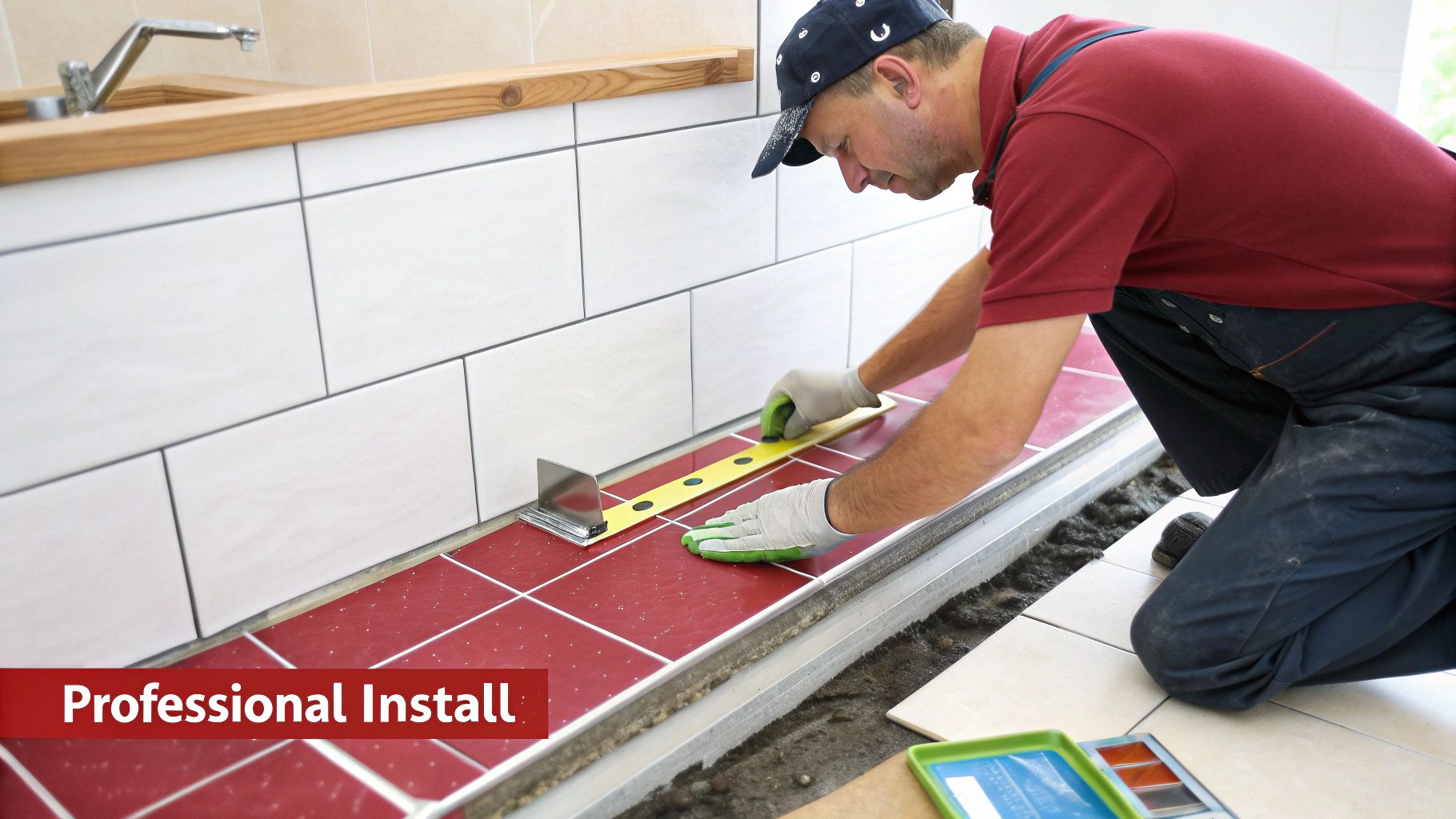
When you work with us at Trademaster Construction, we obsess over the details you might not even see. It all starts with the foundation—the substrate. We make sure it's dead-level and completely stable, because that’s what stops tiles from cracking down the line. Then comes the critical waterproofing layer, your best defense against hidden leaks and moisture damage.
The Difference is in the Details
Our tile setters are artists in their own right. They live for perfect layouts, clean cuts, and grout lines so straight you could use them as a ruler. That level of craftsmanship is what elevates a project from "finished" to "flawless." It's a skill we've honed on countless projects across Southwest Michigan, from Kalamazoo to Portage.
Think of it this way: hiring a professional installer like Trademaster Construction is your best insurance policy. It protects you from the common DIY headaches and guarantees your new countertop isn't just beautiful—it's built to handle real life without causing expensive water damage later.
Ready to see what true craftsmanship looks like? Reach out to Trademaster Construction today for a consultation, and let's get your dream bathroom started.
Frequently Asked Questions About Bathroom Tile Countertops
Even with all the options out there, it's natural to have a few questions when you're considering tile for your bathroom countertops. It's an investment, after all, and you want to be sure you're making the right call. Feeling confident in your decision starts with getting clear, honest answers.
Let's walk through some of the most common questions we hear from homeowners. We'll give you the practical, no-nonsense information you need to decide if tile is the right fit for your home.
Are Tile Countertops Durable Enough for a Family Bathroom?
Yes, absolutely. This is probably the number one concern we hear, but modern tile is a world away from what you might remember. High-quality porcelain and ceramic tiles are incredibly tough and built to handle the chaos of a busy family bathroom. They stand up beautifully to scratches, stains, and even the heat from a forgotten curling iron.
The real secret to making them last, however, is professional installation. When the surface is prepped correctly and the tiles are set with a high-performance grout (like epoxy), the entire countertop becomes a single, waterproof, and incredibly resilient unit. A well-installed tile countertop can easily last for decades with just basic care.
A lot of the durability questions really boil down to the grout. Old-school cement grout was porous and prone to staining and mildew. Modern epoxy and urethane grouts, on the other hand, are non-porous and stain-proof. This is the game-changer that makes today’s tile countertops a truly low-maintenance, long-lasting choice.
Will a Tile Countertop Look Outdated?
Not if you do it right! The fear of a dated look usually stems from visions of those old 4×4 inch square tiles with wide, dingy grout lines. The world of tile has exploded since then, and today it offers far more design flexibility than almost any other material.
Here’s how to create a look that feels modern and timeless:
- Go Big with Large-Format Tiles: Using tiles in sizes like 12×24 or even 24×48 inches dramatically reduces the number of grout lines. This creates a sleek, clean surface that can look almost like a solid slab of stone.
- Match Your Grout: Choosing a grout color that blends in with your tile makes the lines virtually disappear, giving you a smooth, uniform look.
- Play with Modern Shapes: Think beyond the square. Hexagons, pickets, and other geometric shapes can add a touch of contemporary style that feels custom and intentional, not trendy.
At the end of the day, tile's versatility is its greatest strength. You can create a look that’s classic, modern, rustic, or anything in between.
Ready to transform your bathroom with a countertop that perfectly balances style, durability, and value? The expert team at Trademaster Construction is here to guide you through every step, from design to flawless installation. Plan your Southwest Michigan remodel with confidence by visiting us at https://www.trademasterkz.com.

