
Planning a bathroom remodel in Southwest Michigan? The tile you choose is one of the most impactful decisions you'll make, defining the room's entire aesthetic from the floor up. Beyond just color and material, the pattern, or the specific arrangement of the tiles, plays a critical role in creating the atmosphere you desire. Whether you envision a serene spa-like retreat, a bold modern statement, or a timeless classic sanctuary, the right layout is key.
An intricate design can turn a simple shower into a stunning focal point, while a clean, linear layout can make a small bathroom feel spacious and open. But with so many options available, from the enduring popularity of subway tile to the dynamic energy of herringbone and the geometric charm of hexagons, how do you choose the right one? For those seeking fresh inspiration, exploring the latest 2026 bathroom tile trends can help redefine your personal space with artistry and texture.
This guide explores a wide range of essential bathroom tile pattern ideas, moving beyond generic advice to provide actionable insights for your project. We'll examine the pros and cons of each pattern, offer practical tips on where to use them (floors, walls, or accents), and discuss ideal tile sizes and grout choices. You will gain a clear understanding of how to pair different patterns with specific interior design styles. We’ll also touch on budgeting and maintenance, giving you the information needed to plan your renovation with confidence. Get ready to discover the perfect pattern that not only reflects your personal style but also elevates your home's value and daily experience.
1. Subway Tile Pattern
A genuine classic in the world of interior design, the subway tile pattern is one of the most enduring and versatile bathroom tile pattern ideas available. Its name and origin trace back to the iconic white tiles used in the New York City subway system in the early 1900s. The pattern itself consists of rectangular tiles laid in a 50% offset, creating a clean, brick-like arrangement that feels both orderly and dynamic. This timeless look has remained a favorite for over a century because it adapts effortlessly to nearly any design style, from vintage farmhouse to sleek and modern.
Implementation and Best Practices
The beauty of subway tile lies in its simplicity, but small details can make a significant impact on the final result.
- Grout is Key: For a modern, high-contrast look that makes the pattern pop, pair classic white subway tiles with dark gray or black grout. For a softer, more seamless appearance, match the grout color closely to the tile.
- Size Matters: In smaller bathrooms or shower stalls, using a larger format subway tile (such as 4×8 or 4×12 inches) can create a less busy look. Fewer grout lines give the illusion of more space.
- Shower Walls and Accents: This pattern is a go-to for shower walls and backsplashes. For added visual interest, consider a vertical installation to draw the eye upward and make ceilings feel taller, or use it on one accent wall behind the vanity.
Pro Tip: For shower and tub surrounds, we strongly recommend using an epoxy-based grout. While it has a higher upfront cost, its superior resistance to moisture, stains, and cracking makes it an excellent long-term investment for wet environments.
The subway tile pattern works exceptionally well in both historic homes in Kalamazoo and modern new builds in Portage. Its clean lines provide a perfect backdrop that won’t go out of style, ensuring your bathroom renovation remains fresh for years. If you're considering this timeless pattern, you can get a better sense of material and labor costs by using our instant pricing tool to help plan your project budget.
2. Herringbone Pattern
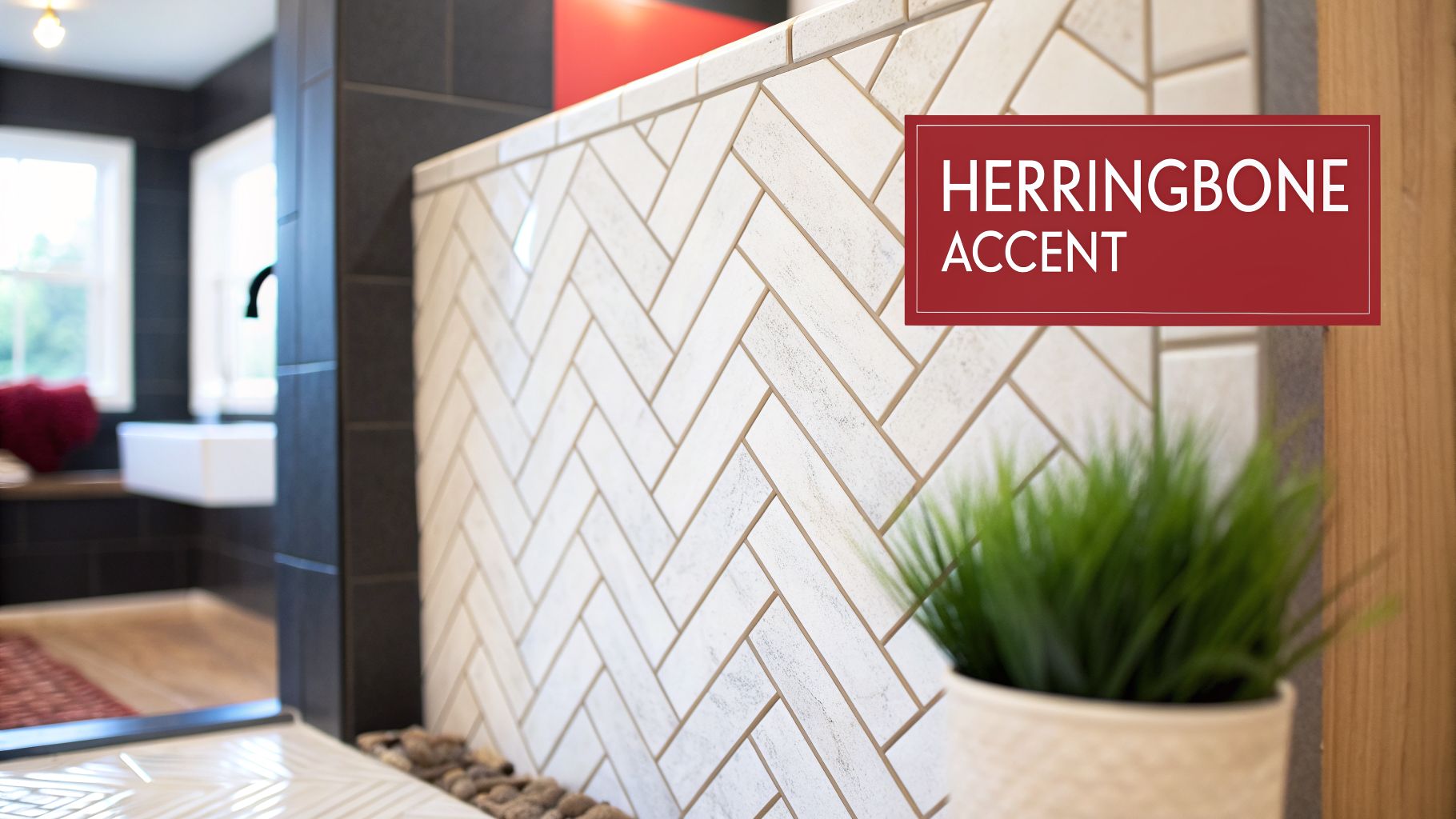
A sophisticated and dynamic choice, the herringbone pattern is one of the most visually engaging bathroom tile pattern ideas you can select. It arranges rectangular tiles in a distinct V-shaped zigzag formation, where each tile is placed at a 45-degree angle to the one next to it. Named for its resemblance to the skeleton of a herring fish, this elegant pattern creates a sense of movement and adds significant architectural interest, making any bathroom feel more luxurious and custom-designed. Its frequent use in high-end spa and hotel designs has cemented its reputation as a premium option.
Implementation and Best Practices
The herringbone pattern’s complexity demands careful planning and execution to achieve a polished, high-end look.
- Create a Focal Point: To avoid overwhelming a space, use herringbone on a single feature wall, such as the wall behind your vanity or the main shower wall. This creates a stunning focal point without making the room feel too busy.
- Balance with Simplicity: Pair a herringbone floor with simpler, larger format tiles on the walls. This contrast allows the intricate floor pattern to stand out while maintaining a clean, uncluttered feel throughout the rest of the bathroom.
- Color and Scale: In smaller bathrooms, using a herringbone pattern in neutral colors like soft grays, whites, or beiges can provide texture without visual clutter. Larger format tiles (like 3×12 or 4×16 inches) also work well, as they result in fewer grout lines and a less busy appearance.
Pro Tip: Due to the angled cuts and precise alignment required, herringbone is one of the more labor-intensive patterns to install. We highly recommend working with an experienced tile installer who is familiar with this layout to ensure clean lines and a professional finish.
The herringbone pattern is increasingly popular in high-end remodels across Southwest Michigan, adding a touch of classic European elegance to modern homes. Its directional lines can make a narrow room feel wider or draw attention to a specific feature. To understand how this premium pattern might affect your project's budget, use our instant pricing tool to get a detailed cost estimate for your bathroom renovation.
3. Hexagon Tile Pattern
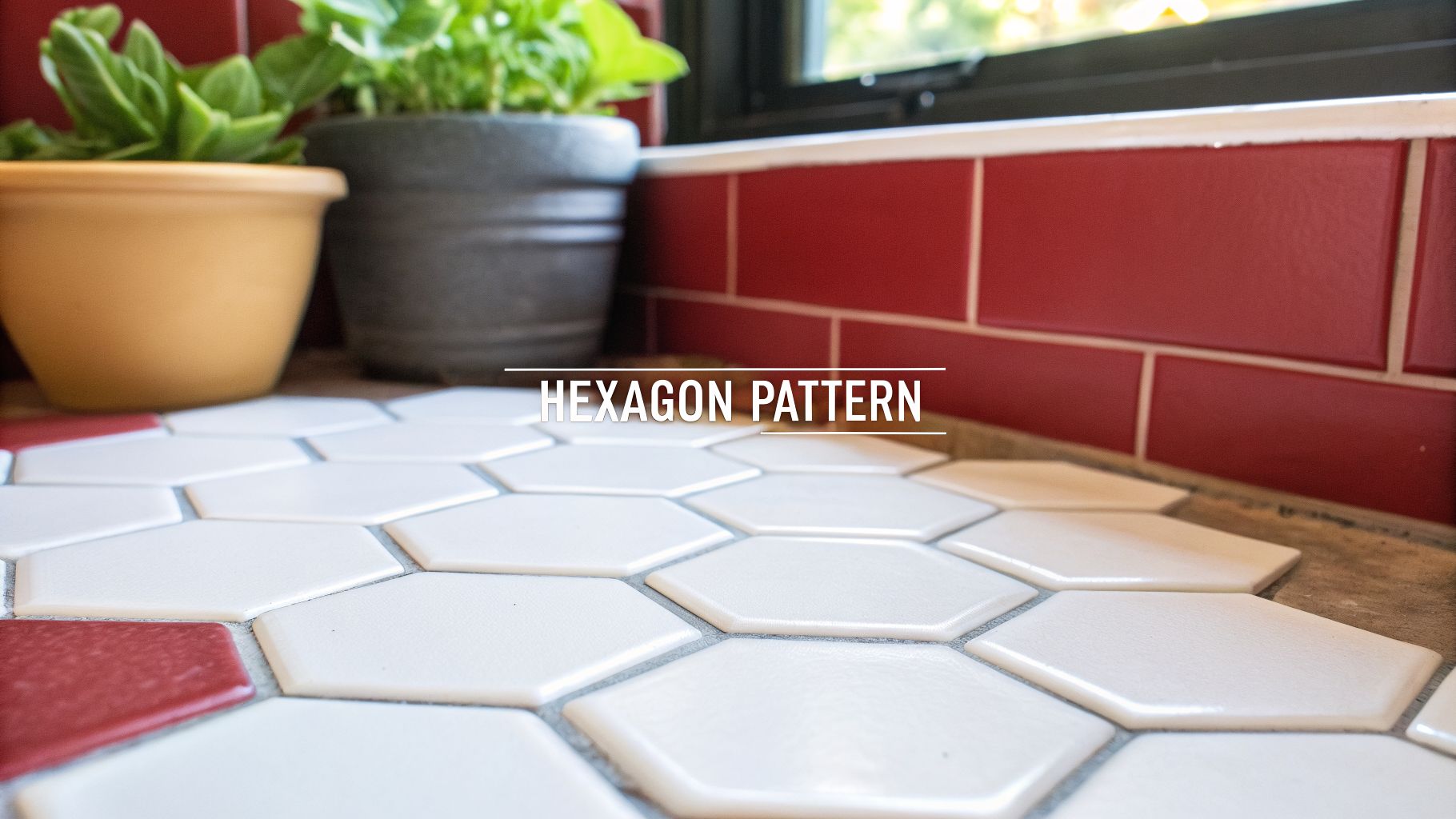
A favorite in contemporary design, the hexagon tile pattern brings playful geometry and a modern edge to any bathroom. Featuring six-sided shapes arranged in a tight, honeycomb-like grid, this pattern is a dynamic alternative to traditional squares and rectangles. Its popularity has soared in recent years, appearing in design publications like Architectural Digest and becoming a staple in upscale, spa-inspired bathrooms. As one of the most adaptable bathroom tile pattern ideas, hexagons can feel both bold and understated depending on their size, color, and application.
Implementation and Best Practices
The key to successfully using hexagon tile is understanding how scale and contrast influence the final look. Proper planning ensures the geometric appeal becomes a feature, not a distraction.
- Vary by Size and Location: Use small mosaic hexagons (1-2 inches) on shower floors. The high number of grout lines provides excellent texture and slip resistance. For a bolder statement, apply large-format hexagons (8-12 inches) to an accent wall behind the vanity or in a shower niche.
- Create Visual Balance: Since the honeycomb pattern is visually active, pair it with simpler elements. Combining a hexagon floor with classic subway tile on the walls creates a layered, sophisticated design without feeling overwhelming.
- Define with Grout: To emphasize the geometric shape, choose a contrasting grout color, such as dark gray grout with white tiles. For a softer, more integrated appearance, match the grout color to the tile.
Pro Tip: When laying out hexagon tiles, especially on a large floor or wall, plan the starting point carefully. A well-planned layout minimizes awkward, slivered cuts along visible edges and corners, resulting in a cleaner, more professional finish.
The hexagon tile pattern is a superb choice for homeowners in Kalamazoo seeking to infuse a modern, custom feel into their bathroom renovation. Whether used as a subtle texture on the floor or a dramatic feature wall, its geometric charm adds lasting style. To see how this pattern fits into your project’s budget, you can use our instant pricing tool to estimate material and installation costs.
4. Moroccan or Zellige Pattern
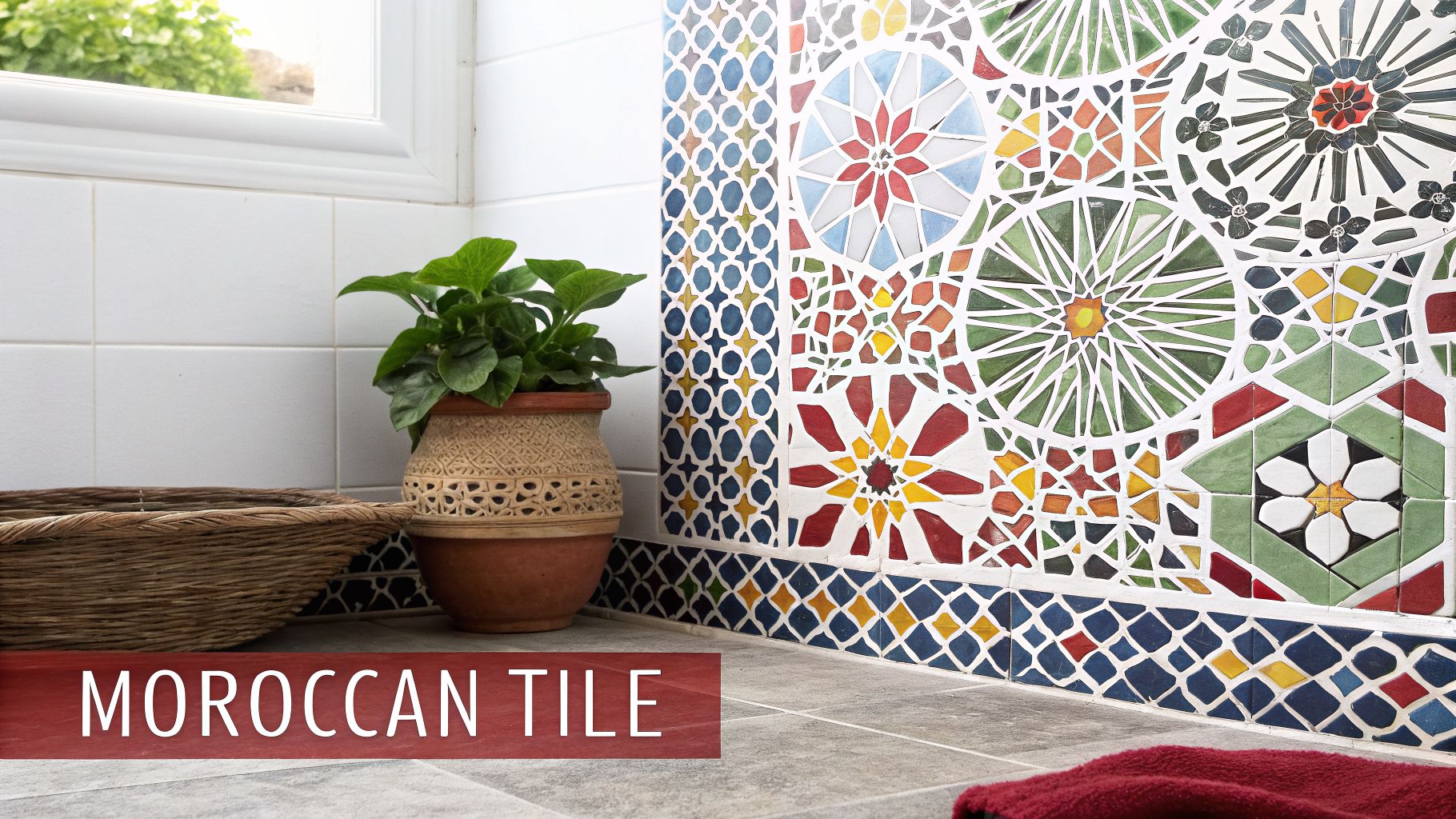
For those looking to infuse their space with exotic elegance and cultural richness, the Moroccan or Zellige pattern is one of the most captivating bathroom tile pattern ideas. Inspired by centuries of traditional North African tilework, this style is known for its intricate geometric designs, star motifs, and complex interlocking shapes. Zellige tiles, in particular, are handcrafted clay tiles known for their vibrant glazes and subtle surface variations, which give them a shimmering, one-of-a-kind quality. This pattern can transform a simple bathroom into a luxurious, spa-like retreat.
Implementation and Best Practices
Bringing the beauty of Moroccan tile into your home requires careful planning to balance its bold character.
- Create a Focal Point: To avoid overwhelming the space, use these ornate tiles as a feature wall behind the vanity or in a shower niche. They also make a stunning statement as flooring, especially in larger bathrooms.
- Balance with Neutrals: Pair a complex Moroccan pattern with simple, neutral tiles on the other walls. This allows the intricate design to be the star without making the room feel too busy.
- Embrace Color: Many Moroccan and Zellige tiles come in rich jewel tones like turquoise, emerald, and sapphire. Using these colors in the tile itself can add a vibrant pop without needing to paint the walls.
- Complementary Fixtures: Enhance the global aesthetic by pairing these tiles with natural wood elements, brass or matte black fixtures, and warm, layered lighting.
Pro Tip: Because Zellige and other handmade Moroccan tiles have natural irregularities, working with an experienced installer is critical. A professional who understands how to blend the tiles and align intricate patterns will ensure a polished, authentic result.
This pattern is ideal for creating an eclectic, bohemian, or high-end look in any Portage or Kalamazoo home. Its rich history and artistic flair add a layer of personality that mass-produced tiles cannot replicate. To understand how these specialty tiles might fit into your budget, you can estimate material and installation costs with our instant pricing tool before you begin.
5. Large Format or Oversized Tile
For a truly modern and seamless aesthetic, few bathroom tile pattern ideas make a statement quite like large format tiles. Defined as any tile with at least one edge longer than 15 inches, these oversized options can range from common 12×24 inch pieces to massive slabs of 48×96 inches or more. The primary appeal is the reduction of grout lines, which creates an expansive, uncluttered look that makes any bathroom feel larger and more luxurious. This style is frequently seen in high-end hotels and contemporary spa designs for its clean, monolithic appearance.
Implementation and Best Practices
While large format tiles look simple, their installation requires precision and specific techniques to achieve a flawless finish.
- Make Small Spaces Grand: Counterintuitively, using large tiles in a small bathroom is a powerful design trick. Fewer grout lines reduce visual busyness, tricking the eye into perceiving a more spacious and open area. Light-colored, oversized tiles are especially effective.
- Finish and Material: For a contemporary, industrial feel, choose a matte finish. If you’re aiming for modern luxury, a glossy or polished finish will reflect light and add a touch of glamour. These tiles are available in durable porcelain as well as natural stone like marble or travertine.
- Wall and Floor Coordination: Create a cohesive, spa-like retreat by using large format tiles on both the floor and shower walls. This continuous look minimizes visual breaks and enhances the sense of space. Consider pairing it with a contrasting accent wall of mosaic or textured tile for added interest.
Pro Tip: Installing large format tiles, especially on walls, is not a typical DIY project. It requires specialized tools, proper substrate preparation to support the weight, and an experienced installer to ensure minimal lippage and perfectly planned cuts.
This trend is becoming a hallmark of luxury home remodels throughout Southwest Michigan, from Portage to the lakeshore. The sophisticated, clean look provides a durable and impressive foundation for any modern bathroom design. To understand how this premium choice impacts your budget, you can use our instant pricing tool to estimate material and installation costs for your project.
6. Penny Round or Mosaic Tile
For a look that exudes charm and texture, penny round and mosaic tiles are fantastic bathroom tile pattern ideas that can create a vintage or playful atmosphere. Penny rounds are small, circular tiles, typically under two inches in diameter, mounted on sheets for easier installation. This category also includes other small-format mosaic tiles, which can be arranged into intricate patterns or used to create a vibrant, textured surface. Their small scale and the high number of grout lines provide excellent slip resistance, making them a traditional choice for bathroom floors and shower pans.
Implementation and Best Practices
The character of penny and mosaic tiles comes from their repetitive, detailed nature. Proper application is crucial to achieving a high-end look rather than a busy one.
- Balance is Essential: When using such a detailed tile on the floor, opt for simpler, larger format tiles on the walls. This creates visual balance and prevents the small-scale pattern from overwhelming the space.
- Grout as a Design Tool: For a defined, graphic look that highlights each individual tile, choose a contrasting grout color like dark gray against white penny rounds. A matching grout color will create a more subtle, uniform texture.
- Ideal Applications: Penny tiles are perfect for shower floors due to their inherent slip resistance. They also work beautifully as an accent wall behind a vanity or within a shower niche to add a pop of personality without covering the entire room.
Pro Tip: With the high number of grout lines inherent to mosaic tiles, using an epoxy grout is highly recommended for any wet area like a shower floor. It provides superior resistance to moisture, staining, and mildew, ensuring the surface remains clean and durable for the long term.
Penny rounds feel right at home in the vintage-inspired bathrooms of historic Kalamazoo homes and add a touch of eclectic fun to modern Portage new builds. They offer a nostalgic nod while still feeling fresh and current. To see how this charming pattern might fit into your budget, use our instant pricing tool to get a preliminary estimate for your bathroom renovation.
7. Chevron or V-Pattern Tile
Often mistaken for herringbone, the chevron tile pattern creates a distinct and dynamic V-shape that is a powerful entry in our list of bathroom tile pattern ideas. Unlike herringbone, which uses rectangular tiles staggered to create a broken zig-zag, chevron tiles have ends cut at an angle (typically 45 degrees). When laid, these angled ends meet perfectly to form a continuous, pointed arrow or V-pattern. This creates a bold sense of movement and architectural sophistication, making it a favorite in modern, spa-inspired bathroom designs.
Implementation and Best Practices
The sharp, clean lines of a chevron pattern demand precision, but the visual reward is significant. Careful planning is essential to maximize its impact.
- Balance is Essential: A full chevron pattern can feel overpowering in a small bathroom. Consider using it on a single accent wall, like behind the vanity or in a shower, and pair it with simpler, solid-colored tiles on other surfaces to create a balanced look.
- Tile and Grout Choices: For a subtle, textured effect that adds depth without overwhelming the space, choose a neutral tile color like gray, beige, or white with a matching grout. Alternatively, a bold color can turn a chevron wall into a stunning focal point.
- Layout and Installation: The key to a successful chevron installation is planning the layout from the center of the wall or floor and working outward. This ensures the pattern is symmetrical and minimizes awkward, small cuts at the edges. This pattern requires an installer experienced with angled tile.
Pro Tip: Using larger format tiles, such as 4×12 or 6×24 inches, in a chevron pattern reduces the number of grout lines. This not only creates a cleaner, more modern aesthetic but also makes the surface easier to maintain over time.
The chevron pattern is increasingly popular in upscale Southwest Michigan home renovations, where its contemporary flair adds significant value. It pairs perfectly with modern fixtures and clean finishes for a cohesive design. To understand how this striking pattern might fit into your renovation budget, you can estimate material and labor expenses with our instant pricing tool to begin planning your project.
8. Running Bond or Stacked Horizontal Pattern
A close relative of the subway pattern, the running bond is another foundational choice among bathroom tile pattern ideas. It arranges rectangular tiles in horizontal rows with a consistent offset, creating the classic, sturdy appearance of traditional brickwork. Where it often differs from the standard subway application is in its emphasis on horizontal flow. This pattern is excellent at making narrow spaces, like galley bathrooms or small powder rooms, feel wider and more expansive. Its straightforward, orderly look provides a sense of structure that pairs well with traditional, farmhouse, and transitional styles.
Implementation and Best Practices
While simple in concept, the running bond pattern offers flexibility that can be adjusted to suit your specific bathroom design goals.
- Emphasize Width: To visually stretch a narrow bathroom, use this pattern on the longest walls. The strong horizontal lines draw the eye from side to side, creating the illusion of a broader space.
- Grout for Definition: Pair your tiles with a contrasting grout color to highlight the horizontal brick-like layout and add graphic interest. For a more subtle, monolithic look, choose a grout that matches the tile color.
- Tile Size and Style: For a more contemporary feel, consider larger format tiles like 6×12 or 8×16 inches. This reduces the number of grout lines and creates a cleaner, more modern surface, perfect for shower walls or a feature wall behind a vanity.
Pro Tip: The running bond pattern is incredibly effective for wainscoting. Tiling the lower half of your bathroom walls in this pattern provides durability and classic style, especially in high-moisture family bathrooms.
The running bond pattern is a reliable choice for bathroom renovations from traditional homes in Portage to cottage-style houses in Kalamazoo. Its timeless appeal ensures your space remains stylish and functional for years. To understand how this classic pattern might fit into your renovation budget, you can use our instant pricing tool to estimate material and labor costs for your project.
9. Basketweave or Woven Pattern
A timeless and sophisticated choice, the basketweave pattern is one of the more intricate bathroom tile pattern ideas that brings a sense of luxury and texture to a space. It mimics the look of a woven fabric or traditional basket by arranging small rectangular and square tiles in an interlocking design. This classic pattern alternates groups of tiles between horizontal and vertical orientations, creating a gentle, rhythmic visual that feels both detailed and orderly. It has long been a hallmark of high-end traditional and transitional bathrooms, frequently seen in elegant marble applications.
Implementation and Best Practices
The basketweave's detailed nature requires precision, but the result is a floor or wall with undeniable character and elegance.
- Balance with Simplicity: Because the basketweave pattern is visually rich, it pairs best with simpler elements. For example, a stunning marble basketweave floor can be perfectly balanced with clean, solid-colored subway tile walls.
- Material Choice: This pattern is famously executed with natural stone like Carrara or Calacatta marble, often with a contrasting dot tile. Using neutral tones in stone or porcelain enhances its elegant effect and ensures it remains a timeless feature.
- Strategic Placement: While beautiful across an entire bathroom floor, basketweave also serves as an excellent accent. Consider using it to create a "rug" inlay in the center of the floor, in a shower niche, or on the floor of a walk-in shower to add a touch of custom detail.
Pro Tip: Basketweave patterns, especially those made from small mosaic sheets, demand a perfectly flat and well-prepared subfloor. Any imperfections can telegraph through the tiles, so proper substrate preparation is critical for a professional finish.
The basketweave pattern adds a layer of quiet luxury, making it a popular choice in historic Kalamazoo homes seeking a classic refresh or new Portage builds aiming for an elegant, spa-like master bath. Its intricate appearance suggests a higher installation cost, so getting a clear picture of your budget is a smart first step. You can use our instant pricing tool to estimate material and labor expenses for your bathroom project.
10. Colored or Patterned Encaustic Tile
For those looking to infuse a bathroom with rich personality and artistic flair, colored or patterned encaustic tile is an exceptional choice. Unlike printed tiles, encaustic designs are created by pressing colored clay into the tile's body, meaning the pattern runs through the entire thickness. This historical method results in an incredibly durable tile with vibrant, intricate geometric patterns and floral motifs that don't fade over time. These artisanal tiles are one of the most expressive bathroom tile pattern ideas, perfect for creating a one-of-a-kind space with deep cultural character.
Implementation and Best Practices
The bold nature of encaustic tile requires a thoughtful approach to ensure it enhances, rather than overwhelms, the bathroom's design.
- Strategic Placement: Use encaustic tiles as a focal point to maximize their impact. A feature wall behind the vanity, an accent area within a shower niche, or a stunning floor pattern are excellent applications.
- Balance is Essential: Pair these intricate tiles with simpler, complementary materials on other surfaces. A classic white subway tile on the walls allows a vibrant encaustic floor to be the star of the show without creating visual clutter.
- Grout Selection: Choose a neutral grout color that complements the tile's background or a minor accent color. The goal is for the grout to disappear, allowing the tile's beautiful pattern to remain the primary focus.
Pro Tip: Encaustic tiles are porous and must be properly sealed before and after grouting to protect them from stains and moisture. Always follow the manufacturer's specific sealing recommendations for longevity, especially in wet areas like a shower floor.
The artistry of encaustic tile can transform a bathroom in a new Mattawan residence or add a bespoke touch to a historic home in Kalamazoo. Because sourcing and installation require careful planning, these tiles often come with a higher material and labor cost. You can start building a realistic budget for your project by using our instant pricing tool to estimate potential expenses.
Top 10 Bathroom Tile Pattern Comparison
| Pattern | 🔄 Implementation Complexity | ⚡ Resource Requirements | 📊 Expected Outcomes | ⭐ Key Advantages | 💡 Ideal Use Cases |
|---|---|---|---|---|---|
| Subway Tile Pattern | Low–Medium, straightforward layout | Low cost, standard tiles & installer | Clean, timeless linear look, visually expands space | Versatile, durable, easy maintenance | Small bathrooms, shower walls, budget-friendly remodels |
| Herringbone Pattern | High, precise angled placement required | Higher labor & waste, skilled installer | Dynamic V-shaped movement, strong focal point | Sophisticated, architecturally engaging | Large baths, shower feature walls, upscale renovations |
| Hexagon Tile Pattern | Medium, varies by tile size/layout | Moderate–High (mosaics need more grout) | Geometric rhythm, contemporary focal interest | Unique modern look, scalable sizes | Shower floors, accent walls, modern designs |
| Moroccan / Zellige Pattern | High, intricate alignment and sealing | High (artisan tiles, careful coordination) | Rich, exotic visual impact with strong pattern | Dramatic, handcrafted character | Accent walls/floors, bohemian/global-inspired baths |
| Large Format / Oversized Tile | Medium–High, requires substrate prep & handling | High cost, special equipment & experienced installer | Seamless, spacious appearance with minimal joints | Fewer grout lines, modern and easy to clean | Small baths for spacious feel, contemporary minimalist designs |
| Penny Round / Mosaic Tile | Medium, mesh sheets ease placement but many cuts | Moderate materials, more grout & maintenance | Textured, slip-resistant surface with vintage charm | Excellent traction, playful/retro aesthetic | Shower floors, small accent areas, vintage-style bathrooms |
| Chevron / V‑Pattern Tile | High, precise 45° cuts and alignment | Higher labor & material waste | Bold directional movement, strong modern statement | Dynamic, distinctive visual energy | Feature walls, statement showers, modern focal areas |
| Running Bond / Stacked Horizontal | Low–Medium, simple offsets | Low cost, standard materials | Wide, horizontal lines that visually widen space | Classic, affordable, broadly compatible | Narrow bathrooms, traditional/transitional designs |
| Basketweave / Woven Pattern | Medium, careful grouping and alignment | Moderate, precise layout increases labor time | Subtle woven texture, refined visual interest | Elegant, understated complexity | Floors, entry focal areas, classic/elegant bathrooms |
| Colored / Patterned Encaustic Tile | High, sourcing and specialist installation | Very high cost, artisanal materials & expertise | One‑of‑a‑kind artistic focal point | Distinctive, handcrafted character | Accent areas, statement floors/walls, designer-led projects |
Bringing Your Vision to Life and Planning Your Budget
We've explored a wide array of bathroom tile pattern ideas, from the enduring simplicity of subway tile to the intricate drama of a herringbone layout. Your journey through these options has hopefully sparked inspiration, revealing how the right pattern can completely redefine a space, turning a functional bathroom into a personal sanctuary. The key takeaway is that tile is more than just a surface; it's a foundational design element that sets the tone for your entire room.
Understanding the relationship between pattern complexity and project scope is the next practical step. A classic running bond is straightforward, whereas a detailed basketweave or chevron pattern requires meticulous planning and more labor-intensive installation. This directly influences both the project timeline and the overall cost. For instance, intricate patterns often generate more material waste from angled cuts, a factor that needs to be included in your material budget.
From Pattern Selection to Project Planning
Translating your chosen design from a picture into a beautifully finished bathroom involves several critical considerations. Your tile choice will impact everything from grout selection to long-term maintenance.
- Scale and Proportion: The size of your tile should complement the size of your bathroom. Large format tiles can make a small bathroom feel more spacious, while small mosaics like penny rounds add texture and grip, making them ideal for shower floors.
- Grout as a Design Tool: Don’t underestimate the power of grout. A contrasting grout color will make your pattern pop, highlighting the shape of each tile. A matching grout color creates a more subtle, monolithic appearance.
- Labor and Skill: The beautiful complexity of patterns like herringbone, chevron, and basketweave demands precision. Executing these designs flawlessly requires not only skill but also the right equipment. For DIY enthusiasts tackling a project with porcelain or large format tiles, a professional-grade high-capacity wet tile saw is essential for achieving the clean, accurate cuts needed for a polished look.
Key Insight: The success of your tile installation hinges on the details. The pattern, tile size, grout color, and quality of the installation all work together. A well-thought-out plan that considers these elements will ensure the final result meets your expectations.
Budgeting for Your Dream Bathroom
With a clear vision for your bathroom tile pattern ideas, creating a realistic budget is paramount. The cost of tile varies dramatically, but the installation labor is a significant part of the equation that homeowners often overlook. Intricate patterns that require more cuts and precise placement will increase labor costs.
To help homeowners in Portage, Kalamazoo, and the surrounding Southwest Michigan area gain clarity on their investment, we offer a straightforward way to estimate costs. Before you commit, get a clear picture of how your tile choice fits into your overall renovation budget by using our free instant pricing tool. This resource provides a valuable starting point, helping you balance your design aspirations with financial planning. Whether you're considering a curbless shower for accessibility or a complete modern overhaul, understanding the potential costs upfront empowers you to make confident decisions for your home. Your new bathroom is an investment in your home's value and your daily comfort, and it all begins with a well-laid plan.
Ready to move from inspiration to installation? The expert team at Trademaster Construction specializes in bringing sophisticated bathroom tile patterns to life with precision and care for homeowners across Southwest Michigan. Let us help you create a bathroom that is both beautiful and built to last.

