
Your bathroom is more than just a functional space; it's a private sanctuary for relaxation and rejuvenation. The foundation of its design almost always begins with the tile, a single choice that dictates the room's entire mood. This one element can transform the space into a serene spa retreat, a bold energetic oasis, or anything in between. A thoughtful tile remodel can dramatically transform your bathroom's aesthetic, improve its daily functionality, and significantly increase your home's long-term value.
However, navigating the endless array of materials, patterns, and layouts can be overwhelming. The sheer volume of choices often leads to decision fatigue, making it difficult to find the perfect fit for your home and personal style. This is precisely why we've created this comprehensive guide, designed to simplify the process by showcasing 10 distinct and actionable bathroom tile remodel ideas. We will move beyond generic suggestions to provide specific, practical insights you can actually use.
Inside this guide, you will discover:
- Creative layouts for classic tiles like subway and hexagon.
- How to use large format tiles to make small bathrooms feel more spacious.
- Strategies for creating stunning accent walls and shower niches.
- The pros and cons of materials ranging from natural stone to modern porcelain.
Whether you're in Kalamazoo, Portage, or the surrounding Southwest Michigan area, these concepts will provide the inspiration you need to partner with experts like Trademaster Construction. Our goal is to help you create a space that perfectly reflects your vision, meets your practical needs, and enhances your daily routine. Let's explore the possibilities that will define bathroom design for years to come.
1. Large Format Tiles (12×24 or Larger)
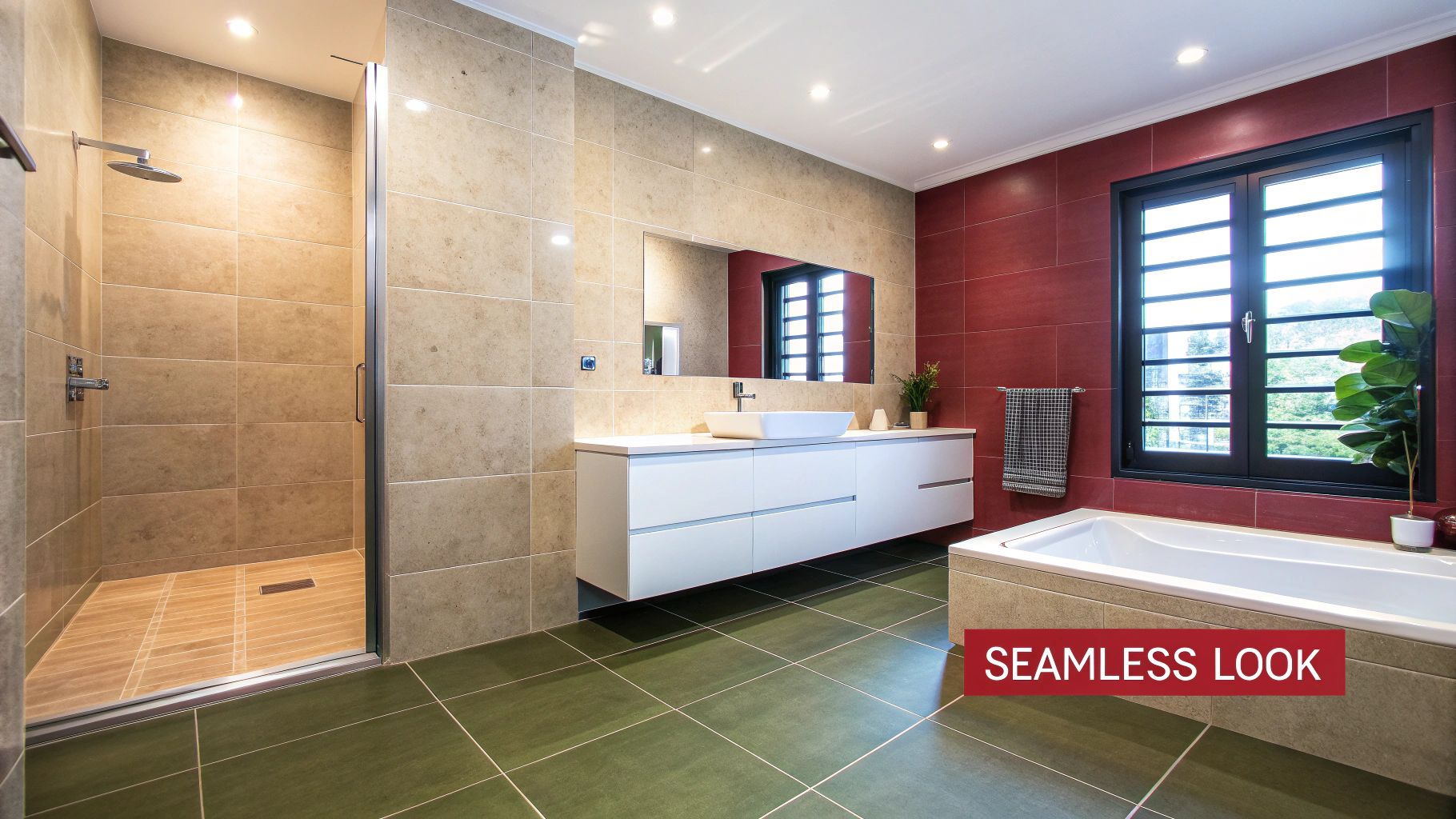
One of the most impactful bathroom tile remodel ideas for creating a clean, expansive, and modern feel is the use of large format tiles. These tiles, typically measuring 12×24 inches or larger, create an illusion of a bigger, more seamless space by significantly reducing the number of visible grout lines. The result is a sophisticated, uncluttered look often seen in luxury spas and high-end hotels.
This design choice is particularly effective for homeowners aiming for a minimalist or contemporary aesthetic. The broad, uninterrupted surfaces draw the eye across the room, making even smaller bathrooms feel more open and airy. Materials like porcelain, ceramic, and natural stone are all available in large formats, offering a wide range of colors and textures to match your vision.
How to Implement Large Format Tiles
Achieving a flawless installation with oversized tiles requires precision and proper preparation. Here are a few key considerations for your project:
- Subfloor Preparation is Critical: The surface beneath the tiles must be perfectly flat and stable. An uneven subfloor can lead to "lippage," where one tile edge is higher than its neighbor, creating a trip hazard and an unprofessional finish. Professional installers often use self-leveling compounds and uncoupling membranes to ensure a perfect foundation.
- Professional Installation is Recommended: Handling large, heavy tiles is a difficult job. It requires specialized tools for cutting and setting, as well as the expertise to manage tight grout lines and avoid breakage. Investing in a professional ensures the final result is beautiful and durable.
- Strategic Grout Selection: To enhance the seamless effect, choose a grout color that closely matches the tile. This technique makes the few grout lines that are present virtually disappear, contributing to a monolithic and clean appearance.
Pro Tip: While large format tiles are stunning on walls and main floors, consider using a smaller, textured tile on the shower floor. The increased number of grout lines provides better grip and enhances safety in wet areas.
2. Subway Tiles in Non-Traditional Layouts
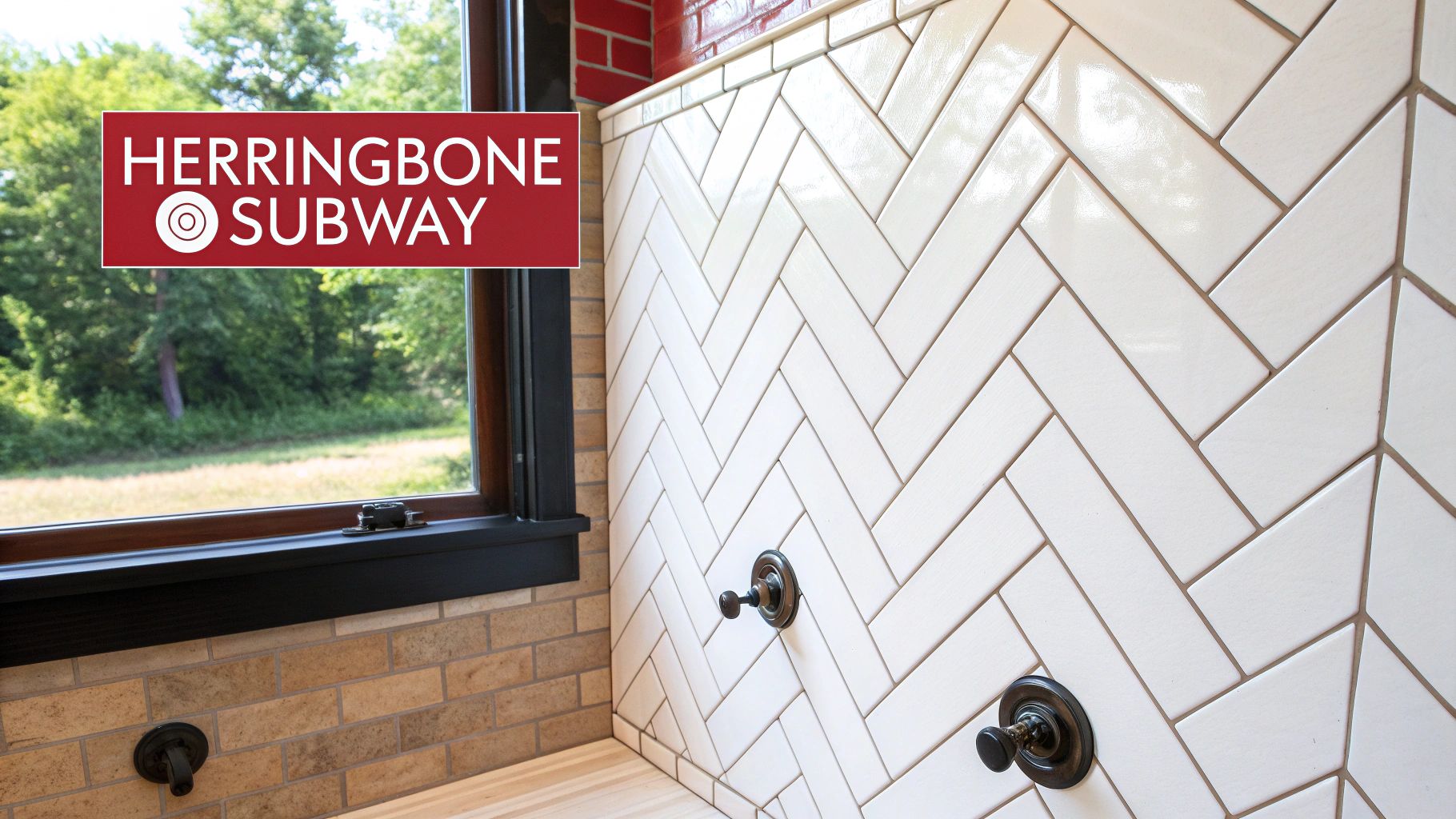
The classic 3×6 inch subway tile is a timeless choice, but modern bathroom tile remodel ideas have reimagined its potential far beyond the traditional brick-like pattern. By arranging these simple tiles in non-traditional layouts, you can add a significant dose of personality and visual interest to your space. This approach allows you to leverage the affordability and classic appeal of subway tile while creating a custom, high-impact design.
From the dynamic movement of a herringbone pattern to the clean, modern lines of a vertical stack, creative layouts transform this humble material into a stunning focal point. This design strategy is perfect for homeowners who want to put a unique spin on a classic look, adding texture and a bespoke feel to shower walls, backsplashes, or entire bathroom enclosures. Popularized by brands like Marazzi and Bedrosians, these innovative patterns can suit aesthetics from mid-century modern to industrial loft.
How to Implement Creative Subway Tile Layouts
Successfully executing a unique tile pattern requires careful planning and a bit of creative flair. Here are some key tips to bring your vision to life:
- Choose a Pattern with Purpose: Different layouts create different effects. A herringbone or diagonal pattern adds a sense of movement and can make a narrow space feel wider. A vertical stack draws the eye upward, creating the illusion of higher ceilings, which is ideal for smaller bathrooms.
- Leverage Grout as a Design Tool: Your grout choice dramatically impacts the final look. A contrasting grout (like dark gray with white tile) makes the pattern pop and highlights the geometric design. A matching grout creates a more subtle, textured appearance where the pattern is less pronounced but still adds dimension.
- Professional Installation is Key for Complexity: Intricate patterns like herringbone or basketweave require more cuts and precise placement than a standard running bond. Hiring a professional ensures the lines are straight, the spacing is consistent, and the overall finish is clean and polished, avoiding costly mistakes and wasted material.
Pro Tip: Don't be afraid to mix finishes for subtle sophistication. Combining glossy and matte subway tiles in the same color and pattern can add an unexpected layer of texture and visual depth that catches the light in interesting ways.
3. Natural Stone Tiles (Marble, Slate, Granite)
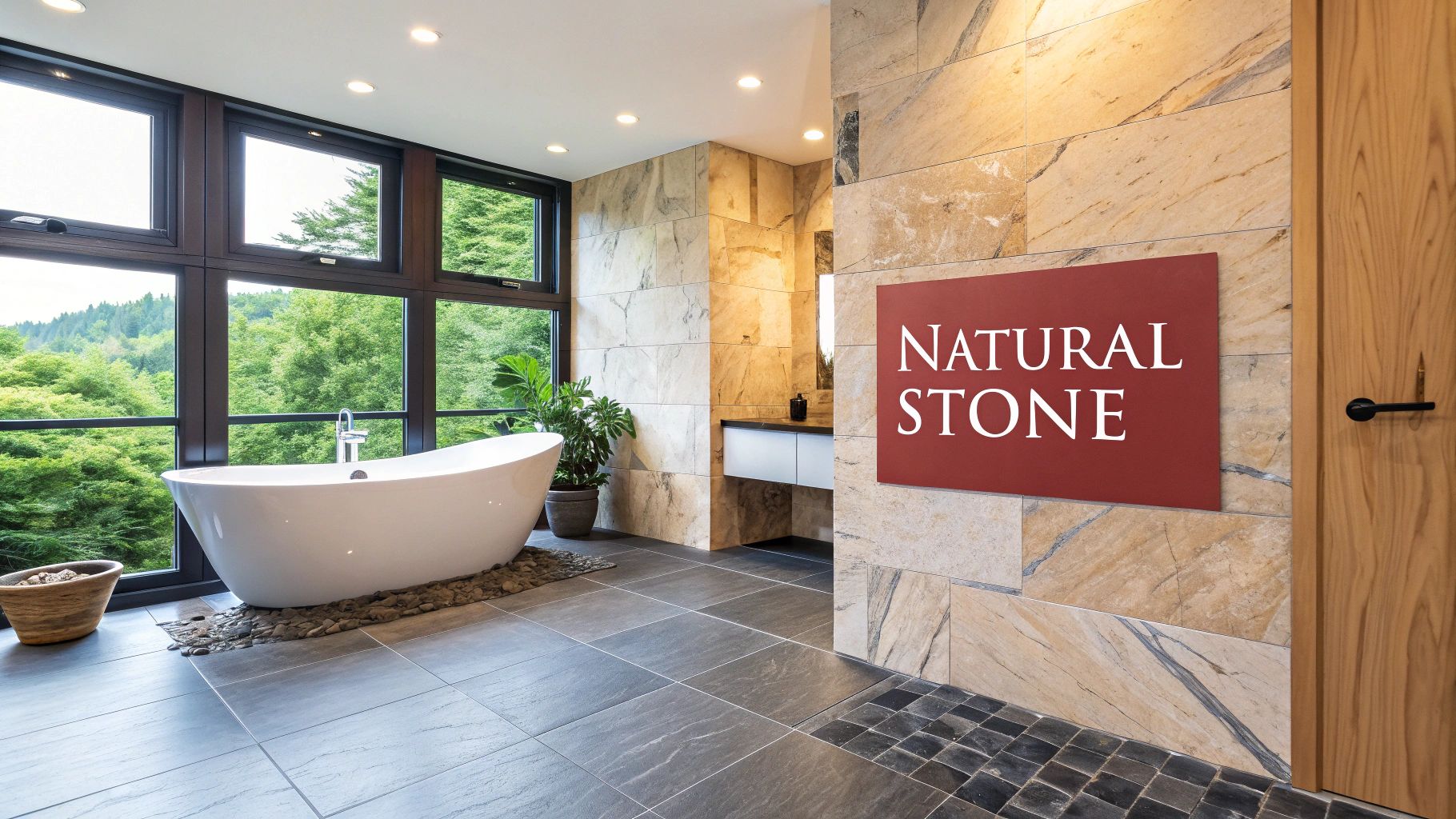
For a truly luxurious and timeless aesthetic, incorporating natural stone is one of the most elegant bathroom tile remodel ideas. Materials like marble, slate, granite, and travertine bring an unparalleled sense of organic beauty and sophistication to any space. Because each tile is a unique product of nature, with distinct veining, color variations, and textures, your installation will be a one-of-a-kind work of art that cannot be replicated.
This choice is perfect for homeowners looking to create a high-end, spa-like retreat. The inherent richness of Carrara marble on a vanity wall, the earthy texture of a slate floor, or the durable polish of granite on a shower bench elevates the entire room. These materials connect the design to the natural world, creating a calming and authentic environment.
How to Implement Natural Stone Tiles
Working with natural stone requires specific care during installation and for long-term maintenance to preserve its beauty. Here are some key considerations for your project:
- Sealing is Non-Negotiable: Natural stone is porous and susceptible to staining and water damage. It must be sealed immediately after installation and then resealed periodically, typically once a year, to protect it. Always test the sealer on a spare tile or inconspicuous area first.
- Choose the Right Finish: The finish impacts both look and function. A polished finish offers a high-gloss, luxurious appearance but can be very slippery when wet. A honed or tumbled finish provides a more matte look with better traction, making it a safer choice for bathroom floors and shower pans.
- Mindful Cleaning is a Must: Avoid using acidic or abrasive cleaners (including vinegar and lemon juice) on stone, especially marble, as they can cause etching and dull the surface. Use only pH-neutral cleaners specifically formulated for natural stone to maintain its integrity. Beyond standard tiles, you can also explore custom stone work solutions to create bespoke elements like a solid slab shower wall or vanity top.
Pro Tip: Mix different types of stone for a layered, designer look. For example, use elegant marble on the walls where it's less exposed to wear and pair it with a durable, dark slate or granite on the floor for a beautiful and practical combination.
4. Hexagon and Geometric Tile Patterns
Breaking away from traditional squares and rectangles, one of the most dynamic bathroom tile remodel ideas is embracing geometric shapes like hexagons. Hexagonal, octagonal, and other non-traditional tile patterns create visual interest and a sense of movement, instantly elevating a bathroom from standard to stunning. They serve as a powerful design element that can act as a floor-to-ceiling focal point or a subtle, sophisticated accent.
This approach is perfect for homeowners looking to inject personality and contemporary flair into their space. From classic black-and-white honeycomb floors to oversized marble hexagons on a feature wall, the versatility is immense. Geometric tiles can complement a wide range of styles, including modern, eclectic, and even minimalist designs when a single-color pattern is used to add texture without overwhelming the eye.
How to Implement Geometric Tile Patterns
Successfully incorporating geometric patterns requires a balance between creativity and restraint to ensure the final look is cohesive and not chaotic. Here are a few key considerations for your project:
- Create a Focal Point: Use a bold geometric pattern on a single surface, such as the floor or an accent wall, to create a strong visual statement. Pairing it with simpler, solid-colored tiles on other surfaces allows the pattern to stand out without making the room feel too busy.
- Scale Matters in Small Spaces: In a smaller bathroom, consider using larger-format geometric tiles (e.g., 6-inch hexagons or larger). This reduces the number of grout lines and can make the space feel less cluttered and more open, a principle similar to using large rectangular tiles.
- Professional Installation is Key: The intricate nature of geometric patterns, especially complex layouts or smaller mosaics, demands precision. A professional installer has the experience to ensure lines are straight, cuts are clean, and the pattern flows seamlessly across the surface, which is critical for a high-end finish.
Pro Tip: Play with texture by mixing matte and glossy finishes within the same geometric pattern. This subtle variation adds a layer of depth and sophistication, catching the light in different ways and adding a custom touch to your design.
5. Waterproof Tile Alternatives (Vinyl, Porcelain Pavers)
While traditional ceramic and porcelain dominate bathroom design, some of the most innovative bathroom tile remodel ideas involve looking beyond tile itself. Modern waterproof alternatives like Luxury Vinyl Tile (LVT) and high-end porcelain pavers offer the sophisticated look of natural materials like wood and stone but with superior water resistance, enhanced durability, and often a simpler installation process.
These materials are engineered to perform in high-moisture environments, making them ideal for busy family bathrooms or basement suites. LVT, for instance, can provide the warm, inviting look of hardwood without any risk of warping or water damage. Similarly, porcelain pavers deliver the authentic, weighty feel of natural stone slabs but are non-porous and incredibly easy to maintain, a perfect blend of high-end aesthetics and everyday practicality.
How to Implement Waterproof Tile Alternatives
Successfully integrating these materials into your bathroom design involves understanding their unique properties and installation needs. Here are a few key considerations for your remodel:
- Prioritize a Quality Underlayment: Even with 100% waterproof flooring, a proper waterproof underlayment is essential. This added layer protects your subfloor from any potential moisture that could find its way through seams, ensuring the long-term integrity of your home’s structure.
- Focus on the Wear Layer for LVT: When choosing luxury vinyl, pay close attention to the thickness of the wear layer, measured in mils. For a high-traffic area like a bathroom, select a product with a wear layer of 20 mils or more to ensure it stands up to daily use without scratching or scuffing.
- Mix Materials for a High-End Look: To elevate the design and increase perceived value, consider using a tile alternative on the floor while installing traditional tile in the shower or as a vanity backsplash. This combination of materials creates a rich, textured, and custom-designed feel.
Pro Tip: Proper ventilation is crucial in any bathroom, but it's especially important when using materials like LVT. An efficient exhaust fan helps manage ambient humidity, preventing moisture buildup and preserving the air quality and condition of all your bathroom surfaces.
6. Accent Tile Features and Mosaics
For those looking to inject personality and create a unique focal point, incorporating accent tile features and mosaics is one of the most effective bathroom tile remodel ideas. Instead of tiling every surface with the same material, this approach uses intricate patterns, vibrant colors, or unique textures in a targeted area to draw the eye and add a layer of custom artistry to the room. This could be a stunning mosaic behind the vanity, a colorful niche in the shower, or a bold pattern on a single feature wall.
This design strategy allows for immense creativity, letting homeowners showcase their personal style without overwhelming the space. From vibrant Moroccan zellige mosaics to hand-painted Spanish tiles or sleek geometric patterns, accent tiles transform a purely functional room into a personalized retreat. They work beautifully when paired with more subdued, neutral field tiles, creating a sophisticated balance between simplicity and decorative flair.
How to Implement Accent Tile Features
Strategic placement and careful selection are key to making accent tiles shine. A little goes a long way, and thoughtful application is what creates a high-end look.
- Create a Focal Point: Use accent tiles to highlight a specific architectural feature, like the wall behind your freestanding tub or the backsplash for your vanity. A "waterfall" stripe of mosaic tile running vertically in the shower is another popular and visually striking application.
- Balance is Essential: To ensure your accent feature stands out, pair it with simpler, more neutral tiles on the surrounding walls and floor. This contrast prevents the design from becoming too busy and allows the special tiles to be the star of the show. For example, a complex mosaic will pop against a background of large-format porcelain tiles.
- Consider Scale and Placement: In a smaller bathroom, a full accent wall might be overwhelming. Instead, consider a decorative border or tiling the inside of a shower niche. These smaller applications provide a powerful design punch without visually shrinking the room.
Pro Tip: When choosing a mosaic or patterned tile, pull one of the subtle colors from the pattern to use for your main field tile. This creates a cohesive and professionally designed palette that ties the entire room together seamlessly.
7. Textured and 3D Tile Designs
For homeowners looking for unique bathroom tile remodel ideas that add depth and a tactile dimension, textured and 3D tiles are a standout choice. These tiles move beyond flat surfaces, featuring raised patterns, sculpted waves, geometric reliefs, and subtle textures that play with light and shadow. The result is a dynamic feature wall or accent area that transforms from a simple surface into a work of art.
This design trend brings a sophisticated, high-end feel to any bathroom, from modern minimalist to spa-inspired retreats. The dimensional surfaces create visual interest and a sense of movement, making the room feel more engaging and luxurious. Materials range from ceramic and porcelain with molded designs to natural stone with chiseled or honed finishes, offering endless creative possibilities.
How to Implement Textured and 3D Tiles
Using dimensional tiles effectively requires thoughtful placement and consideration for maintenance. Here are key tips for incorporating them into your bathroom:
- Focus on Accent Walls: Textured tiles are best used on walls, particularly as a feature behind a vanity or in a shower. This prevents them from being a cleaning challenge on floors while maximizing their visual impact.
- Balance with Smooth Surfaces: To avoid overwhelming the space, pair a 3D tile wall with simpler, smooth tiles on adjacent walls and the floor. This contrast allows the textured surface to become the focal point without making the room feel too busy.
- Lighting is Essential: The effect of 3D tiles is dramatically enhanced by lighting. Consider installing wall sconces, recessed spotlights, or under-vanity lighting that grazes the tile surface, accentuating its shadows and highlights.
- Consider Grout Carefully: The grout you choose can either amplify or soften the pattern. A contrasting grout color will emphasize the shape of each tile and create a bold, graphic look, while a matching color will create a more subtle, monolithic appearance.
Pro Tip: When using textured tiles inside a shower, ensure your bathroom has excellent ventilation. Proper airflow will help prevent soap scum and moisture from building up in the crevices, making cleaning easier and keeping your tile looking pristine.
8. Mixed Material Tile Combinations
For a truly custom and dynamic design, one of the most sophisticated bathroom tile remodel ideas is to combine different tile materials. Mixing materials like stone with metal, ceramic with glass, or wood-look porcelain with marble creates a layered, texturally rich environment. This approach allows you to leverage the unique aesthetic and functional benefits of multiple materials within one cohesive and visually interesting scheme.
This design strategy moves beyond a single tile choice, introducing depth and character to the space. Imagine a shower with durable marble walls accented by a shimmering glass mosaic niche, or a floor laid with practical porcelain that meets a feature wall of rustic natural stone. These combinations transform a standard bathroom into a bespoke retreat, reflecting a high level of design intentionality often seen in luxury homes and boutique hotels.
How to Implement Mixed Material Tile Combinations
Successfully blending different materials requires careful planning to ensure the final look is harmonious rather than chaotic. Here are key considerations for your project:
- Create Clear Material Zones: Avoid a random, jumbled look by assigning specific materials to distinct areas. For example, use a durable, slip-resistant tile for the main floor, a more luxurious material for the shower walls, and a decorative tile for an accent wall or backsplash. This creates intentional, impactful zones.
- Balance Texture and Finish: A successful combination often involves balancing different textures and finishes. Pair a matte-finish porcelain with a glossy glass tile, or a smooth ceramic with a rugged ledger stone. This contrast adds tactile and visual interest without overwhelming the senses.
- Verify Material Compatibility: Before installation, ensure all selected materials have compatible thickness, installation requirements, and maintenance needs. Some natural stones require sealing, while certain metals may react to specific cleaners. A professional can help navigate these technical details to ensure longevity.
Pro Tip: When mixing materials, establish a unifying element to tie the design together. This could be a consistent color palette, a repeated shape, or a shared finish (like polished chrome fixtures that complement metallic accent tiles). This common thread ensures the space feels cohesive and thoughtfully curated.
9. Bold Color and Pattern Tile Choices
For those looking to make a dramatic statement, one of the most exciting bathroom tile remodel ideas is embracing bold colors and intricate patterns. Moving beyond traditional neutrals, this approach uses vibrant jewel tones, saturated hues, and complex designs to create a space that is deeply personal and visually stunning. The tile becomes the focal point, transforming a functional room into a work of art.
This design choice is perfect for homeowners who want to infuse their bathroom with personality and energy. Whether it's a deep navy blue subway tile on a feature wall, a vibrant geometric pattern on the floor, or hand-painted Mediterranean tiles in a shower niche, bold choices create an immediate and lasting impact. They work well in eclectic, modern, and even transitional styles, serving as a powerful expression of individual taste.
How to Implement Bold Color and Pattern
Successfully incorporating bold tiles requires a thoughtful approach to balance and composition. Here are a few key considerations for your project:
- Create a Focal Point: Use bold or patterned tiles strategically to draw the eye. They are incredibly effective on a single accent wall, as a shower surround, or on the floor. Applying them everywhere can be overwhelming, but a targeted application creates a high-end, designer look without dominating the space.
- Balance with Neutral Elements: To prevent the design from feeling chaotic, pair your bold tiles with significant neutral areas. Simple, unadorned fixtures, plain white or gray walls, and minimalist vanities allow the statement tile to shine without competition.
- Coordinate Your Color Palette: Ensure the colors in your chosen tile coordinate with the overall aesthetic of your home. A bold choice should feel intentional and connected, not out of place. Test tile samples in your bathroom's specific lighting conditions before committing to see how the colors truly look.
Pro Tip: A powder room is the perfect space to experiment with a bold tile design. Since it's a small, self-contained area, you can make a powerful style statement that won't overwhelm your home's primary living spaces.
10. Oversized Single-Color Statement Tiles with Minimal Grout
Taking the large-format concept to its minimalist zenith, one of the most sophisticated bathroom tile remodel ideas is using oversized, single-color tiles to create a monolithic, seamless surface. This approach moves beyond simply reducing grout lines; it aims to make them virtually disappear, resulting in an incredibly clean, uncluttered, and continuous look. The goal is to create a serene, spa-like environment where the walls and floor blend into a unified architectural element.
This design is perfect for those who desire a true minimalist or contemporary aesthetic. By using extra-large porcelain or ceramic slabs in a single solid color, like a soft gray, warm white, or deep charcoal, you can make a powerful yet understated statement. The uninterrupted color field makes the bathroom feel larger, calmer, and profoundly modern, a style often seen in high-end spas and luxury architectural homes.
How to Implement Oversized Single-Color Tiles
Executing this look requires an exceptional level of precision, as even the smallest imperfection can disrupt the seamless effect. Here’s what you need to know for a successful installation:
- Prioritize a Perfectly Level Substrate: The foundation is everything. The walls and floors must be perfectly flat and plumb to accommodate these large slabs without lippage. Professional installers will use self-leveling compounds and uncoupling membranes to guarantee a flawless base.
- Invest in Professional Installation: This is not a DIY-friendly project. Handling, cutting, and setting enormous, heavy tiles requires specialized tools, including suction cup lifters and large format tile cutters, and deep expertise. A professional ensures minimal grout joints (often 1/16 inch) are perfectly aligned.
- Choose High-Quality Materials: Select premium porcelain slabs from reputable brands known for their color consistency and rectified edges (meaning they are perfectly straight). This ensures that when placed together, the tiles create a nearly invisible seam. Matte or honed finishes often work best to avoid a clinical, overly reflective appearance.
Pro Tip: To maintain the minimalist aesthetic while adding warmth, choose a soft, warm gray or cream tile instead of stark white. Complement the clean lines with organic elements like a wood vanity, soft lighting, and high-quality fixtures in a warm metallic finish like brushed brass.
10-Way Bathroom Tile Remodel Comparison
| Option | Implementation Complexity 🔄 | Resource Requirements ⚡ | Expected Outcomes 📊⭐ | Ideal Use Cases 💡 | Key Advantages ⭐ |
|---|---|---|---|---|---|
| Large Format Tiles (12×24 or Larger) | High 🔄 Skilled installers; risk of lippage, substrate prep | High ⚡ Higher material cost; may need reinforcement; fewer pieces = faster lay | ⭐⭐⭐⭐📊 Seamless, expansive modern look; easier cleaning | Modern/spa-like bathrooms, large rooms, wall applications | Reduced grout lines, sophisticated look, faster install (fewer pieces) |
| Subway Tiles in Non-Traditional Layouts | Medium 🔄 Precise cuts for patterns; DIY possible for simple layouts | Low–Medium ⚡ Affordable tile cost but more grout/time due to small pieces | ⭐⭐⭐📊 Timeless, pattern-driven visual interest | Accent walls, showers, budget-friendly updates, lofts | Classic versatile style, affordable, easy replacement |
| Natural Stone Tiles (Marble, Slate, Granite) | High 🔄 Professional install, sealing & ongoing maintenance | Very High ⚡ Premium material and labor; sealing and upkeep required | ⭐⭐⭐⭐⭐📊 Luxurious, unique veining, high perceived value | Luxury baths, feature walls, high-end homes and spas | Timeless luxury, increases home value, unique natural patterns |
| Hexagon and Geometric Tile Patterns | High 🔄 Complex layout and cutting; skilled labor recommended | Medium–High ⚡ More grout and labor; material cost varies by size | ⭐⭐⭐⭐📊 Dynamic, modern focal patterns with strong visual impact | Accent floors/walls, small baths to add interest, statement areas | Customizable patterns, contemporary visual interest |
| Waterproof Tile Alternatives (Vinyl, Porcelain Pavers) | Low–Medium 🔄 Easy install (click or glue); DIY-friendly | Low ⚡ Lower material & install cost; underlayment recommended | ⭐⭐⭐📊 Practical, fully waterproof, warmer underfoot | Wet bathrooms, rentals, budget renovations, quick updates | Waterproof, affordable, comfortable, fast installation |
| Accent Tile Features and Mosaics | Medium–High 🔄 Precise placement; custom pieces add complexity | Medium–High ⚡ Can be costly for artisanal/custom mosaics; labor‑intensive | ⭐⭐⭐⭐📊 High visual impact and personalization | Feature walls, niches, murals, culturally-inspired designs | Artistic focal points, personalization, elevates design sophistication |
| Textured and 3D Tile Designs | Medium–High 🔄 Careful grout selection and install; pattern alignment | Medium ⚡ Higher than flat tiles; more cleaning effort over time | ⭐⭐⭐📊 Adds depth and tactile interest; dynamic light interaction | Wall features, accent walls, bathrooms seeking tactile detail | Visual/tactile depth, hides minor imperfections, sophisticated look |
| Mixed Material Tile Combinations | High 🔄 Complex planning; coordinate materials, grouts, seals | High ⚡ Combined material and labor costs; professional design needed | ⭐⭐⭐⭐📊 Layered, designer aesthetic with functional zoning | Designer bathrooms, zoned wet/dry areas, luxury renovations | Tailored function + style, high customization, designer appeal |
| Bold Color and Pattern Tile Choices | Medium 🔄 Requires color coordination and careful placement | Medium–High ⚡ Custom/hand‑painted options raise cost; trend risk | ⭐⭐⭐📊 Dramatic, memorable spaces with strong personality | Powder rooms, feature walls, eclectic or modern homes | Statement-making, reduces need for decor, strong character |
| Oversized Single-Color Statement Tiles with Minimal Grout | Very High 🔄 Expert installers; near‑perfect substrate and techniques | Very High ⚡ Premium oversized porcelain and specialized labor/tools | ⭐⭐⭐⭐⭐📊 Ultra-clean, spa-like, timeless minimalist aesthetic | Luxury minimal bathrooms, high-end spas, hotel suites | Seamless calm aesthetic, minimal grout maintenance, premium feel |
From Idea to Installation: Bringing Your Vision to Life
We've journeyed through a landscape of captivating bathroom tile remodel ideas, from the expansive, modern appeal of large-format porcelain to the timeless character of natural stone and the playful geometry of hexagon patterns. Each concept offers a unique pathway to transforming your bathroom from a purely functional space into a personalized sanctuary. Whether you were drawn to the bold statement of a colorful mosaic accent wall, the subtle sophistication of textured 3D tiles, or the classic charm of subway tile laid in a fresh herringbone pattern, the possibilities are as limitless as your imagination.
The key takeaway is that tile is more than just a surface covering; it is the foundational design element that sets the tone for your entire bathroom. It dictates the room's style, influences the perception of its size, and contributes significantly to its daily functionality and long-term durability. Mastering the selection process means balancing aesthetics with practicality, ensuring the material you choose aligns with your lifestyle, maintenance preferences, and overall design goals.
Beyond the Tile: The Path to a Flawless Finish
Choosing the perfect tile is a thrilling first step, but the success of your project hinges on what comes next: expert execution. The difference between a bathroom that looks good and one that is truly breathtaking lies in the meticulous details of the installation process.
- Substrate Preparation: A flawless tile job begins with a perfectly prepared foundation. This means ensuring the subfloor and wall surfaces are level, stable, and properly waterproofed, especially in wet areas like showers. This critical step prevents future issues like cracked tiles, grout failure, and water damage.
- Precision and Layout: Achieving symmetrical patterns, consistent grout lines, and clean cuts around fixtures and corners requires a high level of skill and specialized tools. A professional installer pre-plans the entire layout to minimize awkward cuts and create a visually harmonious result.
- Grout and Sealing: Grout selection is not just about color. The right type of grout (e.g., sanded vs. unsanded, epoxy vs. cement-based) and professional application are essential for durability and stain resistance. Proper sealing, especially for porous materials like natural stone, protects your investment and simplifies maintenance.
For homeowners looking to manage the broader scope of their project, from initial budgeting to final scheduling, a detailed guide can be invaluable. For comprehensive guidance on managing your project from budgeting to scheduling, consult an ultimate bathroom renovation planner to help you stay organized and on track.
Your Vision, Our Expertise
Ultimately, these bathroom tile remodel ideas are the sparks of inspiration. Bringing that spark to life requires a partner who understands both the art and the science of tile installation. It requires a team that can see your vision and has the technical expertise to build it with precision and care, ensuring it stands the test of time.
This is more than just a renovation; it's an investment in your home's value and your daily comfort. The right tile, installed with expert craftsmanship, creates a space that feels both luxurious and uniquely yours, a room you'll love stepping into every single day. As you move forward from inspiration to action, remember that quality craftsmanship is the bridge that connects your dream design to a beautiful, lasting reality.
Ready to turn your bathroom tile remodel ideas into a stunning reality in Southwest Michigan? The expert team at Trademaster Construction specializes in meticulous tile work and complete bathroom renovations, from accessible curbless showers to luxurious master suites. Contact us to schedule your consultation and let's start building the bathroom you've always envisioned.

