
Your bathroom is more than just a functional space; it’s a personal retreat. In Southwest Michigan, where homes range from historic properties in Kalamazoo to lakeside cottages near Portage, selecting the right tile is crucial for achieving both enduring style and practical durability. The perfect choice can transform a dated bathroom into a spa-like oasis that capably handles humid summers and cold winters. But with countless bathroom tile types available, from classic ceramic to bold cement, the decision can feel overwhelming.
This guide simplifies the process. We'll break down the top ten most popular and practical tile options, giving you a clear, comprehensive overview. For each type, you'll find detailed pros and cons, typical cost ranges you can expect locally, and the best applications, whether you're designing a walk-in shower, a high-traffic floor, or a stunning accent wall.
We will provide the specific, actionable insights needed to make an informed choice that aligns with your home's aesthetic and your family's needs. We’ll cover everything from slip resistance for an age-in-place design to maintenance requirements that fit your lifestyle. Whether you are aiming for the timeless elegance of natural stone or a vibrant, modern statement with glass mosaics, this resource is your first step toward building a bathroom that is not only beautiful but also perfectly suited to your Southwest Michigan home. Let’s explore the ideal foundation for your renovation project.
1. Ceramic Tiles: The Versatile Classic
Ceramic tiles, made from kiln-fired clay, are a cornerstone of bathroom design. Their glazed surface makes them a practical and popular choice for floors and walls due to their affordability, water resistance, and vast array of designs. For a Southwest Michigan home, they offer a reliable and stylish solution that fits nearly any budget. Let's explore why this classic remains a top contender among all bathroom tile types.
Key Characteristics and Benefits
Ceramic tile's popularity stems from its balance of performance and price. The protective glaze on top creates a non-porous barrier, making it an excellent choice for moisture-prone areas like bathroom walls, backsplashes, and shower surrounds.
- Affordability: Ceramic is one of the most cost-effective tile options, making a full bathroom renovation accessible without sacrificing style.
- Design Versatility: Technology allows ceramic tiles to mimic high-end materials like marble, wood, and concrete. You can achieve a luxurious look for less, from classic subway tiles to intricate patterns.
- Low Maintenance: A simple wipe-down with a pH-neutral cleaner is all that's needed. The glazed surface resists stains and won't harbor bacteria, promoting a hygienic environment.
Best Applications in Your Bathroom
While versatile, ceramic is best suited for specific areas. Its durability is good, but it's softer and more prone to chipping than its cousin, porcelain.
- Walls and Shower Surrounds: This is where ceramic truly shines. It's lightweight and easy to install on vertical surfaces, and its water resistance is more than sufficient for these applications.
- Light-Traffic Floors: It works well for guest or half-bath floors that don't see heavy, constant use. For a busy family bathroom in Kalamazoo or Portage, you may want a more durable option for the floor.
Pro Tip for Slip Resistance: When choosing ceramic for floors, look for a matte finish and a PEI (Porcelain Enamel Institute) rating of 3 or higher. A higher Coefficient of Friction (COF) rating also indicates better grip, which is crucial for wet bathroom floors.
2. Porcelain Tiles: The Durable Powerhouse
Porcelain tiles represent a significant step up from ceramic in terms of durability and water resistance. Made from finer, denser clay and fired at much higher temperatures, porcelain is tougher and less porous, making it an ideal choice for any high-moisture, high-traffic bathroom. For a bustling family home in Southwest Michigan, it’s a premium investment among all bathroom tile types that offers unparalleled longevity and performance.
Key Characteristics and Benefits
Porcelain’s dense, through-body composition is its greatest asset. Unlike ceramic, where the color is only in the glaze, the color in a porcelain tile often runs all the way through, meaning a chip is much less noticeable. Its extremely low water absorption rate (less than 0.5%) makes it virtually waterproof.
- Superior Durability: Porcelain is harder, denser, and more resistant to scratches and stains than ceramic, making it perfect for floors in a busy primary bathroom.
- Exceptional Water Resistance: Its non-porous nature makes it an outstanding choice for shower floors, walls, and any area with direct, constant water exposure.
- High-End Aesthetics: Porcelain excels at replicating the look of natural stone like Carrara marble or travertine. Brands like Marazzi and Daltile offer incredibly realistic designs in large formats for a seamless, modern look.
Best Applications in Your Bathroom
Thanks to its robust nature, porcelain is suitable for every surface in your bathroom, from the floor to the ceiling. It is one of the most versatile and reliable bathroom tile types you can choose.
- High-Traffic Floors: Its resistance to wear and tear makes it the top choice for the main family bathroom floor, withstanding daily use without showing age.
- Shower and Wet Room Installations: For a complete wet room or a curbless shower, porcelain’s near-impermeable surface provides the best protection against water damage. Large format 24×48 inch slabs can minimize grout lines, enhancing both style and hygiene.
Pro Tip for Installation: Porcelain is dense and brittle, making it more difficult to cut and install than ceramic. Investing in professional installation is crucial to avoid costly mistakes and ensure the tiles are set correctly on a stable underlayment for a flawless, long-lasting finish.
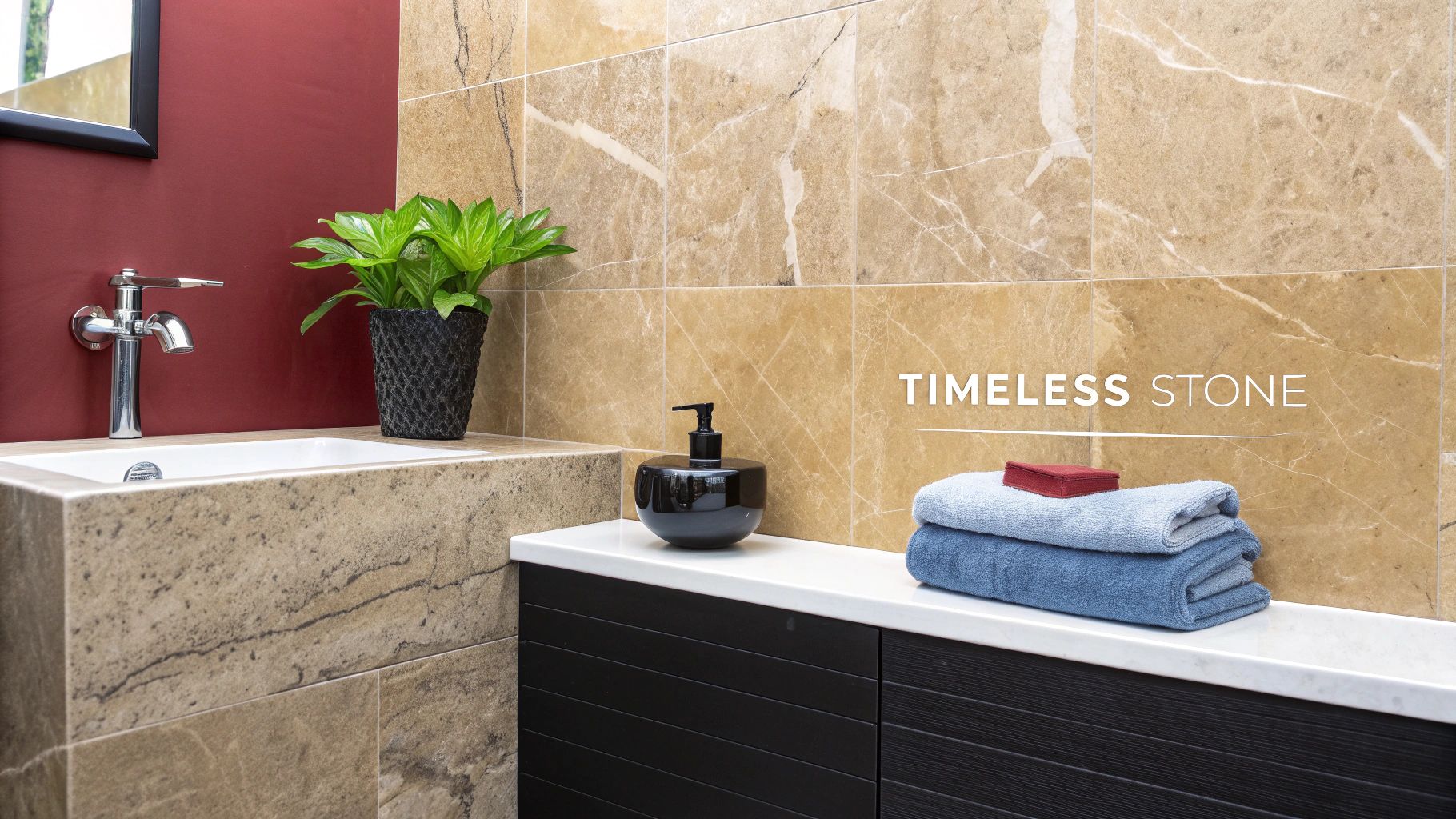
3. Natural Stone Tiles: Authentic, Earthy Elegance
For homeowners seeking unparalleled luxury and a direct connection to nature, natural stone tiles are the ultimate choice. Quarried from the earth, materials like marble, granite, slate, and travertine bring unique patterns, veining, and organic textures that cannot be replicated. A natural stone bathroom in a Southwest Michigan home exudes a timeless, high-end feel, turning a functional space into a personal sanctuary.
Key Characteristics and Benefits
Each piece of natural stone is one-of-a-kind, offering a bespoke finish that elevates bathroom design. While it is a premium material that requires more care than manufactured tiles, its aesthetic and resale value are significant.
- Unmatched Beauty: From the dramatic veining of Carrara marble to the rich texture of slate, no two stone tiles are identical, creating a truly unique and sophisticated surface.
- Durability: Certain stones like granite are incredibly hard and resistant to scratches, making them a lasting investment for bathroom floors and countertops.
- Increases Home Value: The inherent luxury and desirability of natural stone can significantly boost a home's resale value, making it a wise long-term investment.
Best Applications in Your Bathroom
Due to its porous nature and specific care needs, the placement of natural stone is a critical consideration. It is a star performer in areas where its beauty can be showcased without being subjected to harsh chemicals or constant, heavy wear.
- Feature Walls and Shower Surrounds: A floor-to-ceiling slate or marble shower wall creates a stunning, spa-like focal point. Sealing is non-negotiable here to prevent water absorption.
- Flooring in Low-Traffic Areas: Travertine or limestone floors are beautiful in a primary ensuite or powder room. A honed or tumbled finish is recommended over polished to improve slip resistance.
Pro Tip for Stone Maintenance: Always seal natural stone tiles upon installation and re-seal them periodically (typically every 1-2 years). Clean only with pH-neutral, stone-safe cleaners to avoid etching or discoloring the surface.
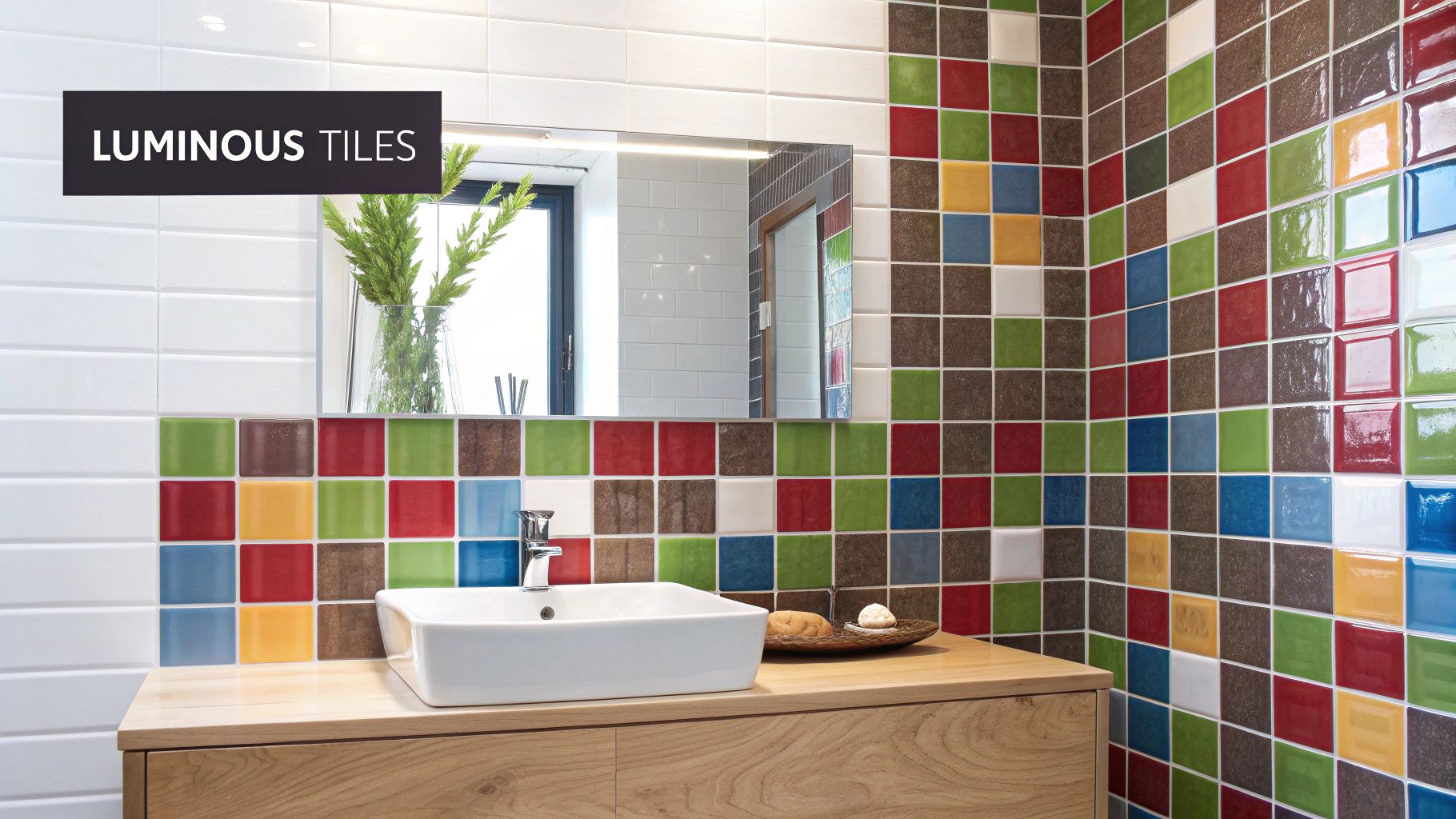
4. Glass Tiles: The Luminous Modern Choice
Glass tiles, crafted from pieces of glass fired with a translucent glaze, are prized for their ability to reflect light and add a luminous, gem-like quality to a room. They are an exceptional choice for creating striking backsplashes and feature walls, instantly making a bathroom feel brighter and more spacious. For a Southwest Michigan home looking to add a touch of contemporary elegance, glass is one of the most impactful bathroom tile types available.
Key Characteristics and Benefits
Glass tile’s unique beauty comes from its light-manipulating properties, which can transform a dimly lit bathroom. Its non-porous surface also makes it one of the most hygienic and water-resistant options on the market.
- Luminosity and Depth: Glass reflects nearly 100% of the light that hits it, creating a sense of depth and brightness that can make a small bathroom feel larger.
- Impervious to Water: With a water absorption rate of 0%, glass is completely waterproof. This makes it a fantastic choice for high-moisture zones like shower interiors and backsplashes.
- Easy to Clean: The smooth, non-porous surface is incredibly easy to clean and is resistant to stains, mold, and mildew. A simple wipe with a glass cleaner keeps it sparkling.
Best Applications in Your Bathroom
While stunning, the slick surface and higher cost of glass tile make it better suited for specific applications rather than whole-room coverage. Its strength lies in its decorative power.
- Accent Walls and Backsplashes: This is where glass truly excels. A full accent wall behind a vanity or a decorative strip in a shower can serve as a breathtaking focal point without overwhelming the space.
- Shower Walls: A shower lined with iridescent or subway-style glass tiles creates a spa-like retreat. Its waterproof nature ensures long-term performance and a clean, fresh look.
- Mosaics and Decorative Borders: Small mosaic glass tiles are perfect for creating custom patterns, borders, or niche inlays that add a personalized, high-end touch to the design.
Pro Tip for Installation: Glass tile installation is less forgiving than ceramic. It requires a specific thin-set mortar (usually bright white to enhance the tile's color) and careful cutting to avoid chipping. Professional installation is highly recommended to achieve a flawless finish.
5. Subway Tiles: The Timeless and Adaptable Choice
Subway tiles, inspired by the classic 3×6-inch rectangles that lined New York City's first subway stations in the early 1900s, have become a design staple. Their clean lines and versatile nature make them one of the most enduring and adaptable bathroom tile types available. For homeowners in Southwest Michigan, they offer a look that is both historic and contemporary, capable of anchoring a design or serving as a neutral backdrop.
Key Characteristics and Benefits
The power of the subway tile lies in its simplicity and the endless possibilities it presents. While traditionally ceramic, this tile shape is now available in glass, marble, and porcelain, expanding its functional and aesthetic range. Its universally appealing format works in nearly any design scheme.
- Timeless Appeal: Subway tiles have been popular for over a century and show no signs of going out of style, ensuring your bathroom design remains relevant for years.
- Design Flexibility: The simple rectangular shape is a blank canvas. It can be laid in various patterns like classic offset, herringbone, or stacked vertically for a modern twist.
- Budget-Friendly: Classic ceramic subway tiles are among the most affordable options, making them an excellent choice for achieving a high-impact look on a budget.
Best Applications in Your Bathroom
Subway tiles are incredibly versatile and can be used almost anywhere in a bathroom. Their clean aesthetic makes spaces feel brighter and larger, a significant benefit for smaller bathrooms common in Portage or Kalamazoo homes.
- Shower and Tub Surrounds: This is the most popular application. A floor-to-ceiling installation creates a seamless, waterproof, and easy-to-clean surface.
- Wainscoting and Walls: Using subway tile for wainscoting adds a layer of durable, moisture-resistant protection to the lower half of your walls while introducing classic architectural detail.
Pro Tip for Adding Personality: The grout color dramatically changes the final look. Use a dark or colored grout (like black or gray) with white tiles to make the pattern pop and create a bold, graphic statement. For a softer, more monolithic look, match the grout color to the tile.
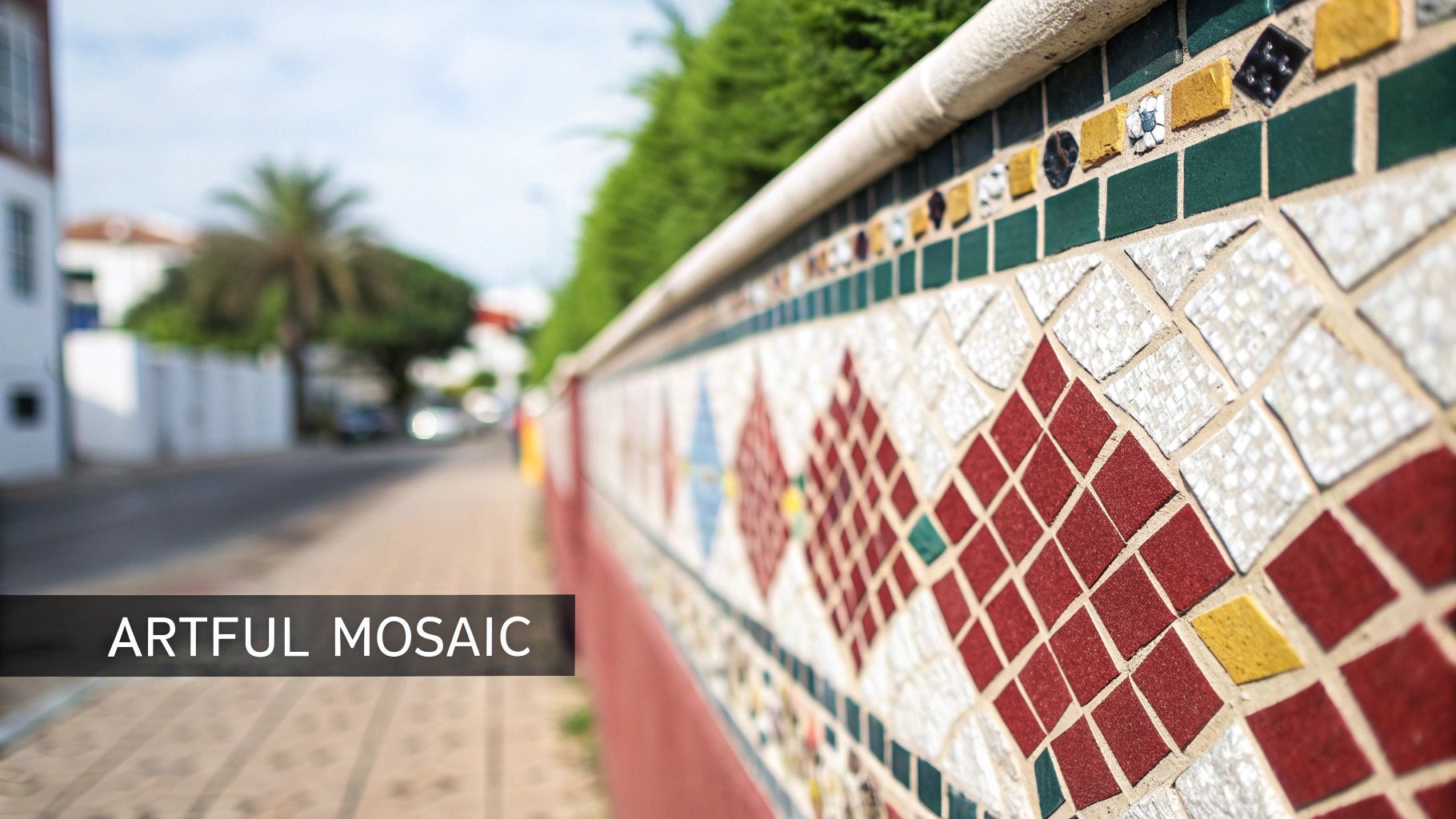
6. Mosaic Tiles: Artistic Accents and Intricate Details
Mosaic tiles are small pieces of tile, typically under two by two inches, arranged to form a pattern, image, or gradient effect. Composed of materials like glass, natural stone, ceramic, or even metal, they are usually mounted on a mesh sheet for easier installation. For Southwest Michigan homeowners looking to inject personality and custom artistry into their space, mosaics offer a powerful way to create a one-of-a-kind bathroom feature.
Key Characteristics and Benefits
The primary appeal of mosaic tiles lies in their decorative potential. They can transform a simple surface into a stunning focal point, drawing the eye and adding a layer of texture and color that larger tiles cannot achieve. This makes them a standout among other bathroom tile types.
- Limitless Design Possibilities: From intricate Mediterranean patterns to sleek, modern glass gradients, mosaics can be arranged into virtually any design. This allows for complete personalization of your bathroom.
- Adds Texture and Depth: The small size of the tiles and the abundance of grout lines create a unique textural quality that adds visual interest to walls, floors, and shower niches.
- Versatile Materials: The ability to mix materials like stone, glass, and ceramic within a single mosaic sheet allows for a rich, dynamic look that can complement any design style.
Best Applications in Your Bathroom
Due to their detailed nature and higher cost per square foot, mosaic tiles are typically used as accents rather than for full-room coverage. Their impact is greatest when used strategically.
- Shower Niches and Accent Strips: A band of colorful mosaic tile running vertically or horizontally through a shower adds a designer touch without overwhelming the space. It's a perfect application for a custom shower remodel.
- Backsplashes: A mosaic backsplash behind the vanity creates an immediate focal point, protecting the wall while adding a splash of character.
- Statement Floors: In smaller spaces like a powder room or within a shower floor, a mosaic pattern can make a bold statement. The extra grout lines also inherently increase slip resistance, a key safety feature.
Pro Tip for Grout Selection: The grout color you choose dramatically affects the final look. A contrasting color will make the individual tiles pop, while a complementary color will create a more blended, seamless appearance. Always seal the grout thoroughly in wet areas.
7. Hexagon Tiles: The Modern Geometric Statement
Hexagon tiles offer a dynamic, contemporary twist on traditional square or rectangular formats. These six-sided geometric wonders create captivating patterns that can feel both modern and timeless, making them a popular choice for homeowners in Southwest Michigan looking to add a touch of personality to their space. Available in various materials like porcelain, marble, and ceramic, they are a versatile pick among bathroom tile types for both floors and walls.
Key Characteristics and Benefits
The appeal of hexagon tile lies in its unique shape, which creates a honeycomb-like pattern that adds visual interest and movement to any surface. This geometric flair is its primary advantage, allowing for creative and eye-catching designs.
- Dynamic Visuals: The interlocking pattern naturally draws the eye, making it an excellent choice for creating a stunning feature wall or a memorable floor design.
- Scale and Material Versatility: Hexagons come in all sizes, from tiny one-inch mosaics to large 12-inch formats. They are also available in nearly every material, including porcelain, natural stone, and glass, offering endless style combinations.
- Grout as a Design Element: The increased number of grout lines can be used creatively. Using a contrasting grout color makes the geometric pattern pop, while a matching color creates a more subtle, textured look.
Best Applications in Your Bathroom
Hexagon tiles are incredibly versatile and can be used almost anywhere, but their application depends heavily on size and material. Their unique shape makes them particularly effective for specific design goals.
- Flooring: Small-format hexagon tiles with more grout lines offer excellent slip resistance, making them a safe and stylish choice for bathroom floors, especially in high-traffic family homes in Kalamazoo.
- Feature Walls and Shower Niches: This is where hexagon tiles truly make a statement. A marble-look hexagon feature wall behind a vanity or a bold, colorful mosaic in a shower niche can become the bathroom's focal point.
Pro Tip for Installation: Due to their shape, hexagon tiles require more precise cuts and layout planning than standard tiles. Ensuring your subfloor is perfectly level is crucial for a professional-looking installation and to avoid uneven, lipped edges.
8. Cement and Concrete Tiles: The Artisanal Statement
Cement and concrete tiles offer a unique, handcrafted aesthetic that stands out among other bathroom tile types. Made by pouring a mixture of cement, sand, and mineral pigments into molds, these tiles are known for their matte finish, rich colors, and the beautiful patina they develop over time. For a Southwest Michigan home seeking an industrial, minimalist, or bold Moroccan-inspired look, cement tiles deliver unparalleled character and charm.
Key Characteristics and Benefits
Unlike kiln-fired ceramic, cement tiles are cured at room temperature, which contributes to their distinct, slightly porous nature. This artisanal quality is their main draw, offering a bespoke feel that mass-produced tiles cannot replicate.
- Artisanal Beauty: Often featuring intricate, hand-poured patterns, they can serve as a stunning focal point. Think of bold geometric designs or classic Moroccan zellige-style patterns that add instant personality.
- Durability: Concrete and cement are incredibly strong and long-lasting materials. Once properly sealed and maintained, they can withstand significant wear, making them suitable for floors.
- Unique Aging Process: These tiles develop a patina over time, a subtle aging that enhances their character rather than detracting from it. This living finish is a cherished feature for many homeowners.
Best Applications in Your Bathroom
Due to their porosity, careful consideration is needed when placing cement and concrete tiles. Proper sealing is non-negotiable, especially in a bathroom environment.
- Statement Floors: Their durability and visual impact make them an excellent choice for bathroom floors, especially in a powder room or main bath where you want to make a design statement.
- Accent Walls and Backsplashes: Use them on a wall behind the vanity or in a shower niche to introduce a powerful design element without overwhelming the space. Be aware that repeated, direct water exposure in a shower requires diligent sealing and maintenance.
Pro Tip for Maintenance: Cement and concrete tiles must be sealed before and after grouting, and then resealed periodically (typically every 1-2 years). Use only pH-neutral, non-acidic cleaners to avoid etching the surface and stripping the sealant.
9. Wood-Look Tile: The Warmth of Wood Without the Worry
Wood-look tile offers the cozy, inviting aesthetic of natural hardwood with the unmatched durability and water resistance of porcelain or ceramic. Made using advanced high-definition printing technology, these tiles beautifully replicate the grain, texture, and color variations of real wood. For Southwest Michigan homeowners who love the rustic charm of a lakeside cabin or a modern farmhouse but need a practical bathroom solution, this option provides the perfect blend of style and performance, making it one of the most popular bathroom tile types today.
Key Characteristics and Benefits
The primary advantage of wood-look tile is its ability to bring a natural, warm element into a moisture-heavy environment where real wood would warp, rot, or stain. It's a high-performance material that masterfully mimics an organic one.
- Superior Durability: Most wood-look tiles are made from porcelain, giving them incredible resistance to scratches, dents, and heavy foot traffic, far surpassing natural wood.
- Waterproof Performance: Unlike hardwood, porcelain wood-look tile is impervious to water, making it an ideal choice for bathroom floors, shower walls, and even shower floors.
- Maintenance-Free: There's no need for sanding, sealing, or special wood cleaners. A simple sweep and mop are all it takes to keep these floors looking pristine, a huge benefit for busy households.
Best Applications in Your Bathroom
Wood-look tile's versatility allows it to be used throughout the bathroom, creating a cohesive and warm design that feels both luxurious and comfortable.
- Bathroom Floors: This is its most popular application. It creates a seamless, warm foundation for the entire room, from a small powder room in Portage to a large primary bathroom suite in Kalamazoo.
- Shower Walls and Accent Walls: Using wood-look planks on a shower wall can create a stunning, spa-like feature that evokes the feeling of a sauna or rustic retreat.
Pro Tip for an Authentic Look: To enhance the realism of your wood-look tile floor, use the thinnest grout lines possible (1/16" or 1/8") and choose a grout color that closely matches the darkest tones in the tile. This minimizes the grid-like appearance and makes the surface look more like genuine hardwood planks.
10. Terrazzo Tiles: The Artistic Composite
Terrazzo tiles, a composite material made from chips of marble, quartz, granite, or glass set in a binder, are experiencing a major design comeback. Polished to a smooth, uniform surface, they offer a unique speckled appearance that ranges from subtle to bold. For Southwest Michigan homeowners looking to make a distinctive statement, terrazzo provides a durable and artistic option that bridges mid-century modern charm with contemporary flair, making it one of the most visually interesting bathroom tile types available.
Key Characteristics and Benefits
The beauty of terrazzo lies in its custom composite nature, which creates a one-of-a-kind surface while offering impressive durability. Originally a flooring solution for grand Venetian palazzos, modern terrazzo is available in easy-to-install tile formats perfect for residential bathrooms.
- Unmatched Aesthetics: The combination of colorful aggregates creates a vibrant, multi-tonal surface that acts as a piece of art. It’s perfect for adding personality to a minimalist design or complementing a retro-inspired space.
- Exceptional Durability: Terrazzo is incredibly hard-wearing and resistant to scratches and stains once properly sealed. It has a proven lifespan, often lasting for decades in commercial settings.
- Eco-Friendly Potential: Many terrazzo tiles are made with recycled glass, marble, and stone chips, making them a sustainable choice for an environmentally conscious remodel in the Kalamazoo area.
Best Applications in Your Bathroom
Terrazzo’s robust composition and striking look make it a fantastic choice for high-impact areas, though its weight and slickness require careful consideration.
- Statement Floors: This is terrazzo’s classic application. A terrazzo floor can serve as the focal point of the entire bathroom, especially in large-format tiles that create a nearly seamless appearance.
- Feature Walls and Benches: Use it on a single wall behind a vanity or as a durable, waterproof surface for a custom shower bench to introduce pattern and color without overwhelming the space.
Pro Tip for Lasting Beauty: Sealing is non-negotiable. Terrazzo, especially with a cementitious binder, is porous. It must be sealed immediately after installation and then periodically to protect it from water damage and staining, ensuring its vibrant look endures.
10 Bathroom Tile Types Compared
| Tile Type | 🔄 Implementation Complexity | ⚡ Resources & Cost | 📊 Expected Outcomes | Ideal Use Cases | ⭐ Key Advantages & 💡 Tip |
|---|---|---|---|---|---|
| Ceramic Tiles | Low — suitable for DIY, standard tools | Low cost; minimal specialized tools; grout/seal required | Durable, water-resistant, 20+ yrs with maintenance | Budget bathrooms, floors & walls, high-traffic areas | ⭐ Affordable, easy to maintain — 💡 use quality grout sealant and matte finishes for slip resistance |
| Porcelain Tiles | Medium–High — dense material, harder cutting | Higher cost; specialized cutters; professional install often recommended | Very durable (30+ yrs), nearly impervious to water | Wet areas, heavy-use floors, marble-look finishes | ⭐ Exceptional durability & water resistance — 💡 choose textured/matte finishes for safety |
| Natural Stone Tiles | High — professional install and careful handling | High cost; ongoing sealing/maintenance; specialist tools | Luxurious, unique appearance; long-lived if sealed | High-end bathrooms, accent walls, low-standing-water zones | ⭐ Distinctive, value-adding aesthetic — 💡 seal after install and use pH-neutral cleaners |
| Glass Tiles | Medium — requires careful handling and setting | Medium–High cost; precise installation techniques | Bright, luminous surfaces; fully non-porous and stain-resistant | Accent walls, backsplashes, light-enhancing features | ⭐ Light-reflective, waterproof finish — 💡 use as accents and wipe regularly to avoid watermarks |
| Subway Tiles | Low — straightforward layout, DIY-friendly | Low cost; widely available, simple tools | Timeless, clean look that visually expands space | Classic bathrooms, showers, backsplashes | ⭐ Versatile and affordable — 💡 experiment with grout color for added interest |
| Mosaic Tiles | Medium–High — precise layout, many grout lines | Medium–High cost; mesh-backed sheets ease install but maintenance intensive | Strong visual focal points; highly customizable | Feature walls, shower accents, artistic installations | ⭐ Highly customizable visual impact — 💡 use sparingly as an accent and seal grout thoroughly |
| Hexagon Tiles | Medium — more complex layout and alignment | Medium cost; increased grout work | Contemporary geometric pattern; designer appeal | Feature floors/walls, modern bathrooms | ⭐ Unique geometric texture — 💡 plan scale carefully and use contrasting grout to emphasize pattern |
| Cement & Concrete Tiles | Medium–High — careful sealing and precise install | Medium–High artisan cost; requires repeated sealing | Artisanal, patina-developing surfaces; porous if unsealed | Industrial/minimalist or patterned accent areas | ⭐ Custom, handcrafted look — 💡 seal regularly and test samples before full install |
| Wood-Look Tile | Low–Medium — similar tile install; larger planks may need skill | Medium cost; durable and water-resistant; works with radiant heat | Warm wood appearance with tile durability | Bathroom floors seeking wood aesthetic, heated floors | ⭐ Wood look without water risk — 💡 choose textured/matte finish for slip resistance |
| Terrazzo Tiles | High — heavy, requires professional installation | High cost; heavy, needs strong substrate; sealing required | Luxurious, long-lasting (50+ yrs); distinctive speckled surface | Upscale bathrooms and large-format floors | ⭐ Durable, upscale and sustainable — 💡 prefer matte finish for safety and seal periodically |
Bringing Your Vision to Life with the Right Partner
Navigating the world of bathroom tile types can feel like an overwhelming journey. We've explored the classic appeal of ceramic and subway tiles, the unmatched durability of porcelain, the earthy elegance of natural stone, and the vibrant, reflective qualities of glass and mosaic tiles. From the bold geometry of hexagon patterns to the industrial chic of cement and the warm, inviting nature of wood-look planks, the options are as vast as your imagination. Each material presents a unique combination of aesthetics, durability, maintenance requirements, and cost, giving you the power to craft a space that is truly your own.
The key takeaway is that there is no single "best" tile; there is only the best tile for your specific needs, your family’s lifestyle, and your Southwest Michigan home. A high-traffic family bathroom in Portage might benefit from the rugged, low-maintenance nature of porcelain, while a serene primary bath retreat in Kalamazoo could be the perfect canvas for luxurious marble or intricate glass mosaics. Understanding these nuances is the first critical step in a successful bathroom renovation.
From Inspiration to Installation: The Path Forward
Choosing your tile is a significant milestone, but it's only the beginning. The long-term success of your project hinges on what comes next: flawless execution. A beautiful tile can be completely undermined by poor preparation and installation, leading to issues like cracked grout, loose tiles, and, most critically, water damage that can compromise your home’s structure.
Here are the actionable steps to bridge the gap between your design vision and a professionally finished reality:
- Finalize Your Selection with Samples: Before committing to a full order, bring physical tile samples into your bathroom. Observe how they look under your specific lighting at different times of day. Feel the texture underfoot to gauge comfort and slip resistance. This step prevents costly surprises and ensures the tile you loved in the showroom is the tile you'll love in your home.
- Evaluate Your Subfloor: The integrity of your subfloor is non-negotiable. It must be level, stable, and clean. An uneven or flexing subfloor is a leading cause of tile and grout cracking. A professional assessment will determine if reinforcement or leveling is needed, especially in older Michigan homes.
- Prioritize Professional Waterproofing: This is arguably the most critical stage of a bathroom tile installation, especially in wet areas like showers and tub surrounds. Proper application of waterproofing membranes, sealant, and backer board creates an impenetrable barrier that protects your home from moisture, mold, and rot. This is not a step to cut corners on.
- Plan Your Layout and Grout: A well-planned layout minimizes awkward cuts and creates a balanced, harmonious look. Discuss the pattern, tile orientation, and grout line size with your installer beforehand. The color of your grout will also dramatically impact the final aesthetic, either blending in to create a seamless look or contrasting to make the tile pattern pop.
Mastering these concepts transforms you from a homeowner with an idea into an informed partner in your renovation. It empowers you to ask the right questions, understand the importance of each step, and appreciate the craftsmanship required for a lasting, beautiful result. Your bathroom is more than just a functional room; it's an investment in your home's value and your daily comfort. Ensuring it's built correctly from the ground up guarantees that investment pays dividends for years to come.
Choosing from the endless bathroom tile types is the fun part; ensuring they are installed with precision and care is what makes a bathroom last a lifetime. In Southwest Michigan, Trademaster Construction specializes in transforming design dreams into meticulously crafted realities, handling everything from subfloor preparation to the final grout seal. Partner with a team that understands our local homes and is committed to exceptional quality by visiting Trademaster Construction to start your project with confidence.

