
When you're picking out new kitchen cabinets, what they're made of is just as important as how they look. You want something that’s not only beautiful but can also handle the daily grind of a busy kitchen. For most people, that sweet spot between durability, style, and cost leads them straight to two classic choices: solid wood and plywood. Solid wood gives you that timeless look and the ability to refinish it down the road, while a quality plywood is fantastic for cabinet boxes because it resists warping from humidity—a real plus here in Michigan.
Your Guide to Selecting the Perfect Kitchen Cabinet Material
Choosing kitchen cabinets is one of the biggest decisions you'll make in a remodel. It’s about more than just picking a color; the material itself dictates how your kitchen will function, how much it will cost, and how well it will hold up over the years. This guide is designed to walk you through the core materials, giving you the clarity you need to choose the best option for your Southwest Michigan home.
A great kitchen renovation starts with materials that can handle your family’s lifestyle and our local climate. Let's break down the main contenders to help you find that perfect balance between the look you want and the practicality you need.
Why Material Choice Matters Most
The material you select for your cabinets sets the stage for everything else. It affects how they age, the finishes you can apply, and their overall resilience.
Here’s what you really need to think about:
- Durability and Strength: Will your cabinets stand up to heavy pots, slamming doors, and the occasional bump from a kid's toy?
- Moisture Resistance: This is a big one, especially around the sink and dishwasher. It's also critical for dealing with the humidity swings we get from season to season in Michigan.
- Aesthetic and Finishing Options: Can the material give you the vibe you're going for? Whether that's a warm, natural wood grain, a crisp painted finish, or a sleek modern laminate, the base material is key.
- Budgetary Impact: Let's be real—materials drive the cost. They are a major line item in any renovation budget, so knowing the price differences is essential.
The Enduring Popularity of Wood Cabinets
There’s a reason wood is still king in the kitchen cabinet world. It’s strong, it lasts, and it just feels right. In fact, wood cabinets captured a massive 67.36% revenue share of the global market, a testament to their structural integrity and long-term value. Lately, we've seen a huge shift back to natural wood grains over painted finishes. White oak, in particular, is having a moment for its light, airy look and impressive stability, making it a perfect fit for busy family kitchens from Portage to Kalamazoo. You can dive deeper into these trends in the 2026 cabinet market report.
Getting a handle on these material basics is the first step toward creating a kitchen you'll love for years. As you start dreaming up your new space, it’s smart to get an early sense of the costs involved. Our instant pricing tool is a great way to play around with different options and see how they fit into your budget.
A Head-to-Head Comparison of Core Kitchen Cabinet Materials
Once you look past the color and door style, the real heart of your kitchen cabinets is the material they're made from. This choice is the foundation for everything else—it dictates how strong they are, how long they'll last, and how they’ll stand up to the rigors of daily life. This is the classic balancing act between long-term performance and upfront cost.
Let's break down the four most common options you'll encounter: solid wood, plywood, MDF, and particleboard. Each one comes with its own set of trade-offs, and what works beautifully in a dry, high-end kitchen might not be the right call for a humid Michigan summer or a quick laundry room refresh.
This quick guide gives you a great starting point for understanding how these materials differ in the real world.
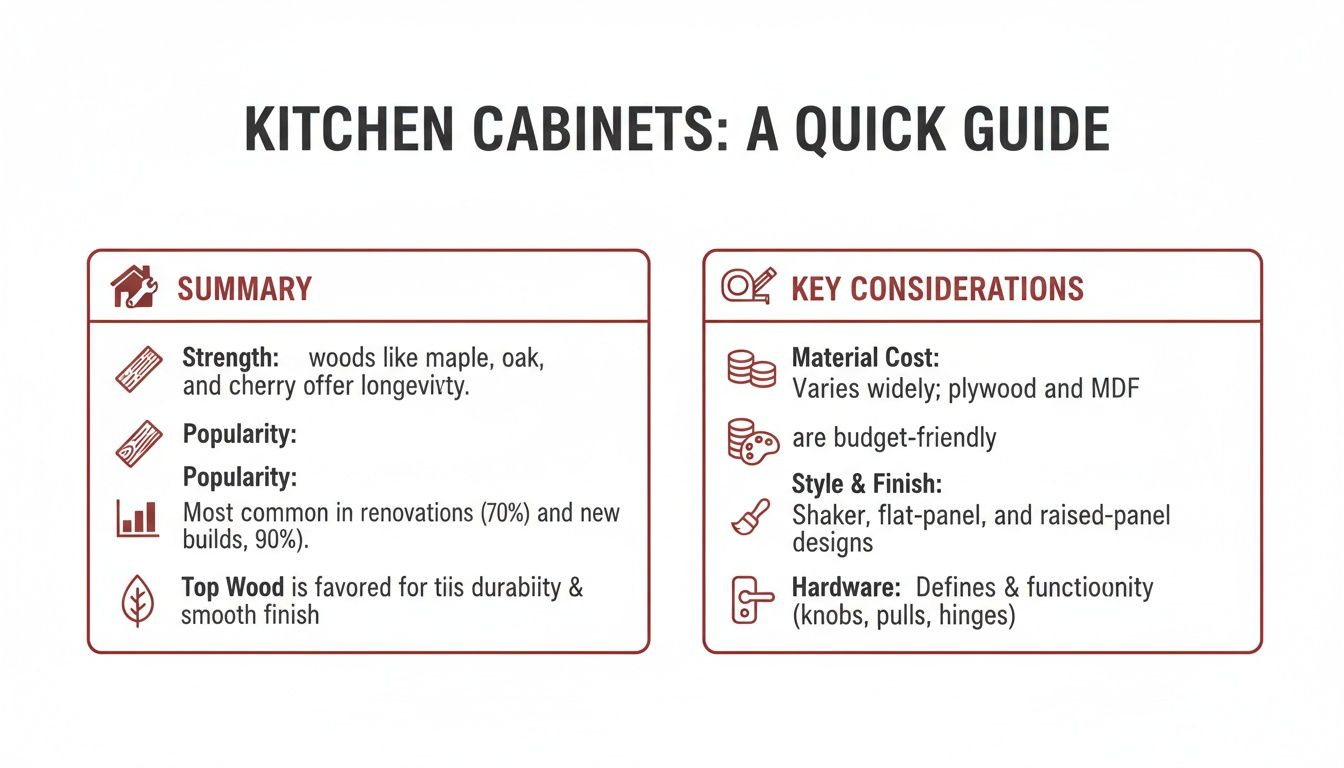
As you can see, while solid wood is often seen as the strongest, engineered woods are incredibly popular. White oak, in particular, has become a top choice for its blend of durability and timeless style.
Solid Wood: The Timeless Classic
For generations, solid wood has been the gold standard for high-quality kitchen cabinets. It's valued for its unmistakable natural beauty, inherent strength, and the ability to be sanded and refinished over and over again. Woods like maple, cherry, and oak each bring their own unique grain and personality to a kitchen.
But that natural quality can also be a drawback. Solid wood is a living material that "breathes," meaning it expands and contracts with shifts in temperature and humidity. Over time, this movement can cause hairline cracks to appear in painted finishes, especially at the joints. In more extreme cases, it can even lead to warped doors.
Best Use Case: Absolutely perfect for stained finishes where the natural wood grain is meant to be the star. It's the go-to for luxury kitchens where authenticity and longevity are the top priorities.
Plywood: The Versatile Workhorse
Plywood is what we call an engineered wood product, and it's a brilliant one at that. It’s made by gluing together thin layers of wood veneers, but the secret is that the grain of each layer runs perpendicular to the one below it. This cross-grain construction is its superpower.
This structure makes plywood incredibly stable. It’s far less likely to warp, shrink, or swell compared to solid wood. While it's lighter than solid wood, it offers very similar strength, making it an ideal material for the cabinet boxes (often called the "carcass"). You'll often find high-quality plywood finished with a beautiful hardwood veneer, giving you the look of solid wood at a more approachable price.
Our Take: Plywood’s layered construction gives it superior resistance to moisture and humidity compared to solid wood or particleboard. That makes it the gold standard for durable cabinet boxes, especially in a climate like ours here in Southwest Michigan.
Medium-Density Fiberboard (MDF): The Perfect Canvas for Paint
Medium-Density Fiberboard, or MDF, is another engineered product made by breaking down wood residuals into super-fine fibers, mixing them with wax and resin, and pressing them into dense panels.
The result is a material that is incredibly uniform and completely smooth, with no wood grain or knots to be seen. This perfectly flat surface makes MDF the absolute best kitchen cabinet material for a flawless, glass-like painted finish. Because it's stable and doesn't expand or contract like wood, you'll never see those hairline paint cracks at the joints.
The downside? MDF is heavy, and its biggest enemy is water. If the sealed surface gets a deep scratch or dent that exposes the core, it will soak up moisture like a sponge and swell up permanently.
Particleboard: The Budget-Friendly Option
Of all the materials, particleboard is the most economical. It’s manufactured from a mix of wood chips, sawmill shavings, and sawdust, all bonded together with resin and pressed into sheets.
While it's great for the wallet, it comes in last for strength and durability. Particleboard is extremely vulnerable to moisture; even a small leak can cause it to swell and completely fall apart. It also doesn't hold screws very well, which means hinges and hardware on heavily used cabinets can loosen over time.
Best Use Case: It’s best reserved for low-moisture, low-traffic areas like a utility closet. It can also work as a substrate for tough laminate or thermofoil finishes in projects where budget is the primary driver. We generally don't recommend it for kitchens or bathrooms, where moisture is always a factor.
Kitchen Cabinet Material Comparison Overview
To make things a little clearer, here’s a quick summary table that puts the trade-offs in black and white. This helps you see at a glance where each material shines and where it falls short.
| Material | Average Cost (Per Linear Foot) | Durability & Strength | Moisture Resistance | Ideal Finish |
|---|---|---|---|---|
| Particleboard | $75 – $150 | Low | Very Low | Laminate, Thermofoil |
| MDF | $100 – $280 | Medium-High | Low (if unsealed) | Flawless Paint |
| Plywood | $150 – $400 | High | High | Stain, Paint, Veneer |
| Solid Wood | $180 – $500+ | Very High | Medium | Stain, Natural |
Choosing the right material is one of the biggest decisions you'll make, and it has a major impact on your total renovation cost. To see how these choices might affect your own project, playing around with an instant pricing tool can give you a rough idea. It's a great way to see if upgrading from MDF doors to solid wood, for example, fits your budget before you even get on the phone.
What About Cabinet Door Finishes and Styles?
While the cabinet boxes are the unsung heroes providing structure, it's the doors and their finishes that get all the attention. This is where your kitchen’s personality comes to life, and where aesthetics have to stand up to the reality of daily use. A finish is so much more than just color—it’s the frontline defense against spills, steam, fingerprints, and general wear and tear.
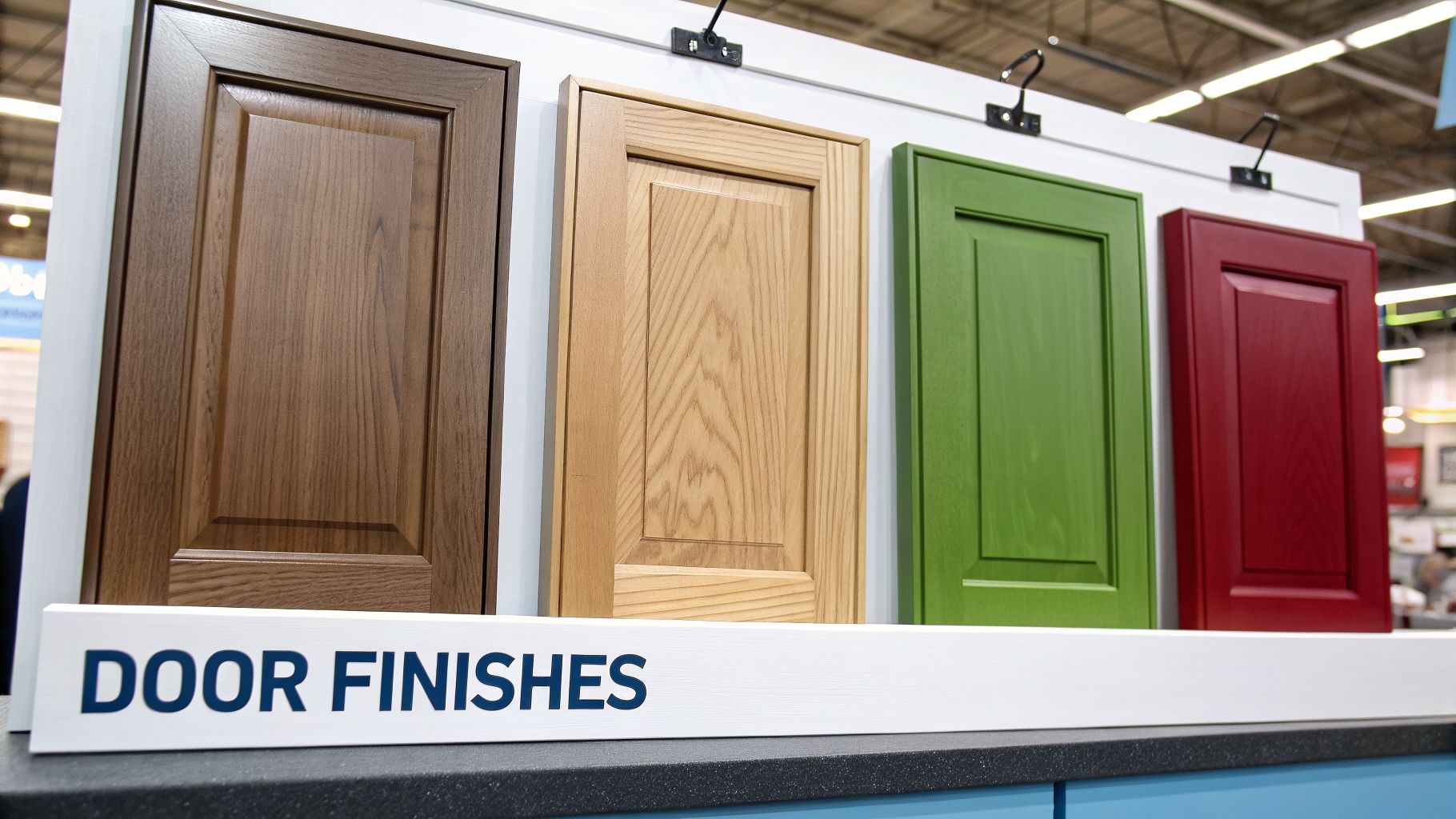
The right choice comes down to how you live. A busy kitchen with kids running around needs a surface that’s tough, forgiving, and easy to wipe down. On the other hand, someone designing a sleek, modern entertainment space might prioritize a flawless, high-gloss finish. Knowing the real-world differences between these options is what ensures you’ll love your choice years from now.
Thermofoil and Laminate: The Modern Workhorses
If you're after a clean, contemporary look that won't break the bank, thermofoil and laminate are fantastic contenders. Both are applied over a core of MDF or particleboard, but the way they're made gives them unique strengths and weaknesses.
Thermofoil is a vinyl film that’s heat-sealed over an MDF door, basically shrink-wrapping it. This creates a completely seamless, smooth surface that’s a breeze to clean.
- The Big Plus: With no joints or edges on the door face, there's nowhere for grime or grease to build up. It’s a very hygienic option.
- The Watch-Out: Heat is thermofoil's kryptonite. If you install it right next to an oven, range, or even a high-heat dishwasher without a proper heat shield, the vinyl can start to peel or bubble over time.
Laminate is a different beast. It's constructed from layers of paper and resin, fused together with intense pressure, and then glued to the cabinet core. Think of the durability of an old-school diner countertop—that’s the same family of material.
- The Big Plus: Laminate is incredibly tough. It stands up to scratches, impacts, and stains better than almost any other finish, making it perfect for high-traffic kitchens.
- The Watch-Out: The edges on laminate doors are typically hard and square. A sharp knock can cause a chip, and once it's chipped, there's really no good way to repair it.
Painted vs. Stained: The Classic Showdown
This is the age-old debate, and it really boils down to personal taste. Do you want the endless color options and clean look of paint, or the warmth and natural character that only a wood stain can provide?
A painted finish gives you a solid, opaque color. It’s the perfect choice for MDF doors because their perfectly smooth surface creates a flawless canvas without any wood grain peeking through. Good cabinet paint is a hard-wearing enamel that can handle frequent cleaning. One thing to know: when used on solid wood doors, you might see tiny hairline cracks appear at the joints as the wood naturally expands and contracts.
An Installer’s Take: The secret to a painted finish that lasts isn't the paint itself—it's the prep work. A painstaking process of cleaning, sanding, priming, and applying several thin coats is what creates that durable, beautiful finish that resists chipping.
A stained finish, by contrast, soaks into the wood fibers to highlight the natural grain, not hide it. This is where hardwoods like oak, maple, and cherry really get to show off. Stains can be anything from a light, natural coat to a deep, dramatic espresso. Since the stain is in the wood, it can't chip like paint, and minor dings and scratches tend to be much less obvious.
Specialty Doors: Glass and Metal
If you want to move beyond the standard options, specialty doors can add a truly custom touch and practical function to your kitchen.
Glass-Front Doors: These are fantastic for breaking up a long wall of solid cabinets and creating a more open, airy feeling. Use them to display your favorite glassware or china. You can choose from crystal clear glass or go with frosted, reeded, or seeded styles for a bit more obscurity.
Stainless Steel/Metal Doors: For that professional chef's kitchen, industrial, or ultra-modern vibe, nothing compares to stainless steel. It’s hygienic, incredibly durable, and non-porous. The trade-off? You'll be wiping away fingerprints and smudges to keep it looking sharp.
Ultimately, choosing the best kitchen cabinet materials and finishes is about finding the right balance for your home and lifestyle. To help you picture how these different options will look in your own space, you might want to explore the best AI tools for interior design.
As you start to zero in on your favorites, the next big question is always the budget. Get a head start by using our instant pricing tool—it’s a great way to see how your material choices will affect your overall project cost.
Thinking Green: A Look at Sustainable and Eco-Friendly Cabinet Choices
For a growing number of homeowners, a kitchen remodel is about more than just a fresh look and better workflow. It’s a chance to make a conscious choice—one that’s better for the planet and for the air inside your home. This move toward sustainable cabinet materials isn't just a fleeting trend; it’s a real commitment to building healthier, more responsible living spaces.
Eco-friendly cabinets aren't just about using recycled materials. The best options come from rapidly renewable sources, are harvested from responsibly managed forests, and are built using finishes that won’t fill your home with chemicals. When you choose green, you're making an investment that pays off for your family's health and the environment for years to come.
Top Sustainable Materials on the Market
When you start looking into eco-friendly options, a few materials consistently rise to the top. Each one brings something unique to the table.
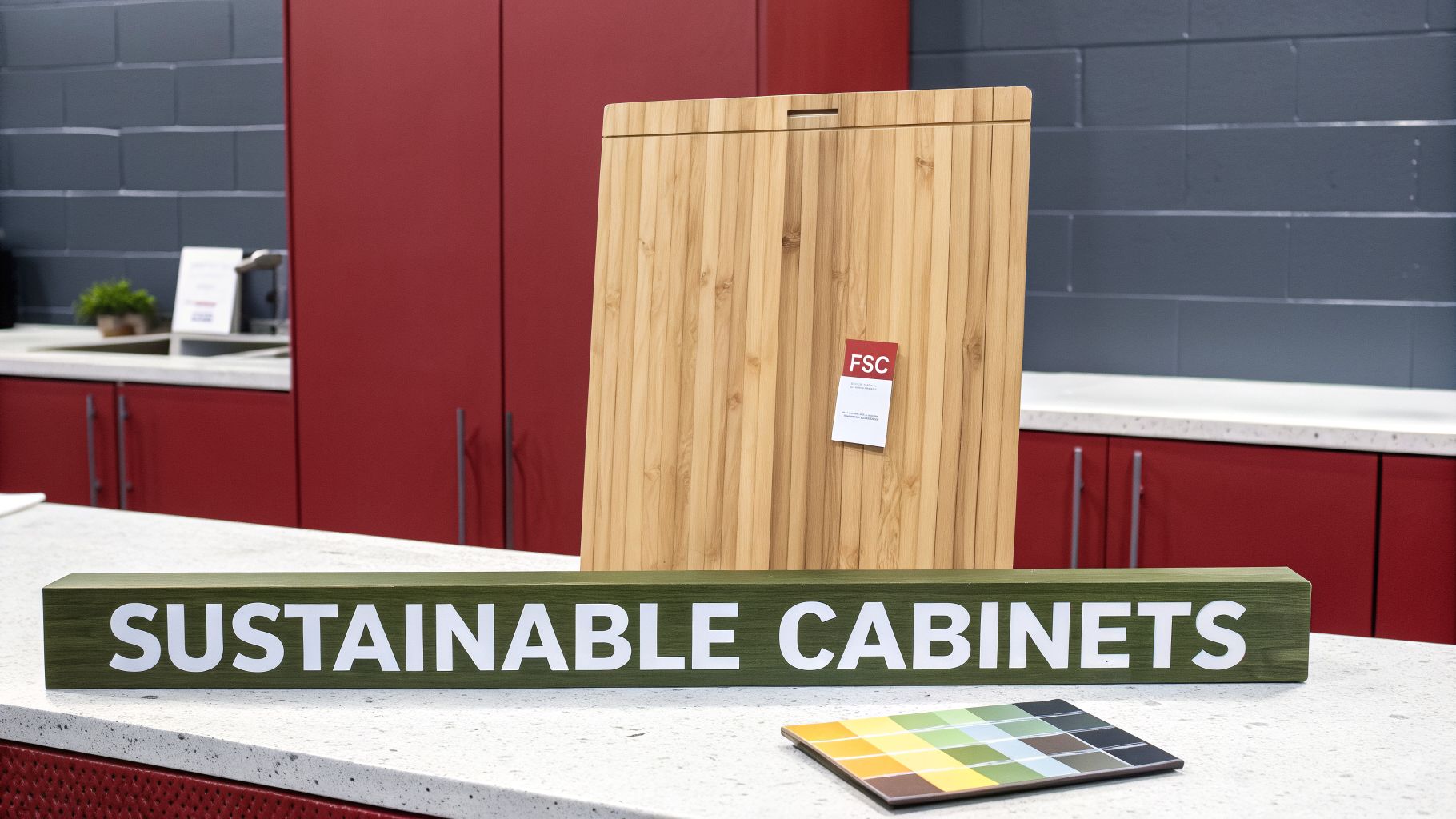
Bamboo: Most people don't realize that bamboo is actually a grass, not a wood, which is why it's such a superstar of sustainability. It reaches full maturity in just three to five years, a tiny fraction of the decades needed for traditional hardwoods. And don't let its fast growth fool you; bamboo is exceptionally dense and strong, often harder than red oak.
FSC-Certified Wood: Love the classic beauty of real wood? You don’t have to give it up to go green. Just look for the Forest Stewardship Council (FSC) certification. This seal guarantees the wood was sourced from forests managed in a way that protects biodiversity and supports local communities. It's the best way to ensure your beautiful wood cabinets aren't contributing to deforestation.
An eco-friendly kitchen is a forward-thinking investment. Materials like bamboo not only offer a clean, modern aesthetic but also provide superior durability and a healthier home environment by minimizing off-gassing from harmful chemicals.
Why Low-VOC Finishes Matter So Much
The core material is only half the story. The paints, stains, and glues used to finish and assemble your cabinets are just as critical for a truly "green" kitchen. Standard finishes often contain Volatile Organic Compounds (VOCs), which are chemicals that evaporate into the air and can seriously degrade your home's air quality.
This is why insisting on low-VOC or zero-VOC finishes is non-negotiable for a healthy home. These products dramatically cut down on harmful emissions, a huge benefit for families with young children, anyone with allergies, or people sensitive to chemicals. It’s a simple choice that helps everyone breathe easier.
The demand for green cabinetry is soaring, with a projected 12% compound annual growth rate that leaves traditional options in the dust. This boom is powered by high-performers like bamboo, which regenerates in under five years (compared to 50+ years for hardwoods) yet has a tensile strength 25-30% higher than oak. For us here in Southwest Michigan, it also means better indoor air—low-VOC finishes can slash emissions by a whopping 70%. You can dig deeper into the growth of the green cabinet market to see where things are headed.
As you start to consider these eco-conscious materials, you're probably wondering how they fit into your budget. To get a quick, ballpark idea of project costs, check out our instant pricing tool for a helpful estimate.
Matching Cabinet Materials to Your Renovation Budget
Every renovation has a budget, and let's be honest, your cabinet choice is one of the biggest line items you'll face. The key to a successful project—one without sticker shock halfway through—is aligning your material choices with your financial plan right from the get-go. This isn't about finding the absolute cheapest option; it's about making smart, strategic decisions.
Figuring out where to save and where it's worth investing is half the battle. By understanding which materials make sense at different investment levels, you can build a beautiful, functional kitchen that won't break the bank. Let's break down how to pick the best kitchen cabinet materials for value-focused, mid-range, and high-end projects.
Value-Focused Projects: Maximizing Every Dollar
When the budget is tight, the goal is simple: find materials that perform well without the premium price. This is where engineered products really shine, offering surprisingly durable and attractive finishes for a fraction of what solid wood costs.
Think about spaces that don't take a heavy, daily beating. A laundry room, a walk-in pantry, or even a powder room are perfect spots for this approach.
- Best Bet: Particleboard cabinet boxes paired with laminate or thermofoil doors.
- Why It Works: Today's laminates are incredibly tough and a breeze to clean, making them a super practical choice. While you wouldn't want raw particleboard near a sink, it holds up just fine in dry areas, especially when it's sealed inside a durable, protective finish.
This strategy gives you a clean, modern look that’s more than capable of handling its job, all while keeping your project costs firmly under control.
Mid-Range Renovations: The Perfect Balance
Most kitchen remodels land right here in the mid-range. Homeowners in this category are looking for a real upgrade in both quality and style, focusing on long-term value without veering into true luxury pricing.
This is where you can get clever by mixing and matching materials to get the best of both worlds. In fact, this blended approach has become the gold standard for a high-quality kitchen that's built to last.
Pro Tip: The smartest mid-range strategy is combining sturdy plywood for the cabinet boxes with solid wood for the doors and drawer fronts. You get the superior moisture resistance and structural stability of plywood for the "bones," plus the timeless beauty and refinishing potential of real wood right where you see and touch it every day.
This combination strikes a fantastic balance between quality, durability, and cost. It’s a smart investment that looks and feels high-end but is built on a practical, resilient foundation.
High-End and Custom Kitchens: Investing in Luxury
In high-end, custom projects, the budget opens the door to premium materials that become a major design statement. Here, the focus shifts to custom craftsmanship, unique wood species, and luxury finishes that create a truly one-of-a-kind space.
This is where you get into the world of premium hardwoods and bespoke veneers, letting the natural beauty of the material become the star of the show.
- Top Choices: Premium hardwoods like quarter-sawn white oak, cherry, or walnut are sought after for their stunning grain patterns and rich, deep color.
- Finishing Touch: For truly exotic looks that would be impractical or astronomically expensive in solid wood, luxury veneers applied over a stable plywood or MDF core are a fantastic option.
With a high-end budget, you can afford to use top-tier materials everywhere, ensuring every single cabinet—from the main kitchen to the butler's pantry—is built to the highest possible standard.
Seeing how these choices add up is a critical part of planning. For a clear picture of what to expect, our instant pricing tool is a great place to start estimating your project costs.
Making the Right Choice for Your Michigan Home
All this research is great, but now it's time to make a decision. It’s easy to get stuck when you’re just comparing materials on paper, so the trick is to start thinking about how they’ll actually perform in your home, for your family. This is where you connect the dots between the pros and cons and the reality of your daily life.
The best kitchen cabinet materials aren't just about what looks good or costs the least. It’s about finding that sweet spot where style, function, and your home’s specific environment all meet. A material that works perfectly in a dry desert climate might not fare so well with the humid summers and cold, dry winters we get here in Southwest Michigan. That’s where a little local know-how goes a long way.
Key Questions to Guide Your Decision
Before you set your heart on a particular finish, take a moment to walk through this simple checklist. Answering these questions honestly will help you filter out the noise and zero in on the options that make the most sense for you.
- How do we really use our kitchen? Is it the chaotic heart of the home with kids, pets, and constant spills? Or is it more of a quiet, low-traffic space? The answer will tell you just how much durability and easy maintenance you truly need.
- What’s my real-world tolerance for upkeep? Be honest. Do you have the patience for the gentle care solid wood demands, or do you need a forgiving, wipe-and-go surface like laminate that can take a beating?
- How will my choice stand up to our four-season climate? It’s crucial to consider how a material like solid wood might expand and contract with humidity swings, versus the built-in stability of engineered options like quality plywood or MDF.
A great kitchen remodel isn't just about how stunning it looks on day one. It’s about choosing materials that perform flawlessly through years of family dinners, holiday gatherings, and seasonal shifts. Your investment should be a perfect blend of your aesthetic vision, your practical needs, and your long-term budget.
Expert Guidance Makes All the Difference
This is exactly where having an experienced partner by your side pays off. Here at Trademaster Construction, we walk homeowners in Portage, Kalamazoo, and the surrounding areas through these decisions every single day. We make sure the cabinets you choose don’t just match your vision but are also built to thrive in your home for years to come.
Getting a handle on how different materials impact your budget is a great next step. For an easy way to estimate project costs before you even make a call, try our instant pricing tool. It’s a fantastic resource for exploring the numbers on your own time.
Feel free to browse our gallery for a little inspiration. When you’re ready to talk specifics, schedule a consultation with our team. We're here to help you bring your vision to life with complete confidence.
Answering Your Top Questions About Cabinet Materials
When you're deep in the details of a kitchen remodel, a few key questions always seem to pop up. Getting straight answers can make all the difference, helping you feel confident that you’re picking the perfect materials for your home and lifestyle.
Let's dive into some of the questions we hear most often from homeowners right here in Southwest Michigan.
What's the Best Material for Painted Cabinets That Will Actually Last?
If you're dreaming of a painted kitchen, MDF (Medium-Density Fiberboard) is, hands down, the best choice for the cabinet doors. Why? Because it’s completely stable and smooth, with no wood grain to get in the way. This means it won’t expand and contract with the humidity swings we get here, so you avoid those ugly cracks that can form at the joints of painted wood doors.
For the cabinet boxes, however, you can't beat furniture-grade plywood. It provides the heavy-duty structural support you need for your countertops and will hold up to daily use for decades.
How Much Does Humidity in Michigan Really Affect Cabinet Materials?
Our local climate is a bigger factor than most people realize. The constant shift in humidity can be tough on solid wood, causing it to swell, shrink, and sometimes even warp or crack over time. This is especially noticeable on painted cabinet doors, where the wood's natural movement shows up as fine cracks in the paint at the joints.
This is where plywood really shines for cabinet boxes. Its layered, cross-grained construction makes it incredibly stable and resistant to moisture. On the other end of the spectrum, particleboard is the most vulnerable; it will swell up like a sponge if it gets wet, so it should only be used in dry areas and must be perfectly sealed with a durable finish like laminate.
So, Are Solid Wood Cabinets Always the Best Option?
Not always. While everyone loves the authentic beauty and strength of solid wood, high-quality plywood is actually a better material for the cabinet boxes (the "carcass"). It’s more dimensionally stable, won’t warp as easily in our humid summers, and is often a bit friendlier on the budget.
Here's a pro tip: One of the best ways to build a high-quality kitchen is to combine materials. Use sturdy plywood for the cabinet boxes and showcase beautiful solid wood for the doors and drawer fronts. You get the best of both worlds—rock-solid structure and timeless style.
Figuring out how these choices fit into your budget is the next logical step. For a quick estimate, you can play around with different options using our instant pricing tool. It's a great way to see how different materials might impact the overall cost of your project.

