
For most people, the go-to choice for shower walls is porcelain tile. It’s incredibly tough, barely absorbs any water, and is easy to live with. If you're looking for more design flair on a tighter budget, ceramic tile is a fantastic alternative, while natural stone offers a high-end, luxurious feel but demands more upkeep.
Your Guide to Selecting the Perfect Shower Wall Tile
Picking the right tile for your shower is one of the biggest calls you'll make in a bathroom remodel. This isn't just about looks; it's about finding a material that can handle the daily reality of a wet, steamy environment for years on end. The tile you choose needs to fend off moisture, handle temperature swings, and stand up to frequent cleaning.
A truly informed decision goes beyond just color and pattern. It requires understanding what makes each type of tile tick.
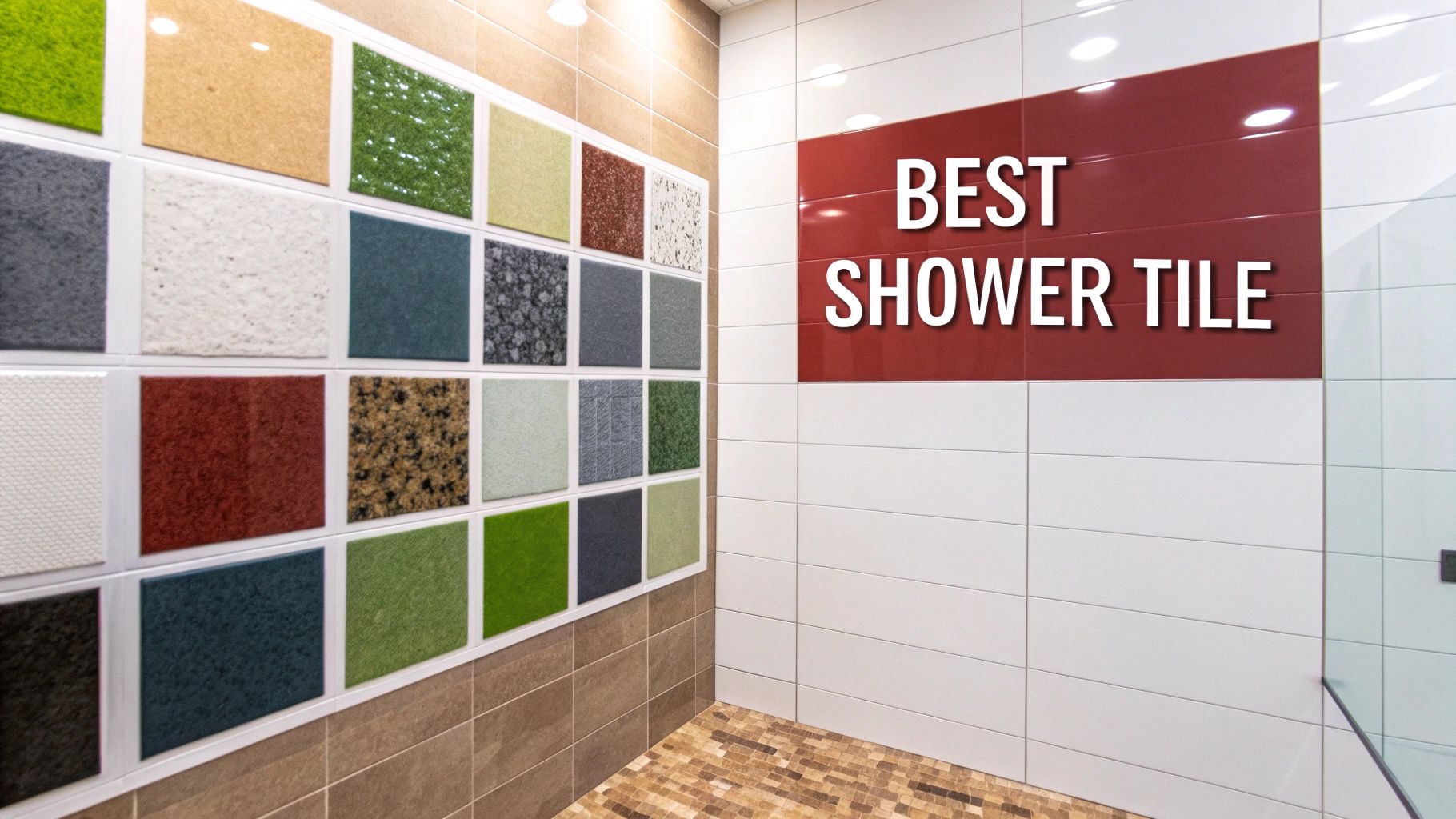
We're going to dive into the key factors that separate a good tile from a great one for your shower walls. We’ll cover everything from the technical stuff to the design details, focusing on:
- Water Resistance: How effectively a tile blocks moisture.
- Long-Term Durability: A tile's toughness against cracks, chips, and everyday wear.
- Maintenance Needs: How much work it takes to keep your shower looking pristine.
- Overall Cost: The total investment, including both the tile and professional installation.
Key Material Differences at a Glance
Getting a feel for how the most common materials compare is the perfect starting point. Each one comes with its own set of compromises between pure function and pure style. Porcelain, for example, is a workhorse, but it might lack the artisanal charm of certain ceramic tiles.
As you weigh your options, you may find that a practical guide on choosing bathroom tiles can also help you tie the whole room's look together.
| Material | Water Absorption | Durability & Hardness | Typical Maintenance |
|---|---|---|---|
| Porcelain | Less than 0.5% | Very High | Low |
| Ceramic | 0.5% to 7% | Moderate to High | Low to Moderate |
| Natural Stone | Varies (Porous) | Moderate to High | High (Requires Sealing) |
| Glass | 0% (Impervious) | Moderate (Prone to Scratches) | Low (Shows Water Spots) |
By digging into these core traits, you can find a tile that truly fits your lifestyle, budget, and design vision. The goal is to build a shower that’s not just beautiful on day one, but is built to last.
Understanding What Makes a Great Shower Tile
Before you get lost in the sea of colors and patterns, let's talk about what actually makes a tile work in a shower. It’s easy to focus on looks, but the real magic is in the technical specs. Nailing these fundamentals is the difference between a shower you’ll love for decades and one that becomes a moldy headache in just a few years.
The number one job of a shower tile is to stand up to water, day in and day out. This goes deeper than the shiny glaze on the surface; it’s about how dense the tile body is. The industry measures this with a water absorption rate—a simple percentage that tells you exactly how much moisture a tile will soak up.
Water Absorption Ratings: What the Numbers Mean
The Tile Council of North America (TCNA) has a straightforward system for classifying tiles by how porous they are. This rating is your first clue to whether a tile is right for a wet area.
- Non-Vitreous (High Absorption): Absorbs more than 7% of its weight in water. Steer clear of these for any shower application.
- Semi-Vitreous (Medium Absorption): Absorbs between 3% and 7%. I'd call this a risky choice for a shower; it puts a massive amount of pressure on your waterproofing system to be absolutely perfect.
- Vitreous (Low Absorption): Absorbs between 0.5% and 3%. This is your baseline, a solid starting point for shower walls.
- Impervious (Lowest Absorption): Absorbs less than 0.5%. This is the best of the best for wet environments. It's what makes porcelain tile the industry gold standard.
A lower number means a denser tile. A denser tile means less water can ever get through to the wall behind it. Think of it as your first line of defense against moisture and mildew.
Pro Tip: The term "porcelain" isn't just marketing fluff. It's a technical definition for tiles with a water absorption rate below 0.5%. This guarantees you're getting a material truly built to handle the constant moisture of a shower.
PEI Rating: How Tough Is the Finish?
While the Porcelain Enamel Institute (PEI) rating is a bigger deal for floors, it still tells you a lot about a tile's surface durability. It scores the glaze's hardness and resistance to scratches on a scale from 1 to 5.
For shower walls, you're generally safe with a PEI rating of 2 or 3. They just don't see the same kind of abuse as a floor. However, if you're designing built-in niches or a bench where you'll be sliding shampoo bottles around, a higher PEI rating is a smart move. A weak glaze can eventually wear down, exposing the more porous tile body and weakening its water resistance.
DCOF Rating: Don't Forget About Grip
This one is absolutely critical for the shower floor. The Dynamic Coefficient of Friction (DCOF) rating measures a tile's slip resistance when wet. A higher number equals more grip.
The industry standard is a DCOF of 0.42 or higher for any interior floor that gets wet. This isn't a suggestion; it's a non-negotiable safety requirement to prevent dangerous falls. While you don't technically need a high DCOF on your walls, if you're using the same tile on the floor and walls for a cohesive look, this number is paramount.
Remember, the tile itself is only part of a larger system. Even the most impervious porcelain tile will fail if the waterproofing behind it is done poorly. A professionally installed waterproofing membrane is what truly keeps your wall cavity dry—not the tile and grout.
By choosing a dense, low-absorption tile, you're just reducing how much work that waterproofing membrane has to do. It’s a multi-layered approach that creates a bulletproof system, ensuring your beautiful new shower stays that way for years to come.
Comparing the Top Shower Wall Tile Materials
Walking into a tile store can feel a bit like a pop quiz. With so many options, each promising the perfect blend of style and function, how do you choose? To find the best tile for your shower walls, you have to look past the showroom shine and really dig into the practical differences between the top contenders.
Let's break down the big four: porcelain, ceramic, natural stone, and glass. Each one brings something unique to the table, and they all have their own quirks and trade-offs. Getting to know these details is the secret to picking a tile that not only looks fantastic on day one but also holds up to daily life for years to come.
This visual guide hits on the three absolute must-haves for any shower tile: it has to be waterproof, durable, and safe. Get these three right, and you're well on your way.
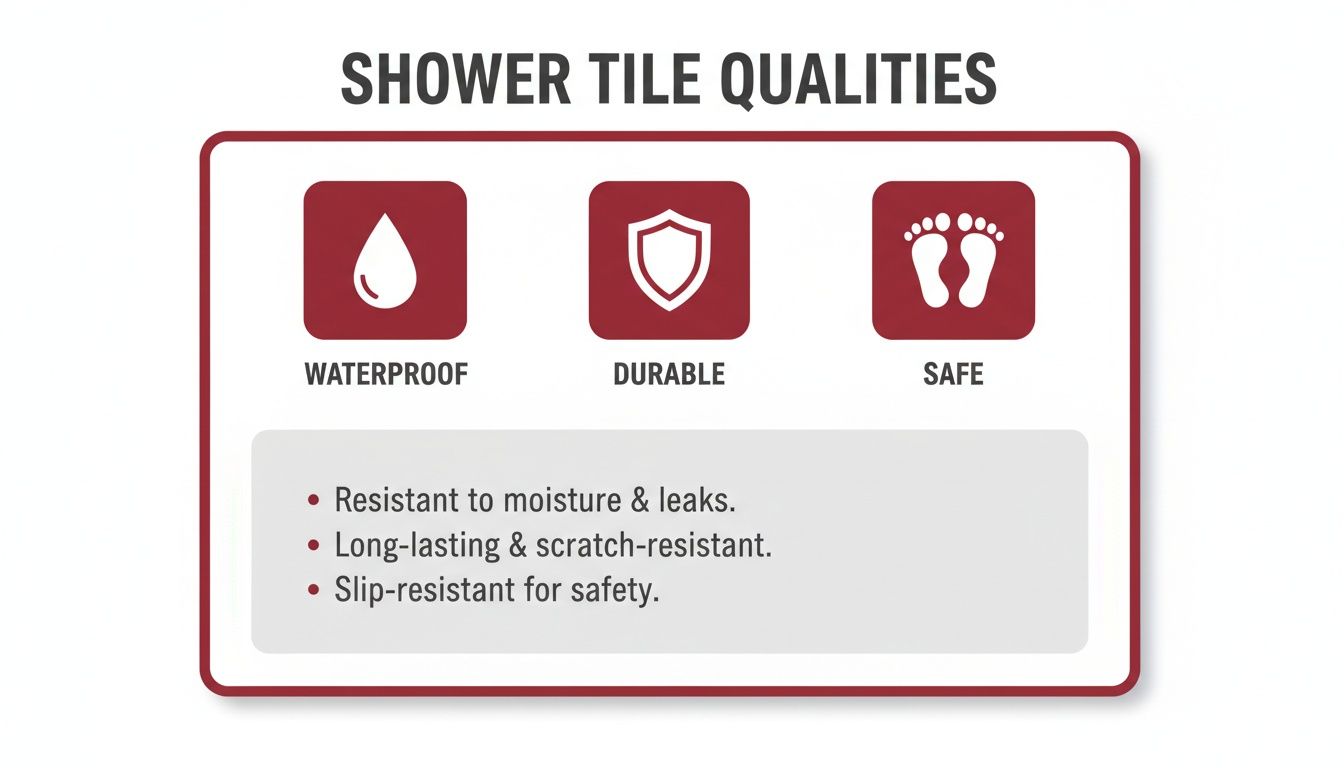
When you make these foundational elements your priority, you’re setting yourself up for a shower that’s beautiful, safe, and doesn't demand all your time to keep it that way.
Porcelain: The Indisputable Workhorse
There's a reason designers and contractors almost universally recommend porcelain for wet areas. It's the undisputed champion. It’s made from a finer, denser clay that’s fired at incredibly high temperatures, creating a tile that's tough as nails and, crucially, almost completely non-porous.
The technical specs tell the whole story. The Tile Council of North America (TCNA) won't even let a tile be called "porcelain" unless its water absorption rate is 0.5% or less. That means it's practically waterproof, giving you a powerful first line of defense against moisture getting where it shouldn't, which is how mold and mildew get started.
Key Differentiator: Porcelain's extreme density makes it a fortress against stains, scratches, and even the harshest cleaning chemicals. It’s the go-to for busy family bathrooms where you need something that can take a beating and still look great with minimal fuss.
The numbers back this up. Porcelain dominates the market, claiming a massive 59.6% share of ceramic wall tiles globally, and it's not slowing down. In North America, it’s expected to hold about 57.4% of the market—a huge vote of confidence in its long-term performance. You can dig into more ceramic wall tiles market data on Market.us if you’re curious.
Ceramic: The Versatile and Budget-Friendly Classic
Ceramic has been a bathroom staple for decades, and for good reason. It hits that sweet spot of good performance, endless style options, and a price tag that’s much easier to swallow. While it isn't quite as dense as its porcelain cousin, today’s ceramic tiles are far more durable than they used to be and work beautifully in a shower when installed over a solid waterproofing system.
The main difference is that ceramic is a bit more porous, with water absorption rates typically between 0.5% and 3%. That’s perfectly fine for shower walls, as long as you have a quality membrane behind it doing the heavy lifting of keeping your wall cavity dry.
Where ceramic really comes alive is in its design potential. It's softer and easier to cut than porcelain, which makes it a dream for DIYers and for creating intricate patterns. You can find it in an incredible range of colors, artistic glazes, and unique textures that bring a ton of personality to a space.
Natural Stone: The Pinnacle of Luxury
If you’re after a truly one-of-a-kind, high-end look, nothing beats natural stone. Bringing materials like marble, travertine, or slate into your shower is like installing a piece of art crafted by the earth itself. The veining, the color variations—no two tiles are ever exactly the same, guaranteeing a space that is uniquely yours.
But all that beauty comes with a catch: maintenance. Natural stone is porous by nature. It absolutely must be sealed—often once a year—to protect it from soaking up water, staining, or getting damaged by common bathroom cleaners. If you skip this step, you risk permanent discoloration and decay.
Comparing Common Natural Stone Options
- Marble: The definition of classic elegance. Its soft, sweeping veins are timeless, but it's also a softer, more porous stone. It needs diligent sealing to fend off scratches and stains.
- Travertine: Known for its warm, earthy vibe, travertine has a naturally pitted surface. This texture is beautiful but requires meticulous sealing and cleaning to keep mold from finding a home in its crevices.
- Granite: As one of the hardest and densest natural stones available, granite is much more forgiving. It’s far more resistant to scratches and stains than marble, and while it still needs sealing, it’s a much lower-maintenance choice if you’re set on stone.
Choosing natural stone means you’re signing up for a relationship. You have to embrace its organic nature and be prepared for the upkeep it demands.
Glass Tile: The Modern and Luminous Accent
Glass tile does something no other material can—it plays with light. Its reflective surface can make a small, dark shower feel instantly brighter and more spacious. With an almost infinite spectrum of colors and shimmering finishes, glass is perfect for creating a show-stopping focal point.
Functionally, it's a winner. Glass is completely non-porous with a 0% water absorption rate, making it an ideal surface for a shower. However, it has its own set of challenges you need to be aware of.
Expert Insight: With glass tile, the installation is everything. You can see the adhesive right through transparent tiles, so your installer has to be a true artist, applying the thin-set with perfect, even strokes to avoid visible trowel lines ruining the look.
While glass is simple to wipe down, it loves to show off water spots and soap scum. It can also be scratched, so stick to non-abrasive cleaners. Because of the higher cost and the need for a skilled installer, glass is often used as a special feature—think a dazzling accent wall or a beautiful decorative border—rather than tiling the entire shower.
Shower Tile Material At-A-Glance Comparison
To make things a bit clearer, here’s a quick-reference table that puts the most popular tile materials head-to-head. It’s a great way to quickly see how they stack up based on what matters most to you.
| Material | Water Resistance | Durability | Maintenance Level | Average Cost (Material Only) |
|---|---|---|---|---|
| Porcelain | Excellent (<0.5% absorption) | Very High | Very Low | $$ – $$$ |
| Ceramic | Good (0.5% – 3% absorption) | High | Low | $ – $$ |
| Natural Stone | Poor to Good (Porous) | Moderate to High | High (Requires sealing) | $$$ – $$$$ |
| Glass | Excellent (0% absorption) | Moderate (Can scratch) | Low (Shows spots easily) | $$$ – $$$$ |
So, what's the verdict? The best tile for shower walls really comes down to your priorities. For a bombproof, set-it-and-forget-it option, porcelain is the hands-down winner. If you're working with a tighter budget but still want creative freedom, ceramic is a fantastic choice. For unmatched luxury, natural stone is worth the effort, and for a splash of modern brilliance, nothing beats glass.
Matching Shower Tiles to Your Remodeling Goals
It's easy to get bogged down in technical specs, but let's be honest—the best tile for shower walls is the one that actually fits your life. Every renovation has a purpose, whether you're building a bulletproof bathroom for a busy family or creating a safe, comfortable space to age in place.
If you start with your end goal in mind, you can cut through the noise and pick a tile that will serve you well for years. This way, you're not just comparing water absorption rates; you're finding a real-world solution for your home.
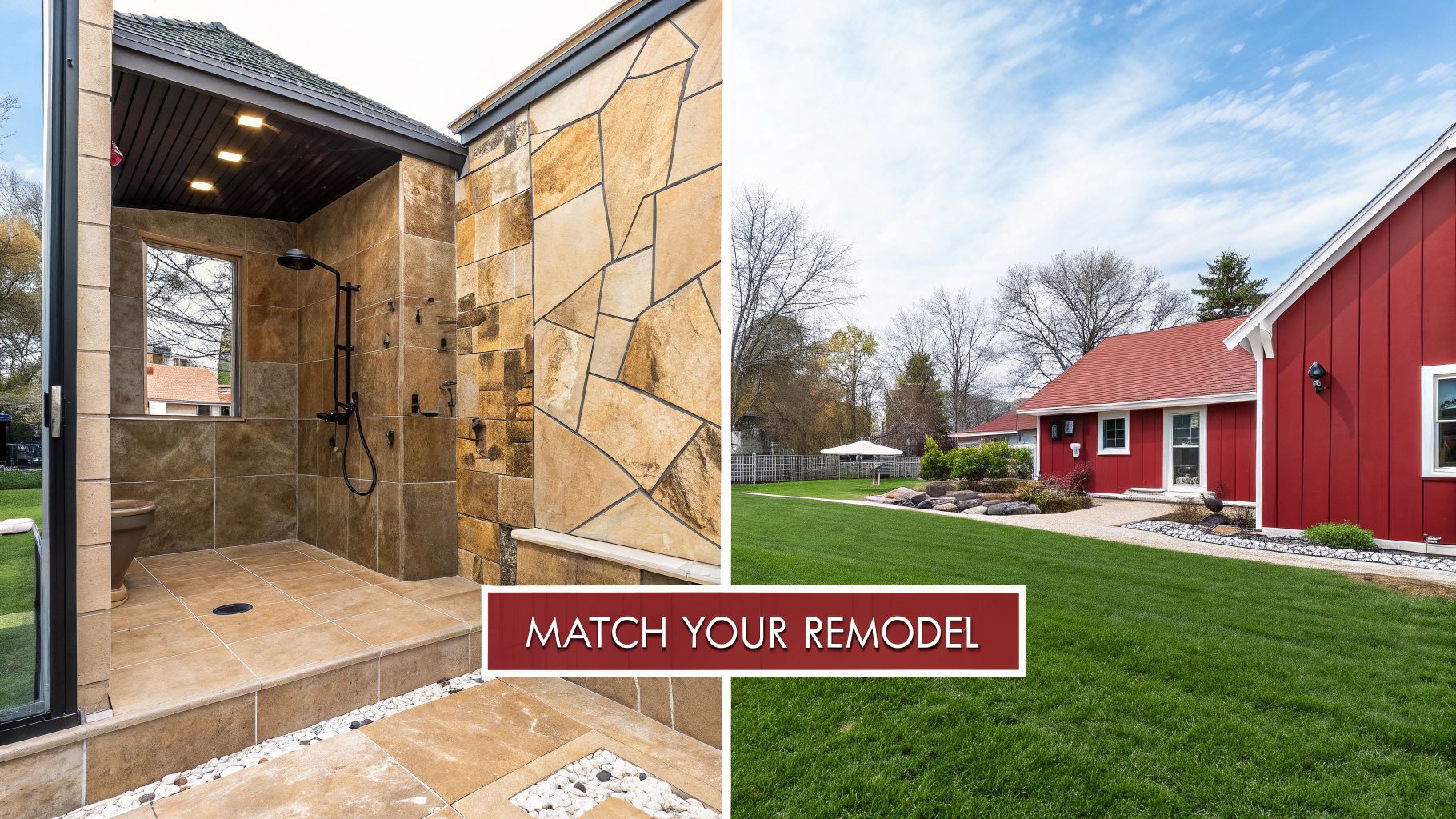
Let’s walk through four common homeowner scenarios. Seeing how different tiles fit each situation will help you picture the perfect choice for your own project.
The High-Traffic Family Bathroom
When a bathroom has to endure everything from kids’ bath time chaos to the morning rush hour, you need two things: durability and low maintenance. This is where porcelain tile is the undisputed champion. Its dense body and nearly impervious surface make it a fortress against stains, scratches, and soap scum.
For an even bigger win, go with large-format porcelain tiles. Fewer, smaller grout lines mean less scrubbing for you and fewer places for mildew to hide. It’s pretty much the ultimate "set it and forget it" choice for a space that works as hard as you do.
The Luxury Master Retreat
If your goal is a personal, spa-like sanctuary, the decision shifts toward aesthetics and feel. This is the time to embrace materials that deliver breathtaking beauty, even if they ask for a little more upkeep.
Here are a few elevated options to consider:
- Large-Format Natural Stone: Imagine a shower walled with floor-to-ceiling slabs of marble or travertine. It creates a seamless, opulent look, and the unique veining means your space is truly one-of-a-kind.
- Intricate Glass Mosaics: For a pop of modern brilliance, a feature wall of iridescent glass mosaic tile can be a stunning focal point. It plays with light beautifully, making the whole shower feel brighter and more open.
Choosing a luxury material is a commitment. Natural stone requires consistent sealing to protect its porous surface, but the timeless elegance it provides is often worth the effort for those creating a high-end escape.
The Aging-in-Place Renovation
When designing a bathroom for long-term independence, safety and accessibility are everything. The tile you choose is critical for preventing slips and falls, which are among the most common hazards at home.
The key is to look for tiles with a matte or textured finish, as they provide far more grip than glossy surfaces when wet. Small mosaic tiles—ceramic or porcelain—are also a fantastic choice for the shower floor. Why? The sheer number of grout lines creates a grid of extra traction. This is a functional, smart approach that delivers a safer shower without giving up on style.
The Budget-Friendly Refresh
You absolutely do not need a massive budget to make a huge impact. For a cost-effective and stylish shower update, modern ceramic tile offers incredible bang for your buck. It’s more affordable than porcelain and is available in a seemingly endless variety of colors, shapes, and patterns.
From classic white subway tiles to vibrant, handcrafted-style squares, ceramic lets you inject personality and create a fresh, clean look without breaking the bank. As you plan a significant upgrade, it’s worth thinking about how your tile choice fits into the bigger picture; exploring professional bathroom renovation services can offer expert guidance on creating a cohesive and functional space that respects your budget.
Budgeting for Your Shower Tile Installation
When you start planning a shower remodel, it's easy to get focused on the price of the tile itself. But that's just one piece of the puzzle. A realistic budget has to cover the entire system, from the waterproofing hidden behind the wall to the grout that fills the gaps. Getting this wrong is probably the single biggest mistake I see homeowners make.
The final bill is always a sum of several crucial parts. Of course, the tile you choose is the main event, but the supporting cast—the waterproofing membrane, the thin-set mortar, the right kind of grout—is what guarantees the show will go on for years. Skimping on these behind-the-scenes players can lead to total system failure down the road.
Breaking Down the Total Project Cost
To keep your budget from spiraling out of control, it helps to think about it in separate buckets. Each one is critical for a successful, long-lasting shower.
- Tile Material: This is where your costs can swing wildly. A simple ceramic tile might only be a few dollars a square foot, but if you've got your eye on handcrafted glass mosaics or a stunning slab of natural stone, you could easily be looking at ten times that price.
- Waterproofing System: This is the most important line item in your budget. It’s your shower's only real defense against leaks and water damage. The cost can range from a roll-on liquid membrane to more sophisticated, integrated foam board systems.
- Installation Labor: Don't be surprised when labor accounts for 50-60% of the total project cost. This isn't just for sticking tiles to a wall; it pays for the skill needed to create a perfect layout, make precise cuts, and, most importantly, install the waterproofing correctly.
- Demolition and Prep: Before the new tile can go up, the old stuff has to come down. Tearing out the old shower and getting the walls perfectly prepped for the new system is labor-intensive work that adds to the bottom line.
- Finishing Materials: This covers all the small but essential items like grout, caulk, and any trim pieces needed to give the tile edges a clean, finished look.
DIY vs. Professional Installation: A Critical Decision
The idea of saving a big chunk of cash by installing your own shower tile is tempting, I get it. But this is a high-stakes project. A seasoned DIYer who has successfully tiled a kitchen backsplash might feel confident, but a shower is a whole different animal. The consequences of a bad waterproofing job are severe—we're talking hidden mold, rotted studs, and repairs that will cost you far more than you ever saved.
A professional tile setter brings years of experience to the job. They know how to flatten a wall to prevent lippage (uneven edges) with large-format tiles, how to create a completely seamless waterproof barrier, and how to ensure every single tile has full mortar coverage so it won't crack under pressure.
A high-quality installation isn’t an expense; it’s an investment in your home. A professionally tiled shower is a huge selling point, while a shoddy DIY job can be a major red flag for potential buyers, hinting at bigger problems lurking behind the walls.
How Tile Choice Impacts Your Home Value
Choosing the best tile for shower walls isn't just about what looks good today—it's about what adds lasting value to your home. Some materials simply have a better track record for timeless style and rock-solid durability. The numbers don't lie: porcelain is a top contender, capturing 51.23% of the global ceramic tile market. Its massive popularity comes from its incredible strength and an almost non-existent water absorption rate of less than 0.5%.
With the U.S. market for ceramic and porcelain expected to hit $19.40 billion by 2034, it's clear that homeowners and builders trust it. You can see more data on the global ceramic tile market on Mordor Intelligence.
When you invest in a quality tile like porcelain and have it installed by a pro, you’re making a smart financial move. It sends a clear message to future buyers that your shower was built right, giving them peace of mind and boosting your home’s appeal.
A Few Lingering Questions About Shower Tiles
As you get closer to a final decision, a few questions always bubble up. These are the practical details that can make or break a project, so getting them right is key to feeling confident in your choice and ensuring your new shower stands the test of time.
Are Big Tiles Really Better for a Shower?
Large-format tiles are definitely a popular and smart choice for modern showers, and for good reason. The most obvious win is fewer grout lines. This isn't just about looks; it means significantly less scrubbing and fewer places for grime and mildew to set up camp.
Aesthetically, those big, clean surfaces can make even a tight bathroom feel more expansive. But there's a catch, and it's a big one: the wall has to be perfectly flat. Any imperfections in the wall behind them will cause lippage—where one tile edge sits higher than its neighbor—which completely ruins the smooth, sleek effect. This is precisely why getting a pro to install large-format tile is money well spent.
Key Insight: While large tiles are a low-maintenance dream, they are incredibly demanding during installation. The wall prep has to be flawless to handle their weight and prevent any unevenness. This is a job you want an experienced tiler to handle.
What's the Best Grout for Shower Tile?
Don't overlook the grout! It's just as critical as the tile itself, especially in a place that's constantly wet. If you want the absolute best performance with the least amount of upkeep, epoxy grout is the champion.
Unlike old-school cement grout, epoxy isn't porous. That means it’s naturally waterproof, won’t stain, and fights off mold and mildew without ever needing a sealer. Yes, it costs more upfront for both the material and the more meticulous installation, but the long-term payoff is huge. A good runner-up is a high-performance, fortified cement grout, but be prepared to seal it every so often to keep it from absorbing water and stains.
Can I Just Tile Over My Old Shower Tiles?
I know it sounds like a fantastic shortcut, but tiling over existing tile is a major no-go. Ask any professional, and they'll tell you to avoid it at all costs. The problem is simple: you have no idea what’s happening with the wall and the waterproofing system behind that old tile.
Trying to cover it up can hide some truly ugly secrets, like:
- Water damage rotting out the wall studs.
- Hidden mold or mildew festering in the wall cavity.
- A waterproofing membrane that's already failed or is about to.
Slapping new tile over these issues won't make them disappear. For a shower that is truly waterproof and built to last, the only right way to do it is to tear out the old tile. It's the only way to inspect the structure and start fresh with a properly waterproofed surface, giving your beautiful new tile a solid foundation.
Ready to transform your bathroom into a space that’s both stunning and structurally sound? The team at Trademaster Construction specializes in custom tilework and full bathroom renovations throughout Southwest Michigan. We guide you through the process with expert craftsmanship to bring your vision to life. Start planning your project with us today!

