
When it comes to tiling a small bathroom, one of the biggest myths I see is the idea that you need to use tiny tiles. It seems logical, right? Small room, small tiles. But in reality, the opposite is often true.
The best tile size for a small bathroom is usually a medium to large-format tile, something like a 12×24 inch plank. This surprises a lot of homeowners, but the reasoning is simple: larger tiles mean fewer grout lines. This creates a cleaner, less busy surface that makes a compact bathroom feel surprisingly open and luxurious.
Why Tile Size Matters in a Small Bathroom
Let's break down that common design myth. The thing that actually makes a small bathroom feel cramped isn't the tile itself—it's the grid of grout lines. Every single line acts as a border, chopping up the floor or walls into a busy, distracting pattern. Your brain registers this checkerboard effect and immediately thinks "confined."
Now, picture a surface with very few interruptions. It feels more expansive, doesn't it? By using larger tiles, you dramatically reduce the number of grout lines, creating a smoother, more unified look. This visual trick is one of the most effective tools we have for making a compact space feel bigger.
This infographic really captures the core strategy.
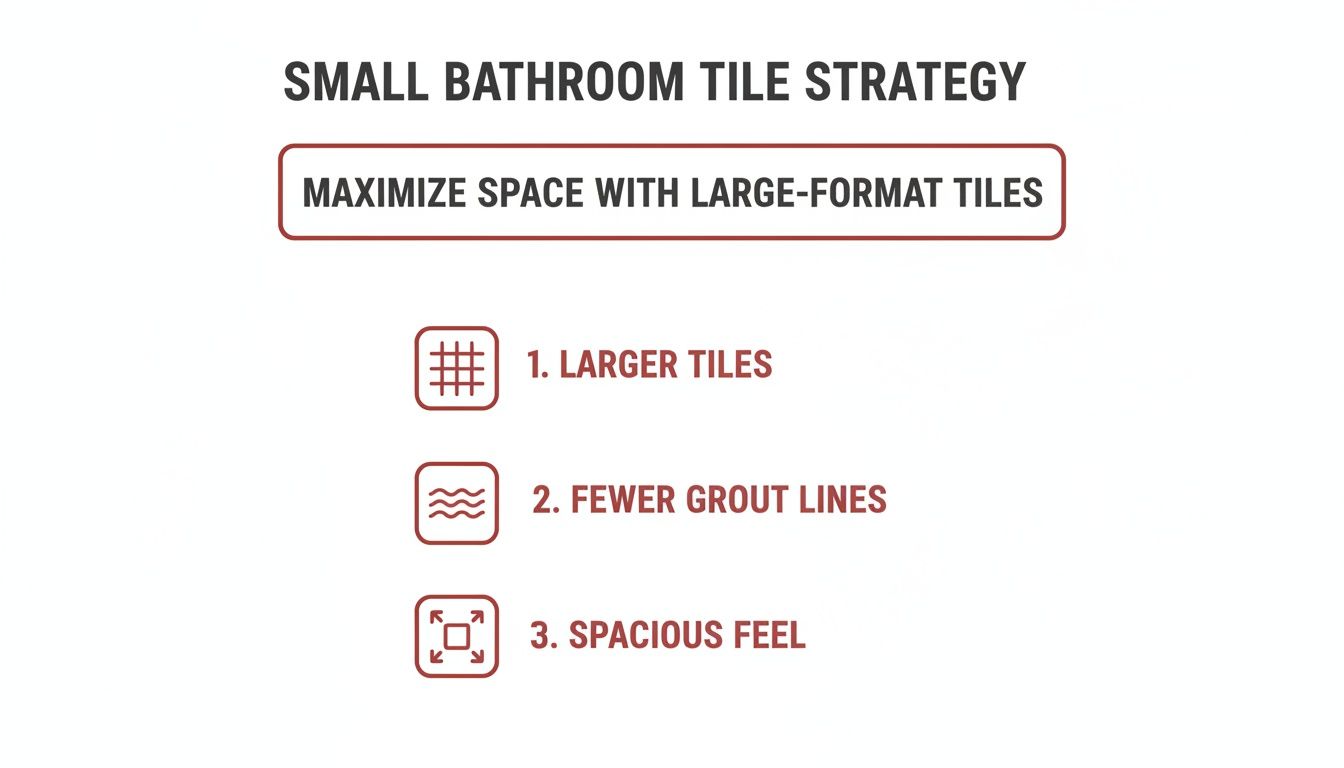
As you can see, it's all about creating that illusion of space with bigger tiles and less grout. It's a simple change that makes a huge difference.
The Psychology of Perception
Choosing the "best tile size for small bathroom" is less about the physical dimensions and more about playing with perception. It’s about how your eyes travel across the room and how light bounces off the surfaces. With fewer grout lines, you get a serene, continuous canvas that lets other design elements—like a beautiful vanity or stylish fixtures—truly shine.
This isn't just a design theory; the effect is measurable. A 2022 industry study found that participants perceived small bathrooms with large-format tiles as being 15-20% larger than those with small, busy tiles. That’s a massive change in feel without ever touching a wall. If you're interested in the data, you can read more about these kinds of [consumer perceptions on the global tile market](https://www.fortunebusinessinsights.com/tiles-market-102Tiles Market).
So, stop trying to match the tile size to the room size. Instead, focus on creating a clean, unified look.
Here are the goals we're aiming for:
- Reduce Visual Clutter: The main objective is to have as few grout lines as possible on your floors and primary walls.
- Create Continuity: A seamless appearance helps blur the boundaries of the room, making it feel less boxed-in.
- Enhance Light Reflection: Larger, smoother surfaces are better at bouncing light around the room, which is crucial for making any small space feel brighter.
Quick Guide to Small Bathroom Tile Sizes
To make it even simpler, here's a quick rundown of what we recommend for different areas of your bathroom.
| Area of Bathroom | Recommended Tile Size Range | Primary Benefit |
|---|---|---|
| Floors | 12" x 24", 24" x 24", or large planks | Creates an expansive, seamless look |
| Shower Walls | 12" x 24", large-format subway tile | Minimizes grout for easy cleaning and a modern feel |
| Main Walls | 12" x 24" or even larger panels | Makes walls recede, enhancing the sense of space |
| Accent Areas | Mosaics, penny tiles, or small hex | Adds texture and personality in small doses |
This table gives you a solid starting point for planning your project. The key is to use larger formats for the main surfaces and save the smaller, more intricate tiles for accent areas where you want to draw the eye.
Choosing Floor Tiles to Maximize Your Space
The floor is the very foundation of your bathroom's design. Getting this one choice right can make a small bathroom feel surprisingly spacious. The secret? Minimize visual clutter.
Think of it like this: your floor is a canvas. If you fill it with lots of tiny tiles, you create a busy grid of grout lines that chops the whole space up. It feels distracting and cramped. But when you use medium or large-format tiles—like 12×24 inch planks or big 18×18 inch squares—you create a smoother, more unified surface.
With far fewer grout lines interrupting the view, the floor reads as one continuous plane. It’s a simple but powerful visual trick that makes the entire room feel more open, airy, and even a bit more luxurious.
The Power of Tile Layout
Beyond just the size of the tile, how you lay it can completely change the feel of the room. A classic designer trick for a narrow bathroom is to lay rectangular tiles on a diagonal. This simple shift draws your eye along the longest possible line, which instantly makes the room feel wider and less cramped.
Another fantastic strategy is to run the same large-format tile from the floor right up the walls. This creates a seamless, cohesive look that literally blurs the boundaries of the room. The effect is a grand, spa-like environment where it's hard to tell where the space begins or ends.
Key Takeaway: For small bathroom floors, the goal is to create an unbroken visual plane. Fewer grout lines and clever layouts fool the eye into seeing a much larger, more cohesive space.
Don't Forget Durability
Of course, a beautiful floor has to be a practical one, especially in a bathroom. For a high-moisture, high-traffic area, you really can't beat porcelain tile. It’s incredibly dense and less porous than regular ceramic, so it stands up brilliantly to water, stains, and scratches.
It's interesting, though—while designers often push for larger tiles to create that illusion of space, smaller, classic sizes are still incredibly popular. The global ceramic tile market was valued at a massive USD 186.70 billion in 2023, and guess what? The humble 6×6 inch tile was still statistically preferred in 62% of small bathroom installations worldwide. That trend is strong here in North America too, where smaller tiles accounted for 55% of choices in bathroom remodels, a number likely boosted by the 12% rise in tiny home construction. You can dig into these market trends and their impact on design to see how these numbers stack up.
Ultimately, whether you go big or stick with a classic, always choose a material that can handle the daily grind while helping you achieve that open, spacious feeling you're after.
Make Walls and Showers Feel Taller and Brighter
While floor tiles ground the room, your wall and shower tiles are what truly lift the space. They have the unique ability to make a small bathroom feel taller, brighter, and more expansive.
When it comes to walls, you can't go wrong with rectangular tiles. The classic 3×6 inch subway tile is a favorite for a reason, but don't shy away from larger formats like 4×12 inches. These larger tiles can actually make a small wall feel less busy.
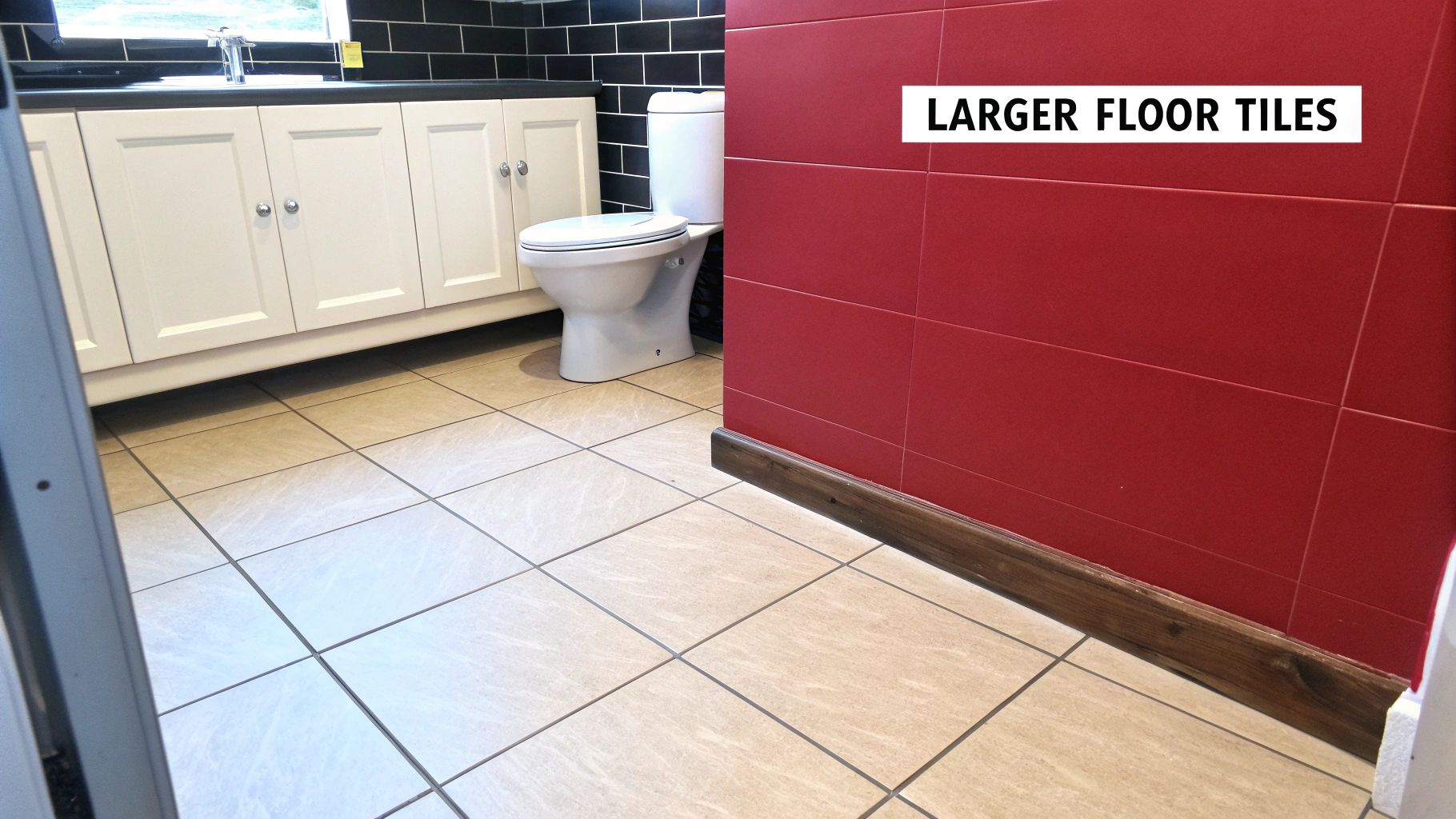
The real trick, though, isn’t just the tile itself—it’s how you lay it. The installation pattern is where the magic happens, guiding the eye and completely changing how you perceive the room's dimensions.
Use Patterns to Manipulate Space
Think of your tile layout as a clever optical illusion. Two of the most effective patterns we use in small bathrooms are the horizontal and vertical stack bonds. It all comes down to what you want to achieve.
- Go Horizontal for Width: Laying rectangular tiles horizontally makes a narrow room feel wider. This pattern, whether a classic running bond or a modern straight set, pulls the eye from side to side and creates a welcome sense of spaciousness.
- Go Vertical for Height: If you want to make a low ceiling feel higher, stack your tiles vertically. This simple change draws the eye upward, giving even a compact shower a touch of grandeur and a much more open feel.
Beyond the tile, consider pairing your new walls with frameless glass shower screens and enclosures. This is a game-changer for small bathrooms. By removing visual barriers, the shower becomes part of the room instead of a boxed-off cubicle, letting light flow freely.
The Power of Finish and Flow
Another piece of the puzzle is the tile’s finish. In a bathroom that’s short on windows, a glossy or polished finish is your secret weapon. These surfaces work like mirrors, reflecting both natural and artificial light around the room. The result is a space that instantly feels brighter and more alive.
For the ultimate illusion of space, create a seamless look by running the same wall tile from the main bathroom area straight into the shower. This continuous surface eliminates the visual breaks that can chop up a small room, creating a clean, unified backdrop that makes the entire space feel bigger.
Why Grout Color Is as Important as Tile Size
You’ve finally landed on the perfect tile. Great! But the job is only half done. The unsung hero of any great tile installation is the grout, and getting the color and width right can make or break your design—especially in a small bathroom.
Think of grout as the frame around a picture. The right choice makes the art pop, but the wrong one just distracts from it.
When you're working with a compact space, the goal is almost always to create a seamless, expansive feel. The most powerful way to do that? Match your grout color as closely as possible to your tile color. It’s a simple trick, but it works wonders. The grout lines practically disappear, tricking your eye into seeing one large, continuous surface instead of a busy grid of individual tiles.
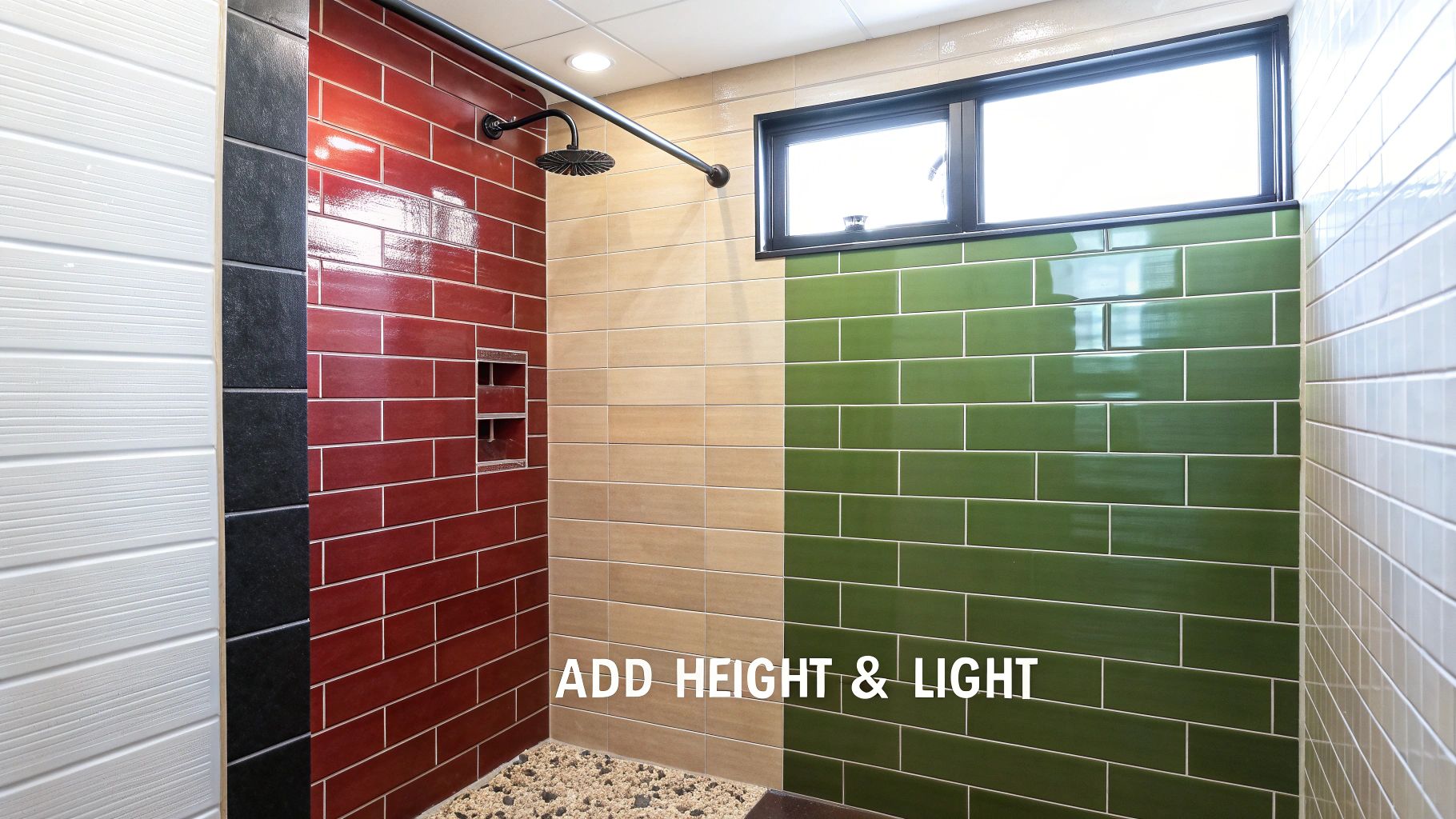
On the flip side, high-contrast grout—like pairing black grout with classic white subway tile—creates a bold, graphic pattern. While it's a fantastic look for the right space, all those lines chop up the surface and can make a small bathroom feel even more cluttered and confined. If you want to maximize the feeling of space, blending is always better.
For the Cleanest Look, Ask About Rectified Tiles
Want to take this seamless strategy to the next level? Talk to your installer about using rectified tiles. These are ceramic or porcelain tiles that have been machine-cut to a precise, uniform size after the firing process. This gives them perfectly straight, sharp edges.
That precision is what allows for incredibly thin grout lines.
With rectified tiles, a skilled installer can set grout joints as narrow as 1/16" or 1/8". When you pair those razor-thin lines with a color-matched grout, they become almost invisible. It’s the secret to getting that truly clean, high-end, and expansive look.
Standard, non-rectified tiles have slightly rounded edges that aren't perfectly consistent, so they require wider grout lines (usually 3/16" or more) to hide those little variations. You can still get a great look, of course, but it won't be quite as flawless.
So, if you really want to knock it out of the park, combine large-format tiles with rectified edges and a grout that blends right in. It's the ultimate triple-threat for making a small bathroom feel bigger. It’s an investment in the details, but the payoff is a stunning, open, and modern space. When you're planning your project with Trademaster Construction, we can show you exactly how these small decisions create a massive impact.
Smart Design Tricks to Make Your Bathroom Feel Larger
Once you've got your tile and grout strategy locked in, a few more design choices can take your small bathroom from just functional to truly fantastic. These are tried-and-true techniques that work in tandem with your tile selection to create a powerful illusion of space, making the whole room feel more open and even a bit luxurious.
One of the most effective tricks in the book is creating continuity. When you use the same tile on both the floor and the walls, you essentially erase the hard boundaries of the room. This creates a seamless, spa-like effect that lets your eye travel without interruption, making the entire space feel bigger and more unified.
Use Patterns and Fixtures Strategically
Even though a continuous look is powerful, it doesn't mean you can't have a little fun with patterns. The secret is to be intentional about it. Think about installing a dynamic pattern, like a herringbone or chevron, on a single accent wall. The wall behind the vanity or at the far end of the shower is a perfect spot for this—it adds a pop of visual excitement without making the room feel busy or cluttered.
Another brilliant move is to simply show more of the floor. It’s a simple psychological trick: the more floor you see, the bigger your brain thinks the room is. This is where your choice of fixtures really comes into play.
- Wall-Mounted Vanities: Floating vanities are a total game-changer for small bathrooms. Lifting the cabinet completely off the floor creates an unbroken sightline that instantly makes the room feel wider and much airier.
- Wall-Mounted Toilets: A wall-hung toilet works the same magic. The tank is hidden away in the wall and the bowl is lifted off the ground, which not only frees up a few precious inches but also makes cleaning a breeze.
- Recessed Niches: Forget those clunky shower caddies that jut out into your space. Instead, build recessed niches directly into the shower wall for a streamlined, clutter-free way to store your essentials.
By combining these elements, you’re not just saving physical space; you’re enhancing the visual space. Every inch of visible floor tile contributes to a more open and organized atmosphere.
The Finishing Touch: Mirrors and Light
Finally, let’s talk about the ultimate tool for amplifying space: a big mirror. A generously sized mirror can literally double the room’s perceived size by reflecting all that beautiful new tile and bouncing light into every last corner. It's the oldest trick in the designer's handbook for a reason!
To get this right, it’s worth doing a little homework. Consulting a good homeowner's bathroom mirror size guide can help you figure out how different dimensions will play with the proportions of your specific room. Pair that perfect mirror with smart lighting, and you’ll guarantee your bathroom feels bright, open, and inviting, no matter its actual square footage.
Ready to Remodel Your Small Bathroom in Southwest Michigan?
Hopefully, this guide has armed you with the confidence to tackle your small bathroom tile project. We’ve busted some old myths and shared practical tips on everything from layouts to grout, giving you the tools to create a space that feels open, airy, and anything but small.
The big takeaways are pretty straightforward: think bigger tiles for floors to create a less busy look, use wall patterns to your advantage, and match your grout to your tile for that seamless, expansive feel. Now, it’s time to turn that vision into a reality.
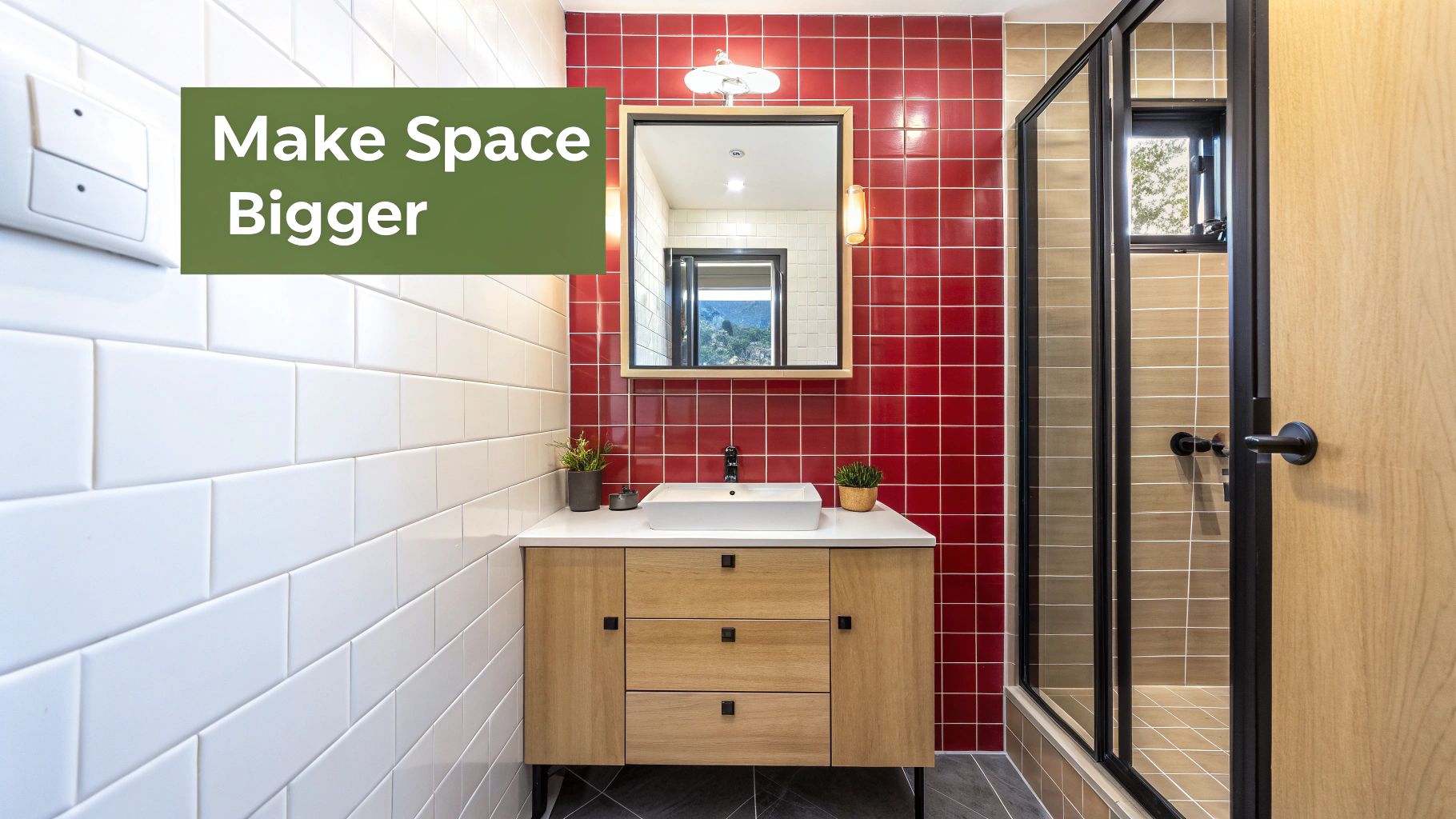
For homeowners here in Southwest Michigan, translating these ideas into a finished bathroom is where we come in. At Trademaster Construction, we’re the local team that specializes in transforming compact bathrooms into beautiful, functional spaces you'll love for years.
Your Local Tile and Remodeling Experts
We know the homes in the Kalamazoo and Portage areas. We understand the unique challenges and opportunities they present. Our team has built a reputation for renovations that maximize every single square inch, blending meticulous craftsmanship with a real-world understanding of what makes a design work. We don't just lay tile; we create cohesive, thought-out spaces that make your daily routines better.
From helping you pick out the perfect large-format porcelain for your floor to designing a custom shower niche that’s both stylish and practical, we’re with you every step of the way. Our entire process is built on clear communication and an unwavering commitment to quality, ensuring your project not only reflects your personal style but is also built to last.
We truly believe that a small bathroom doesn’t have to feel small. With the right design, the right materials, and expert installation, it can easily become a highlight of your home.
So, whether you're planning a complete gut renovation or a simple tile update that makes a big impact, our team is ready to get to work. We bring years of hands-on experience and a genuine passion for creating stunning results, no matter the size of the room.
If you’re ready to get started and see just how much the right tile can transform your space, the next step is easy. Contact Trademaster Construction today for a consultation, and let's work together to build a bathroom you'll be proud of.
Your Top Questions About Small Bathroom Tiles, Answered
Alright, so you've got a plan, but a few nagging questions might still be floating around. That’s completely normal. Let’s tackle some of the most common things we hear from homeowners, so you can move forward with your project feeling totally sure of your choices.
Think of this as a final sanity check before you start pulling up that old floor.
Can I Use Dark Colored Tiles in My Small Bathroom?
Yes, you absolutely can—and it can look incredible when you do it right. Dark floor tiles, for instance, can add a ton of depth and sophistication. It’s a bold move, but one that can make the room’s edges almost disappear, giving it a larger, more grounded feel.
The trick is to create balance. If you go dark on the floors, you need to bring in light elsewhere. Think lighter walls, great lighting fixtures, and a big mirror to bounce all that light around. This keeps the space from feeling like a cave. A large, dark tile with a closely matched grout line is a fantastic way to nail that sleek, modern look.
Are Mosaic Tiles a Bad Idea for a Small Bathroom?
Not a bad idea, just one that needs a very specific job. The problem with mosaics is the sheer number of grout lines. All those little squares can create a ton of visual noise, making a small room feel chaotic and even smaller. That’s why I almost never recommend them for the main floor or all four walls.
But as an accent? They’re perfect for injecting a bit of personality.
- Shower Niche: They’re brilliant for creating a little jewel box effect inside a shower niche.
- Feature Wall: A thin vertical stripe of mosaic behind the sink or toilet adds texture and a focal point without overwhelming the eye.
- Powder Room Floor: In a tiny powder room, a busy mosaic can sometimes work its magic, creating an intentional, rug-like effect that feels like a design statement.
What Is the Most Durable Type of Tile for a Bathroom?
Hands down, porcelain is the undisputed champion here, especially for floors. It’s fired at a higher temperature than standard ceramic, making it much denser and way less porous. That means it’s incredibly resistant to water, stains, and scratches from daily life.
Because it absorbs so little water, porcelain is the go-to material for wet zones like shower floors and walls. When you're shopping, keep an eye out for the PEI (Porcelain Enamel Institute) rating. You'll want a tile with a PEI rating of at least 3 for residential floors.
Should Shower Tile Match the Bathroom Floor Tile?
It’s a fantastic strategy for making a small bathroom feel bigger. When you run the same tile from the main floor straight into a curbless shower, you create one continuous, unbroken surface. This visual trick erases the boundary of the shower, making the entire room feel more expansive.
If you choose this path, just make sure the tile has a good, slip-resistant finish for safety. The alternative is to pick a smaller, coordinating tile for the shower floor itself. This not only adds grip but also makes it easier for your installer to create the proper slope for the drain.
Ready to turn your compact bathroom into a retreat that feels open and beautiful? The team at Trademaster Construction has been helping homeowners in Southwest Michigan do just that for years. Start planning your project today.

