
For homeowners here in Portage and Kalamazoo, the answer is usually pretty clear: porcelain and ceramic tiles are overwhelmingly the best choice for bathroom walls. If you're tiling a high-moisture area like a shower, porcelain's superior water resistance is hard to beat. For general bathroom walls, a high-quality ceramic tile offers a fantastic blend of durability, style, and value.
Ultimately, both options deliver a great balance of longevity, easy maintenance, and design versatility that works perfectly for our local homes.
Choosing the Right Tile for Your Bathroom Walls
Picking out the perfect tile is one of the biggest moments in a bathroom remodel. It’s about so much more than just color; this decision directly impacts your home's long-term health and value. Think of your wall tile as the first line of defense against moisture, constantly working to protect your walls from water damage, mold, and mildew.
Before you get lost in the showroom, it helps to understand what makes a tile suitable for a bathroom in the first place. You have to look past the pretty surface and consider things like water absorption rates, how it will hold up to daily wear and tear, and what it’ll take to keep it looking new. A tile's ability to repel water is non-negotiable in a bathroom, which is why some materials are rock stars in a shower surround while others are better left for a backsplash.
Key Factors to Evaluate
Before we jump into specific materials, let's nail down the criteria that truly matter. These are the guideposts that will help you choose a tile that fits your lifestyle, budget, and the look you’re going for.
- Moisture Resistance: This is the big one. How well does the tile block water from getting to your walls?
- Durability and Longevity: Will it stand up to daily use, cleaning, and the occasional bump without chipping or cracking?
- Maintenance Needs: Honestly, how much work will it be to keep the tile clean and free from soap scum or mildew?
- Aesthetic Impact: Does the tile bring your design vision to life, whether that’s a modern spa or a classic, timeless retreat?
The global market backs this up, with ceramic and porcelain tiles dominating sales for good reason—they just perform. In fact, market analysis shows porcelain holds a 52.4% market share within the ceramic tile category. With the residential sector projected to grow at a rate of 6.8%, it's clear homeowners are investing in quality bathroom upgrades. You can explore more data on the tile market to see these trends for yourself.
Quick Comparison of Core Tile Attributes
| Attribute | Why It Matters for Bathroom Walls | Top Performing Materials |
|---|---|---|
| Water Absorption | Prevents moisture from penetrating the wall, stopping mold growth and structural damage. | Porcelain (<0.5%), Glazed Ceramic |
| Durability | Resists scratches, chips, and stains from everyday bathroom products and cleaning. | Porcelain, Natural Stone (sealed) |
| Ease of Cleaning | Smooth, non-porous surfaces simplify the removal of soap scum and hard water stains. | Glazed Ceramic, Porcelain, Glass |
| Design Flexibility | Offers a wide range of colors, patterns, and sizes to match any aesthetic. | Ceramic, Porcelain, Mosaic |
A Detailed Comparison of Bathroom Wall Tile Materials
Diving into the world of bathroom wall tiles can feel like a huge task, but it gets a lot simpler when you break it down by material. Instead of a generic pros-and-cons list, let's put the four most popular options—porcelain, ceramic, natural stone, and glass—head-to-head. We'll compare them on the factors that actually matter in a high-moisture space like your bathroom. This side-by-side look will uncover the small but crucial differences that affect how your walls will look and last for years to come.
This decision tree is a great starting point. It helps you zero in on what's most important to you, whether it’s fighting off moisture, standing up to daily life, or achieving a specific look.
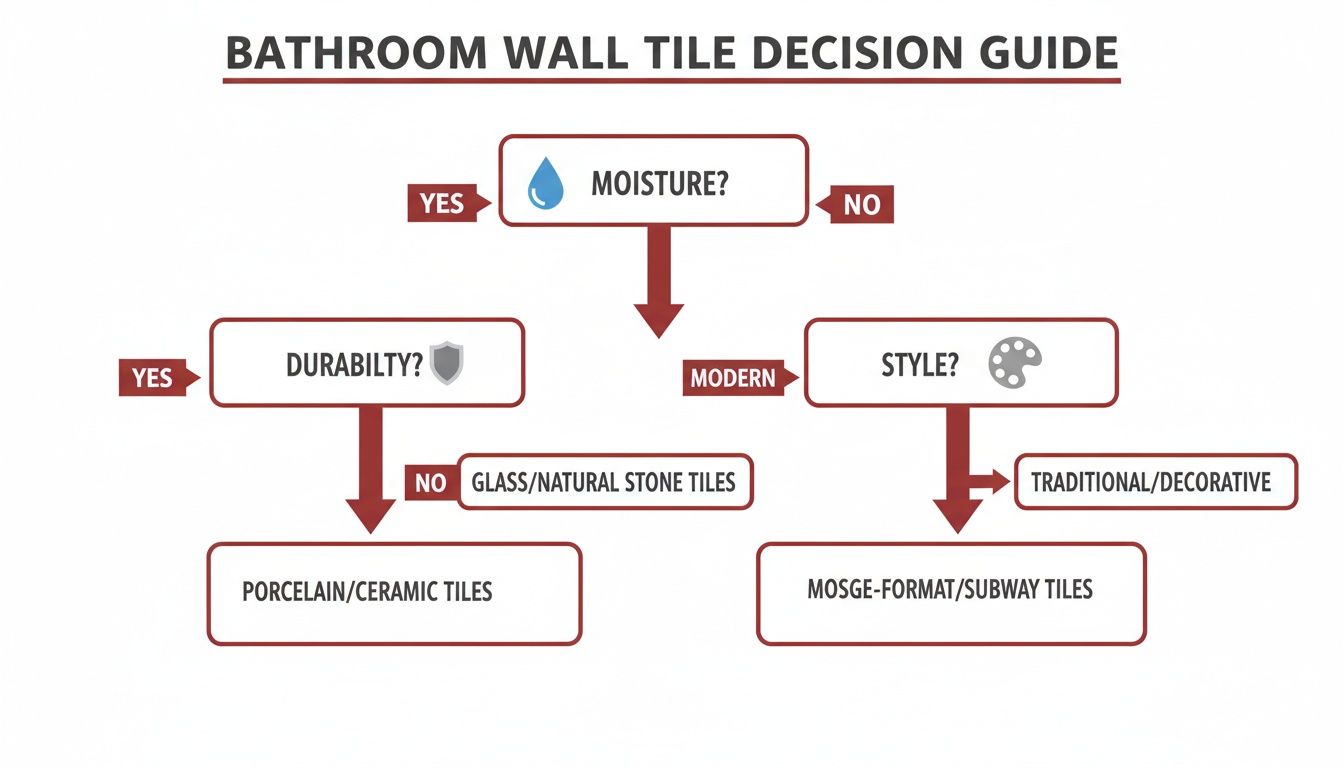
As you can see, the flowchart quickly guides you to the right material based on your top priority—be it water exposure, toughness, or pure aesthetics.
At-a-Glance Bathroom Wall Tile Comparison
To make things even clearer, here’s a quick-reference table that boils down the key attributes of the most popular bathroom wall tile materials. It’s a great way to see how they stack up at a glance.
| Tile Type | Moisture Resistance | Durability | Maintenance Level | Ideal Use Case |
|---|---|---|---|---|
| Porcelain | Excellent (Waterproof) | Very High | Low | Shower surrounds, high-traffic family bathrooms |
| Ceramic | Very Good | High | Low | General bathroom walls, backsplashes, budget-conscious remodels |
| Natural Stone | Good (Requires Sealing) | High | High (Regular Sealing) | Luxury primary baths, accent walls (low-splash zones) |
| Glass | Excellent | Moderate | Low-to-Medium | Accent walls, decorative niches, contemporary backsplashes |
This table provides a snapshot, but the real story is in the details. Let's dig deeper into how these materials perform in real-world scenarios.
Moisture Performance: Porcelain vs. Ceramic
Both porcelain and ceramic are heavyweights when it comes to moisture resistance, making them the standard choices for bathroom walls. The real difference, however, comes down to their water absorption rates. While standard ceramic is perfectly fine for most bathroom walls, porcelain is the undisputed champion for wet zones like shower surrounds.
What gives porcelain the edge? It’s fired at much higher temperatures and made from a denser, more refined clay. This process results in an incredibly low water absorption rate of less than 0.5%. Its nearly impermeable surface provides the ultimate shield against water, a must-have for walls that are constantly soaked.
Glazed ceramic tile also holds its own, but the tile body underneath is more porous. If the glaze gets chipped or cracked, moisture can eventually work its way in. Think of it this way: ceramic is an outstanding choice for the main bathroom walls, while porcelain is a specialized upgrade for the wettest areas.
Durability and Daily Use: Natural Stone vs. Porcelain
When it comes to pure toughness, porcelain once again sets the bar high. Its incredibly dense body makes it highly resistant to scratches, cracks, and the general chaos of daily life. It shrugs off cleaning chemicals and accidental bumps, making it a "set it and forget it" option for a busy Portage household.
Natural stone, like marble or travertine, brings a different kind of durability to the table. These materials are undeniably strong and can last a lifetime, but they're also more vulnerable in a bathroom. Stone is naturally porous and absolutely requires regular sealing to guard against moisture and stains.
The critical trade-off with natural stone is its susceptibility to etching. Everyday bathroom products containing acids—from certain cleaners to some soaps—can permanently dull the stone's polished surface. Porcelain, on the other hand, is virtually immune to this kind of chemical damage.
This makes porcelain the more practical pick for a family bathroom. Natural stone is often better reserved for a primary or guest bathroom where you have more control over maintenance.
Maintenance and Cleaning: Glass vs. Ceramic
Let’s be honest, nobody wants to spend their weekend scrubbing walls. Both glass and glazed ceramic tiles have smooth, non-porous surfaces that are a breeze to wipe down. Soap scum and hard water stains come off with minimal effort, putting them squarely in the low-maintenance camp.
Glass does have one small catch: it’s fantastic at showing water spots and smudges. While it's easy to clean, you might find yourself wiping it down more often to keep that pristine, reflective shine. It’s a showstopper for an accent wall but could become a bit of a chore in a high-use shower.
Glazed ceramic tile, especially with a matte or satin finish, is much more forgiving. It does a great job of hiding minor water spots and fingerprints, cutting down on your cleaning time. Its blend of a tough glaze and endless style options makes it one of the most practical, easy-care choices for any bathroom wall.
Design Versatility and Installation
All four of these materials can create stunning bathrooms, but they each lend themselves to different styles and have unique installation needs.
- Ceramic and Porcelain: These offer the most extensive range of styles, from simple solid colors to complex patterns that convincingly mimic wood or stone. Their uniform size and shape make for a relatively straightforward installation, which helps keep labor costs in check.
- Natural Stone: Every piece of natural stone is unique, creating a truly one-of-a-kind, luxurious space. That variation, however, demands a skilled installer who can artfully blend the tiles. Stone is also heavier and often trickier to cut than ceramic.
- Glass: Glass tile is a master at reflecting light, which can make a small Kalamazoo bathroom feel brighter and more spacious. Mosaics are especially popular for creating eye-catching feature walls or decorative niches. Installation requires a specialist, as adhesive can show through transparent tiles, and the material is more prone to chipping during cuts.
Ultimately, choosing the best tile for your bathroom walls comes down to balancing these practical factors. Porcelain delivers unmatched performance in wet areas, ceramic offers fantastic value and style, natural stone provides timeless luxury (with a maintenance commitment), and glass creates a bright, modern vibe.
7. Beyond the Basics: Exploring Modern and Specialty Tiles
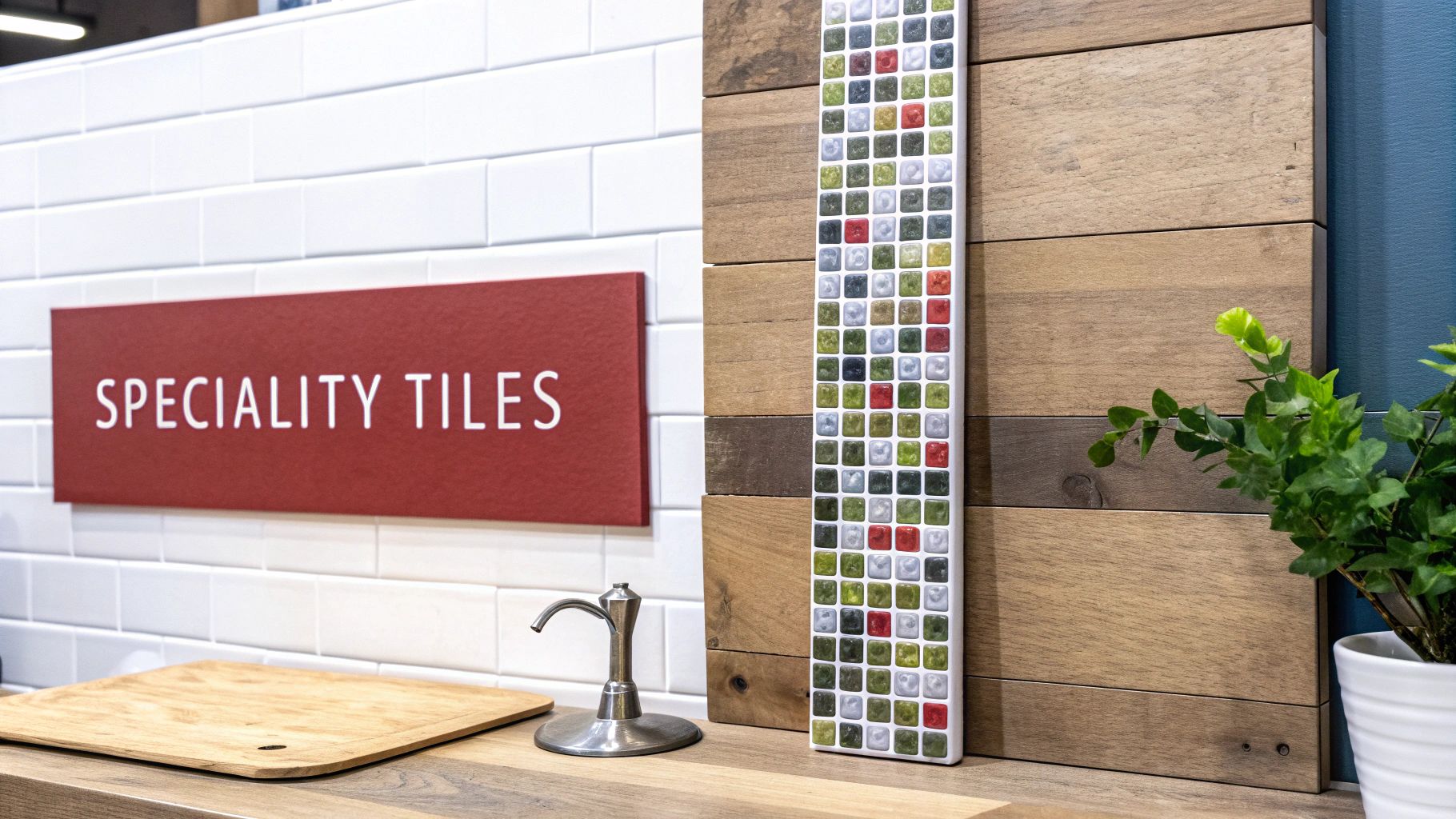
Once you get past the workhorses like porcelain and ceramic, the world of bathroom tile really opens up. This is where you can inject serious personality into your space. Think of these options as less about just covering a wall and more about making a design statement. Whether you’re aiming for a sleek, modern look with huge tiles or a detailed, artistic flair with mosaics, these specialty choices can elevate a bathroom from functional to fabulous.
These aren't your everyday, whole-room tiles (though they can be!). Often, they're used to create a stunning feature wall, add a pop of texture, or even solve a design problem, like making a cramped bathroom feel spacious. Let's dive into a few of these styles and see how they can transform your bathroom.
8. The Big Impact of Large-Format Tiles
If you want a clean, almost seamless look, large-format tiles are your answer. We're talking about tiles with at least one side longer than 15 inches. Their biggest selling point? Far fewer grout lines. This creates a monolithic, visually expansive surface that feels incredibly modern and uncluttered.
But this minimalist vibe is more than just looks—it's incredibly practical. Fewer grout lines mean less space for mildew and soap scum to take hold, which makes cleaning a breeze. For a smaller bathroom in a Portage or Kalamazoo home, using large-format tiles in a light, bright color is a classic designer trick to make the room feel much bigger and more open.
9. The Unbeatable Charm of Subway Tiles
Subway tiles are a design staple for good reason. That simple, clean rectangle is a chameleon, fitting in everywhere from vintage-inspired bathrooms to sleek, contemporary ones. They got their start in New York City subway stations, and that classic, glossy finish brings a certain timeless brightness to a room.
The real creative power of subway tiles comes from how you lay them and what color grout you choose.
- Classic Offset: The traditional running bond pattern is never going out of style. It just works.
- Herringbone or Chevron: Arranging the tiles in a "V" pattern adds a touch of sophisticated energy, perfect for a feature wall behind a vanity or in a shower.
- Vertical Stack: For a more modern, architectural feel, stack the tiles straight up. This can also create the illusion of higher ceilings.
You can completely change the vibe by playing with grout. Pairing white subway tiles with a dark gray or black grout creates a bold, graphic look. Or, use a matching white grout for a subtle, seamless effect that highlights the tile's clean shape. When paired with modern fixtures like frameless glass shower screens and enclosures, the look is pure, clean-lined perfection.
10. Artistic Flair With Mosaics and Metal Tiles
Ready to add some real artistry? Mosaic tiles offer almost unlimited creative freedom. These tiny tiles, often made of glass, stone, or ceramic, come mounted on mesh sheets, which simplifies installation quite a bit. Their small size is perfect for creating intricate patterns, custom murals, or dazzling accent borders.
A fantastic way to use mosaics is to feature them in a shower niche or as a decorative "waterfall" stripe running vertically down a wall. It introduces color and texture without overpowering the room, turning a simple functional spot into a beautiful focal point.
Metal tiles are another specialty option, though they are best used as an accent. Finishes like stainless steel, copper, and bronze can bring an industrial-chic vibe or a touch of warm glamour. Just be mindful that they can scratch and tend to show water spots, so they’re better suited for a backsplash behind the sink rather than inside a high-moisture shower enclosure.
Understanding Grout, Waterproofing, and Installation
You can pick the most beautiful tile in the world, but if the installation isn't handled correctly, you're setting yourself up for failure. The real heroes of a lasting bathroom renovation are the things you don't always see: the waterproofing membrane and the grout holding it all together.
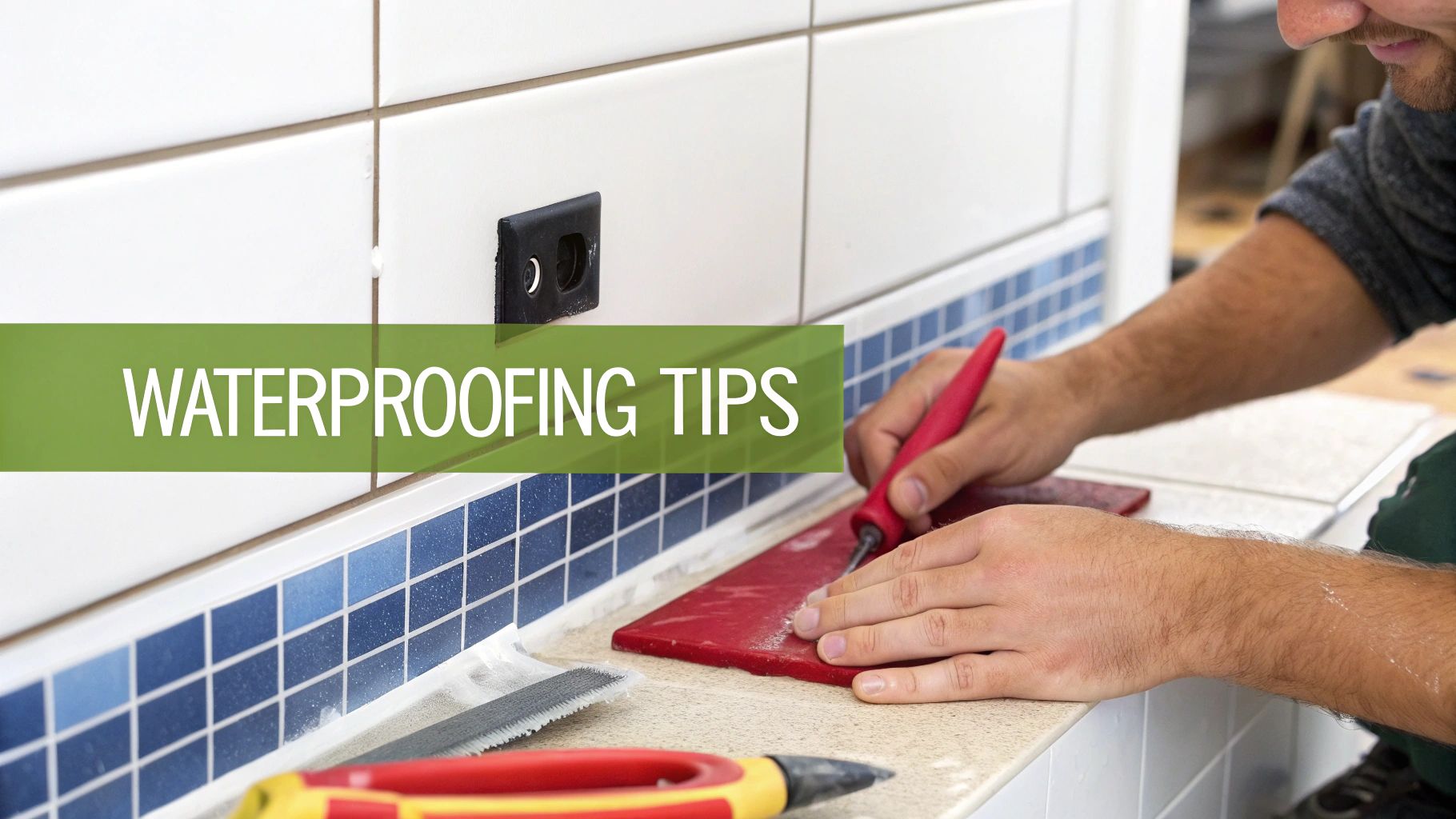
Let’s talk about the single most important part of the equation: the waterproofing membrane. This is a layer that gets applied to the wall before a single tile is set. For a shower or tub surround, it’s not optional—it’s essential. Without it, steam and water will eventually work their way through the grout and tile, leading to hidden mold, mildew, and even structural rot.
What’s the Big Deal with Grout?
Grout does more than just fill the gaps between your tiles. It’s a crucial part of the structure, locking everything into place and creating a unified, water-resistant surface. Choosing the right grout can make all the difference in how your bathroom walls hold up over time.
For years, cement-based grout was the go-to choice, and it still has its place. It generally comes in two forms:
- Sanded Grout: Best for wider grout lines (1/8 inch or more), the sand adds strength and prevents the grout from cracking as it cures.
- Unsanded Grout: A smoother mix used for tight grout lines (less than 1/8 inch). It's the right choice for delicate materials like glass or polished stone that could be scratched by the sand.
The catch with traditional grout is that it's porous. It needs to be sealed right after installation and then re-sealed periodically to keep stains and moisture out.
A Smarter Choice: Modern Grout Solutions
If you're looking for better performance, especially in a shower, it’s worth looking at epoxy or urethane grouts. These newer formulas are a game-changer. Epoxy grout, for instance, isn't porous at all. It cures through a chemical reaction, making it incredibly tough against stains, water, and harsh cleaning products.
The best part? You never have to seal it, and it's far less likely to grow mold or mildew. While it costs a bit more upfront and needs a skilled hand to install, the trade-off is years of low-maintenance durability.
Think of your grout choice as a long-term investment. Spending a little extra on epoxy or urethane grout now can save you countless hours of scrubbing stained, grimy grout lines down the road.
While some maintenance is manageable, ensuring a completely watertight and durable installation often calls for a professional tile grout service.
Grout as a Design Tool
Don't forget that grout color is also a powerful design element. It can completely change the vibe of your space.
- To Blend In: Matching the grout to your tile creates a seamless, uniform look. This is a great trick for making a smaller bathroom feel more spacious or for letting a busy tile pattern take center stage.
- To Stand Out: A contrasting grout color—think dark charcoal with classic white subway tiles—makes the tile pattern pop. This adds a bold, graphic feel that highlights the shape and layout of your tiles.
A successful tile installation is a complete system. Every piece, from the hidden waterproofing to the visible grout lines, has a job to do. Understanding how they all work together helps you make smarter decisions and ensures your bathroom not only looks fantastic but is built to last.
Picking the Right Tile for Your Life (and Your Wallet)
Knowing the specs of different tiles is one thing, but feeling confident you've picked the right one for your home is something else entirely. The best tile for your bathroom walls isn't just about what it's made of; it's about how it fits into your daily routine, your style, and your budget.
Let's bridge that gap. We'll move beyond general facts and dive into four real-world scenarios we see all the time with homeowners here in Portage and Kalamazoo. Think of this as a practical guide to connect the dots, so you can see exactly which tile makes the most sense for you.
For Busy Families with Young Kids
Life with kids is beautifully chaotic. Bathroom walls in a family home need to withstand everything from cannonball-level bath splashes to sticky fingerprints and the occasional run-in with a toy. In this environment, your walls need to be tough and ridiculously easy to clean.
This is where porcelain tile is the undisputed champion.
Its water absorption rate is practically zero, so it just laughs off water and steam, protecting the wall behind it. The tile itself is incredibly dense and hard, making it highly resistant to the scratches, chips, and stains that come with family life. Best of all, a quick wipe is usually all it takes to make it look new again.
Want the ultimate low-maintenance setup? Go with large-format porcelain tiles and ask your installer to use epoxy grout. You’ll have far fewer grout lines to ever worry about scrubbing, giving you a little bit of your weekend back.
For a Stylish Remodel on a Smart Budget
You don’t need to break the bank to get a bathroom that looks like a million bucks. When you need that perfect balance of high-end style and real-world cost, glazed ceramic tile is your go-to. Thanks to modern manufacturing, ceramic now comes in a staggering variety of colors, patterns, and sizes that convincingly mimic much pricier materials.
You can get the timeless look of marble or the warm feel of wood, all for a fraction of the cost and without the fussy upkeep. Ceramic is still plenty durable and moisture-resistant for any bathroom wall outside of a direct shower surround. By choosing a classic design—like a simple white subway tile—you create a look that won’t feel dated in a few years, giving you a fantastic return on your investment.
Key Insight: A budget-friendly remodel gets its value from smart, timeless choices. High-quality ceramic tile offers the best of both worlds, delivering long-lasting performance and aesthetic appeal without straining your finances, making it a favorite for practical Southwest Michigan homeowners.
For an Aging-in-Place or Accessible Design
When you’re designing a bathroom to be safe and functional for years to come—like an "aging-in-place" remodel with a curbless shower—every choice matters. While the floor tile’s texture is crucial for slip resistance, the wall tile plays a huge role in creating a safe, cohesive, and easy-to-maintain space.
Here again, porcelain tile is an outstanding choice, especially in a matte or lightly textured finish. Its durability is a major plus in a bathroom that might need to accommodate a walker or other mobility aids. Even more importantly, it's so easy to clean, which reduces the physical effort needed for upkeep. Using large-format porcelain tiles also means fewer grout lines, which not only simplifies cleaning but also makes the room feel more open and spacious—a common goal in accessible design.
For the Ultimate Spa-Like Retreat
If your dream is a personal sanctuary—a place to truly unwind—your tile choice can make all the difference. To create that luxurious, spa-like atmosphere, natural stone like marble or travertine is often the first thing that comes to mind. Each piece is unique, creating a surface with an elegance and depth that manufactured tiles just can't replicate. But this beauty comes with a catch: it requires serious maintenance, including regular sealing to prevent stains.
Looking for that same high-end vibe without the high-maintenance commitment? Consider glass mosaic tile. Glass plays with light in a way no other material can, making the entire bathroom feel brighter and more alive. A full feature wall of glass tile behind a freestanding tub or in a shower creates a stunning, high-impact focal point. It's totally waterproof and a breeze to wipe down, though you might notice water spots a bit more.
A great strategy is to mix materials: use a dazzling glass mosaic for that "wow" factor and pair it with sleek, large-format porcelain on the other walls. This gives you the best of both worlds—that luxurious spa feel while keeping the budget and long-term maintenance in check.
Got Questions About Bathroom Wall Tiles? We Have Answers.
Even with all the options laid out, it's natural to have a few more questions. Picking the right tile for your bathroom walls is a big deal, and it's the little details that make the difference between a good renovation and a great one. Here are some straightforward answers to the questions we hear most often from homeowners right here in Portage and Kalamazoo, designed to help you lock in your choice with total confidence.
We'll cover everything from what holds up best in a steamy shower to design hacks for making a small bathroom feel bigger. Think of this as the final checklist before you get started.
What Is the Most Durable Tile for a Shower Wall?
Hands down, porcelain tile is the undisputed champion for shower walls. Its incredible durability isn't an accident; it's engineered. Porcelain is made from super-fine clay fired at scorching-hot temperatures, which creates a tile that's incredibly dense and tough.
The key number to look at is the water absorption rate. A true porcelain tile has an absorption rate of less than 0.5%, which means it’s practically waterproof. This is absolutely critical inside a shower, as it forms a barrier that stops moisture from ever getting to your wallboard, preventing mold, mildew, and costly water damage.
Beyond being waterproof, porcelain also stands up to scratches, chips, and stains from everyday things like shampoo and soap. While something like natural stone is certainly strong, it's also porous and needs to be sealed regularly to offer similar protection. If you’re looking for a "set it and forget it" solution that offers maximum protection, porcelain is the way to go.
Can I Use Large Format Tiles in a Small Bathroom?
Not only can you, but you probably should! There's a persistent myth that big tiles will overwhelm a small bathroom, but the reality is just the opposite. Large-format tiles (think 12×24 inches or bigger) can make a small bathroom feel much more spacious and uncluttered.
The magic is in the grout lines—or rather, the lack of them. Fewer grout lines mean less visual clutter, creating a clean, continuous surface that tricks the eye into seeing a larger space. It’s one of the simplest and most effective design tricks in the book.
Want to take it a step further? Choose a lighter-colored tile to bounce more light around the room and match the grout color as closely as possible to the tile. This creates a seamless, monolithic look that really opens up the space.
How Do I Choose Between Ceramic and Porcelain Tile?
This decision really boils down to two things: where in the bathroom the tile is going and what your budget looks like. Both are great materials, but each has a specific role where it truly shines.
For general bathroom walls that don't get a direct, daily soaking—like the wall behind your vanity or toilet—a quality ceramic tile is a smart, budget-friendly choice. It's plenty durable, resists moisture well, and comes in a massive variety of colors and patterns.
However, for the "wet zones" like the inside of a shower or a tub surround, porcelain is the wiser long-term investment. Its near-zero water absorption gives you the ultimate peace of mind against water penetration and mold. While it might cost a bit more upfront, the superior performance and longevity in those critical areas easily justify the expense.
What Is the Easiest Bathroom Wall Tile to Keep Clean?
If low maintenance is your goal, look no further than large-format porcelain or ceramic tiles with a smooth, glazed finish. The logic here is pretty simple: the hardest part of cleaning a tiled wall is always the grout. That's where soap scum, mildew, and grime love to set up shop.
By using large tiles, you dramatically cut down on the amount of grout you have to scrub. The smooth, non-porous surface of glazed tile also means you can just wipe it clean without any real elbow grease.
For the ultimate easy-to-clean setup, pair those large tiles with a high-performance, stain-resistant grout like epoxy. While glass tiles are also a breeze to wipe down, they tend to be magnets for water spots and fingerprints, making smooth ceramic or porcelain the top pick for anyone who hates cleaning.
Ready to transform your bathroom with the perfect tile? The experts at Trademaster Construction are here to guide you through every step, from design to flawless installation. Use our convenient online tools to get started today.

