
Using blue tiles for a bathroom renovation is one of those timeless design moves. It’s a choice that can completely change the character of the room, turning it from just a functional space into a personal retreat that feels either incredibly calming or daringly bold. Whether you’re dreaming of a light, airy sky blue or a dramatic navy, you really can’t go wrong with blue’s versatility. Let's walk through how to bring that perfect blue-tiled bathroom to life in your own home.
Creating Your Personal Sanctuary with Blue Tiles
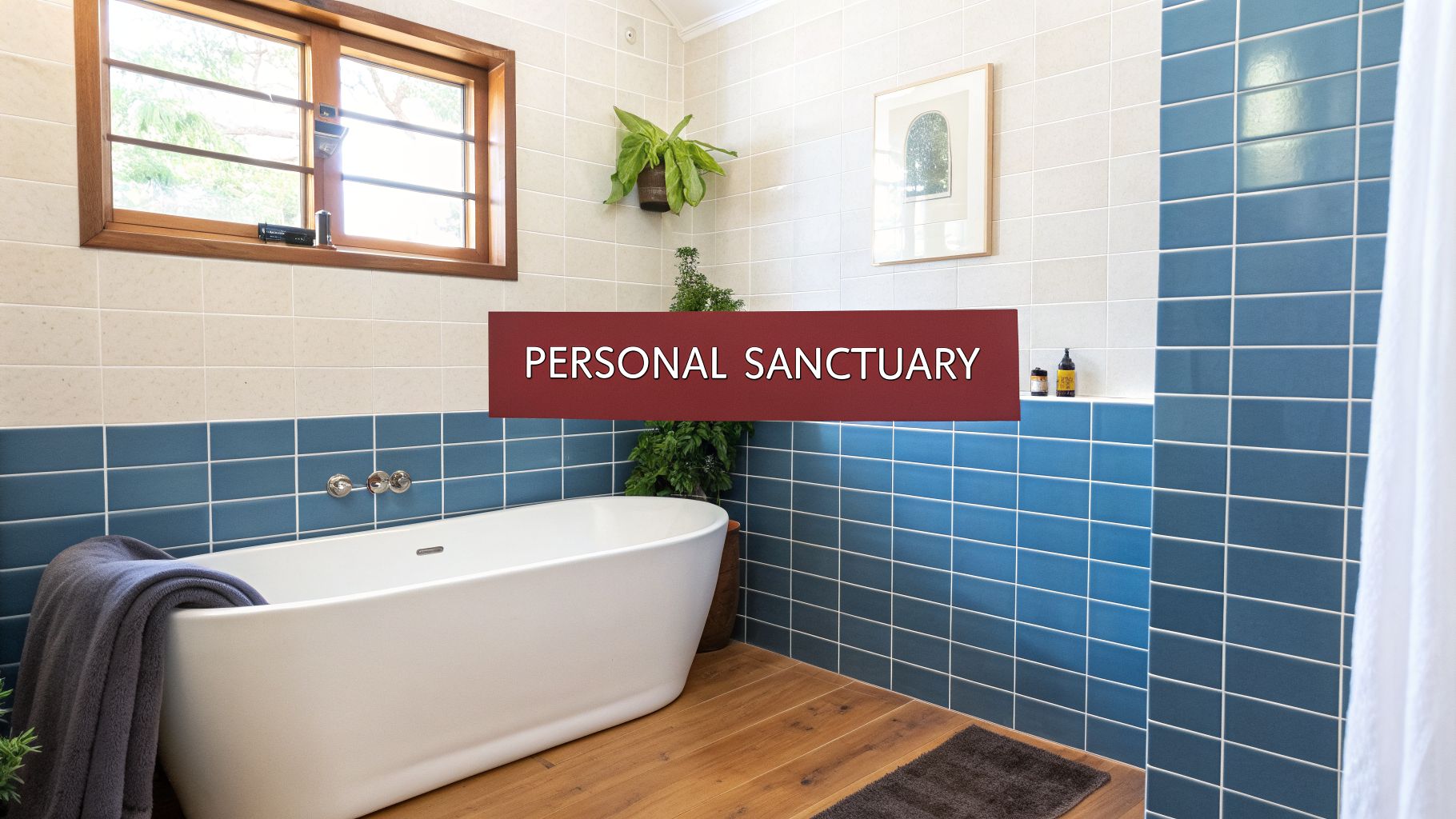
Blue is so much more than just a color—it’s an experience. When you choose blue tiles, you’re not just picking out a product; you’re setting a mood. You’re crafting an atmosphere that says something about you and turning a standard room into a place you genuinely want to be.
The psychology of blue is a powerful tool in design. Every shade tells a slightly different story, giving you an amazing amount of flexibility to build the exact feeling you’re after.
Defining Your Bathroom's Atmosphere
Lighter blues, like a soft cerulean or baby blue, are masters of calm. They have a way of echoing the open sky or tranquil water, making them an obvious choice for creating a spa-like vibe where you can truly unwind. They also have a secret weapon for smaller bathrooms: they bounce light around beautifully, making the whole space feel bigger and more open.
On the flip side, deeper shades like navy, cobalt, or indigo bring a whole different energy. They introduce a sense of drama, sophistication, and intimacy. A bathroom wrapped in rich, dark blue tiles for bathroom walls can feel like a luxurious, cozy escape from the world. These bolder tones don't just decorate a room; they make a statement.
This isn't just about picking a product; it’s about crafting a feeling. The right blue tiles become the foundation for creating a bathroom you’ll love for years to come.
For a closer look at how different blues can shape the feel of your space, this article on Blue Tiles for Bathroom: Transform Your Space with Serenity is a great resource.
Starting to picture how this could look in your home? It’s always smart to get an early feel for the budget. If you want to see how different tile choices might line up with your numbers, our instant pricing tool can give you a solid preliminary estimate to get you started.
Finding Your Perfect Shade of Blue
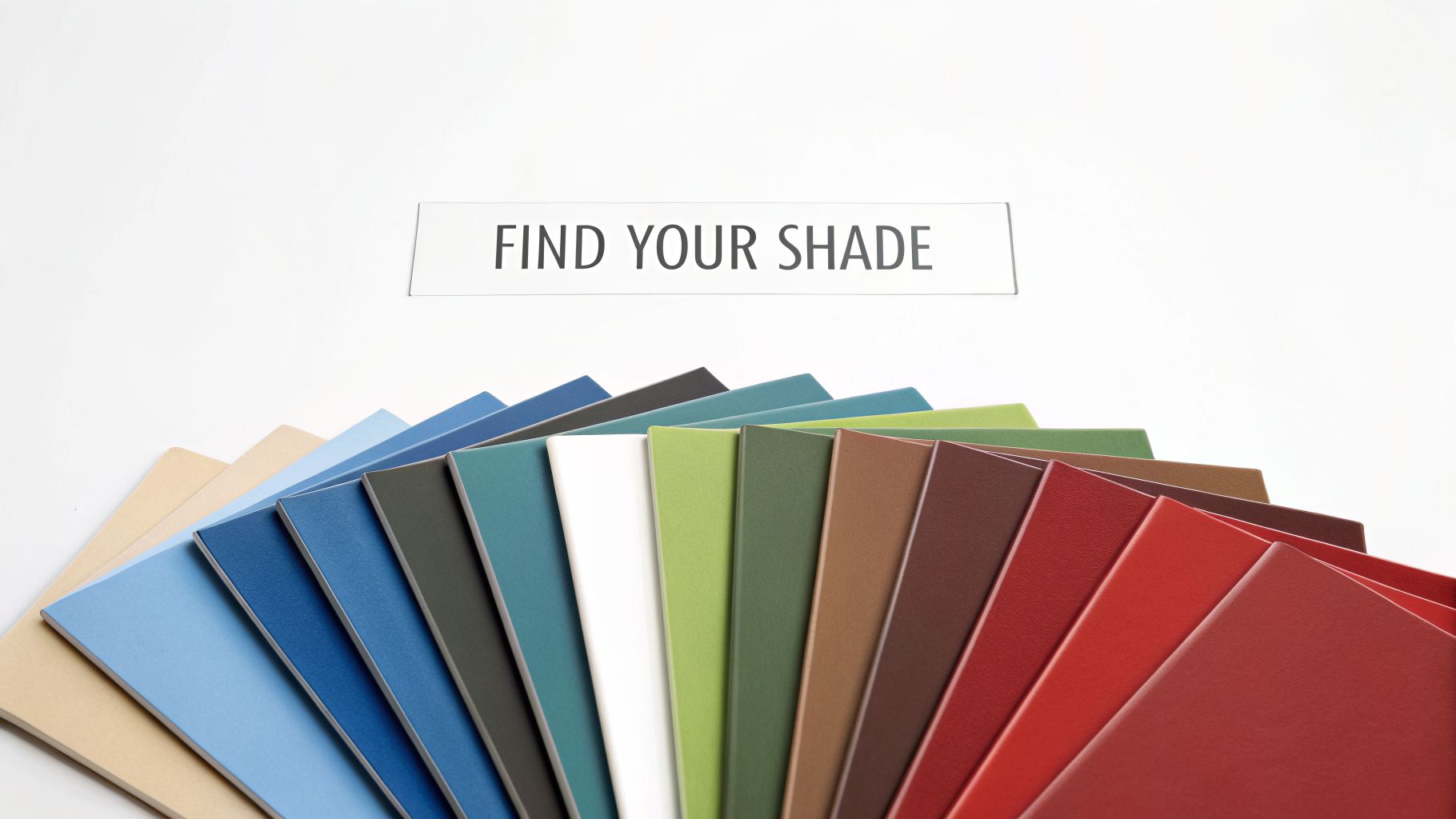
Choosing the right shade of blue is the first, and arguably most important, decision you'll make. It’s the choice that will define the entire personality of your new bathroom. With a spectrum that runs from whisper-soft pastels all the way to deep, dramatic jewel tones, it’s easy to feel overwhelmed. But think of it less as a tough decision and more as the start of a creative journey.
Light Blues for an Airy Feel
If you want a bathroom that feels open, bright, and airy, light blue tiles are a time-tested solution. Shades like sky blue, cerulean, or even a pale aqua have a unique ability to reflect light, which works wonders in smaller bathrooms. They create an illusion of space, making the walls feel a little farther apart and the ceiling a bit higher. This makes them a fantastic pick for guest baths or powder rooms where you want to maximize every square foot.
A fresh, clean aesthetic is practically guaranteed with lighter blues. They’re also incredibly versatile, pairing beautifully with different fixture finishes and design styles.
- Sky Blue & Chrome: This is a crisp, timeless combination. It creates a bright and invigorating atmosphere that feels both modern and classic.
- Baby Blue & Matte Black: For a more contemporary edge, pair a soft, gentle blue with the sharp contrast of matte black fixtures. You get a beautiful blend of soft color and bold, graphic lines.
- Cerulean & White: Nothing says "spa" quite like pale blue tiles matched with clean white fixtures and accents. The result is pure serenity.
Dark Blues for a Touch of Luxury
On the other side of the coin, you have deep and saturated blues like navy, cobalt, and indigo. These shades create an entirely different experience—one of luxury and intimacy. A dark blue tile can wrap a room in a way that feels both bold and comforting, crafting a dramatic, high-end feel.
A lot of people worry that dark colors will make a room feel small. But dark blue doesn't shrink a space; it gives it depth and character. When you balance it with good lighting and reflective surfaces, a navy bathroom can feel like an exclusive, personal retreat.
This approach is perfect for a statement-making accent wall, maybe behind the vanity or inside the shower. And when paired with the right hardware, these dark blues truly come alive. A rich navy tile, for instance, looks absolutely stunning against the warmth of brushed gold or brass. For a more energetic and modern vibe, try a vibrant cobalt with sleek chrome fixtures.
To help you visualize how these different shades and finishes might come together, here's a quick reference table.
Blue Tile Shade and Style Pairings
This table is designed to give you a starting point for matching popular blue tones with different design aesthetics and fixture finishes you might be considering.
| Blue Shade | Best For | Pairs Well With (Fixtures) | Design Style |
|---|---|---|---|
| Powder/Sky Blue | Creating an open, airy feel in small bathrooms. | Chrome, Polished Nickel | Coastal, Traditional, Farmhouse |
| Teal/Aqua | A vibrant, energetic space with personality. | Brushed Gold, Matte Black | Mid-Century Modern, Eclectic |
| Navy Blue | A luxurious, sophisticated, and intimate atmosphere. | Brushed Brass, Gold, Copper | Modern, Art Deco, Transitional |
| Cobalt Blue | Making a bold, modern statement; accent walls. | Chrome, Matte Black, White | Contemporary, Mediterranean |
Remember, these are just guidelines to get you started. The best combination is the one that speaks to you.
Visualizing these pairings in your own Portage or Kalamazoo home is the best way to make a confident choice. As you start to zero in on your favorite shades, it's also smart to get a handle on the budget. You can use our instant pricing tool to get a reliable ballpark estimate for your project. Taking this simple step now can make your entire planning process much smoother down the road.
Choosing the Right Tile Material and Finish
Once you've fallen in love with a shade of blue, the next step is choosing the material. This decision is about so much more than just looks; it's the foundation of your bathroom's durability and feel for years to come. Think of it like picking the right coat for a Michigan winter—you need something that not only looks good but can also handle the elements. For a bathroom, your main choices are ceramic, porcelain, and glass, and each brings something different to the table.
The Top Three Material Contenders
Ceramic is the jack-of-all-trades in the tile world. It comes in a dizzying array of styles, shapes, and glazes, so finding that perfect navy, sky, or aqua blue is almost guaranteed. It's no surprise that residential remodeling is a huge driver of the ceramic tile market, as so many homeowners are looking for that sweet spot of beauty and high performance in wet areas like a bathroom. Ceramic's excellent water resistance and durability make it a go-to for a reason.
Porcelain, on the other hand, is the tough-as-nails workhorse. It’s fired at higher temperatures than ceramic, making it denser and far less porous. That means it stands up exceptionally well to water, making it the ideal choice for high-traffic bathroom floors. If you’ve got a busy family bathroom in the works, a blue porcelain tile provides serious peace of mind against daily splashes, spills, and wear.
And then there's glass tile, the showstopper. Glass has a unique ability to catch and reflect light, creating a luminous, water-like effect that can make any space feel brighter and more open. A feature wall of shimmering blue glass tiles behind a vanity or in a shower can turn your daily routine into a spa-like escape.
Finishes That Define Function and Feel
After you’ve settled on a material, the finish is your final touch. This is where you really dial in the balance between style and everyday safety.
- Glossy Finish: A glossy finish is sleek and highly reflective. It bounces light around the room and is incredibly easy to wipe clean, which makes it a fantastic choice for shower walls or a kitchen-style backsplash behind the sink.
- Matte Finish: A matte finish offers a soft, non-reflective surface that feels both modern and grounded. Most importantly, it provides much better slip resistance than its glossy counterpart, making it the hands-down safer and smarter option for bathroom floors.
Choosing a material and finish isn't just a technical detail—it’s a core design decision. A matte blue porcelain floor offers a modern, non-slip foundation, while glossy blue ceramic walls create a bright, easy-to-clean surface.
As you explore all the possibilities, you can see a fantastic range of options in our blue tiles collection. Of course, knowing how these choices affect your budget is the next logical step. For a quick, realistic estimate tailored to your project, our instant pricing tool is a great resource to use during your planning phase.
Using Layout Patterns and Grout to Define Your Design
So, you’ve found the perfect blue tile. That’s a huge step, but now comes the part that truly brings your vision to life: deciding how to arrange them. The layout pattern and the grout color you choose are where the real design magic happens. These two elements work together to turn a simple box of tiles into a stunning, custom feature.
Think of your tile as the star of the show, and the pattern as the choreography. A standard running bond—what most people call a subway pattern—is classic and never goes out of style. But even a small change to the layout can completely transform the feel of your bathroom.
- Vertical Stack: By stacking rectangular tiles one on top of the other, you create strong vertical lines that draw the eye upward. It's a fantastic trick for making bathrooms with standard or low ceilings feel much taller and more spacious.
- Herringbone: This zig-zag pattern is all about adding energy and sophisticated movement. It’s an absolute showstopper for a feature wall behind a vanity or in a shower, and it can make even a simple blue tile look incredibly high-end.
- Basket Weave: This classic arrangement uses squares and rectangles to mimic a woven texture. It adds a wonderful layer of detail and a touch of vintage charm, especially on a bathroom floor.
These aren't just technical choices; they're your opportunity to put a personal stamp on the project and create a space that feels uniquely yours.
Grout Is a Design Tool, Not Just a Filler
For years, people have treated grout as a boring necessity—the stuff that fills the gaps. It's time to see it for what it really is: one of the most powerful (and affordable) design tools in your arsenal. The color you pick for the space between the tiles can either highlight your pattern or blend everything into one seamless surface.
Want to make a statement? Use a high-contrast grout, like a crisp white against a deep navy tile. This makes each tile's shape pop and puts the focus squarely on the intricate pattern you've chosen. On the other hand, if you’re aiming for a more minimalist or modern vibe, choosing a grout color that closely matches your blue tile will cause the lines to virtually disappear. This creates a smooth, continuous field of color that feels sleek and unified.
This decision is also closely tied to the tile material you select, as each has its own unique character.
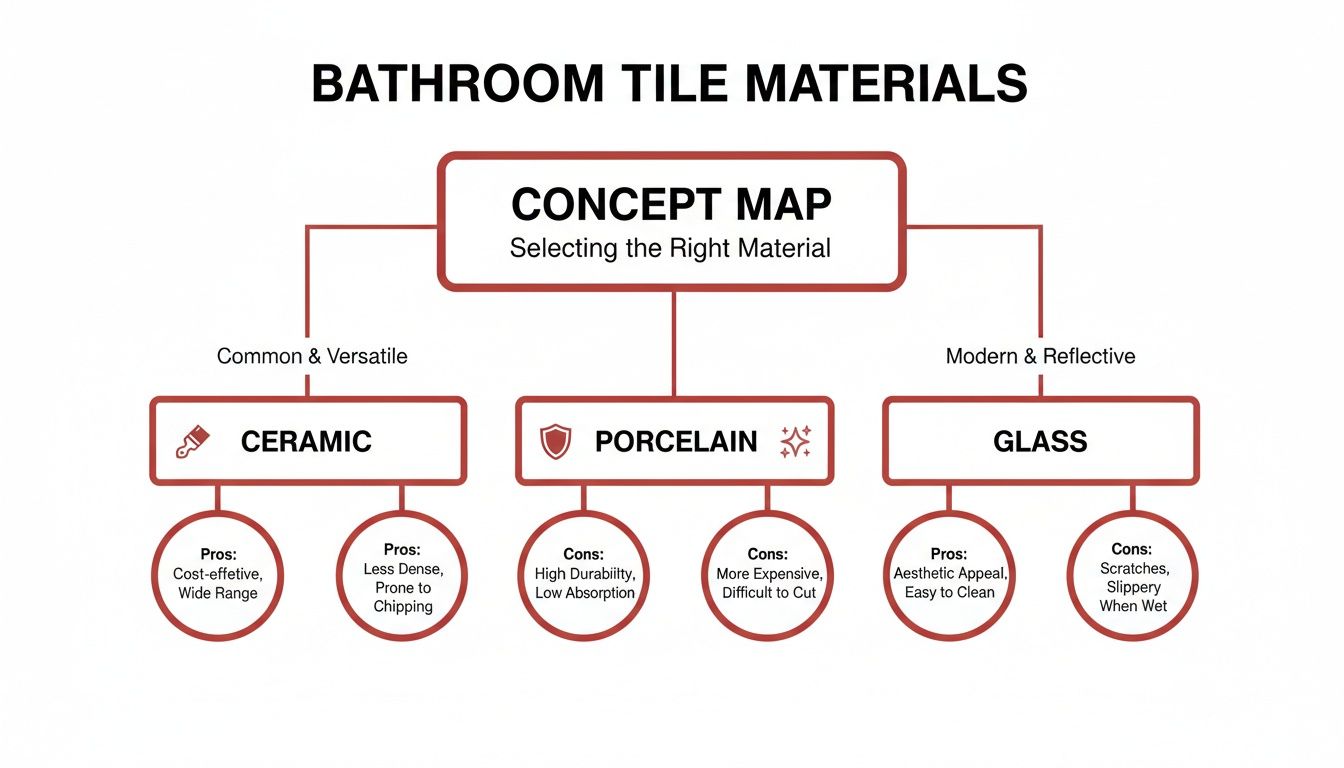
As you can see, the design flexibility of ceramic, the toughness of porcelain, and the luminous quality of glass each interact differently with various patterns and grout colors.
Don’t forget the practical side of grout. While it might cost a little more upfront, modern epoxy grouts are a lifesaver in a bathroom. Because they're non-porous, they're incredibly resistant to stains, mold, and mildew. It’s a smart investment that will save you countless hours of scrubbing down the road.
Of course, a more complex layout like herringbone will require more labor than a simple stacked pattern. To get a feel for how these choices impact your budget, our free instant pricing tool is a great place to start. It helps you see the financial picture early on so you can plan with confidence.
How to Budget Your Blue Tile Bathroom Project
It’s easy to get swept up in the fun of picking out those perfect blue tiles, but the key to a successful renovation is knowing what it will all cost. A realistic budget isn't about limiting your creativity; it's about giving you a clear roadmap to turn your vision into a finished bathroom without any unwelcome surprises.
Think of your project's total cost as a combination of two major things: what you buy (materials) and who you hire (labor). Getting a handle on how these two pieces fit together is the first step toward a smart plan.
Breaking Down the Core Costs
Your final investment will be a mix of materials and the skilled labor needed to install them. The price of blue tiles for bathroom projects can swing dramatically based on what they're made of. A simple ceramic tile can be very wallet-friendly, while a custom-made glass or natural stone tile will naturally sit at a higher price point.
But the tile itself is only half the story. The complexity of the installation—the pattern you choose—is a huge factor. A classic subway pattern is relatively straightforward, but an intricate herringbone design requires more planning, more precise cuts, and more time from your installer, which is reflected in the labor cost.
The rule of thumb we often share with clients is to plan on 50% for materials and 50% for labor. This isn't a rigid formula, but it’s a great starting point that reminds you installation is a major part of the total cost.
The tile market is buzzing right now. Globally, the demand for ceramic tiles is expected to hit around $228.8 billion by 2026, largely because so many people are renovating their homes. For us here in Southwest Michigan, this strong market is great news—it means we have access to a fantastic variety of products and competitive pricing. You can read more about these global ceramic tile market trends to see how the industry is evolving.
Key Budget Variables to Consider
When you start putting numbers on paper, these are the main factors that will influence your final cost:
- Tile Material: Ceramic is typically the most budget-friendly option. Porcelain offers a step up in durability for a bit more, while glass and natural stone are at the premium end of the scale.
- Layout Complexity: A herringbone or basketweave pattern looks stunning but takes more time and expertise to install, increasing labor costs compared to a simple stacked or running bond layout.
- Grout Choice: Standard grout is cheaper upfront, but it's worth considering an upgrade. A high-performance epoxy grout costs more initially but can save you a lot of headache and maintenance costs down the road.
- Labor Rates: The cost for professional installation can vary based on the installer’s experience, reputation, and the specific demands of your project.
Getting a clear handle on these costs early is a game-changer. Before you dive deep into consultations, a great first step is to get a ballpark idea of the investment. You can use our instant pricing tool to get a transparent, realistic look at what your project might cost. It’s a simple way to make the whole budgeting process feel a lot less stressful.
Why Professional Tile Installation Matters
I get it. Tiling seems like one of those DIY projects you could probably knock out over a long weekend. But a truly stunning, long-lasting tile job is built on a foundation of details you’ll never even see. Think of hiring a pro as an insurance policy against the nightmares of a bathroom remodel gone wrong—water damage, cracked tiles, and persistent mold.
The beautiful blue tiles are just the final, visible layer. The real magic happens long before a single tile is set. A true craftsman ensures the surface underneath is perfectly prepped and level, which is the secret to avoiding “lippage” (where one tile edge is higher than its neighbor) and getting that flawlessly smooth finish. This is especially important in older Portage and Kalamazoo homes, where perfectly plumb walls and level floors are a rare find.
What a Pro Really Does
A professional installer’s expertise goes way beyond just laying tiles in a straight line. They’re masters of the critical, unseen steps that make or break a bathroom.
- Bulletproof Waterproofing: This is priority number one. We meticulously apply waterproof membranes, especially in wet areas like showers, creating a sealed barrier. This is your primary defense against water sneaking into your walls and subfloor, which can cause thousands in structural damage down the road.
- Precision Cuts: Getting those clean, perfect cuts around pipes, drains, windows, and inside corners is a genuine skill. It’s the difference between a project that looks homemade and one that has a high-end, seamless finish.
- Artful Layout: A seasoned pro knows how to plan the entire layout before the first tile goes down. We find the center of the room and map everything out to ensure the cuts on opposite walls are perfectly balanced and symmetrical. It's a small detail that makes a massive impact on how your blue tiles for bathroom look in the end.
The tile industry is always moving forward, with new installation methods and better materials coming out all the time. Staying on top of these trends means we can bring higher-quality products to our local projects, giving Southwest Michigan homeowners a better result and more value for their money. If you're curious, you can get a sense of how market trends benefit local clients from industry reports like this one.
A professional tile job is more than an expense; it’s an investment in durability and peace of mind. It’s the difference between a bathroom that looks good for a year and one that looks beautiful for decades.
At Trademaster Construction, that commitment to quality craftsmanship is how we protect your home and deliver a durable, spa-like bathroom you’ll love for years to come. To get a ballpark idea of what your project might cost, you can use our instant pricing tool for a quick preliminary estimate before we even talk.
Common Questions About Blue Bathroom Tiles
Thinking about going with blue tile? It’s a fantastic choice that can totally transform a bathroom, but it's natural to have a few questions before you commit. We get it. Choosing a color like blue can feel bold, so let’s walk through some of the most common questions we hear from our clients right here in Southwest Michigan.
Will Dark Blue Tiles Make My Small Bathroom Feel Cramped?
That’s a common worry, but the answer is no—not if you do it right! In fact, dark blue can make a small bathroom feel incredibly sophisticated and cozy, almost like a little jewel box. It all comes down to balance.
You don't want the color to swallow the room, so here are a few tricks of the trade:
- Create contrast: The key is to balance that deep blue with lighter elements. Think crisp white ceilings, a light-colored vanity, or even bright white towels. This keeps the space from feeling heavy.
- Lean into reflections: A large, well-placed mirror is your best friend. It will bounce light all around the room, making it feel more open and creating an illusion of depth.
- Make it a feature: You don’t have to tile every wall. Using dark blue tile on just one accent wall—say, in the shower or behind the vanity—gives you all the drama without visually shrinking the space.
What Is the Best Blue Tile for a Bathroom Floor?
For bathroom floors, porcelain tile is the top choice, hands down. It’s fired at much higher temperatures than standard ceramic tile, which makes it incredibly dense and durable. That means it can handle daily foot traffic, splashes, and all the moisture a bathroom throws at it.
When you're picking out a blue porcelain for the floor, make sure to check its slip-resistance rating. You'll often see this listed as the DCOF rating. This is a critical safety feature that ensures the tile has enough grip, especially when it gets wet.
How Do I Keep My Grout Clean?
Grout is always a hot topic! The best way to keep it looking fresh is to choose the right kind from the start. We often recommend upgrading to an epoxy grout, which is non-porous and naturally resists stains and mildew. It costs a bit more upfront but saves you a ton of cleaning headaches down the road.
If you stick with traditional cement grout, just be sure it's sealed properly right after installation. A good sealer creates a protective barrier against moisture and grime. For regular cleaning, a simple pH-neutral cleaner works best—stay away from harsh acids or bleach that can eat away at the grout over time.
As you finalize your plans, getting a clear picture of the budget is the next big step. To get an immediate, transparent estimate of your project costs, try our free instant pricing tool. It’s a simple way to start planning your finances with confidence.

