
It’s easy to get swept away in a showroom, surrounded by endless colors and textures. But the real secret to picking the perfect shower tile doesn’t start there. It starts right at home, with a clear-eyed look at what you really want and need.
Taking a little time to map things out first can turn what feels like an overwhelming task into a genuinely fun part of your project.
Before You Shop: Figure Out Your Foundation
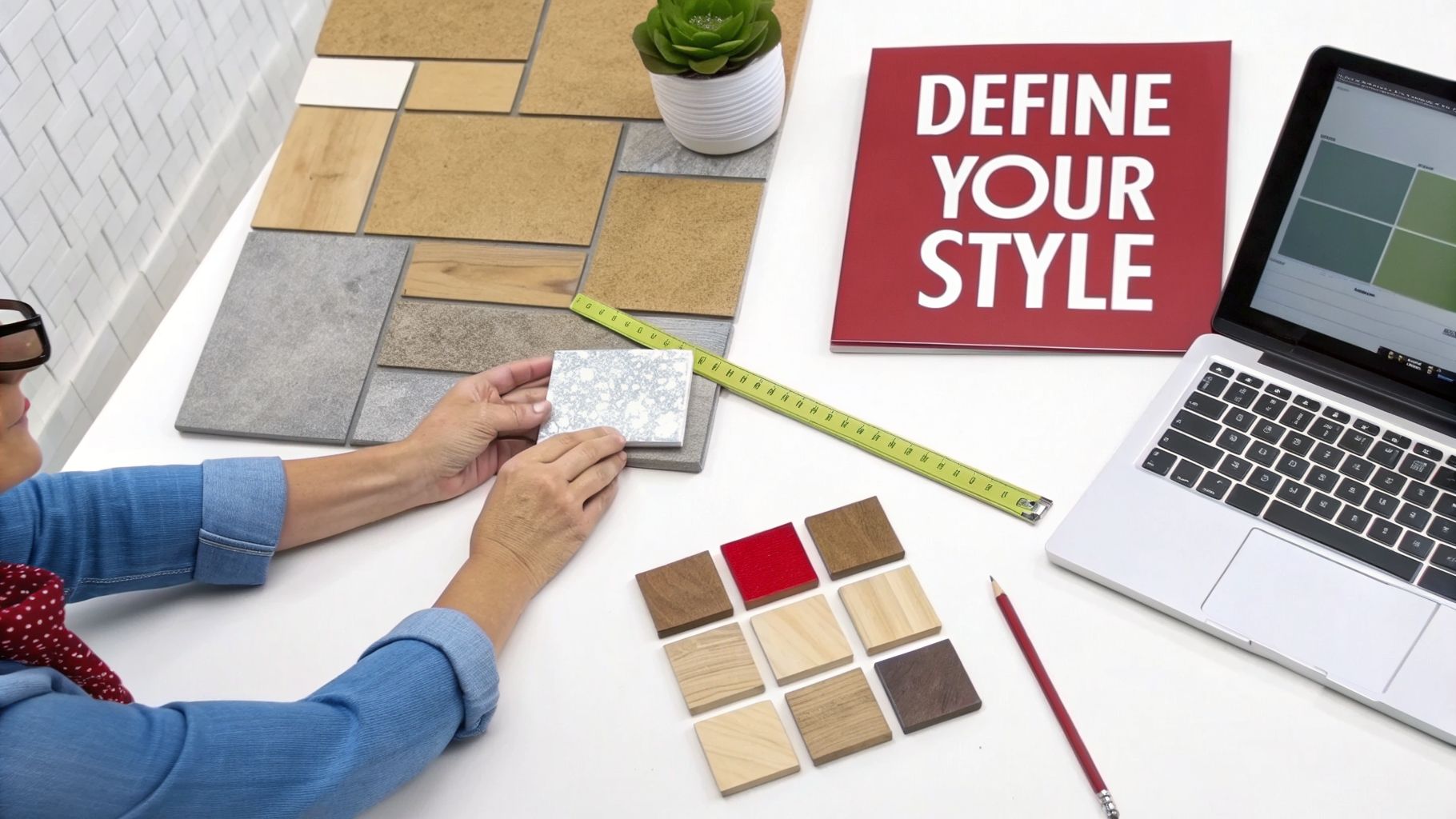
Before you even think about stepping into a tile store, let’s talk about the big picture. What’s the vibe you're going for? A bright, modern oasis? A cozy, rustic retreat? Your shower tile is a huge visual piece of the puzzle, so it needs to feel right with the rest of your home.
Match the Tile to Your Home's Style
A cohesive look is everything. If you have a warm, modern farmhouse aesthetic, a wall of glossy, jet-black tile is going to feel jarring. On the flip side, an ornate natural stone might look out of place in a super minimalist space.
To get it right, think about how different tiles support popular styles:
- The Modern Spa: Large-format porcelain tiles in soft, muted tones—think grays, whites, or beiges—are your go-to. They create a clean, seamless look with very few grout lines, which immediately feels calming.
- The Classic Farmhouse: You can’t go wrong with timeless white subway tiles. They’re incredibly versatile, and you can give them a rustic edge just by using a darker grout for contrast.
- Bold and Eclectic: This is your chance to play! Go for vibrant colors, fun shapes like hexagons or fish scales, or even patterned encaustic-look tiles that make a real statement.
As you mull over the look and feel, exploring different bathroom remodel shower ideas can be a huge source of inspiration for your tile selections.
A Pro Tip: I often tell clients about the "rule of one." It’s a simple but powerful design guideline. If you fall in love with a busy, patterned tile for one surface (like the floor), keep the other surfaces (like the walls) simple and solid. It prevents the space from feeling visually chaotic.
Nail Down Your Budget and Lifestyle Needs
Your budget is so much more than the price tag on a box of tile. A realistic plan has to cover everything: waterproofing systems, backer board, adhesive, grout, and, of course, the professional installation. I always recommend building a 10-15% contingency fund into your budget for those "just in case" moments.
Getting a handle on these costs early is crucial. For a ballpark idea of what your project might cost here in Southwest Michigan, our instant pricing tool can give you a solid, no-obligation estimate to start from.
Beyond the money, think about your real, day-to-day life.
- Who’s using this shower? If you’ve got young kids or are planning for aging-in-place, safety is a top priority. Look for tiles with a bit of texture or a matte finish for the shower floor—they provide much better slip resistance.
- How much cleaning are you really going to do? Be honest! Large-format tiles mean fewer grout lines, which means less scrubbing. Non-porous materials like porcelain are also low-maintenance champions, as they naturally resist stains and water damage.
Comparing the Most Popular Shower Tile Materials
The tile you choose for your shower is more than just a style statement. It's a long-term decision that impacts everything from durability and safety to how much time you'll spend cleaning it down the road. Let's walk through the real-world differences between the top contenders so you can feel confident in your choice.
The Reliable Workhorses: Porcelain and Ceramic
When you think of shower tile, porcelain and ceramic are probably what come to mind, and for good reason. They are the practical, time-tested champions of the bathroom. Both are clay-based and fired in a kiln, but a few key differences make one better suited for certain parts of your shower.
Porcelain tile is the tougher of the two. It's made from a finer, denser clay and fired at scorching-hot temperatures. This process creates an incredibly durable tile with a water absorption rate of less than 0.5%, which makes it practically waterproof. That's why we almost always recommend porcelain for shower floors.
Ceramic tile is still an excellent choice, especially for shower walls where it won't be constantly submerged. It's slightly more porous than porcelain but is often more friendly to your budget. Because it's so widely used, the sheer variety of colors, shapes, and patterns available is staggering.
The scale of this industry is massive—the global ceramic tiles market is projected to hit $231.72 billion in 2026. What this means for you as a homeowner is a nearly endless selection. But it also means you need to know what you're looking for to ensure you get a quality product built for a wet environment. You can explore more about these market trends to see how innovation is changing the game.
My Two Cents: For the floor of your shower, always go with porcelain. It's the best defense against water. For the walls, a high-quality glazed ceramic gives you fantastic value and opens up a world of design possibilities.
The Timeless Elegance of Natural Stone
There’s just something about natural stone that feels luxurious. Whether it's marble, travertine, or slate, each tile is a unique piece of the earth, bringing an organic, high-end vibe to your bathroom. But that beauty comes with a catch: maintenance.
- Marble: The classic, spa-like look. Its elegant veining is unmatched, but it's a softer stone that can scratch or get damaged by harsh cleaners. It needs to be sealed diligently.
- Travertine: Known for its warm, earthy tones and natural pits. To keep water from seeping into its porous surface, proper and regular sealing is non-negotiable.
- Slate: Offers a beautiful, rustic texture that provides some natural slip resistance, making it a solid choice for shower floors. Like its cousins, it needs sealing to keep moisture out.
The biggest thing to understand about natural stone is that it's porous. Unlike porcelain, it will drink up water if it isn't sealed correctly—and that seal needs to be reapplied, often once a year in a high-use shower. If you skip this upkeep, you're risking stains and water damage behind your walls.
A Quick Look at Your Options
Choosing a material is the first big step. To make it a bit easier, here’s a straightforward comparison of the most common shower tile options we see here in Southwest Michigan.
Shower Tile Material At a Glance
| Material | Durability & Water Resistance | Maintenance Level | Typical Cost | Best For |
|---|---|---|---|---|
| Porcelain | Excellent. Extremely dense with <0.5% water absorption. Resists scratches and stains. | Low. Easy to clean; no sealing required. | $$ | Shower floors, walls, and high-traffic, high-moisture areas. The most versatile option. |
| Ceramic | Good. Glazed surface is waterproof, but body is more porous than porcelain. | Low. Simple to clean. Grout lines are the main upkeep. | $ – $$ | Shower walls and backsplashes where direct water saturation is lower. |
| Natural Stone | Fair to Good. Varies by stone type; all are porous and require regular sealing. | High. Must be resealed annually (or more) and requires pH-neutral cleaners. | $$$ – $$$$ | Creating a luxurious, high-end look on walls for homeowners committed to upkeep. |
| Glass | Excellent. Impervious to water, mold, and mildew. | Low to Medium. Easy to clean, but installation is tricky and grout can be challenging. | $$$ | Accent walls and decorative details. Adds brightness and a modern pop. |
This table should give you a solid starting point. Remember, the "best" material really depends on your priorities—whether that's budget, style, or long-term maintenance.
The Bright and Modern Appeal of Glass Tile
Want to make your shower feel bigger and brighter? Glass tile is your answer. Its surface reflects light all around the space, creating a luminous, sparkling effect that feels incredibly clean and modern. It’s also completely waterproof and won't harbor mold or mildew.
But there are a couple of things to keep in mind with glass.
First, it’s best used on walls, especially as an accent, not on floors. It can be extremely slippery when wet and is more prone to scratching than porcelain. Second, the installation has to be perfect. You can see the adhesive right through the tile, so you need an installer with a skilled hand to get a flawless finish. It also tends to be more expensive than its ceramic or porcelain counterparts.
Making the right choice here sets the tone for your whole project. As you start to picture your new shower, it's smart to think about the budget. Our instant pricing tool can give you a ballpark estimate based on different materials, which is a great way to see how your choices might affect the final cost. It's a no-obligation way to get a baseline before you move forward.
How Tile Size and Shape Can Make or Break Your Shower
Don't underestimate the power of tile size and shape. These aren't just minor details; they're foundational design choices that dictate the entire look, feel, and even the maintenance of your new shower. The right selection can make a small shower feel expansive, while the wrong one can make it feel chaotic and cramped. It’s all about creating a space that works for you, from aesthetics to daily use.
If you're feeling a bit overwhelmed by the options, this visual guide can help you connect what you want—be it durability, a touch of luxury, or a specific style—to the tile that will get you there.
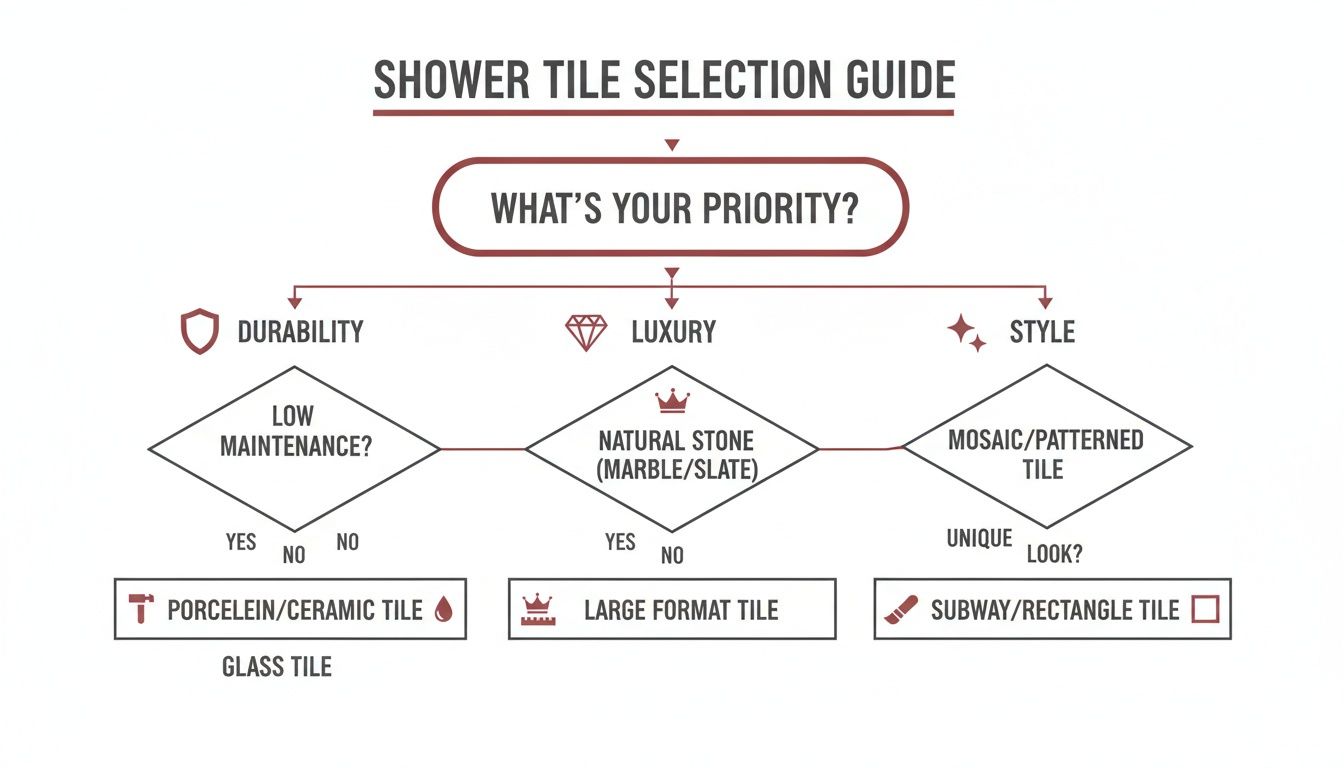
Think of it as a decision tree. Following the path of your top priority—durability, luxury, or style—can lead you to some surprisingly perfect and beautiful tile solutions.
The Modern Appeal of Large Format Tiles
There's a good reason you see large-format tiles—anything 12×24 inches or bigger—all over design magazines. They create a clean, nearly seamless surface that works wonders in making a bathroom feel more open and uncluttered. Fewer grout lines are the secret sauce here. Not only does this create a sleek, modern look, but it also means way less scrubbing for you.
Picture a compact walk-in shower in a Portage home. If you fill it with a busy mosaic, it can feel claustrophobic. Now, imagine that same shower with large 12×24 porcelain tiles on the walls. It instantly feels more spacious and breathes a sense of spa-like calm.
A great rule of thumb I always share with clients: let one pattern be the star. If you fall in love with a bold, marble-veined tile for the walls, fantastic. But then, choose a simple, solid tile for the floor. Trying to feature two competing patterns just creates visual noise.
Small Tiles: Big on Character and Grip
On the flip side, small tiles are perfect for injecting personality and texture. You can't go wrong with classic 3×6 inch subway tiles, which can be laid in everything from a traditional brick pattern to a modern vertical stack or a sophisticated herringbone.
Where small tiles truly shine, though, is on the shower floor. This is where size becomes a matter of safety, not just style.
- Better Slip Resistance: More tiles equal more grout lines. Those grout lines provide the texture and grip your feet need on a wet, soapy surface, dramatically reducing the risk of a slip.
- Perfecting the Slope: It’s much easier for an installer to create the very slight, precise slope needed to guide water to the drain when working with flexible sheets of small mosaics.
This practical advantage makes mosaics the industry standard for shower pans, creating a safe and functional foundation no matter what you choose for the walls.
Finding the Right Scale for Your Space
The last piece of the puzzle is simply matching the tile size to your shower's dimensions. While large tiles can make a small shower look bigger, a tile that's too big for the space can look awkward and result in a lot of wasted material from odd cuts. You want a balanced layout that looks intentional, not forced.
Juggling all these considerations—material, size, and layout—is where the budget really starts to come into focus. If you're wondering how these choices will add up, we’ve created a tool to help you get a clear financial picture from the start.
Give our instant pricing tool a try. It gives you a personalized estimate that serves as a solid baseline for planning your perfect shower, helping you see exactly how different tile options fit within your budget.
Picking Finishes and Grout: The Devil’s in the Details
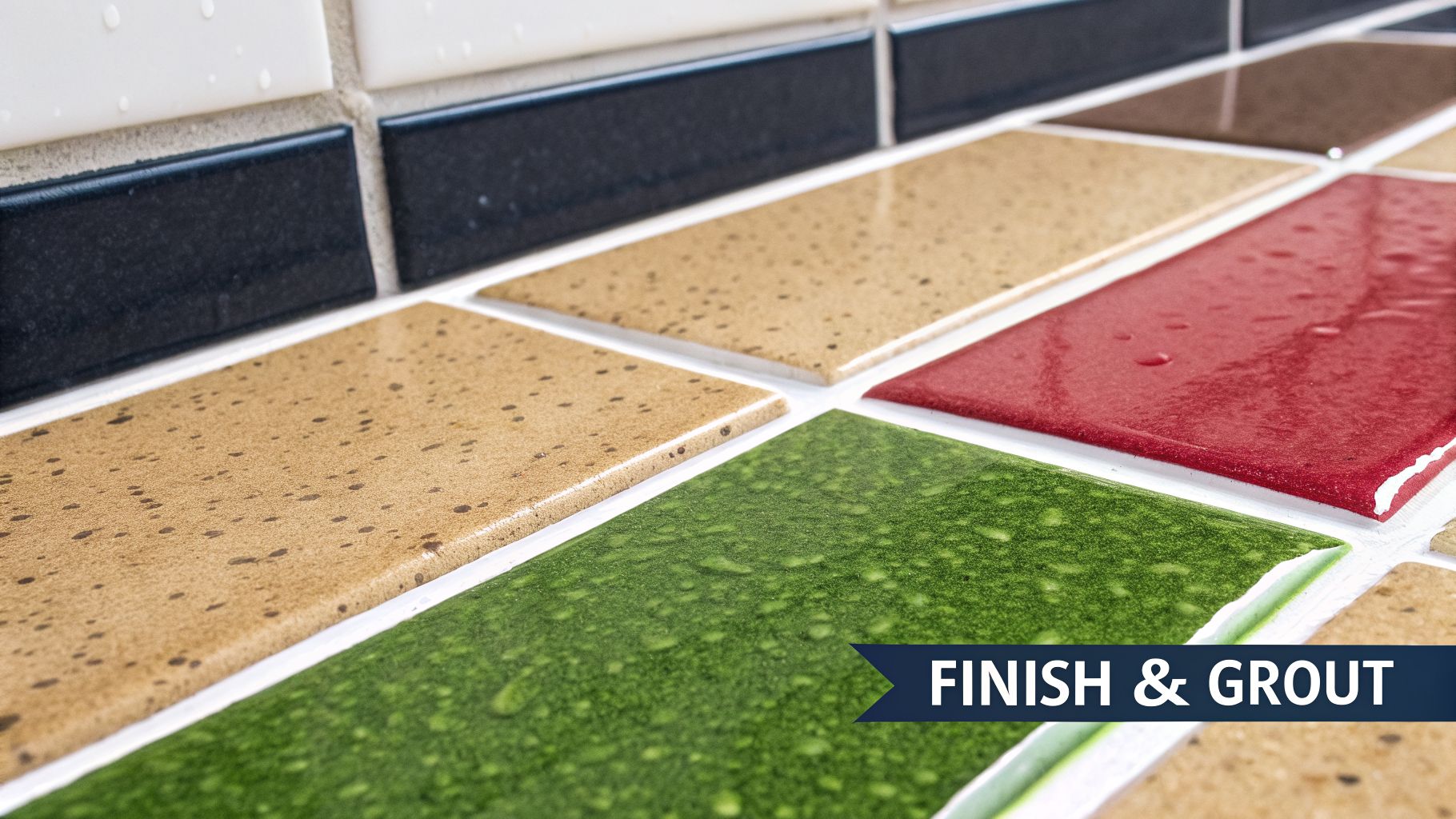
You’ve narrowed down the material and size, but now we get to the fun part—the details that truly define your shower's look and feel. The tile finish and the grout you pair it with are far more than afterthoughts; they have a huge say in aesthetics, safety, and how much time you'll spend cleaning.
Let's dive into how the surface of your tile—glossy, matte, or textured—shapes both style and real-world function.
Choosing the Right Tile Finish
A glossy finish is fantastic for bouncing light around, which can make a small, dim bathroom feel a lot bigger and brighter. They're also a breeze to wipe down. The big catch? They get incredibly slick when wet, making them a poor choice for shower floors. We typically reserve glossy tiles for the walls.
For shower floors, a matte finish is a much safer bet. It provides better traction underfoot and has the added benefit of hiding water spots and fingerprints more effectively than a shiny surface. The look is more subtle and contemporary, which is a huge plus for many modern designs.
If slip resistance is your number one priority, textured tiles are the way to go. These tiles often mimic the look and feel of natural materials like slate or wood, offering the best grip you can get. They are an absolute must for anyone designing with accessibility in mind or for a busy family bathroom.
It's easy to get swayed by how a tile looks, but for a shower floor, performance data is what really counts. We always base our recommendations on official ANSI/ASTM standards. These are independent ratings that measure everything from slip resistance to water absorption, giving you objective proof of how a tile will hold up. Relying on these industry-backed standards means you’re not just hoping the tile is safe—you know it is.
Grout: The Unsung Hero of Your Design
Believe it or not, grout can completely change the personality of your tile. The color you pick can either make the tile pattern pop or help it blend into a seamless surface.
- Contrasting Grout: Pairing a light tile with dark grout (or the reverse) outlines each tile, highlighting its shape. This is perfect for showcasing unique tile shapes like hexagons or fish scales, or for adding a classic, graphic punch to a subway tile layout.
- Matching Grout: Using a grout color that’s very close to the tile color creates a unified, serene look. This trick can make a small shower feel more spacious and less busy.
The decision is about more than just aesthetics. For a deep dive into matching colors and tones, this guide on how to choose grout color is a great resource.
Grout Types and Why Sealing Matters
Just as crucial as the color is the type of grout you use. In a shower, this choice is your first line of defense against moisture problems down the road.
Cement-based grout is the old-school standard. It's affordable, but it's also porous. That means it absolutely must be sealed after installation and then resealed every year or so to keep it from absorbing water, staining, or growing mildew.
Epoxy grout is the modern, high-performance upgrade. It’s inherently waterproof, non-porous, and incredibly resistant to stains and cracking. While it costs more upfront and requires a skilled installer, you'll never have to seal it. For a shower, we almost always recommend epoxy—it's a smart investment in the long-term health and durability of your bathroom.
Thinking about how these material choices will add up? You can get a clear, no-obligation estimate with our instant pricing tool to see how everything fits within your budget.
Setting a Realistic Budget and Project Timeline
It’s easy to get swept up in the fun of picking out beautiful tiles, but a successful shower remodel is really built on two things: a solid design and an even more solid plan. Nailing down your budget and timeline isn't the most glamorous part of the process, but it's where your dream shower starts to become a reality.
Getting this right from the start prevents those gut-wrenching, costly surprises down the road. It’s what keeps the project moving smoothly and takes the stress out of the equation.
Breaking Down the True Cost of a Tiled Shower
The price tag on a box of tile is just the beginning. One of the biggest mistakes I see homeowners make is focusing only on the "finish" materials and completely underestimating everything that has to happen behind the tile.
To build a budget that won’t fall apart, you have to account for the entire system. These aren’t optional add-ons; they are what make a shower waterproof and built to last.
- Waterproofing System: This is a non-negotiable. It involves specialized membranes, sealants, and bands that create a bulletproof barrier against moisture.
- Backer Board: You can't just stick tile to drywall. You need a proper moisture-resistant substrate to give the tile a stable foundation.
- Adhesive and Grout: Using high-quality thin-set mortar and the right kind of grout (like epoxy in wet areas) is crucial for a durable, waterproof finish.
- Professional Labor: The skill of the installer is just as important as the materials. This cost covers the expertise needed to do everything from demolition to the final seal, and to do it right the first time.
Any seasoned pro will tell you to build a 10-15% contingency fund right into your budget. This isn't for fun upgrades; it's a safety net for the unknowns that often hide behind old walls, like surprise plumbing issues or subfloor rot.
Getting a Clear Starting Point for Your Budget
So, how do you figure out a realistic number to begin with? It's interesting to know that the Asia Pacific region makes up over 54% of the global ceramic tile market, but that statistic won't help you budget a project in Kalamazoo. What you really need are numbers grounded in your local reality. For a deeper dive into how global trends impact what's available, you can read the full analysis on the ceramic tiles market.
The best first step is to get a personalized estimate for your specific project. You can use our no-obligation Instant Pricing Tool to get a clear and immediate baseline. It’s a great way to see how different tile choices and project sizes will impact the bottom line, right here in Southwest Michigan.
Mapping Out a Typical Installation Timeline
Knowing what to expect day-to-day can make the whole renovation process feel much more manageable. While every job has its own quirks, a standard shower tile installation follows a pretty predictable rhythm.
Here’s a rough idea of how things usually unfold:
- Day 1-2: Demolition and Prep. We'll tear out the old shower and get a good look at what’s behind the walls. This is when we’ll handle any necessary repairs to plumbing or framing.
- Day 2-3: Waterproofing. The crew installs the backer board and applies the full waterproofing system. This is a critical stage, and some components need time to cure properly.
- Day 4-6: Tiling. This is where the magic happens. It’s also the most meticulous phase, as tiles are carefully cut and set. The time it takes depends a lot on the tile size, material, and the complexity of the pattern.
- Day 7: Grouting and Sealing. Once the tile adhesive has had 24-48 hours to fully cure, we'll apply the grout, clean everything up, and apply a sealer if needed.
- Final Cure Time (24-72 hours): This is the "hands-off" period. Your beautiful new shower needs a few days for the grout and sealants to harden completely before you can turn on the water.
All said and done, you should probably plan for your bathroom to be out of commission for about a week. Understanding this schedule ahead of time helps you prepare your household and ensures the project runs smoothly, from demo day to that amazing first shower.
Got Questions About Shower Tile? We've Got Answers.
Even with a solid plan, a few nagging questions always seem to pop up right when you're about to make a decision. Choosing tile can feel like a huge commitment, but getting clear answers to these common hang-ups can make all the difference. Here are the questions we hear most often from homeowners right here in Southwest Michigan.
What's a Safe Bet for the Shower Floor?
When you’re talking about the shower floor, safety and durability are the top priorities—no exceptions. The best choice, hands down, is almost always a porcelain tile with a matte or textured finish. Why? Because porcelain is incredibly dense and has a water absorption rate of less than 0.5%. That means it’s practically waterproof and can handle being wet 24/7.
Another great trick is to use smaller tiles, like 2×2 inch mosaics. All those extra grout lines create natural grip, which seriously cuts down on the slip factor.
Here's a pro tip: look for the tile's DCOF (Dynamic Coefficient of Friction) rating on the box or spec sheet. For any surface that gets wet, the industry standard is 0.42 or higher. It’s not just a suggestion; it's a real-world measurement of how safe that tile is under your feet.
Can I Use the Same Tile Everywhere—Walls and Floor?
You absolutely can! In fact, it’s a really popular design move. Using the same tile throughout the shower creates a clean, seamless look that can make the whole space feel bigger and more unified.
The one non-negotiable rule is that the tile must be rated for floor use in a wet environment. A lot of gorgeous decorative tiles are made for walls only; they just don't have the grit or strength to be walked on, especially in a shower.
A smart way to get this look is to see if a tile you love comes in different sizes. You could use a beautiful large 12×24 inch tile on the walls, and then install a matching 2×2 inch mosaic version on the floor. You get the same cohesive style, but the smaller floor tile is safer and easier for your installer to slope for proper drainage.
How Do I Know if a Tile Is Actually Durable?
For a shower, durability really boils down to two things. First is the water absorption rate. As we mentioned, porcelain is the clear winner here, giving you the best defense against water seeping into the tile body.
The second thing to look for is the PEI (Porcelain Enamel Institute) rating. This number, on a scale of 1 to 5, tells you how well the tile’s surface holds up to wear and tear.
- PEI 1-2: Fine for walls, but that's about it.
- PEI 3: The sweet spot for residential floors, including shower floors that get regular use.
- PEI 4-5: This is heavy-duty commercial stuff. It's overkill for a home shower.
If you find a tile with a low water absorption rate and a PEI rating of 3, you’ve found a winner. That’s the professional's formula for a tile that will look fantastic for years to come.
What's the Real Difference Between Porcelain and Ceramic?
They might look similar on the shelf, but the way they're made is completely different—and that affects where you should use them.
Porcelain is made from a super-fine clay that gets fired at scorching hot temperatures. That process makes it incredibly dense, hard, and way less porous than its ceramic cousin.
Ceramic tile is a bit softer, more porous, and usually easier on the wallet. A good-quality glazed ceramic is a fantastic choice for shower walls. It creates a tough, waterproof surface and comes in a million different styles.
But for the shower floor—the area that's always wet—porcelain's density and near-zero water absorption make it the most reliable long-term investment. It's your best defense against moisture problems down the road.
As you start to lock in your choices, the next step is figuring out the budget. If you're ready to get a sense of your project's cost, try our instant pricing tool. It can give you a clear, no-strings-attached estimate to see how your tile picks fit into the bigger picture.
At Trademaster Construction, we believe a great project starts with good information and a clear plan. We hope this guide helps you feel confident as you choose the perfect shower tile for your Southwest Michigan home.

