
Your kitchen is more than just a place to cook; it's the heart of your home, where memories are made and daily life unfolds. As we look at today's design landscape, kitchen design trends are evolving to create spaces that are not only beautiful but also deeply functional, personalized, and perfectly suited for the modern Southwest Michigan lifestyle. Whether you're in Kalamazoo, Portage, or the surrounding areas, a kitchen remodel is a significant investment in your home's value and your family's quality of life.
This guide moves beyond fleeting fads to explore 10 enduring trends that balance timeless style with contemporary needs. We’ll provide a comprehensive look at what’s current, from the serene simplicity of warm minimalism to the tech-savvy convenience of smart kitchens. For each trend, we will provide actionable insights, practical implementation tips, and specific examples to help you visualize the possibilities within your own home.
You will discover how to incorporate these ideas, consider budget and material options, and even plan for long-term accessibility or aging-in-place modifications. This article is designed to be your go-to resource, offering the clarity and inspiration needed to begin your remodeling journey with confidence. Before you start your project, see how these concepts come to life in our Idea Book and get a preliminary budget with our Pricing Tool to turn your vision into a stunning reality with Trademaster Construction.
1. Warm Minimalism
Say goodbye to the cold, clinical feel often associated with minimalism. One of the most sought-after kitchen design trends right now is Warm Minimalism, a style that blends the clean, uncluttered principles of minimalism with a cozy, inviting atmosphere. This approach prioritizes simplicity and functionality but introduces natural textures, earthy colors, and soft lighting to create a space that feels both modern and comfortable. It’s about creating a streamlined kitchen that still feels like the heart of the home, perfect for Southwest Michigan’s blend of contemporary and classic architecture.
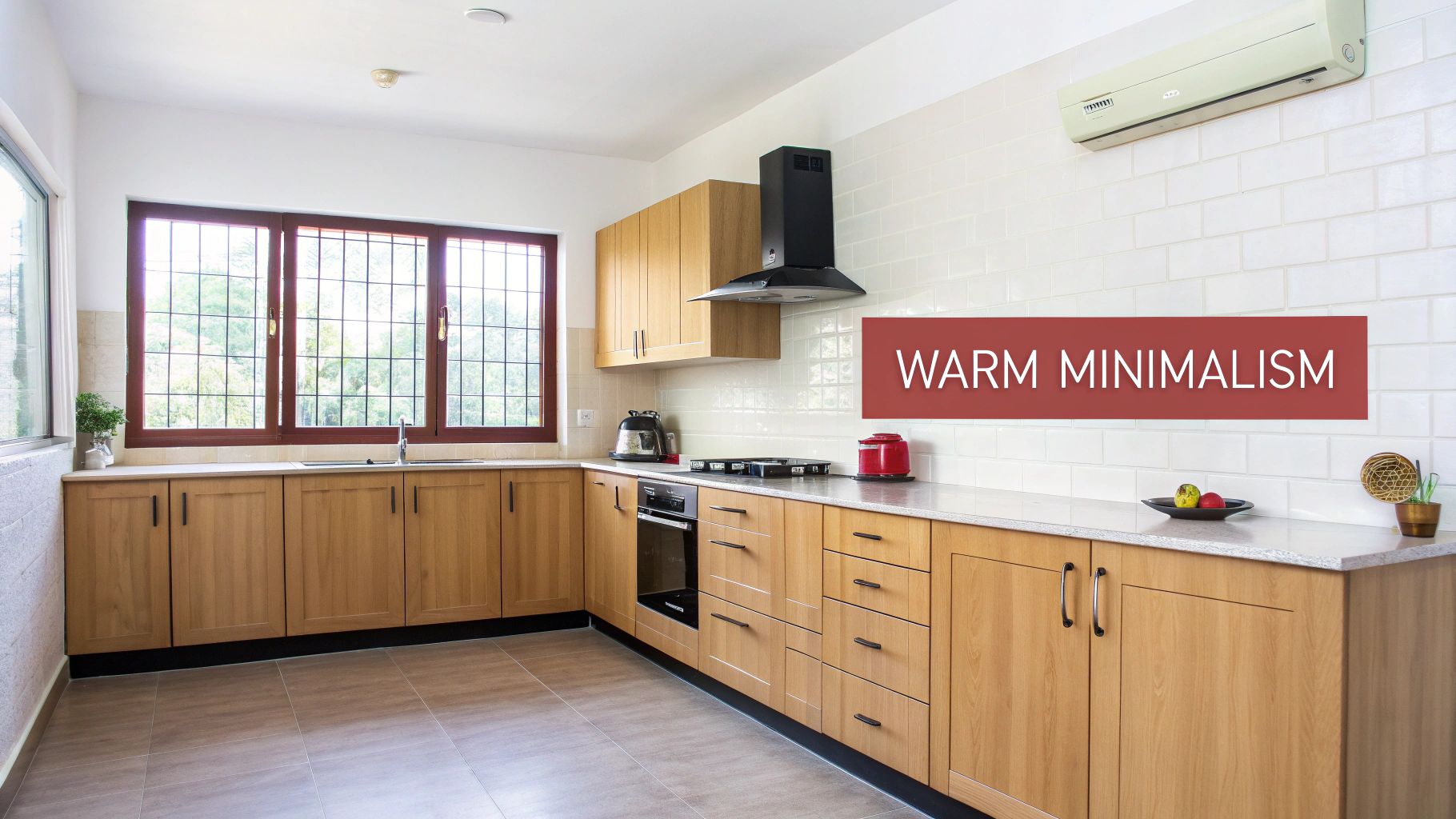
This trend achieves its signature look by moving away from stark whites and cool grays, instead embracing a palette of warm beiges, soft creams, and muted earth tones like terracotta or sage green. Materials are key to achieving this style. Think light-toned wood cabinetry, stone countertops with subtle veining, and warm metal accents like brass or bronze for hardware and fixtures. The result is a space that feels sophisticated, intentional, and deeply welcoming.
How to Achieve a Warm Minimalist Kitchen
- Foundation of Natural Wood: Start with high-quality, natural wood cabinetry. Light oak, walnut, or maple can serve as the warm, organic base for the entire design. Consider flat-panel or shaker-style doors to maintain clean lines.
- Embrace Texture: Since patterns are minimal, texture becomes crucial. Incorporate it through a honed or leathered finish on your countertops, a subtly textured backsplash tile, or woven bar stools. This adds depth and interest without creating visual clutter.
- Integrated and Concealed Appliances: Maintain a seamless look by choosing panel-ready appliances that blend directly into your cabinetry. This "disappearing" effect is a hallmark of minimalist design and keeps the focus on the beautiful materials.
- Strategic and Sparse Decor: Less is truly more here. Use open shelving sparingly to display a few curated items you love, like handmade pottery or a single piece of art. The goal is intentionality, not emptiness.
Pro-Tip: For aging-in-place considerations, Warm Minimalism excels. The uncluttered layouts improve traffic flow and accessibility, while handleless, touch-latch cabinets or C-channel pulls are easier to operate for those with limited hand strength.
By focusing on quality materials and a "less but better" philosophy, Warm Minimalism creates a timeless kitchen that is both beautiful and highly functional. It’s a perfect fit for homeowners who want a clean, modern aesthetic without sacrificing a sense of warmth and personality. Ready to explore this look for your home? See how these elements come together in our Trademaster Idea Book.
2. Two-Tone Kitchen Cabinets
One of the most dynamic kitchen design trends involves breaking up the monotony of a single cabinet color. Two-tone kitchens use contrasting or complementary colors for different sections of cabinetry, creating instant depth and a custom, high-end look. This approach allows for greater personalization, whether you’re pairing a classic white upper cabinet with a bold navy lower, or grounding a space with a dark island while keeping the perimeter light and airy. It’s a versatile trend that works beautifully in any style, from modern farmhouse to sleek contemporary.
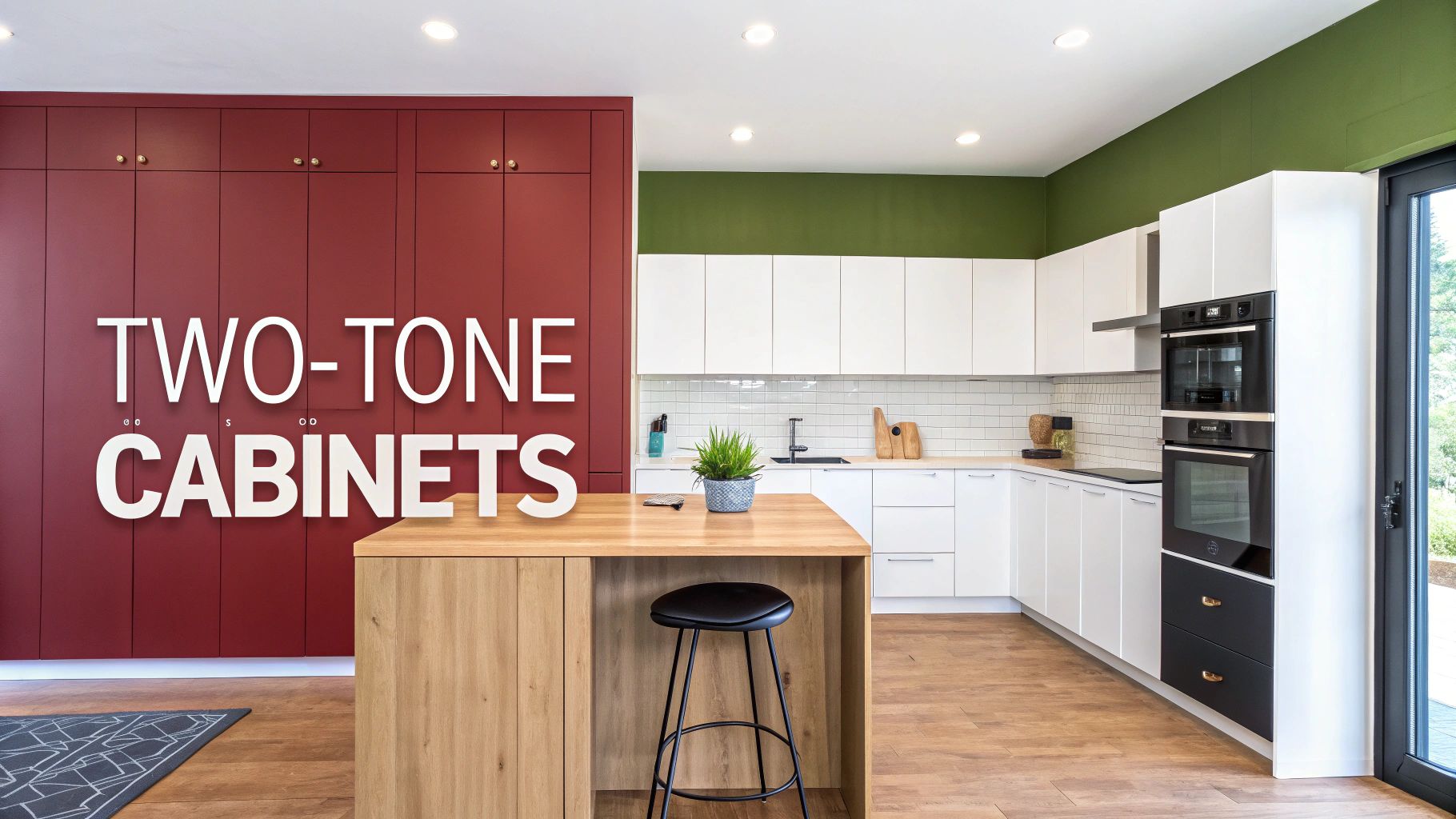
The beauty of the two-tone look is its ability to make a space feel larger and more interesting. By using a lighter color for the upper cabinets, the eye is drawn upward, creating a sense of openness and height. The darker or bolder color on the lower cabinets anchors the room, adding richness and character without overwhelming the space. Popular combinations include timeless pairings like natural oak with white, charcoal with soft greige, or dramatic matte black with warm cream.
How to Achieve a Two-Tone Kitchen
- Anchor with a Darker Base: Use a darker or more saturated color for your lower cabinets or kitchen island. This grounds the design and is more practical for hiding scuffs and wear in high-traffic areas.
- Keep Uppers Light and Bright: Select a lighter, neutral color for the upper cabinets. This reflects light around the room, making your kitchen feel more spacious and open, which is especially effective in smaller Southwest Michigan homes.
- Create Cohesion with Hardware: Unify the two distinct cabinet colors by using the same style and finish for all hardware. Consistent pulls and knobs will tie the entire look together, creating a polished and intentional design.
- Bridge the Colors: Use your countertop and backsplash to create a visual bridge between the two cabinet colors. A surface that incorporates tones from both your upper and lower cabinets will ensure the design feels harmonious rather than disjointed.
Pro-Tip: The two-tone trend can be used strategically for accessibility. Placing a darker color on lower cabinets can provide better visual contrast for individuals with low vision, making it easier to navigate the kitchen and identify different work zones.
This trend offers a perfect middle ground for homeowners who want to incorporate color without committing to a single bold hue throughout the entire kitchen. It’s a sophisticated way to add personality and visual interest. See stunning examples of two-tone designs in our Trademaster Idea Book.
3. Open Shelving
Breaking away from the tradition of wall-to-wall closed cabinetry, open shelving has emerged as one of the most popular kitchen design trends for creating an airy and personalized space. This approach replaces upper cabinets with exposed shelves, turning everyday dishware, glassware, and spices into a curated display. It promotes a sense of spaciousness, making it ideal for smaller kitchens or for homeowners who want to create a more open, casual atmosphere reminiscent of a boutique café or modern farmhouse.
This trend is incredibly versatile, fitting seamlessly into various aesthetics from industrial designs with metal brackets to Scandinavian styles with natural wood shelves. The key is intentionality. Open shelving encourages homeowners to invest in beautiful, functional items they love to see every day, blending storage and décor. By putting your favorite pieces on display, the kitchen becomes a true reflection of your personal style and story.
How to Achieve an Open Shelving Look
- Strike a Balance: You don't have to go all-or-nothing. Combine open shelving with closed lower cabinets or a pantry to hide less sightly items. A common approach is to flank a window or range hood with symmetrical shelves.
- Curate Your Collection: The success of open shelving lies in the styling. Stick to a cohesive color palette for your displayed items (3-4 colors works best) and group them by category, size, or function to create a look that is organized, not cluttered.
- Invest in Display-Worthy Items: Since your dishes are on display, this is a great opportunity to use those beautiful ceramic bowls or artisanal glasses. Think of your shelves as a functional art installation.
- Don't Overcrowd the Space: A common mistake is packing shelves too tightly. Aim to use only about 60-70% of the shelf depth to maintain a light, uncluttered appearance and ensure items are easy to access.
Pro-Tip: For accessibility, open shelving is fantastic. Placing frequently used items on lower, easy-to-reach shelves eliminates the need to open heavy cabinet doors or reach far back into deep cupboards, making it a great choice for aging-in-place designs.
Open shelving transforms your kitchen’s storage into a dynamic and stylish feature. It's a perfect choice for those who appreciate organization and want to infuse their space with personality. Find inspiration for how to incorporate this trend in our Trademaster Idea Book.
4. Smart Kitchen Technology Integration
The kitchen is evolving beyond just a place for cooking; it's becoming the command center of the modern home. A leading force in current kitchen design trends is the seamless integration of smart technology. This approach embeds connected appliances, voice-activated controls, and automated systems directly into the kitchen’s fabric, creating a space that is incredibly efficient, convenient, and future-proof. This isn't about gadgets cluttering your countertops, but rather a cohesive, built-in experience that simplifies daily routines.
This trend brings the power of technology to your fingertips. Imagine preheating your oven on the way home using an app, asking your faucet for a precise amount of water, or having your refrigerator suggest recipes based on its contents. Brands like Samsung, Miele, and Kohler are pioneering this field with appliances that are as intelligent as they are beautiful. From touchless faucets that reduce the spread of germs to smart lighting that adjusts to the time of day, these innovations make the kitchen more intuitive and responsive to your needs.
How to Achieve a Smart Kitchen
- Plan Your Ecosystem: Before purchasing, decide on a central smart home ecosystem like Google Assistant, Amazon Alexa, or Apple HomeKit. Choosing devices that are compatible with your preferred system will ensure they can communicate and work together smoothly.
- Prioritize High-Use Appliances: Start by upgrading the appliances you use most. A smart refrigerator like the Samsung Family Hub or an LG smart oven can offer immediate, tangible benefits to your daily meal preparation and planning.
- Ensure a Strong Network Foundation: A smart kitchen relies on a robust Wi-Fi signal. Work with your remodeler to ensure your network infrastructure can handle multiple connected devices without lag, and plan for strategically placed outlets and USB ports to power everything.
- Future-Proof Your Design: Technology changes rapidly. Plan for tomorrow by having your electrician install extra wiring or conduit behind walls. This makes it easier and less expensive to add or upgrade smart features down the road.
Pro-Tip: Smart technology offers incredible benefits for aging-in-place. Voice-activated lighting and faucets provide hands-free control for those with mobility challenges, while smart ovens with remote monitoring and automatic shut-off features enhance safety and peace of mind.
By thoughtfully integrating technology, a smart kitchen enhances functionality without compromising on style. It creates a space that works harder for you, making everyday tasks simpler and more enjoyable. Ready to see how technology can transform your kitchen? Explore the possibilities in our Trademaster Idea Book.
5. Bold Backsplashes and Statement Walls
Moving beyond simple utility, the backsplash has become the ultimate canvas for personal expression in the kitchen. One of the most exciting kitchen design trends is the use of bold backsplashes and statement walls, which act as a stunning focal point. This trend treats the backsplash not just as a protective surface but as an art installation, allowing homeowners to inject personality, color, and sophisticated patterns into their space. From jewel-toned zellige tiles to intricate geometric designs, this approach defines the entire character of the kitchen.
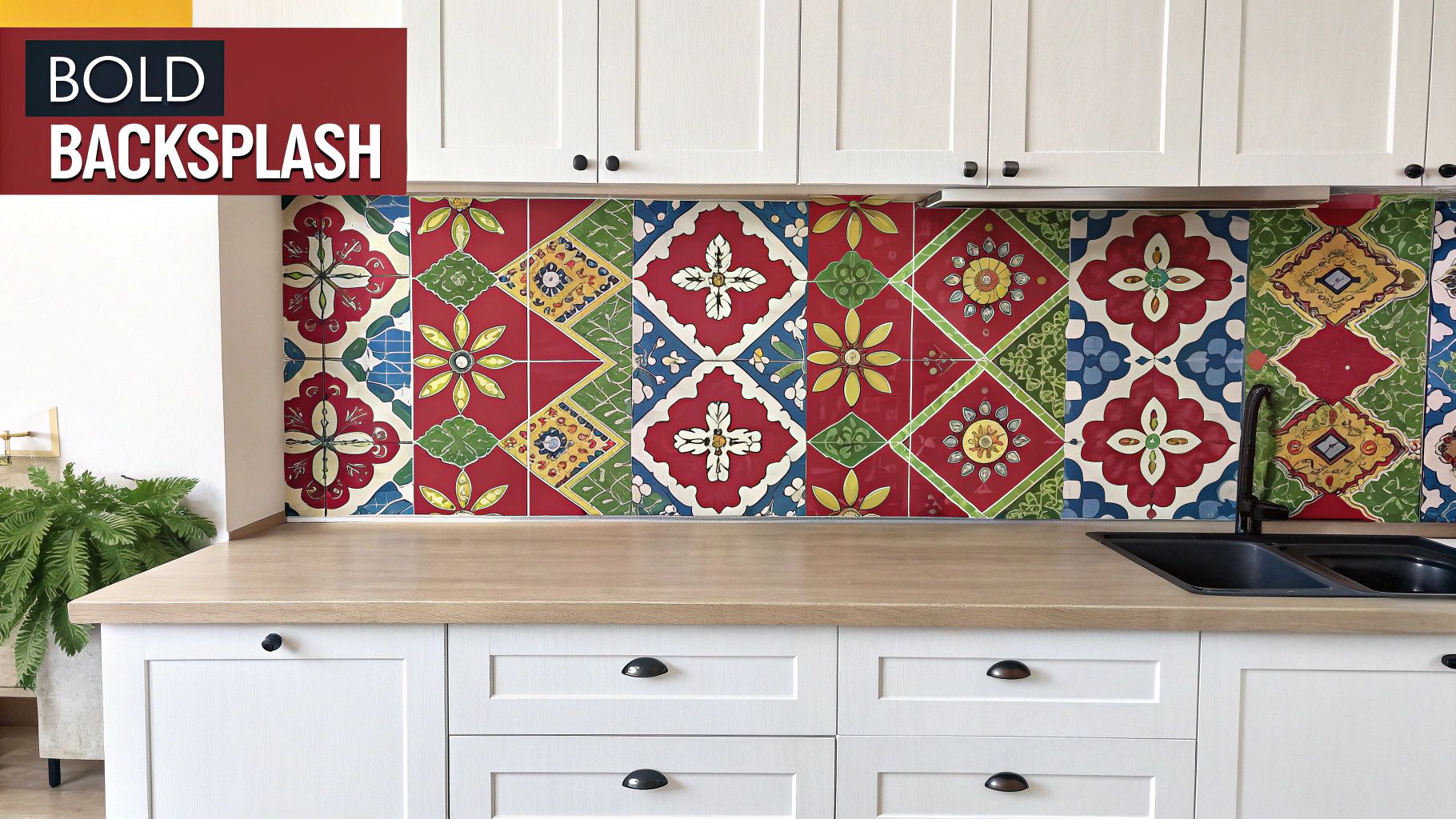
This trend celebrates unique materials and craftsmanship. Imagine a wall of hand-painted Talavera tiles bringing Spanish-influenced warmth to a home in Portage, or deep emerald green handmade tiles creating a rich, dramatic backdrop. Materials like terrazzo with colorful stone aggregates, metallic tiles for a touch of glamour, or Moroccan-inspired zellige tiles add texture and a bespoke feel. The goal is to create a powerful visual anchor that elevates the entire kitchen design from standard to spectacular.
How to Achieve a Bold Backsplash
- Balance is Key: To make your statement wall pop, pair it with more subdued elements. Simple, neutral countertops and clean cabinet lines will allow the bold pattern or color of your backsplash to take center stage without overwhelming the space.
- Consider Scale and Proportion: A busy, intricate pattern might work beautifully across a large wall but could feel chaotic in a smaller backsplash area. Always test tile samples in your kitchen to see how they look with your specific lighting and scale.
- Grout Matters: The color of your grout can dramatically change the final look. A contrasting grout will highlight the shape of each tile and emphasize the pattern, while a complementary grout will create a more seamless, blended appearance.
- Limit to One Wall: The most effective way to implement this trend is by dedicating one wall as the focal point. Extending a bold pattern across the entire kitchen can feel overwhelming and visually cluttered.
Pro-Tip: For a high-impact look that's easier to clean, consider extending your backsplash material all the way to the ceiling. This creates a seamless, dramatic effect and eliminates the need to paint the small strip of wall above a traditional backsplash.
A bold backsplash is a fantastic way to showcase your personal style and create a kitchen that is truly one-of-a-kind. It turns a functional area into a conversation starter. Explore vibrant and unique tile options in our Trademaster Idea Book.
6. Sustainable and Eco-Friendly Materials
Reflecting a growing awareness of environmental impact, one of the most significant kitchen design trends is the move toward sustainable and eco-friendly materials. This trend goes beyond aesthetics, focusing on creating a kitchen that is not only beautiful and durable but also healthy for your family and kind to the planet. It involves choosing materials that are renewable, reclaimed, recycled, or responsibly sourced, minimizing waste and reducing the home's overall carbon footprint. For Southwest Michigan homeowners who value nature, this is a way to bring that commitment indoors.
An eco-friendly kitchen prioritizes long-term performance and minimal environmental harm. This includes everything from reclaimed barn wood cabinets that tell a story to countertops made from recycled glass or paper composites. The focus is on materials with transparent supply chains, like FSC-certified wood, and finishes that improve indoor air quality, such as low-VOC or zero-VOC paints. The result is a space that feels authentic, thoughtfully designed, and aligned with modern values.
How to Achieve a Sustainable and Eco-Friendly Kitchen
- Choose Responsible Cabinetry: Opt for cabinetry made from sustainable materials like bamboo, which is a rapidly renewable grass, or FSC-certified wood, which guarantees it comes from a responsibly managed forest. Reclaimed wood from old barns or buildings is another excellent choice for adding character and history.
- Select Eco-Conscious Countertops: Look for countertops made from recycled content, such as those from IceStone or Vetrazzo which use recycled glass and concrete. Other options include durable materials like quartz, which has a long lifespan, or even high-quality butcher block from sustainably harvested wood.
- Prioritize Healthier Finishes: Ensure all paints, stains, and sealants used in your kitchen are low-VOC or zero-VOC. These products release fewer harmful chemicals into the air, leading to better indoor air quality for you and your family.
- Source Locally and Think Long-Term: Whenever possible, source materials locally to reduce transportation emissions. More importantly, choose durable, high-quality materials that won’t need to be replaced in a few years, which is the most sustainable choice of all.
Pro-Tip: Sustainability and accessibility often go hand-in-hand. Materials like cork flooring are not only renewable but also provide a cushioned surface that is easier on the joints, making it a great aging-in-place option. Similarly, choosing durable, low-maintenance materials reduces the physical effort required for upkeep.
By focusing on the origin and lifecycle of your materials, you can create a kitchen that is both stylish and sustainable. This forward-thinking approach ensures your space will be cherished for years to come. Ready to see what’s possible? Browse sustainable options in our Trademaster Idea Book.
7. Maximalist and Colorful Kitchens
For those who believe more is more, Maximalism is a vibrant rebellion against years of muted, minimalist design. One of the most expressive kitchen design trends today, Maximalist and Colorful Kitchens celebrate personality through bold colors, layered patterns, and an abundance of curated details. This trend transforms the kitchen into a dynamic, artful space that tells a story, embracing rich textures and personal collections to create a room filled with energy and warmth. It’s a perfect style for homeowners in Southwest Michigan looking to infuse their home with unique character and joy.
This look is defined by its confident use of color and pattern. Think deep jewel-toned cabinetry in emerald green or sapphire blue, eye-catching patterned wallpaper, and intricate tile work inspired by Spanish or Moroccan design. The style encourages mixing materials, from ornate brass hardware to richly veined marble countertops and open shelving filled with colorful glassware and art. It’s about creating a harmonious, visually stimulating environment that feels deeply personal and unapologetically bold.
How to Achieve a Maximalist and Colorful Kitchen
- Start with a Bold Color Palette: Choose a color you absolutely love as your anchor. Whether it's a dramatic cabinet color, a vibrant backsplash, or a statement wall, let this hue guide your other selections. Use the 60-30-10 rule as a starting point, but don't be afraid to intensify the shades.
- Layer Patterns with Intention: Mix patterns by varying their scale. Combine a large-scale floral wallpaper with a smaller geometric tile floor and medium-scale patterned textiles on window treatments or cushions. This creates visual interest without feeling chaotic.
- Showcase Your Collections: Maximalism is the perfect excuse to put your personality on display. Use open shelving or glass-front cabinets to show off curated collections of colorful dishes, vintage cookware, or unique pieces of art. The goal is a curated gallery, not clutter.
- Don't Forget the "Jewelry": Hardware, lighting, and fixtures are the finishing touches that complete the look. Opt for ornate, statement-making pieces like decorative cabinet pulls, a sculptural chandelier, or a faucet in a unique finish like aged brass to add another layer of detail.
Pro-Tip: Proper lighting is crucial in a maximalist kitchen. Use a combination of ambient, task, and accent lighting to ensure every bold color, intricate pattern, and curated object is beautifully illuminated.
Maximalism allows you to create a kitchen that is truly one-of-a-kind, reflecting your tastes and passions. It’s a trend that proves that functional spaces can also be artistic and full of life. Feeling inspired to go bold? Explore more unique designs in our Trademaster Idea Book.
8. Kitchen Islands as Focal Points
Gone are the days when a kitchen island was just extra counter space. Today, one of the most impactful kitchen design trends involves transforming the island into a deliberate, multi-functional focal point of the room. This trend elevates the island beyond a simple worksurface, turning it into the true anchor of the kitchen’s design and social flow. It’s a statement piece that combines stunning aesthetics with enhanced utility, perfect for the open-concept living spaces popular in Southwest Michigan homes.
This trend is defined by making the island distinct from the surrounding cabinetry, often through contrasting colors, different materials, or a dramatic countertop choice like a waterfall edge. These islands are designed to be command centers, incorporating everything from seating and specialized storage to integrated beverage coolers and secondary sinks. The goal is to create a dynamic hub for cooking, entertaining, and daily life, making the kitchen more efficient and visually striking.
How to Make Your Kitchen Island a Focal Point
- Create Powerful Contrast: Make your island stand out by using a contrasting color or material. A bold, dark island in an otherwise light-colored kitchen, or a natural wood island against sleek white cabinets, creates immediate visual interest and defines the space.
- Invest in Statement Lighting: The right lighting can turn an island from functional to fabulous. Hang a pair of large, decorative pendant lights or a linear chandelier above the island to draw the eye, provide essential task lighting, and reinforce your kitchen's style.
- Incorporate Multi-Functionality: Plan your island to meet your family’s specific needs. Integrate a mix of deep drawers for pots, open shelving for cookbooks, and specialized appliances like a wine fridge. Ensure a comfortable seating overhang of at least 12-15 inches to encourage gathering.
- Prioritize Proper Scale and Flow: A successful island enhances, rather than hinders, workflow. Ensure there is adequate clearance (a minimum of 42 inches is recommended) on all sides for traffic. The island’s size should be proportional to the kitchen to avoid overwhelming the room.
Pro-Tip: For aging-in-place design, a multi-level island can be highly effective. A section at a lower, 30-inch height can provide an accessible, wheelchair-friendly workspace or dining spot, making the kitchen more inclusive for all family members.
By treating the island as a central design element, you can dramatically improve your kitchen's functionality and aesthetic appeal. It becomes the heart of the home where everyone naturally wants to gather. Explore stunning island designs in our Trademaster Idea Book to find inspiration for your own project.
9. Large Format and Slab Materials
For those seeking a truly luxurious and seamless aesthetic, one of the most impactful kitchen design trends is the use of large format and slab materials. This trend moves away from traditional tiles and busy patterns, instead embracing expansive, continuous surfaces for backsplashes, countertops, and even islands. By using oversized slabs of porcelain, quartz, or natural stone, you create a dramatic, high-end look with minimal grout lines, resulting in a clean, uninterrupted visual flow that feels both grand and modern.
The appeal lies in its sophisticated simplicity and practical benefits. A full-height slab backsplash eliminates the need for scrubbing grout, while a single-piece island countertop becomes a stunning monolithic centerpiece. Materials like engineered quartz and large format porcelain offer incredible durability and a consistent appearance, perfect for achieving this sleek style. This approach elevates the kitchen from a purely functional room to a work of art, showcasing the inherent beauty of the material itself.
How to Achieve a Large Format Slab Look
- Plan the Layout Meticulously: Success with large slabs depends entirely on precise planning. Work with your designer to create detailed drawings that map out every cut and seam to maximize visual continuity, especially for waterfall edges or wrapped islands.
- Select the Right Material: While natural marble is classic, consider engineered options like porcelain or quartz slabs. They are often lighter, more durable, and available in larger, more consistent formats, making a seamless installation more achievable.
- Ensure Proper Structural Support: These materials are incredibly heavy. Your cabinetry and flooring must be professionally assessed and reinforced to safely support the weight of the slabs, a critical step that ensures long-term stability.
- Hire Expert Fabricators: The installation of large format materials is a specialized skill. A precise template, expert cutting, and careful transportation are essential to avoid costly mistakes. Always partner with experienced and reputable installers.
Pro-Tip: The seamless, non-porous surfaces created by slab materials are exceptionally easy to clean and maintain. This makes them an excellent choice for universal design and aging-in-place, as they reduce physical effort and promote a more hygienic environment.
By prioritizing dramatic, unbroken surfaces, the large format trend delivers a powerful statement of modern luxury. It’s a sophisticated choice for any homeowner looking to create a high-impact, low-maintenance kitchen. Discover how these stunning materials can transform your space in our Trademaster Idea Book.
10. Multifunctional and Flexible Kitchen Spaces
The modern kitchen has evolved far beyond a place just for cooking. It’s now the command center of the home, a space that must adapt to work, school, socializing, and relaxing. This need for versatility is driving one of today's most practical kitchen design trends: creating multifunctional and flexible spaces. This approach focuses on designing a kitchen that can seamlessly transition between different activities, from a morning coffee bar to an afternoon home office and an evening entertainment hub.
This trend is about smart, intentional design that anticipates a family's diverse needs. It often involves creating distinct "zones" within an open-concept layout for different tasks. Think dedicated beverage stations, integrated desk nooks, and comfortable seating areas that invite lingering. The goal is to maximize every square foot, ensuring the kitchen supports the dynamic lifestyle of a modern household without feeling cluttered or chaotic.
How to Achieve a Multifunctional Kitchen
- Define Functional Zones: Create specific areas for different activities. A peninsula or island can double as a prep surface and a casual dining spot, while a small countertop section with dedicated outlets can serve as a charging station or temporary workspace.
- Integrate a Workspace: If you need a dedicated office area, consider integrating a desk into the end of a cabinet run or creating a "cloffice" (closet office) within a pantry. This keeps work contained while remaining connected to the rest of the home.
- Use Moveable Elements: A kitchen island on casters offers incredible flexibility. It can be moved to the side to open up floor space for a gathering or repositioned to serve as a buffet during parties.
- Plan for Smart Storage: Concealed storage is key to keeping a multi-use space organized. Incorporate appliance garages to hide toasters and coffee makers, deep drawers for laptops and paperwork, and custom cabinetry that can store everything from serving platters to school supplies.
Pro-Tip: Proper lighting is crucial for a multifunctional kitchen. Use layered lighting: bright, focused task lighting for prep areas, dimmable ambient lighting for dining and socializing, and accent lighting to highlight features. This allows you to change the room's mood and function with the flip of a switch.
By thoughtfully planning for various activities, a flexible kitchen becomes the true heart of the home, adapting to your needs throughout the day. To see how these zones can be integrated into your layout, explore the possibilities in our Trademaster Idea Book.
Top 10 Kitchen Design Trends Comparison
| Trend | 🔄 Implementation Complexity | ⚡ Resource Requirements & Efficiency | 📊 Expected Outcomes | 💡 Ideal Use Cases | ⭐ Key Advantages |
|---|---|---|---|---|---|
| Warm Minimalism | Moderate — careful curation to avoid sterility | Moderate cost for quality materials; efficient to maintain | Calm, timeless, uncluttered and welcoming spaces | Homeowners seeking minimal but warm aesthetics; Scandinavian/Japanese influences | Timeless appeal; easy upkeep; natural materials age well |
| Two-Tone Kitchen Cabinets | Moderate — requires color planning and matching finishes | Moderate cost; relatively affordable update vs full remodel | Enhanced depth and visual interest; can alter perceived proportions | Affordable aesthetic refreshes; transitional and modern kitchens | Versatile styling; hides wear; high visual impact for cost |
| Open Shelving | Low technical, higher styling upkeep 🔄 | Low material cost but higher maintenance time; very accessible ⚡ | Airy, open feel but demands constant tidiness 📊 | Display-focused kitchens; small spaces needing visual openness | Affordable, flexible display, easy access to everyday items |
| Smart Kitchen Technology Integration | High — systems integration and compatibility planning 🔄 | High upfront cost; can improve energy efficiency and time savings ⚡ | Increased convenience, safety, and remote control capabilities 📊 | Tech-forward homes; large or high-function kitchens; energy-conscious users | Time-saving automation; energy monitoring; modern convenience |
| Bold Backsplashes & Statement Walls | Moderate–High — custom design and precise installation | Variable cost (artisanal high); moderate installation effort ⚡ | Strong focal point; personalized and memorable kitchen character 📊 | Homeowners wanting a design focal point or accent wall | Powerful visual statement; ties room together; relatively replaceable |
| Sustainable & Eco-Friendly Materials | Moderate — sourcing certified materials and vetting suppliers 🔄 | Often higher upfront costs; long-term savings via durability and efficiency ⚡ | Lower environmental footprint, better indoor air quality 📊 | Eco-conscious projects; green-certified builds; long-term value seekers | Environmental benefits; healthier interiors; unique reclaimed aesthetics |
| Maximalist & Colorful Kitchens | Moderate — heavy design coordination to maintain harmony 🔄 | Variable cost (paint/accessories affordable; custom elements costlier) ⚡ | Vibrant, personalized, and potentially polarizing spaces 📊 | Expressive homeowners; eclectic, bohemian, or statement-driven designs | High personality and memorability; flexible to update |
| Kitchen Islands as Focal Points | Moderate–High — may require structural/plumbing/electrical work 🔄 | Can be expensive (appliances, plumbing); greatly improves workflow ⚡ | Added workspace, storage, seating and social hub 📊 | Open-plan homes, entertainers, families needing multifunctional zones | Multifunctional centerpiece; improves flow and social interaction |
| Large Format & Slab Materials | High — specialized fabrication, heavy installation 🔄 | High material and labor cost; low maintenance and easy cleaning ⚡ | Seamless, luxurious aesthetic with fewer grout lines 📊 | Luxury remodels and modern minimal kitchens | Dramatic continuity; durability; premium, contemporary look |
| Multifunctional & Flexible Kitchen Spaces | Moderate — careful zoning and adaptable elements required 🔄 | Variable cost; maximizes utility of existing space; efficient use ⚡ | Versatile spaces that support cooking, work, socializing 📊 | Small homes, families, work-from-home households | Adaptability, future-proofing, and efficient multi-use functionality |
Ready to Bring These Kitchen Trends to Your Home?
The journey through the latest kitchen design trends reveals a fascinating landscape of possibilities. From the serene, uncluttered elegance of Warm Minimalism to the vibrant, personality-packed aesthetic of Maximalist and Colorful Kitchens, today’s design ethos is all about creating a space that is both beautiful and deeply personal. We've explored how two-tone cabinets can add visual depth, how open shelving can create an airy, curated feel, and how bold backsplashes can serve as the artistic heart of your home. Each of these trends offers a unique path toward a kitchen that doesn’t just serve its purpose but enhances your daily life.
The overarching theme connecting these diverse styles is intentionality. It’s about making conscious choices that reflect your family's needs, values, and tastes. Whether that means integrating smart technology for seamless daily routines, choosing sustainable materials to align with your environmental values, or designing a multifunctional space that adapts to your dynamic lifestyle, the goal is the same: to create a kitchen that works perfectly for you.
From Inspiration to Implementation: Your Next Steps
Feeling inspired is the perfect starting point, but translating that inspiration into a cohesive and functional plan is where the real work begins. The most successful kitchen remodels don't just haphazardly combine trends; they thoughtfully weave together elements that complement each other and align with the home's existing architecture. Think about how the clean lines of large format slab materials could pair with the organic feel of eco-friendly wood cabinets, or how a statement island can anchor a space that also features the subtle sophistication of two-tone cabinetry.
As a homeowner in Southwest Michigan, your kitchen should be a reflection of your life here, blending contemporary style with timeless comfort. The key is to move from a list of "likes" to a unified vision.
Here are a few actionable steps to take right now:
- Revisit Your Favorites: Look back through the trends we've discussed. Which one or two truly resonated with you? Start a folder or a Pinterest board dedicated to these specific ideas.
- Assess Your Current Space: Consider your existing kitchen's layout, strengths, and weaknesses. Which trends would solve a current problem? For instance, would a multifunctional island provide the extra seating and workspace your family desperately needs?
- Define Your Priorities: Is your primary goal to improve workflow, increase storage, update aesthetics, or enhance accessibility for aging in place? Ranking your priorities will help narrow down which kitchen design trends will deliver the most value for your investment.
Creating a Timeless and Functional Kitchen
Ultimately, the most enduring kitchen design trends are those that master the balance between form and function. A beautiful kitchen that is difficult to work in will quickly lose its charm. A highly functional kitchen that lacks personality will never feel like the true heart of your home. By thoughtfully selecting and combining elements from today's top trends, you can create a space that is not only stylish for years to come but also a true joy to live in every single day. The goal is to build a kitchen that supports your lifestyle, whether you're hosting a large family gathering in Kalamazoo or enjoying a quiet morning coffee in Portage.
Your dream kitchen is within reach. It begins with clear vision, thoughtful planning, and a trusted partner to bring it all together.
Ready to transform your vision into a stunning, functional reality? The team at Trademaster Construction specializes in guiding Southwest Michigan homeowners through the entire remodeling process, ensuring the final result perfectly captures your style and needs. Visit our website at Trademaster Construction to explore our portfolio and see how we masterfully implement the latest kitchen design trends.

