
Let's get right to it: a full kitchen renovation cost breakdown for Michigan shows a minor refresh can start around $27,000. A more common mid-range project often lands between $45,000 and $70,000, while a high-end, custom overhaul can easily climb past $80,000. Where you land on that spectrum all comes down to the scope of your project, the quality of materials you choose, and the labor involved.
What a Michigan Kitchen Renovation Really Costs
Before we start digging into specific line items, it’s important to set a realistic financial baseline. The cost of a kitchen remodel isn't one single number; it's a wide range that's shaped entirely by your vision and choices.
I often tell clients to think of it like buying a car. You could go for a reliable, no-frills sedan, a feature-packed SUV for the family, or a high-performance luxury car. Each has a very different price tag because of its components, craftsmanship, and capabilities. Your kitchen works the same way.
Once you understand what drives the cost, you gain control over your budget. There are really three main factors that determine your total investment:
- Project Scope: Are you just looking to refresh surfaces with new paint, hardware, and maybe a countertop? Or are you dreaming of knocking down walls and completely reconfiguring the layout? A cosmetic update is far less intensive—and much less expensive—than a gut renovation that involves structural changes.
- Material and Finish Selections: This is where the budget can really swing. For example, stock laminate countertops are incredibly budget-friendly, while custom-fabricated quartz or marble is a significant investment. The same logic applies to everything from your cabinets and flooring to the appliances you select.
- Labor and Professional Expertise: Hiring skilled professionals is an investment in getting the job done right. This cost doesn’t just cover the physical installation; it includes crucial project management, pulling the right permits, and having the experience on hand to avoid expensive mistakes down the road.
National Averages and Local Context
Looking at the national picture, the numbers line up pretty well with what we see here in Michigan. For 2025, the average cost for a minor kitchen remodel across the U.S. is about $27,492, while a major, mid-range remodel averages around $79,982.
These figures really highlight that wide range we talked about, which is driven by the project's scope and the quality of finishes. If you want to discover more insights on remodeling costs, you'll see that the average cost per square foot can be anywhere from $75 to $250, which shows just how much size and material choices can affect the final price tag.
A good rule of thumb we often share with homeowners is to plan on investing between 5% and 15% of your home’s total value into your kitchen renovation. This helps ensure your project is a smart investment that aligns with your property's overall market value.
For those of us here in Southwest Michigan, these numbers serve as a fantastic starting point. At Trademaster Construction, our job is to help you navigate all these variables, making sure we create a design that not only fits your budget but truly enhances your home and your day-to-day life.
To make this a bit clearer, let's look at what you can typically expect for your money at different budget levels here in Michigan.
Typical Michigan Kitchen Remodel Cost Ranges
| Renovation Scope | Average Cost Range | Typical Inclusions |
|---|---|---|
| Minor / Cosmetic | $27,000 – $40,000 | Cabinet refacing or painting, new countertops (laminate/butcher block), new sink/faucet, updated lighting, new paint, and backsplash. |
| Mid-Range | $45,000 – $70,000 | New semi-custom cabinets, quartz/granite countertops, new mid-grade appliances, flooring, and potentially minor layout changes. |
| High-End / Custom | $80,000+ | Fully custom cabinetry, premium stone countertops (marble/quartzite), high-end appliances, significant layout changes, and structural work. |
As you can see, the scope of work and the materials you select are the biggest factors in determining where your project will land. A simple cosmetic update keeps costs down, while a full-scale custom job with high-end finishes will naturally require a larger investment.
The Complete Kitchen Renovation Cost Breakdown
Knowing the ballpark cost of a kitchen remodel is a good starting point, but to really get a handle on your budget, you need to see where every single dollar is going.
Think of your total project cost as a pie. Each slice—cabinets, countertops, flooring, labor—represents a different part of the job. Understanding the typical size of each slice is what separates a smooth, predictable project from one full of stressful financial surprises. This is how you stay in control.
A detailed kitchen renovation cost breakdown demystifies the whole process. When you can see the individual line items, you can make smart trade-offs. For example, if you decide to splurge on those high-end, professional-grade appliances you've been dreaming of, you'll know you might need to choose a more budget-friendly backsplash to balance things out.
This chart gives you a quick visual of what Michigan homeowners can expect to invest, from a minor refresh to a full-gut, high-end renovation.
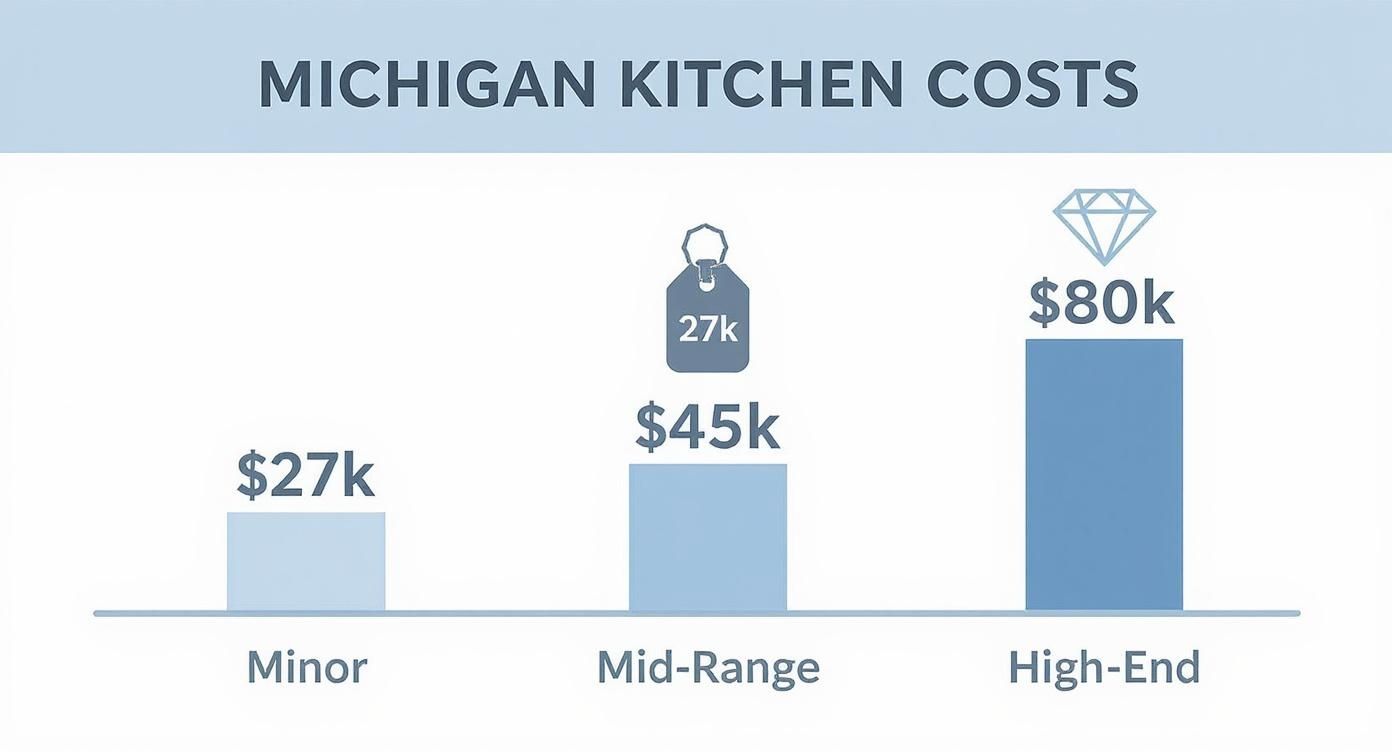
As you can see, the budget scales up quickly as the scope of work grows from simple cosmetic updates to a completely custom, reconfigured space.
Deconstructing the Budget Percentages
So, how does that pie usually get sliced? While every kitchen is different, the cost percentages follow a surprisingly consistent pattern across most projects. It’s the same framework we use here at Trademaster Construction to build accurate proposals, and it’s an incredibly powerful tool for homeowners.
Let's look at a typical mid-range kitchen remodel. The lion's share of the budget, often 30-40%, goes straight to the cabinetry—it's almost always the single biggest expense. After that, countertops and new appliances are the next biggest tickets, each typically eating up 10-15% of the total. Finally, the skilled labor to install everything correctly usually accounts for 20-25%. For a really granular look, you can explore this detailed budget breakdown to see how it all adds up.
This percentage-based view helps you figure out what's most important to you. Are you a passionate home chef? Then you know to set aside a bigger slice for appliances.
Understanding these percentages is like having a financial map for your renovation. It guides your spending, helps you compare contractor quotes intelligently, and ensures you're investing in the areas that will bring you the most value and satisfaction.
Key Cost Categories Explained
Let's dig into the major components that will make up your kitchen renovation budget.
-
Cabinetry and Hardware (30-40%): This is the undisputed heavyweight of the budget. Costs here are driven by whether you choose stock, semi-custom, or fully custom cabinets, the materials used (like MDF vs. solid wood), and the finish. Don't forget the hardware—pulls, knobs, and handles are part of this category, too.
-
Labor and Installation (20-35%): This is the cost of all the skilled tradespeople needed to make your new kitchen a reality. It covers everything from project management and demolition to installing cabinets, plumbing, electrical work, and all the final finishing touches.
-
Appliances (10-15%): Your refrigerator, oven, range, dishwasher, and microwave all fall in here. The price range is massive, from reliable standard models to smart, high-performance appliances that can cost a small fortune.
-
Countertops (10-15%): Your choice of material is the biggest factor. Laminate is the most wallet-friendly, while natural stone like granite and engineered materials like quartz represent a much larger investment. This line item also includes the cost of fabricating and installing the slabs.
Secondary Cost Components
Beyond the "big four," several other essential items will claim a piece of your budget. These smaller slices are critical for creating a finished, functional kitchen.
-
Flooring (5-7%): Options run the gamut from affordable luxury vinyl tile (LVT) and laminate to premium hardwood or porcelain tile. The cost includes the material itself plus installation and any prep work needed for the subfloor.
-
Lighting and Electrical (4-5%): This is more than just buying pretty fixtures. It covers hiring a licensed electrician to safely install recessed cans, under-cabinet lighting, pendants, and any new outlets or switches your updated layout requires.
-
Backsplash (2-3%): While it's a smaller piece of the budget, the backsplash makes a huge visual impact. Costs vary wildly depending on whether you choose a simple ceramic subway tile or an intricate glass or natural stone mosaic.
-
Plumbing and Fixtures (3-5%): This line item includes your new sink, faucet, and garbage disposal. It also covers the plumber’s time to hook everything up, especially if your new layout requires moving supply or drain lines.
-
Design and Permits (2-5%): For larger-scale remodels, you may have design fees. Almost all renovations will also require building permits from your city or township to ensure all work is up to code, which comes with its own fees.
By understanding this detailed kitchen renovation cost breakdown, you’re no longer staring at one big, intimidating number. Instead, you can see it for what it is: a series of smaller, manageable decisions that, piece by piece, will build the kitchen you’ve always wanted.
The Two Sides of Your Budget: Labor and Materials
When you start dreaming about a new kitchen, your mind probably jumps straight to the fun stuff: gorgeous countertops, shiny new appliances, and custom cabinets. It’s only natural. Those are the tangible, exciting pieces you'll see and use every day.
But there’s another huge piece of the puzzle that often catches homeowners by surprise: the cost of skilled labor. Getting a handle on how your budget splits between materials and labor is one of the most important steps in planning a realistic renovation.
Think of it this way: you can buy the absolute best ingredients for a gourmet meal—prime-cut steak, fresh organic vegetables, rare spices. But if the person cooking doesn't know what they're doing, you'll still end up with a disappointing dinner. High-end materials are just like those ingredients; they need an expert's touch to become something truly special. Skilled labor is the "chef" who turns a pile of boxes and materials into the beautiful, functional kitchen you envisioned.
What You're Really Paying for with "Labor"
So, what’s actually included in that "labor" line item on your estimate? It's much more than just a person swinging a hammer. For most kitchen projects, professional labor will make up about 20-35% of your total budget, and that investment buys you peace of mind and quality control.
This isn't just about paying for someone's time. It's a comprehensive package that covers the critical, behind-the-scenes work that makes a project successful.
- Project Management: A huge part of this cost is having a professional, like our team at Trademaster Construction, steer the ship. They handle the complex scheduling, order all the materials at the right time, and make sure every single step happens smoothly and in the correct order.
- Coordinating the Pros: A kitchen remodel is a team sport. You need plumbers, electricians, painters, and tile setters, just to name a few. A general contractor is the coach who wrangles all these different experts, making sure they show up when they're supposed to and that their work meets high standards.
- The Craftsmanship Itself: This is the hands-on skill you see. It’s the art of hanging cabinets so they are perfectly level, making flawless cuts in a quartz countertop, or laying tile with precision. This is where expertise really shines and separates a DIY-ish result from a truly professional one.
- Knowing the Rules: Skilled pros know the local building codes here in Southwest Michigan inside and out. They ensure all the wiring and plumbing is done correctly and safely, which protects you from major problems and failed inspections down the road.
A Quick Budget Breakdown: Labor vs. Materials
Let's make this real with a hypothetical $50,000 mid-range kitchen remodel. Here’s a rough idea of how the costs could shake out:
| Category | Budget Percentage | Estimated Cost | What It Buys You |
|---|---|---|---|
| Materials | 65-80% | $32,500 – $40,000 | Cabinets, countertops, appliances, flooring, fixtures, paint, etc. |
| Labor | 20-35% | $10,000 – $17,500 | Project management, demolition, installation, plumbing, electrical, finishing. |
As you can see, both are significant investments. One of the biggest mistakes we see is when homeowners try to slash the labor budget to free up more money for fancier materials. It almost always backfires. A beautiful, expensive floor that's installed poorly or a cabinet that isn't hung correctly will cause headaches and repair bills that wipe out any initial savings.
Think of professional labor as your project's insurance policy. It ensures all those beautiful materials you invested in are installed with the skill and care they require, giving you a kitchen that doesn’t just look good on day one, but is built to last for decades.
At the end of the day, a fantastic kitchen is born from the partnership between great materials and expert craftsmanship. You can't have one without the other. When you budget properly for both, you’re not just renovating; you're making a smart, lasting investment in your home.
Sample Budgets for Southwest Michigan Kitchens
Talking about percentages and line items is helpful, but nothing makes a budget click like seeing real-world examples. To give you a clearer picture of what your investment can look like right here in Southwest Michigan, we’ve put together three common scenarios.
Think of these as starting points—blueprints you can tweak to fit your own home and vision. Whether you’re planning a simple cosmetic update or a full-scale transformation, these examples show how different choices in materials and scope play out in terms of cost.

Scenario 1: The Minor Kitchen Refresh
This budget is for the homeowner whose kitchen has a solid foundation but looks tired. The layout works just fine, and the cabinets are in good shape, but the style is stuck in another decade. The goal here is to get the biggest visual bang for your buck without tearing everything out.
For a project like this, we focus on the surfaces that make the most impact. This usually includes:
- Cabinet Painting or Refacing: Instead of a full replacement, a professional paint job or brand-new doors and drawer fronts can give you a modern look for a fraction of the price.
- New Countertops: Swapping out old laminate for a quality, budget-friendly option like butcher block or an entry-level granite instantly elevates the whole room.
- A Fresh Backsplash and Hardware: You’d be surprised what classic subway tile and new cabinet pulls can do. These are small details with a huge design payoff.
- Updated Fixtures: A new sink, faucet, and light fixtures are the essential finishing touches that make the space feel truly complete.
This approach is all about making smart, strategic upgrades. It’s not a gut job, but a well-executed refresh that makes an old kitchen feel brand new and adds real value to your home.
Scenario 2: The Comprehensive Mid-Range Remodel
This is the kind of kitchen remodel we see most often at Trademaster Construction. It’s for homeowners who want a fundamentally new kitchen with better flow, higher-quality materials, and a more current layout—all without jumping into the ultra-luxury price range.
Here, you’re not just covering up old problems; you’re replacing core components with stylish, durable alternatives. A typical mid-range project includes semi-custom cabinets that offer more styles and flexibility than stock options, paired with ever-popular quartz countertops.
This budget also allows for a new suite of energy-efficient appliances and modern flooring, like luxury vinyl plank (LVP). While we typically avoid major structural work to keep costs in check, minor layout tweaks—like moving the dishwasher or reconfiguring an island for better workflow—are definitely on the table. It's the sweet spot where you get a personalized, high-quality kitchen that perfectly balances cost and features.
Scenario 3: The High-End Custom Renovation
For homeowners who want to bring a specific vision to life with top-tier materials and craftsmanship, a high-end budget opens the door to a truly custom space. This is where we can completely rethink the kitchen, moving walls, relocating plumbing, and rewiring to create the perfect layout from scratch.
This level of investment is all about premium quality. Key features often include:
- Fully Custom Cabinetry: Built to your exact measurements with premium woods, unique finishes, and clever interior organizers.
- Luxury Countertops: High-end natural stone like marble or quartzite, or designer quartz with dramatic waterfall islands.
- Professional-Grade Appliances: Top-of-the-line ranges, built-in refrigerators, and specialty appliances like wine fridges or steam ovens.
- Bespoke Finishes: Intricate tile work, designer lighting, and custom architectural details that make your kitchen one-of-a-kind.
This is the ultimate in flexibility, allowing you to create a dream kitchen that is perfectly tailored to your lifestyle.
To help you see how the numbers line up, here’s a table comparing what these three scenarios might look like in Southwest Michigan.
Sample Southwest Michigan Kitchen Remodel Budgets
| Cost Item | Minor Refresh Budget | Mid-Range Remodel Budget | High-End Custom Budget |
|---|---|---|---|
| Cabinetry | Cabinet Painting or Refacing | Semi-Custom Cabinets | Fully Custom Cabinetry |
| Countertops | Laminate or Entry-Level Granite | Quartz or Mid-Range Granite | Marble, Quartzite, High-End Quartz |
| Appliances | Keep Existing or New Basic Models | New Mid-Grade Appliance Suite | Professional-Grade & Integrated Appliances |
| Layout Changes | None | Minor Adjustments (e.g., island) | Major Reconfiguration, Moving Walls |
| Labor | Basic Installation, Painting | Comprehensive Installation, Plumbing, Electrical | Extensive Skilled Labor, Custom Fabrication |
Remember, these figures are a guide. The final cost of your project will always depend on the specific materials you choose and the unique complexities of your space.
Planning for the "What Ifs": Your Renovation Contingency Fund
Even the most buttoned-up kitchen renovation cost breakdown has a blind spot: the unknown. No matter how carefully you and your contractor plan every detail, nobody has X-ray vision. It’s what’s lurking behind the drywall that can throw a real wrench in your budget and timeline.
Think of your renovation like a perfectly planned road trip. You’ve got the map, the snacks, and the playlist ready. But you can't plan for a sudden rockslide or a flat tire. That’s exactly what a contingency fund is—it’s your financial roadside assistance, ready to handle a bump in the road without derailing the whole trip.
This is why we consider a contingency fund of 10-20% of your total project cost to be absolutely essential. This isn't "extra" money for a last-minute splurge on fancier countertops. It's a dedicated safety net for the genuine surprises that pop up.
Common Surprises Hiding in Your Walls
So, what kind of surprises are we talking about? Every home has its own quirks, but after years of doing this, we see the same culprits show up time and again once the demolition starts.
Here are a few of the usual suspects:
- Outdated Electrical Wiring: Finding old knob-and-tube or aluminum wiring is a showstopper. It’s not up to code, it’s not safe, and it means we have to bring in an electrician to get things right.
- Hidden Water Damage: That slow, barely-noticeable leak under the sink you ignored for years? It could have been quietly rotting out your subfloor or wall studs, turning a simple cabinet install into a structural repair job.
- Unwelcome Houseguests: Once the old cabinets come down, we might find evidence of termite or carpenter ant damage. That means calling an exterminator and replacing the compromised wood before we can move forward.
- Hazardous Materials: In older homes, it's not uncommon to uncover asbestos tiles or lead paint. These materials require professional abatement, which is a specialized and often costly process to ensure everyone's safety.
These aren't just minor setbacks; they are crucial fixes that protect the health and integrity of your home. It’s no surprise that the demand for professional kitchen renovations is growing. Across the globe, the market is expanding, with homeowners in the U.S. spending an estimated $22.5 billion on these projects. This trend really underscores how important it is to get these foundational issues handled correctly. You can read the full research about market trends in home renovation.
Your contingency fund is the single most important tool for keeping your project on track without financial stress. It transforms a potential crisis into a manageable, planned-for expense, ensuring peace of mind throughout the renovation process.
Hidden Costs Beyond the Walls
Other expenses can hide in plain sight. It’s easy to overlook them in the excitement of picking out finishes, but they need a spot in your initial budget so they don’t start eating into your emergency fund.
- Permit Fees: Your local municipality here in Southwest Michigan will require building permits to make sure all the work is done to code. The fees can vary quite a bit depending on where you live and the scope of your project.
- Demolition and Disposal: Tearing out an entire kitchen creates a lot of debris. The cost to haul it all away, which usually involves renting a dumpster, is a real and necessary expense.
- Your Temporary Kitchen: For a few weeks, you'll be without a functioning kitchen. You’ll need to budget for a microwave, a hot plate, and the simple fact that you’ll probably be eating out or ordering in a lot more often.
The best way to prepare is to have a frank conversation about these "what-ifs" with your contractor at Trademaster Construction. A transparent discussion builds a realistic budget and a partnership based on trust, making sure your project is ready for whatever we might find.
How to Save Money on Your Kitchen Remodel
A detailed kitchen renovation cost breakdown does more than just tell you where your money is going—it shines a light on all the places you can be smart about saving. When we talk about maximizing your budget, it's not about cutting corners or sacrificing quality. It’s about making strategic choices that give you a huge impact without the eye-watering price tag.

It really comes down to smart financial planning: knowing where to splurge and where to find incredible value. By focusing on intelligent savings, you can free up funds for the elements you've been dreaming of, whether that's granite countertops or high-end appliances that will save you money in the long run.
Keep Your Layout Intact
One of the single biggest ways to keep your budget in check is to work within your kitchen’s existing footprint. A full gut-job that involves moving walls and reconfiguring the entire space sounds exciting, but it also brings a whole new level of expense.
Changing the layout means rerouting plumbing lines, moving electrical outlets, and then patching up the drywall and floors to hide all the work. Each of those steps adds significant labor costs that can make your budget balloon. By simply keeping your sink, dishwasher, and stove right where they are, you can easily avoid thousands of dollars in extra work. That’s money you can now put toward better finishes and fixtures.
Time Your Project Strategically
Believe it or not, when you schedule your project can make a real difference. The construction industry has its own busy seasons. Spring and summer are prime time for remodels, which means contractors are booked solid and demand is at its peak.
By planning your renovation for the off-season—usually late fall or winter—you might find that contractors have more availability. This can sometimes translate to more competitive pricing. It’s a simple scheduling shift that can lead to real savings on labor, a huge slice of any renovation pie.
Make Savvy Material and Appliance Choices
The materials and appliances you choose will have a massive impact on your final bill. The good news? Saving money here doesn't mean you have to give up on style. There are some incredible, budget-friendly alternatives to high-end materials that look just as good.
- Countertops: Everyone loves natural stone, but high-quality laminate or butcher block can give you a premium look for a fraction of the price. Today’s laminates come in stunningly realistic stone and wood patterns that are both durable and stylish.
- Cabinetry: If your cabinet boxes are still in good shape, why replace them? Refacing or even just repainting the doors can completely transform your kitchen's look for so much less than a full replacement.
- Appliances: Keep an eye out for floor models, scratch-and-dent sales, or big holiday promotions. You can also often get a package discount if you buy a whole suite of appliances from the same brand, which means more savings without sacrificing quality.
Being smart with your money is what turns a good renovation into a great one. When you partner with an experienced team like us at Trademaster Construction, you get expert guidance on where every dollar will count the most. It just goes to show that a smart budget is the true foundation of a successful project.
Common Questions About Kitchen Renovation Costs
Even after crunching the numbers, you're bound to have a few more questions rattling around as you get serious about your project. That's completely normal. Getting clear on these final details is what builds the confidence you need to move forward. Let's tackle some of the most common things we hear from homeowners right here in Southwest Michigan.
Can I Be My Own General Contractor to Save Money?
This is easily one of the first questions people ask. It seems logical, right? If labor is 20-35% of the cost, handling the project management yourself should slash the budget. In theory, yes. In reality, it's a massive undertaking.
Being a general contractor isn't just about making phone calls; it's a full-time job that requires deep industry knowledge, a network of reliable subcontractors, and the experience to solve problems on the fly. Juggling schedules, ordering materials, and handling unexpected hiccups can quickly spiral out of control for even the most organized homeowner.
How Long Will My Kitchen Actually Be Out of Commission?
Ah, the big one. Living without a kitchen is tough, so knowing the timeline is crucial for your sanity. A simple, minor refresh might only put you out for one to three weeks.
However, a typical mid-range remodel usually takes a solid four to eight weeks from demolition day to the final polish. For a high-end, custom gut job, especially one that involves moving walls or reconfiguring plumbing, you should plan on three months or even longer.
Do I Really Need a Permit for a Small Kitchen Remodel?
This is a big one, and the answer is almost always: yes. It’s easy to think that if you aren't moving walls, you can skip the paperwork, but that's rarely the case. Most cities and townships require permits for any significant electrical or plumbing work. Swapping a leaky faucet is one thing; relocating the sink and its drain line is a whole different ballgame.
Getting the right permits is a must for two huge reasons:
- Safety: It guarantees that a licensed inspector will sign off on the work, making sure it’s up to code. This protects your family from potential fire hazards or future water damage.
- Resale Value: When it comes time to sell, unpermitted work is a red flag that can cause major headaches during a home inspection, sometimes even killing the deal.
Our advice? Always assume you'll need a permit. A professional contractor like us handles this entire process for you, so you can rest easy knowing your beautiful new kitchen is also safe, legal, and built to last.
How Much Value Does a Kitchen Renovation Add to My Home?
Naturally, you want to know if this investment will actually pay off down the road. The good news is that a smart kitchen remodel delivers one of the best returns on investment (ROI) you can make in your home. Across the country, homeowners typically recoup between 50% to 75% of what they spend when they sell.
Think of it this way: a $60,000 mid-range remodel could add anywhere from $30,000 to $45,000 to your home's value. But beyond the numbers, you get to enjoy a more beautiful, functional space every single day—and you can't put a price on that. The trick is to choose a timeless design that will appeal to future buyers, not just your own specific tastes.
Feeling more confident about your kitchen renovation budget? The next step is to get personalized advice for your unique space. The team at Trademaster Construction is ready to help you create a detailed plan that aligns with your vision and financial goals. Start planning your dream kitchen today.

