
Subway tile is a timeless choice, but its true design power lies in the layout. The pattern you select can dramatically alter the feel of a kitchen, bathroom, or basement, transforming a simple material into a statement piece. Moving beyond the standard offset pattern opens a world of design possibilities, from the elegant V-shape of a herringbone layout to the modern, clean lines of a straight stack. This guide is built to be your definitive resource for understanding the most impactful subway tile layout patterns.
For homeowners in Southwest Michigan, from Portage to Kalamazoo, getting this detail right is key to a successful remodel. Each pattern we cover has a distinct personality, installation complexity, and ideal application. We will break down ten essential layouts, providing a clear analysis of what makes each one unique. You’ll learn which patterns make a small bathroom feel larger, which add a touch of luxury to a kitchen backsplash, and how simple choices in grout color can completely change the visual outcome. To kick off your project, exploring a variety of Subway Tile Backsplash Ideas, along with installation and maintenance guidance, can provide valuable inspiration.
This listicle isn't just about pretty pictures; it’s a practical guide packed with actionable advice to help you make an informed decision for your home. We'll give you the strategic insights needed to select the perfect pattern, ensuring your new tile installation reflects your personal style and enhances your living space for years to come.
1. Classic Running Bond (Offset) Pattern
This is the quintessential subway tile pattern, the one most people picture when they hear the term. The classic running bond, also known as an offset pattern, is where each tile is staggered by half its width from the row directly above and below it. This creates a strong, brick-like appearance that has remained a design staple since its first use in the New York City subway system over a century ago. Its enduring popularity comes from its ability to create visual movement and distribute texture evenly across a surface, making it one of the most versatile subway tile layout patterns available.
Why It Works So Well
The running bond pattern is a master of disguise. Its staggered grout lines are exceptionally forgiving, helping to hide minor imperfections in walls or slight variations in tile size. This makes it a practical choice for both new constructions and older Southwest Michigan homes that may have settled over time. The horizontal lines draw the eye across the room, which can make smaller spaces like galley kitchens or compact bathrooms feel wider and more expansive. Its timeless appeal ensures it fits seamlessly into nearly any design aesthetic, from historic Arts and Crafts to modern farmhouse.
Key Takeaway: The classic running bond pattern is the go-to choice for a reason. It offers a balanced look that is both visually engaging and highly effective at concealing surface irregularities.
Best Practices and Local Tips
- Grout Choice: Use a dark, contrasting grout (like charcoal or black) with white tile to make the iconic pattern pop. For a more subtle and monolithic look, match the grout color to the tile.
- Vertical Installation: In spaces with lower ceilings, a common challenge in many Kalamazoo and Portage basements, install the tiles vertically. This draws the eye upward, creating an illusion of height.
- Finish: A glossy finish reflects light and feels traditional, perfect for a vintage-inspired bathroom. A matte finish absorbs light, offering a soft, contemporary feel ideal for a modern kitchen backsplash.
- Scale: For a modern update on this classic, consider using larger format subway tiles, such as 4×8 or 4×12 inches.
Planning a tile project? Getting an idea of the budget is a crucial first step. You can use our instant pricing tool to get a reliable cost estimate for your specific project.
2. Herringbone Pattern
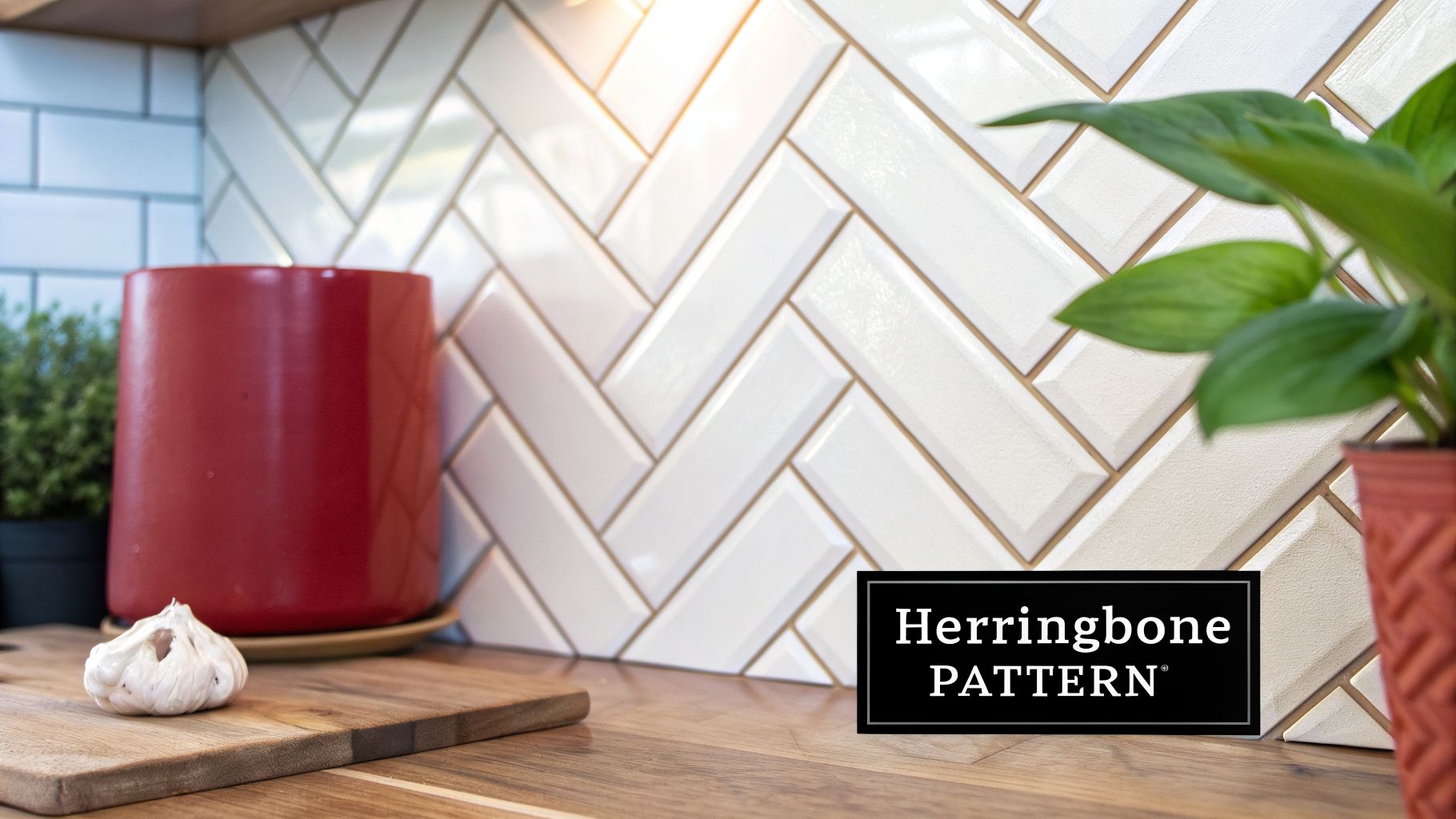
For those looking to add a touch of drama and sophisticated movement, the herringbone pattern is a stunning choice. This arrangement involves laying rectangular tiles at a 45-degree angle to create a distinctive, interlocking V-shape or zigzag effect. Reminiscent of the intricate floors found in historic European manors, this pattern elevates standard subway tile into a focal point. While more complex to install than a simple offset, the herringbone is one of the most dynamic subway tile layout patterns, creating a high-end, designer aesthetic that commands attention.
Why It Works So Well
The herringbone pattern introduces a powerful sense of direction and energy into a room. The diagonal lines draw the eye either upward or across the space, depending on the orientation, which can make a room feel taller or wider. This makes it a great choice for creating a feature wall in a shower or a striking backsplash in a kitchen. Its rich, woven texture adds depth and a feeling of luxury, turning a functional surface into a work of art. The complexity of the pattern signals quality craftsmanship and attention to detail.
Key Takeaway: The herringbone pattern is an excellent way to create a high-impact design feature. It brings a sense of refined elegance and dynamic movement that is ideal for backsplashes, accent walls, and floors.
Best Practices and Local Tips
- Professional Installation: Due to the precise, angled cuts required, this pattern is best left to experienced installers. Proper layout, starting from the center line, is essential for a balanced look.
- Scale and Impact: Use the herringbone pattern on a single feature wall in a bathroom or as a kitchen backsplash behind the stove. This creates a powerful focal point without overwhelming the entire space.
- Grout Matters: A contrasting grout will emphasize the intricate zigzag pattern, while a matching grout will create a more subtle, textural effect. For a clean, modern look, aim for smaller grout joints.
- Pre-Planning: Always do a dry layout of the tiles on the floor first. This allows you to visualize the final pattern and ensure your starting lines are correct before applying any mortar.
Because of its complexity, the labor for a herringbone installation can be higher. To understand how this pattern might affect your project's budget, try our instant pricing tool for a clear cost estimate.
3. Straight Stack (Grid) Pattern
This pattern is a celebration of clean lines and geometric precision. In a straight stack, also known as a grid pattern, tiles are aligned perfectly on top of one another, creating uninterrupted horizontal and vertical grout lines. The result is a highly ordered, modern look that feels both simple and bold. Influenced by Japanese minimalism and the Mid-century modern movement, this layout has become a favorite for contemporary spaces, offering a distinct alternative to more traditional subway tile layout patterns.
Why It Works So Well
The straight stack pattern is uncompromisingly modern and direct. Its grid-like structure creates a sense of calm and order, making it an excellent choice for minimalist and Scandinavian-inspired interiors. Unlike offset patterns that hide imperfections, the grid puts everything on display, demanding precision and highlighting the quality of the tile itself. This makes the tile a true focal point. The clean, straight lines can also be used strategically; a vertical stack draws the eye upward, making ceilings feel higher, while a horizontal stack can make a narrow room feel wider.
Key Takeaway: The straight stack pattern delivers a powerful, contemporary statement. Its success depends on flawless installation, as the uniform grid highlights both the tile and the craftsmanship.
Best Practices and Local Tips
- Precision is Key: The wall surface must be perfectly flat and plumb before installation begins. Any dips or bows, common in older Portage homes, will be magnified by the grid pattern.
- Grout for Impact: Use a contrasting grout color, like black or charcoal, to emphasize the geometric grid and create a graphic effect. For a more subtle, monolithic appearance, match the grout to the tile.
- Tile Quality Matters: Choose high-quality, rectified tiles that are uniform in size. Even slight variations will disrupt the pattern's clean lines. A matte or textured finish can add depth and softness to the minimalist aesthetic.
- Mind the Grout Lines: Thin grout lines (1/16 inch) create a more seamless and sophisticated look, reinforcing the pattern's modern appeal.
Thinking about how this pattern might fit into your kitchen or bathroom renovation? A great starting point is to understand the potential costs. You can use our instant pricing tool to get a detailed estimate for your project.
4. Chevron Pattern
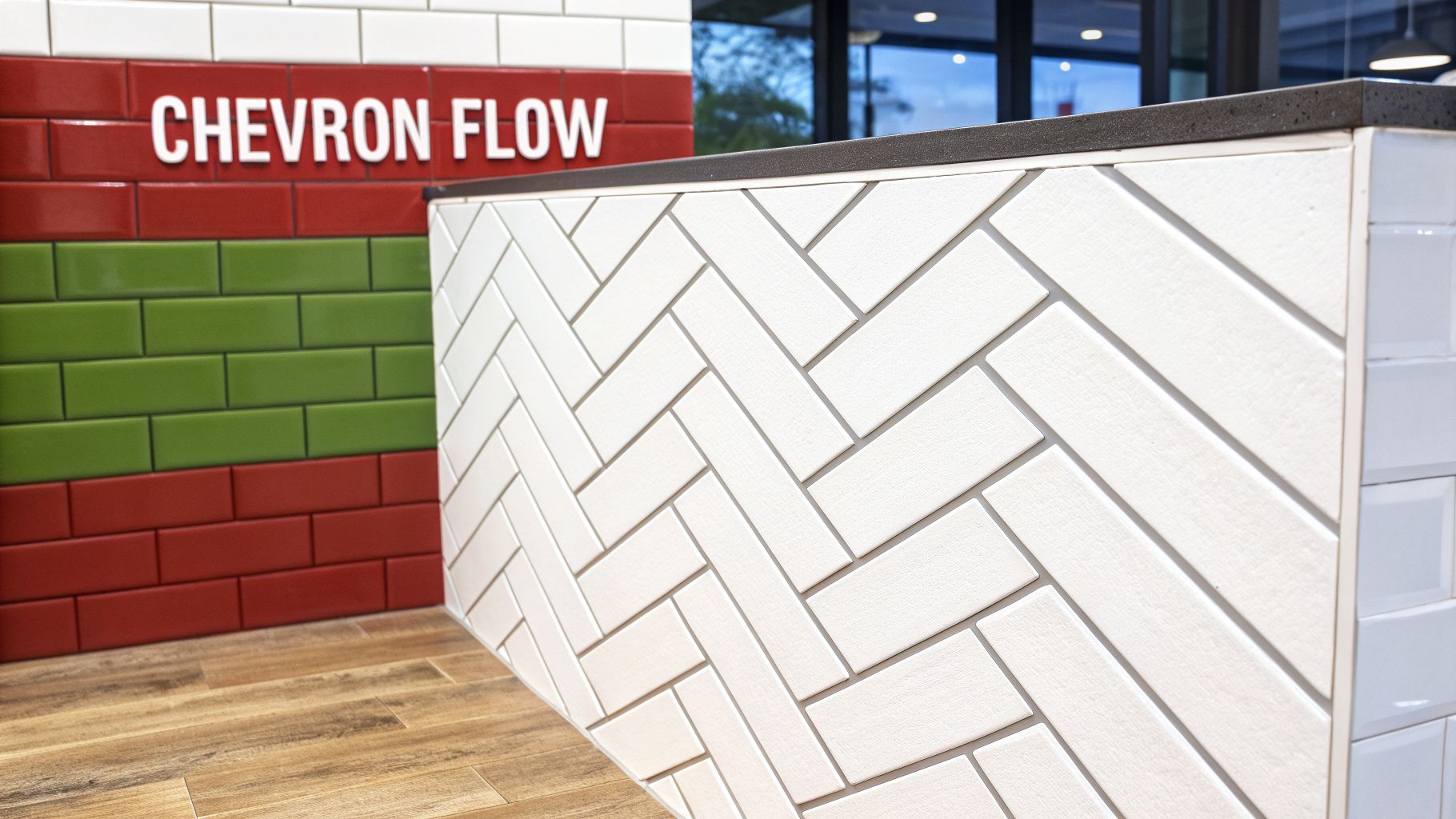
While often confused with herringbone, the chevron pattern offers a distinct and more uniform sense of movement. In this layout, the ends of each tile are mitered at a 45-degree angle and joined to form a continuous "V" shape, creating a seamless arrow-like effect. This creates a clean, graphic look that points in a single direction, producing a dynamic visual flow that is less busy than herringbone but more energetic than a classic running bond. It's one of the more modern subway tile layout patterns, perfectly suited for contemporary and transitional design aesthetics.
Why It Works So Well
The chevron pattern’s strength lies in its ability to create directional emphasis. The V-shaped lines act as arrows, guiding the eye through a space and highlighting specific features. This makes it an exceptional choice for creating a focal point in a kitchen or adding a sense of drama to a shower wall. Unlike the staggered look of other patterns, chevron’s crisp, unbroken lines give it a sharp, sophisticated appearance that elevates the entire room. It brings a feeling of luxury and intentional design, often seen in high-end projects and design-forward Southwest Michigan homes.
Key Takeaway: The chevron pattern provides a clean, directional flow that is both modern and elegant. It's an ideal choice for creating a strong visual statement and drawing attention to a room's best features.
Best Practices and Local Tips
- Focal Point: Orient the "V" to point toward a focal point, such as a range hood in the kitchen or a window in the bathroom, to create a deliberate and impactful design.
- Layout Start: This pattern requires precise installation. Always begin your layout from the center line of the wall and work your way outward to ensure perfect symmetry.
- Grout Choice: A contrasting grout color will accentuate the sharp, graphic nature of the chevron, while a matching grout will create a more subtle, textural effect.
- Shower Walls: Installing a chevron pattern on a shower feature wall is a fantastic way to add a custom touch. Pointing the chevrons downward can even create an illusion of greater height.
- Professional Help: Due to the mitered cuts and precision required, this is a pattern best left to experienced tile professionals to ensure a flawless finish.
Wondering how a premium pattern like chevron might affect your project's budget? You can use our instant pricing tool to get a clear cost estimate for your renovation.
5. Basketweave Pattern
The basketweave pattern creates a beautiful woven effect by arranging rectangular tiles in small, alternating groups. Typically, two or three tiles are grouped together and laid either horizontally or vertically, with the next group laid in the perpendicular direction. This design produces an intricate, interlocking appearance reminiscent of a woven basket, adding a layer of texture and sophisticated movement to any surface. It stands out among subway tile layout patterns for its ability to feel both classic and dynamic.
Why It Works So Well
This pattern brings a sense of refined detail and character to a space. The interlocking blocks create a visually engaging surface that feels more decorative than simpler layouts, making it an excellent choice for feature walls or floors. Its origins in traditional design, particularly the Arts and Crafts movement, give it a timeless quality perfect for historic Southwest Michigan homes. Yet, when executed with modern tiles and finishes, it fits beautifully into transitional or contemporary bathrooms, offering a hint of classic charm without feeling dated. The multi-directional pattern also adds subtle texture, which can be particularly useful for adding grip on bathroom floors.
Key Takeaway: The basketweave pattern offers a classic, textural look that provides significant visual interest. It's an ideal choice for adding a touch of elegance and detail to both floors and walls.
Best Practices and Local Tips
- Grout Choice: To emphasize the woven effect, choose a grout color that provides a slight contrast. For a more subtle, unified look that lets the texture speak for itself, match the grout to the tile.
- Central Starting Point: Always begin your installation from the center of the surface. This ensures the pattern is balanced and that any cut tiles at the edges are of a consistent size.
- Pairing Patterns: In a larger bathroom, consider using a basketweave on the floor and a simple running bond on the walls. This creates a focal point without overwhelming the space.
- Application: This pattern is a fantastic choice for shower floors in Kalamazoo homes, where both visual appeal and added traction from the increased grout lines are beneficial. It also makes a stunning kitchen backsplash in a craftsman-style home.
Before starting your renovation, it's smart to figure out the potential costs. Our instant pricing tool can help you develop a realistic budget for your tiling project.
6. Brick Bond with Large Format Tiles
This pattern is a modern interpretation of the traditional running bond, using larger format tiles like 6×12, 8×16, or even 12×24 inches to create a contemporary take on the classic. The brick bond with large format tiles maintains the familiar visual movement of offset rows but achieves a more minimalist and streamlined appearance. The reduced number of grout lines results in a cleaner, less busy surface, making it one of the most popular subway tile layout patterns for modern luxury bathrooms and high-end kitchen backsplashes.
Why It Works So Well
The oversized scale of the tiles commands attention and creates a sense of grandeur and simplicity. Fewer grout lines mean less visual clutter, which helps to make a room feel larger and more open. This effect is especially powerful in shower enclosures or on large accent walls, where the uninterrupted planes of tile can create a serene, spa-like atmosphere. For Southwest Michigan homeowners aiming for a sophisticated, upscale look, this pattern delivers a high-impact design statement with understated elegance.
Key Takeaway: Using a running bond pattern with large format tiles modernizes a classic look, creating a clean, expansive feel that is perfect for contemporary and minimalist designs.
Best Practices and Local Tips
- Surface Prep is Key: Large tiles are less forgiving of uneven surfaces. Ensure your substrate is perfectly flat and level before installation, as any imperfections will be much more noticeable.
- Grout Lines: Use thin grout lines (1/8 inch or less) with a closely matched grout color to enhance the monolithic, seamless appearance.
- Application: This style is perfect for shower walls in modern Portage bathroom remodels, creating a continuous, easy-to-clean surface that feels luxurious.
- Balance: Pair these large tiles with minimal fixtures and clean lines to maintain a cohesive, modern aesthetic. A 6×12 or 8×16 size offers a great balance of scale and practicality for most residential spaces.
If you're considering a modern tile update, getting an idea of the budget is a crucial first step. You can use our instant pricing tool to get a reliable cost estimate for your specific project.
7. Diagonal Layout Pattern
For a dramatic departure from the grid, the diagonal layout pattern sets tiles at a 45-degree angle to the walls and floor. This orientation creates a dynamic, diamond-like grid that immediately injects energy and a sense of movement into a space. Popularized in contemporary and high-end design, this layout is a bold statement piece. While not a traditional use of subway tile, it's one of the more striking subway tile layout patterns for homeowners wanting a custom, modern aesthetic.
Why It Works So Well
The diagonal pattern is a powerful tool for visual expansion. Its angled lines draw the eye across the surface and toward the corners of the room, making a narrow space like a shower stall or a small bathroom feel wider and more spacious. This pattern turns a simple tile into a compelling graphic element, perfect for creating a feature wall that commands attention. Its inherent complexity gives it a luxurious feel, often seen in boutique hotels and spa environments, making it a great choice for a primary bathroom renovation in an upscale home.
Key Takeaway: The diagonal layout pattern is a high-impact choice that uses angular lines to create a sense of spaciousness and sophisticated visual drama.
Best Practices and Local Tips
- Strategic Use: This pattern can be visually intense. Reserve it for an accent wall, like behind a vanity or in a shower niche, rather than an entire room. Pair it with a simpler pattern, like a classic running bond, on adjacent walls for balance.
- Starting Point: A precise layout is crucial. Your installer should begin from the center point of the wall and work outward to ensure the pattern is symmetrical and the cut tiles at the edges are balanced.
- Color Simplicity: Let the pattern be the star. Stick to a single, consistent tile color to prevent the design from feeling chaotic or overwhelming.
- Skilled Installation: This is not a DIY-friendly pattern. The numerous angle cuts require a high level of precision and experience. Hiring a skilled tile professional is essential for a clean, professional finish.
Because this layout requires more cuts and labor, it's important to understand the budget implications. Our instant pricing tool can help you estimate the costs for a professional installation.
8. Vertical Subway Tile Layout
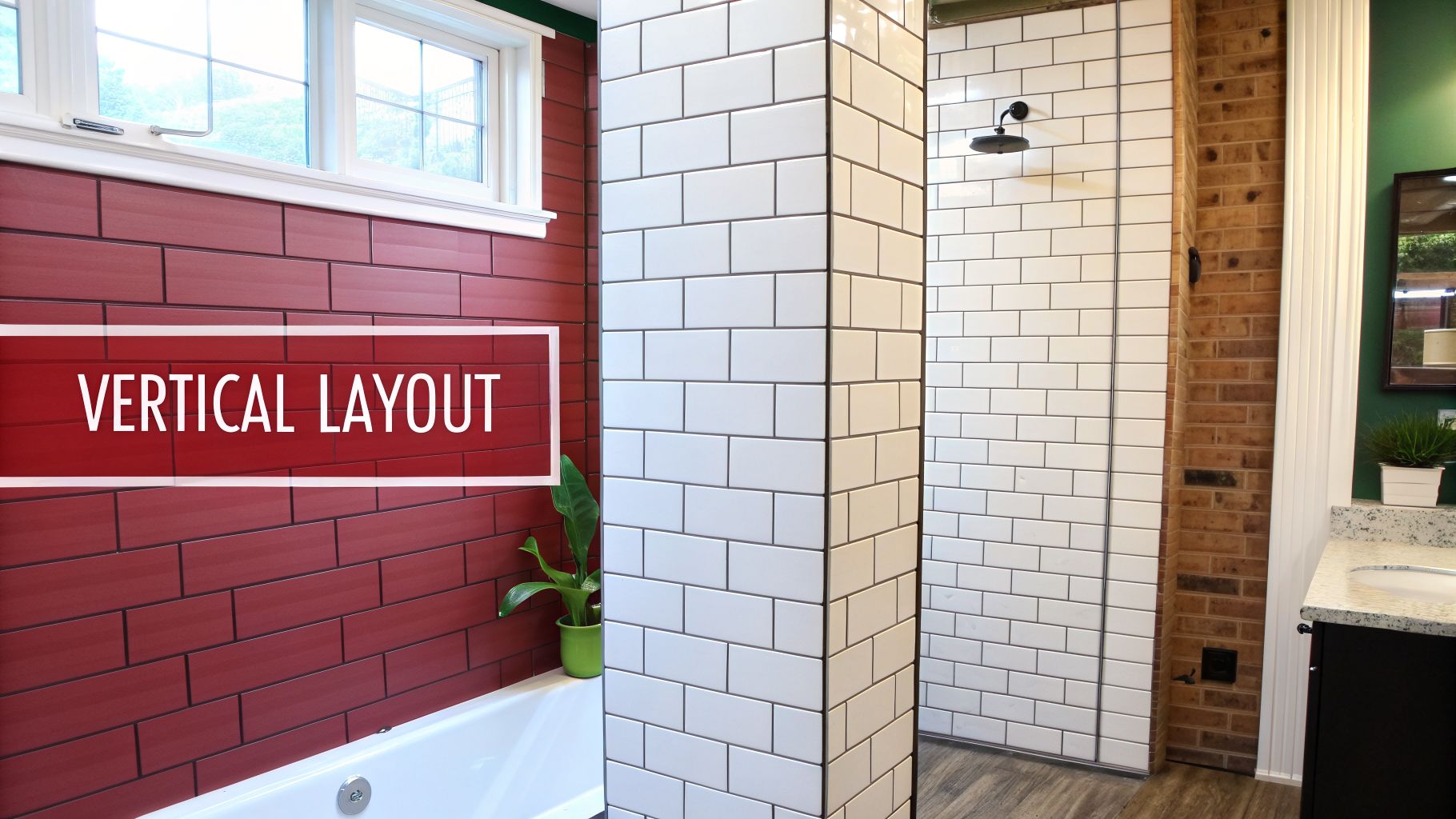
Flipping the classic subway tile on its end creates the vertical layout, a simple change with a dramatic effect. In this pattern, standard tiles are installed with their short edges running horizontally, emphasizing height over width. This orientation draws the eye upward, making it one of the most effective subway tile layout patterns for creating an illusion of space and height. Popularized by contemporary designers, this look offers a fresh, modern alternative to traditional horizontal installations.
Why It Works So Well
The vertical layout is a powerful tool for visual transformation, especially in rooms with standard or low ceilings. The strong vertical lines guide the gaze upward, making walls feel taller and the room more open and airy. This is particularly useful in spaces like shower stalls, powder rooms, or compact bathrooms where you want to maximize the feeling of vertical space. It breaks from the expected brick-like pattern, injecting a clean, architectural, and distinctly modern feel into the design.
Key Takeaway: The vertical subway tile layout is a smart design choice for making spaces feel taller and more contemporary. Its simple orientation shift delivers significant visual impact.
Best Practices and Local Tips
- Ceiling Height: For maximum effect, run the vertical tiles all the way up to the ceiling. This is an excellent strategy for basement bathrooms common in Southwest Michigan homes, helping to counteract the often lower ceiling height.
- Grout Lines: A contrasting grout color will accentuate the long vertical lines and amplify the heightening effect. For a more subtle, textured look, choose a grout that matches the tile color.
- Application: This pattern shines in smaller areas like a kitchen backsplash between the counter and cabinets or within a shower enclosure. It adds a touch of sophistication without overwhelming the space.
- Mix and Match: Consider using a vertical layout on an accent wall, like the one behind a bathroom vanity, while keeping adjacent walls more traditional for a balanced yet interesting design.
Before you begin your tile project, understanding the potential costs is essential. You can use our instant pricing tool to get a clear and reliable cost estimate tailored to your home.
9. Mixed Size Subway Tile (Staggered) Pattern
For those who love the clean look of subway tile but crave a more dynamic and custom feel, the mixed size pattern offers a perfect solution. This modern approach involves combining standard subway tiles (like 3×6 inches) with smaller, proportionally sized tiles (such as 1.5×3 inches) within the same layout. Arranged in a staggered, seemingly random sequence, this pattern creates a subtle rhythm and texture that breaks up the uniformity of a single-size installation, making it one of the more artistic subway tile layout patterns. It adds visual interest without overwhelming the space, maintaining a clean and cohesive aesthetic.
Why It Works So Well
The mixed size staggered pattern introduces an element of bespoke design to any surface. It feels intentional and thoughtfully curated, adding character to spaces like kitchen backsplashes or bathroom feature walls. This pattern is excellent at drawing attention to a specific area, turning a functional surface into a focal point. Because it shares the classic offset DNA, it retains a familiar feel that integrates well with various styles, from modern farmhouse to eclectic contemporary. The varied tile sizes create a unique texture that plays with light and shadow, adding depth to the wall.
Key Takeaway: The mixed size pattern is an ideal choice for homeowners who want a unique, custom look that elevates the classic subway tile into a more contemporary and personalized statement.
Best Practices and Local Tips
- Plan Ahead: Before starting, lay out your pattern on a flat surface or map it out on paper. This helps you visualize the balance and avoid awkward clusters of one size.
- Maintain Cohesion: For the most successful execution, stick to a single tile color and finish. This allows the pattern itself to be the star without the design becoming too busy.
- Balance is Key: Use this pattern on a feature wall, such as behind a vanity or stove, and pair it with simpler walls elsewhere. This prevents the room from feeling visually cluttered.
- Application: This pattern is particularly striking for kitchen backsplashes in modern Portage homes, where it can add a touch of artistic flair to a minimalist design.
Thinking about how this unique pattern might fit your budget? A well-planned tile project begins with a clear cost estimate. Our instant pricing tool can help you figure out the costs for your remodel.
10. Horizontal Stripe Pattern with Grout Color
This pattern takes a classic layout, like the running bond, and elevates it into a bold statement using a simple yet powerful design tool: grout color. Instead of matching the grout to the tile for a seamless look, this method uses a high-contrast grout to create distinct horizontal lines that read as stripes. A dark grout with light tiles, or vice versa, transforms a standard installation into a graphic, contemporary feature, making it one of the most budget-friendly and impactful subway tile layout patterns.
Why It Works So Well
The Horizontal Stripe pattern is a masterclass in making a big impact with a small change. The strong, clean lines draw the eye across the room, which can visually widen a space like a narrow bathroom or galley kitchen. This technique introduces a modern, architectural feel without the added labor or tile waste associated with more complex patterns. It’s particularly effective in minimalist or contemporary designs, where the grout lines become an integral part of the overall aesthetic, adding rhythm and structure to the surface. For Southwest Michigan homeowners aiming for a design-forward look, this is a brilliant way to add personality.
Key Takeaway: Using contrasting grout to create horizontal stripes is a highly effective, low-cost strategy to give standard subway tile a custom, modern appearance.
Best Practices and Local Tips
- Color Contrast: The key is high contrast. Think charcoal or black grout with classic white tiles, or a crisp white grout with dark-colored tiles like navy or forest green.
- Grout Type: For the narrow grout lines (1/16 to 1/8 inch) that best suit this look, an unsanded grout is ideal. To combat staining, especially with light grout, consider an epoxy grout for its durability and ease of cleaning.
- Test First: Always test your chosen grout color on a small, inconspicuous area or a sample board to see how it dries, as the final color can vary slightly.
- Modern Fixtures: This pattern pairs exceptionally well with modern, streamlined fixtures. Matte black or brushed gold faucets and hardware will complete the contemporary feel, a popular choice in updated Portage homes.
Wondering how a designer choice like this might affect your project's bottom line? You can use our instant pricing tool to get a clear cost estimate for your tile installation.
10 Subway Tile Layout Patterns Compared
| Pattern | 🔄 Implementation complexity | ⚡ Resources & efficiency | ⭐ Expected outcome/quality | 📊 Ideal use cases | 💡 Key advantages / quick tip |
|---|---|---|---|---|---|
| Classic Running Bond (Offset) | Low — straightforward layout; needs precise alignment | Efficient install; moderate edge cuts noted (~50% at edges) | ⭐⭐⭐⭐ Timeless, balanced linear movement | Kitchen backsplashes, shower & bathroom walls, powder rooms | Use contrasting grout to emphasize movement; vertical install boosts perceived height |
| Herringbone Pattern | High — careful layout and skilled installer required | Labor‑intensive; high material waste (up to ~70%); 20–40% higher install cost | ⭐⭐⭐⭐⭐ Dramatic, high‑end designer impact | Feature shower walls, backsplash focal points, luxury baths | Start at center; use experienced installers; best as accent rather than full room |
| Straight Stack (Grid) Pattern | Low — simple alignment but requires very level surfaces | Low material waste (<10%); faster install and lower labor cost | ⭐⭐⭐⭐ Clean, minimalist, contemporary look | Modern kitchen backsplashes, contemporary bathrooms, feature walls | Use high‑quality consistent tiles and thin grout lines for a seamless appearance |
| Chevron Pattern | Moderate–High — precise angled cuts and layout | Moderate–high waste from diagonal cuts; higher labor than running bond | ⭐⭐⭐⭐ Strong directional flow; modern transitional appeal | Shower feature walls, backsplash accents, long narrow spaces | Point chevrons toward a focal point; easier execution than herringbone for similar effect |
| Basketweave Pattern | Moderate — intermediate skills and careful planning | Moderate waste (~20–30%); more planning than running bond | ⭐⭐⭐⭐ Woven texture that reads classic yet versatile | Floors & shower walls, craftsman or transitional kitchens, powder rooms | Start from center for balanced edges; use consistent tile color for cohesion |
| Brick Bond with Large Format Tiles | Moderate — similar to running bond but needs level substrate | Fewer grout lines (lower maintenance); tiles costlier and heavier | ⭐⭐⭐⭐ Streamlined, sophisticated modern look | Modern bathroom renovations, spa‑like showers, contemporary backsplashes | Ensure perfectly level walls; choose 6×12–12×24 for balanced scale |
| Diagonal Layout Pattern | High — complex cuts, expert installation required | Very high waste (50–70%); most labor‑intensive and costly option | ⭐⭐⭐⭐⭐ Bold, dynamic diamond grid that enlarges perceived space | Feature walls, high‑end bathrooms, design‑forward accent areas | Reserve for focal areas; combine with straight patterns on adjacent walls |
| Vertical Subway Tile Layout | Low–Moderate — similar to running bond but reoriented | No extra material cost vs horizontal; comparable labor | ⭐⭐⭐⭐ Vertically elongates walls; contemporary reinterpretation | Basement bathrooms, narrow powder rooms, modern backsplashes | Run tiles full height to maximize perceived ceiling height; pair with horizontal on adjacent walls |
| Mixed Size Subway Tile (Staggered) | Moderate — planning required for balanced rhythm | Moderate waste (~20–30%); more cuts than uniform layouts | ⭐⭐⭐⭐ Contemporary, rhythmic and personalized appearance | Kitchen backsplashes, artistic bathroom walls, eclectic homes | Create a layout template first; center on focal points for symmetry |
| Horizontal Stripe Pattern with Grout Color | Low — standard running bond install with grout choice | Budget‑friendly; no added install complexity (grout selection upsell possible) | ⭐⭐⭐⭐ High visual contrast and horizontal emphasis at low cost | Modern kitchen backsplashes, contemporary bathrooms, budget‑conscious remodels | Test grout color first; epoxy grout helps with cleaning high‑contrast joints |
Final Thoughts
We've explored a diverse collection of subway tile layout patterns, moving far beyond the standard running bond to reveal a world of creative possibilities. From the dynamic energy of a Herringbone pattern to the modern, clean lines of a Straight Stack, it's clear that the arrangement of your tile is just as impactful as the tile itself. The goal was to show you not just what these patterns look like, but why they work and how to use them effectively in your own home.
The journey through these layouts underscores a central theme: thoughtful design is about details. The choice between a Chevron and a Herringbone, for instance, isn't just aesthetic; it affects the sense of movement and scale in a room. Similarly, selecting a contrasting grout for a Vertical Stack isn't merely a color choice; it's a strategic decision to emphasize height and create a bold graphic statement. These small choices accumulate to define the character of your space.
Key Takeaways for Your Southwest Michigan Home
As you consider your own kitchen backsplash, bathroom renovation, or basement finishing project here in the Kalamazoo or Portage area, keep these core principles in mind:
- Pattern Dictates Perception: The layout you choose can make a small bathroom feel wider (horizontal patterns) or a kitchen with standard ceilings feel taller (vertical patterns). Don't just pick a pattern you like; select one that serves the architectural needs of your space.
- Grout is a Design Tool: Your grout is not just a functional filler. Use it to either blend in for a subtle, monolithic look or to contrast sharply and make your chosen subway tile layout pattern the star of the show.
- Scale and Proportion Matter: The classic 3×6 subway tile is versatile, but remember how patterns like the Brick Bond or Mixed Size layouts can introduce a different sense of scale. A larger tile format can make a compact space feel less busy and more expansive.
- Complexity Affects Cost: Intricate patterns like Basketweave or Chevron require more cuts and precision during installation, which translates to higher labor costs. It's crucial to balance your design aspirations with your budget. Understanding the potential costs upfront can help you make informed decisions.
Turning Inspiration into Action
The true value of exploring these subway tile layout patterns is in applying them to your own unique project. Think about the specific goals for your room. Are you trying to create a serene, spa-like retreat in your primary bathroom? A classic offset or a clean straight stack might be perfect. Are you hoping to make a statement with a dynamic kitchen backsplash? A bold Herringbone or a colorful horizontal stripe pattern could be the answer.
Before you finalize any decisions, it's essential to understand the project's budget. To get a clear idea of your potential investment and start planning effectively, we invite you to use our complimentary instant pricing tool. It's a great first step in estimating project costs and turning your vision into a reality.
Ultimately, the humble subway tile proves itself to be one of the most adaptable materials in modern design. By mastering its various layout patterns, you gain the power to create a truly personalized space that is both timeless and perfectly suited to your home's style and your family's needs.
Ready to bring your vision for the perfect tile installation to life? The expert team at Trademaster Construction specializes in crafting beautiful and durable kitchens, bathrooms, and basements for homeowners across Southwest Michigan. We can help you select and install the ideal subway tile layout pattern to elevate your home's design. Contact us today to start your renovation journey.

