
It's absolutely possible to update your kitchen without breaking the bank. The trick is to focus on high-impact, low-cost changes. Think of projects like painting cabinets, swapping out hardware, and upgrading lighting instead of getting bogged down in expensive structural work. This approach can completely transform your space without the massive price tag of a full gut renovation.
Your Smart Start to a Budget Kitchen Update
Dreaming of a new kitchen but watching your wallet? You’re in the right place. A beautiful, functional kitchen doesn’t have to cost a fortune. The secret is making smart, strategic choices that deliver the most visual bang for your buck.
This guide is your launchpad for a successful and cost-effective kitchen update. We're going to bust the myth that a stunning kitchen requires a massive overhaul. It all starts with a simple decision: work with your existing layout. That single choice can save you thousands in plumbing, electrical, and demolition costs right from the get-go.
Assess Your Kitchen's Potential
Before you even think about picking up a paintbrush, take a hard, honest look at your current kitchen. Instead of focusing on the flaws, try to see the hidden potential. Are those cabinets dated but still solid? They’re a perfect canvas for a fresh coat of paint. Are the countertops tired? You could resurface them or find a modern, budget-friendly replacement.
Your goal here is to pinpoint the elements that offer the biggest return on your investment—both your time and your money. Ask yourself what truly defines the room's atmosphere. Often, it's not the huge-ticket items but a thoughtful combination of smaller, well-chosen upgrades.
A successful budget kitchen update is less about how much you spend and more about where you spend it. Prioritizing cosmetic upgrades over structural changes is the fastest path to a fresh look without draining your savings.
Understanding the Costs
To really appreciate the value of a budget-focused approach, it helps to know what a "typical" remodel costs. In 2025, a minor kitchen remodel averages around $27,492, while major remodels can easily soar past $80,000.
Why so high? A big chunk of that cost is new cabinets, which can run anywhere from $100 to over $1,200 per linear foot. On top of that, labor adds another significant hit, often landing between $3,000 and $6,000. By choosing to refresh what you already have, you neatly sidestep these major expenses.
Quick-Start Budget Kitchen Update Priorities
When every dollar counts, you need to focus on what matters most. This table breaks down the updates that give you the most dramatic results for the least amount of money.
| Update Area | Potential Impact | Typical Budget Focus | DIY-Friendly? |
|---|---|---|---|
| Cabinets | Game-changing. A new color can redefine the entire room. | Paint, new hardware | Yes |
| Lighting | Instantly brightens and modernizes the space. | Pendant lights, under-cab | Yes |
| Backsplash | Adds personality, color, and texture. | Peel-and-stick, new tile | Yes |
| Faucet/Sink | A new "jewelry piece" that elevates the whole sink area. | Faucet, drop-in sink | Usually |
| Flooring | Covers old, tired floors for a clean, cohesive look. | Luxury Vinyl Plank (LVP) | Yes |
Sticking to these priorities ensures your time and money go toward changes you'll see and appreciate every single day.
Ultimately, this is about creating a space you love without the financial stress. With a clear vision and a practical plan, you can tackle this project with confidence. For more inspiration on cost-effective home improvements, you can explore various room makeover on a budget ideas that apply to the kitchen and beyond.
Creating a Realistic Kitchen Budget You Can Stick With

Before you pick up a single paintbrush, you need to get real about the numbers. A successful kitchen update hinges on a solid, honest financial plan—not just a number you pull out of thin air. This is the crucial first step that keeps the project exciting instead of stressful.
Start by figuring out what you can genuinely afford to spend. This isn't just about the final tally; it's about creating a roadmap that will guide every decision you make, from the brand of paint you choose to the style of cabinet pulls you buy.
Calculate What You Can Truly Afford
First things first: what’s your all-in number? Look at your savings and decide on a total figure you're comfortable investing. Once you have that top-line number, it's time to break it down into smaller, more manageable pieces.
- Materials: This is the fun stuff—paint, primers, new hardware, light fixtures, and backsplash tile.
- Tools: Don't forget to account for brushes, rollers, sandpaper, or any specific tools you might need to buy or rent.
- Labor: Even if you’re a die-hard DIYer, you might need an electrician for that new pendant light or a plumber to install the faucet. Budget for it.
- Contingency: This is your project’s safety net. More on that in a second.
This simple breakdown turns one big, intimidating number into a series of smaller goals. It gives you a clear picture of where every dollar is going, which makes it much easier to decide where to splurge and where to save.
The Non-Negotiable Contingency Fund
If I've learned one thing from years of home projects, it's that you always find surprises. That's why a contingency fund of 15-20% of your total budget isn't just a good idea—it's essential. This isn't "extra" cash; it's a planned part of your budget designed to handle the unexpected without derailing everything.
Think of your contingency fund as project insurance. It's the buffer that covers the patch of hidden water damage you find behind a cabinet, the specialty tool that breaks mid-job, or the task that ends up being way over your head, forcing you to call a pro.
Skipping this step is one of the most common rookie mistakes. In fact, studies show that around 40% of remodels go over budget, often because of unforeseen problems. Planning for the unknown is what keeps your project on track and your stress levels down.
Ground Your Estimates in Local Reality
It's easy to look up national averages for kitchen updates, but those numbers are pretty much useless for your actual project. The cost of materials and, more importantly, labor can swing wildly depending on where you live. For instance, labor alone can account for 50% to 60% of the total cost in major cities, which is a huge variable. To get numbers you can actually count on, you have to do a little local legwork.
Here’s how to build a budget that reflects what things really cost in your area:
- Price Materials Locally: Walk the aisles of your local home improvement stores. Get actual prices for the specific paint, cabinet pulls, and light fixtures on your wish list.
- Get Labor Quotes: If you need to hire anyone, get at least three quotes from licensed and insured local professionals. This gives you a realistic baseline for labor costs.
- Explore All Your Options: As you put your numbers together, look at different material tiers. You might find fantastic budget-friendly flooring options that give you the look you want for a fraction of the cost.
This hands-on research is what turns a hopeful guess into a reliable plan. Taking the time to build a detailed, locally-informed budget is the single best thing you can do to ensure your kitchen update is a success from start to finish.
Here is the rewritten section, designed to sound like it was written by an experienced human expert.
High-Impact Upgrades That Feel Expensive
Alright, this is where the fun begins. We’ve moved past the planning stage and are ready to get our hands dirty with the changes that deliver that "wow" factor without emptying your wallet. These are the specific upgrades that will have your friends asking, "Did you do a full remodel?"
The secret here is to focus on the things you see and touch the most: surfaces and focal points. You’d be amazed at how changing the color of your cabinets, the style of your hardware, or the lighting can completely reinvent the room for a tiny fraction of what a full gut job would cost.
The Game-Changing Power of Paint
Never, ever underestimate what a fresh coat of paint can do. It's hands-down the most powerful tool in your arsenal for a budget kitchen update, capable of dragging a dated space into the modern era for just a few hundred bucks.
If your cabinets are in good shape structurally but look like they're from another decade, painting them is your single best move. I've seen clients go for a deep, dramatic blue or a sophisticated forest green on just the lower cabinets, creating a custom two-tone look that feels incredibly high-end.
But here’s the thing: the magic is all in the prep work. This is the one step you absolutely cannot rush.
- Clean, Then Clean Again: Get a good degreaser and scrub off every bit of kitchen grime. Paint simply won't stick to grease.
- Give It Some Grip: A light sanding is crucial. You're not trying to strip the old finish, just scuff it up so the primer has something to hang onto.
- Don't Skip the Primer: Use a quality bonding primer. This is the barrier that ensures your beautiful topcoat won't chip or peel off in six months.
This same logic applies to your walls and even tired old tile floors. There are specialized tile paints now that can completely cover up dated patterns, giving you a clean, modern look without the headache of demolition.
A well-executed paint job on your cabinets can yield an immediate visual return that rivals the impact of installing brand-new ones. It's all about the prep work; diligent sanding and priming are what separate a DIY job from a professional-grade finish.
Swap Hardware for an Instant Elevation
Think of cabinet hardware as the jewelry for your kitchen. It’s a small detail, but it has a huge say in the overall style. Kicking those dated, builder-grade knobs and pulls to the curb is one of the quickest, most satisfying updates you can make.
Picture those dark, 90s-era oak cabinets. Now, imagine them with sleek matte black bar pulls or some elegant champagne bronze knobs. The entire vibe of the cabinetry shifts in an instant, from old-fashioned to completely on-trend. It's a change that costs less than a nice dinner out but pays you back every single day.
Just think about the style you're going for.
- Modern: Look for clean lines—long bar pulls in stainless steel or matte black are perfect.
- Farmhouse: You can't go wrong with classic cup pulls and simple round knobs in oil-rubbed bronze.
- Transitional: Simple, elegant hardware in a warm brass or champagne bronze finish is great for bridging different styles.
You can often score a full set of new hardware for $70 to $150. It's a high-impact project you can easily knock out in an afternoon.
Install a Backsplash That Looks Luxe
A dated backsplash can really drag down the whole kitchen. The good news is you don’t need to spend a fortune on custom tile to make a statement. There are so many affordable options that look surprisingly expensive.
Peel-and-stick tiles have come a long, long way. You can now find incredibly realistic subway tile, cool geometric patterns, and even designs that mimic marble. For a couple hundred dollars and a weekend, you can install a backsplash that looks and feels like the real deal.
Another one of my favorite budget-friendly tricks is beadboard paneling. Paint it with a durable semi-gloss white or a color that plays off your cabinets, and it instantly adds texture and a classic, custom-built feel for next to nothing.
Brighten Your Space with Better Lighting
Lighting is one of those things people often forget, but it completely dictates the mood and function of a kitchen. A single, ugly overhead fixture can cast harsh shadows and make the whole room feel gloomy. A smart lighting update can change everything.
Start with that main fixture. A modern pendant light over your island or a sleek semi-flush mount can become a beautiful focal point. This one swap usually runs between $100 and $250, but it makes the room feel so much more intentional and bright.
Next, add some under-cabinet lighting. You can get inexpensive LED strips that are a breeze to install, and they provide incredible task lighting right where you need it. This little detail makes a kitchen feel layered and professionally designed, getting rid of those dark countertop corners and showing off your new backsplash. It's these small, smart upgrades that work together to create a kitchen that doesn't just look new, but feels thoughtful and far more expensive than it actually was.
Knowing Where to Spend for Maximum Value
When you’re updating a kitchen on a budget, it’s easy to get laser-focused on saving every last dollar. But the smartest renovators know that a few strategic investments can completely transform the space, both in looks and long-term value. This isn't about reckless splurging; it's about pinpointing the upgrades that punch way above their weight class.
Think of it as investing in your home, not just spending on it. A slightly higher cost upfront for the right things can save you from future headaches and give you a kitchen you’ll love for years.
Upgrading Your Countertops Smartly
Countertops dominate the visual landscape of a kitchen, but that doesn't mean they have to dominate your budget. While high-end stone is beautiful, there are some fantastic, affordable alternatives that deliver a premium look without the premium price tag.
Forget the peeling laminate of the past. Today's high-pressure laminates are incredibly durable and come in stunning designs that do a surprisingly good job of mimicking natural stone or wood. Butcher block is another great choice, adding a warm, organic feel to the room for a fraction of what you'd pay for stone.
Pro Tip: Don't automatically write off granite or quartz. Get in touch with local stone yards and ask about their remnants. These are leftover pieces from bigger projects, and they're sold at a huge discount. They’re perfect for smaller kitchens, an island, or even a new coffee bar area.
The Big Question: Reface or Repaint?
We’ve already covered the transformative power of paint, but what if your cabinet doors are just too far gone? If they’re warped, badly damaged, or a style you simply can't stand, cabinet refacing is a fantastic middle-ground solution.
Refacing means you keep your existing cabinet boxes but get brand-new doors and drawer fronts. It costs more than painting, sure, but it's a world away from the cost of a full tear-out and replacement.
Consider refacing if:
- Your cabinet frames are still solid and in good shape.
- The doors have damage that a coat of paint just won't hide.
- You want a totally different door style, like switching from dated arched panels to a clean, modern Shaker look.
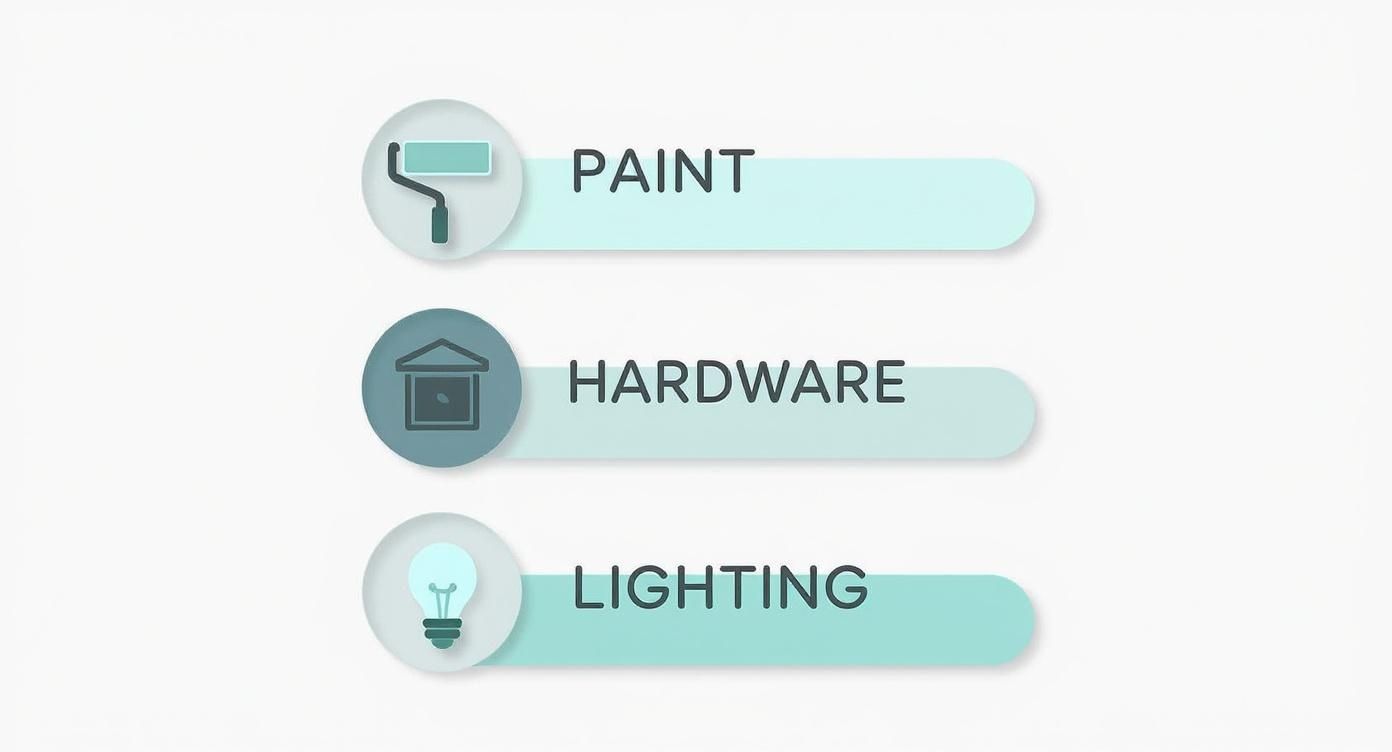
As you can see, simple cosmetic tweaks like paint, new hardware, and updated lighting give you the biggest bang for your buck.
A High-Quality Faucet Is Always Worth It
If there’s one place to allow for a modest splurge, it's the kitchen faucet. You’ll use it constantly, every single day, and the difference between a cheap, wobbly faucet and a solid, well-made one is immediately obvious.
A quality faucet doesn't just feel more substantial; it's also far less likely to spring a leak or cause problems later. Look for one with a pull-down sprayer and a durable finish—it’s a small touch of functional luxury that makes daily chores easier and really elevates the whole sink area.
Budget Upgrade Cost vs. ROI Comparison
Thinking about which upgrades make the most financial sense can feel overwhelming. This table breaks down some of the most popular budget-friendly kitchen projects, giving you a clearer picture of what you might spend and what you can expect in return.
| Upgrade | Estimated Cost Range | Typical ROI | Key Consideration |
|---|---|---|---|
| Cabinet Painting | $700 – $2,000 | 75% – 100%+ | High visual impact for a low cost, especially for DIY. |
| New Hardware | $100 – $500 | High | Quick, easy DIY project that instantly modernizes the look. |
| Faucet Upgrade | $200 – $600 | 70% – 85% | Improves daily function and adds a touch of perceived luxury. |
| Backsplash | $500 – $1,500 | 70% – 90% | Peel-and-stick options can lower cost and make it a DIY job. |
| Lighting Fixtures | $150 – $700 | High | Dramatically changes the mood and functionality of the kitchen. |
| Cabinet Refacing | $4,000 – $9,000 | 60% – 80% | Achieves the look of new cabinets for about half the cost. |
| Laminate Countertops | $1,500 – $3,500 | 60% – 75% | Modern designs offer a high-end look on a very modest budget. |
Remember, these are just estimates. The real value comes from choosing updates that not only boost your home's equity but also significantly improve how you use and enjoy your kitchen every day.
When to Invest in New Appliances
Appliances are a huge line item, so the general rule for a budget refresh is to work with what you've got. But that rule isn't absolute. Sometimes, a strategic appliance upgrade is the smartest move you can make.
Think about replacing an appliance if it is:
- On its last legs: A failing fridge isn't just an inconvenience; it can ruin hundreds of dollars worth of groceries.
- An energy hog: That ancient dishwasher might be costing you a fortune on your utility bills. A new, energy-efficient model can literally pay for itself over time.
- The obvious odd-one-out: If you have one appliance that’s a completely different color or style, replacing it can bring the whole room together for a more cohesive, polished look.
Ultimately, your goal is to find that sweet spot between saving money now and creating lasting value. The return on investment is a huge part of this. For 2025, homeowners can expect to recoup about 59% of a major kitchen remodel's cost at resale. But here's the kicker: minor kitchen updates have a much better return. A modest, smart remodel can see a recoup rate of over 94%, whereas huge overhauls often return less than 50%.
The data is clear: targeted, high-impact upgrades are the most financially prudent way to improve your home. You can dig into more kitchen renovation statistics to see how different projects stack up. By making informed choices, you’ll end up with a kitchen that not only looks incredible but also works for your family and your wallet.
The DIY vs. Hire a Pro Decision
So, you're ready to get started. One of the biggest questions you'll face is deciding what to tackle yourself and when it’s time to call in a professional. Getting this right is probably the most critical part of keeping your budget and your sanity intact.
Making the right call is all about being honest with yourself. It's a balance between your skills, the free time you actually have, and how complex the job really is. A smart choice saves you a ton of cash and stress, but a misstep can lead to expensive fixes and even safety risks.
Great Projects for a DIY Weekend
Good news! Many of the most impactful kitchen updates are totally manageable for the average homeowner. These are the jobs where your main investment is sweat equity—your time and patience—rather than a fat check for labor costs. With a few tutorial videos and the right tools, you can get stunning results.
If you’re ready to roll up your sleeves, these projects offer the biggest bang for your buck:
- Painting Cabinets and Walls: This is the undisputed champion of budget transformations. It takes time, yes, but the steps are simple: clean, sand, prime, and paint. The difference is night and day.
- Swapping Cabinet Hardware: If you can handle a screwdriver, you can do this. Seriously, it's a one-hour job that can completely change the vibe of your kitchen, taking it from dated to modern in an afternoon.
- Installing a Peel-and-Stick Backsplash: Forget messy mortar and tile saws. Today’s peel-and-stick options are high-quality and designed for DIYers. It takes a steady hand and careful measuring, but it’s a game-changer.
- Replacing a Faucet: As long as you’re comfortable shutting off the water supply to your sink, swapping out a faucet is a surprisingly straightforward project that makes a huge functional and aesthetic difference.
These are your best bets for saving a significant amount of money. The labor is free—it’s just you!
Quick reality check: The true cost of a DIY mistake isn't just wasted materials. It's paying a professional double—once to fix your error, and again to do the job correctly. Be realistic about what you can handle.
When to Call a Professional
Some jobs just aren't worth the risk. When you're dealing with your home's core systems—electrical, plumbing, gas—hiring a licensed and insured pro isn't just a good idea, it's a non-negotiable. This is an investment in your family's safety and your home's value.
Even a job that looks simple on the surface can hide big problems. A pro can spot old wiring that’s a fire hazard or plumbing that needs more than just a quick fix. Their expertise stops a small issue from snowballing into a full-blown, budget-busting disaster.
Tasks Best Left to the Experts
For your safety and peace of mind, always bring in a licensed professional for these jobs. Don't even think about winging it.
- Electrical Work: Moving an outlet? Installing hardwired pendant lights? Anything that involves your breaker box? This is 100% a job for a licensed electrician. Bad wiring is one of the leading causes of house fires.
- Plumbing: While a faucet swap is usually fine, moving supply lines for a sink or dishwasher is plumber territory. One leaky pipe behind a wall can lead to thousands in water and mold damage.
- Major Cabinet Installation: Hanging heavy upper cabinets so they are perfectly level and securely anchored to studs is harder than it looks. A pro has the right tools and know-how to make sure they don’t come crashing down.
- Countertop Installation: Heavy materials like granite and quartz require precision templating, specialized cutting tools, and a team to move the slabs without cracking them (or injuring someone). Leave this to the specialists.
Working with a reputable company like Trademaster Construction brings more than just technical skill to the table. You're getting efficiency, accountability, and the confidence that the job is done right the first time. They handle the permits and logistics, which is worth its weight in gold.
Answering Your Top Kitchen Remodel Questions
Alright, let's get into some of the questions I hear all the time from homeowners planning a kitchen refresh on a budget. These are the practical, real-world concerns that pop up once you start digging into the details.
What’s the absolute cheapest way to update my kitchen?
Hands down, it's paint. Nothing else delivers this much impact for such a small investment. A fresh coat on the walls can brighten the entire room, and if you have the patience for it, painting your existing cabinets can make them look brand new for a couple hundred bucks.
After paint, the next best bang-for-your-buck updates are swapping out dated cabinet hardware and replacing that one central, dreary light fixture. You’d be amazed what new pulls and a modern light can do.
What’s a realistic budget for a small kitchen facelift?
For a cosmetic-only update—think paint, new hardware, a lighting swap, and maybe a DIY backsplash—you're typically looking at a range of $2,000 to $7,000. The key here is that you're not moving walls, re-routing plumbing, or buying a whole suite of new appliances. You're simply maximizing the visual appeal of what you already have.
Remember, a smart budget isn't just a number; it's a plan. Always build in a 15-20% contingency fund. Trust me, something unexpected always comes up, and you'll be glad you have that cushion.
Can I just replace my countertops without breaking the bank?
Absolutely, but your choice of material is critical. Forget the high-end quartz for a moment and look at modern high-definition laminate, solid butcher block, or even tile. These can give you a fresh, updated look for a fraction of the cost.
Here's a pro tip I always share: visit local stone yards and ask if they have any remnants. These are smaller, leftover pieces from big granite or quartz jobs. They sell them at a huge discount, and they're often the perfect size for a smaller kitchen island or a short run of counters.
Ready to move from inspiration to action? The team at Trademaster Construction can help you plan a kitchen update that fits your vision and your budget. Explore our Inspiration Gallery to see what’s possible.

