
Staring at a mountain of flooring samples can be paralyzing. You're trying to pick something beautiful, but in the back of your mind, there's that nagging fear: one wrong choice, and you're looking at a future filled with water damage. The secret is knowing how to spot a floor that is truly 100% waterproof, not just water-resistant.
It helps to think of it this way: a waterproof floor is like a submarine. It's built to be completely sealed and impenetrable, keeping every last drop of water out. Water-resistant flooring, on the other hand, is more like a rain jacket. It’ll keep you dry in a light drizzle, but a real downpour will eventually soak through.
Your Guide to Choosing a Truly Waterproof Bathroom Floor
The bathroom floor is a battlefield. It takes a constant beating from shower splashes, high humidity, and the occasional overflowing tub. If you choose the wrong material, you're signing up for warped planks, a moldy subfloor, and a repair bill you'd rather not think about.
This is exactly why getting the "waterproof vs. water-resistant" distinction right is the most critical first step. A genuinely waterproof floor is made from materials that simply don't absorb water. Period. This protects not only the beautiful surface you walk on but, more importantly, the vulnerable subfloor structure hidden underneath.
This guide will cut through the marketing jargon and help you choose a floor that looks amazing and is engineered to handle everything a bathroom can throw at it. We’ll focus on the high-performers that succeed where materials like solid hardwood and older-style laminates are guaranteed to fail.
Why Waterproof Flooring is Booming
It turns out, homeowners everywhere are tired of worrying about water damage. The massive demand for reliable, moisture-proof flooring isn't just a local thing; it's a global trend. The proof is in the numbers.
The global flooring market is expected to rocket from USD 501.1 billion in 2025 to USD 741.7 billion by 2035. One of the biggest reasons for this surge is the incredible popularity of resilient flooring like luxury vinyl. By 2023, it made up about a third of all flooring sales—a staggering leap from just 4% a decade ago. You can dig into more data on flooring market trends to see just how much priorities have shifted.
The concept behind waterproof flooring is brilliantly simple: it creates a seamless, non-porous barrier. This shield stops water dead in its tracks, preventing it from ever reaching the subfloor—which is usually made of wood products that are prime candidates for rot and mold.
What's the Secret Sauce in a Waterproof Floor?
So, what actually makes a floor waterproof? It all comes down to its DNA—the materials it's made of and how it’s put together. Products like luxury vinyl plank (LVP), stone polymer composite (SPC) vinyl, and porcelain tile are naturally non-porous.
Here’s what to look for:
- Core Materials: The best options have a core that water can't harm. SPC vinyl, for example, uses a core made from a limestone composite that is completely inert to moisture.
- Surface Integrity: Porcelain and glazed ceramic tiles have a fired, glass-like surface that water simply cannot seep into.
- Installation Method: A professional installation is key. Properly sealed seams, tight-fitting joints, and perimeter caulking create a truly watertight surface from wall to wall.
By keeping these features in mind, you'll be able to confidently pick a floor that delivers decades of protection and total peace of mind.
Comparing the Best Waterproof Flooring Materials
Now that you know what separates a truly waterproof floor from a water-resistant one, let's meet the top players in the game. Picking the right waterproof flooring for your bathroom really comes down to a balance of durability, style, and budget. Each option has its own personality and strengths, so the “best” choice is always the one that fits your home and your vision perfectly.
We're about to take a close look at the most reliable and popular materials homeowners are choosing today. We’ll break down what makes each one a champion against moisture, from the solid, impermeable core of modern vinyl to the timeless, water-shedding surface of porcelain tile. By the end, you'll be able to weigh your options like a seasoned pro.
This simple decision tree can help you start on the right foot, showing the most important first step for any bathroom project.

As you can see, for a space that deals with daily splashes, spills, and steam, starting your search exclusively in the "waterproof" category is the smartest move you can make.
The Reigning Champion: Luxury Vinyl Flooring
Luxury vinyl has absolutely taken the flooring world by storm, and for good reason. Forget the flimsy, peeling sheet vinyl of your grandmother's kitchen—today's luxury vinyl is a different beast entirely. It mainly comes in two styles: Luxury Vinyl Plank (LVP), which masterfully mimics the look of real wood, and Luxury Vinyl Tile (LVT), which beautifully replicates stone or ceramic.
So, what’s its secret? It’s all in the construction. Luxury vinyl is made from 100% polymer materials (mostly PVC), which are naturally immune to water. A puddle can sit on the surface for days without seeping in, and the plank or tile won't swell, warp, or fall apart. This makes it a slam-dunk choice for any bathroom.
The demand for these floors tells the story. The bathroom vinyl flooring market was already valued at around $2.5 billion in 2025 and is set to keep growing. This trend shows a clear shift toward materials that are affordable, tough, and stylish. You can learn more about the growth of the bathroom vinyl flooring market to see why homeowners keep choosing it.
A Deeper Look at SPC and WPC Vinyl
Within the luxury vinyl family, you'll find a couple of specialized upgrades, usually named after their core materials: Stone Polymer Composite (SPC) and Wood Polymer Composite (WPC). Both are 100% waterproof, but their inner construction gives them slightly different personalities.
- SPC (Stone Polymer Composite): This core is a mix of natural limestone powder, PVC, and stabilizers. The result is an incredibly dense and rigid plank that feels rock-solid underfoot.
- WPC (Wood Polymer Composite): This core is made from a blend of recycled wood pulp and plastic composites. It’s a bit lighter and contains tiny air pockets, making the floor feel slightly softer and warmer.
For your bathroom, this means you have choices. SPC's biggest advantage is its sheer toughness. It resists dents from dropped items and won't expand or contract much with temperature changes—a huge plus for bathrooms here in Southwest Michigan. WPC, while just as waterproof, offers a bit more cushion and helps muffle sound.
Key Takeaway: Both SPC and WPC are fantastic waterproof options. Go with SPC if you need maximum durability, especially in rooms with direct sunlight or big temperature swings. Choose WPC if you want a floor that’s a little softer and quieter under your feet.
The Timeless Classic: Porcelain and Ceramic Tile
For generations, tile has been the go-to for bathrooms, and its reputation is well-deserved. Both porcelain and ceramic tiles are born from clay fired at scorching temperatures, which creates a surface that’s hard, durable, and naturally resistant to water.
The real difference is density. Porcelain is made from a finer, purer clay and baked at even higher temperatures. This process makes it denser and far less porous than standard ceramic. In fact, for a tile to earn the "porcelain" label, it must have a water absorption rate of 0.5% or less.
This means water just beads up on the surface until you wipe it away or it evaporates. It simply can't soak in. The one weak spot? Grout lines. The grout between the tiles is porous, so a professional installation using high-quality grout and a reliable sealant is non-negotiable for creating a truly bulletproof, waterproof system.
A Surprising Contender: Waterproof Engineered Wood
We've all been taught that wood and water are a terrible mix. But technology has changed the rules. Meet the new kid on the block: waterproof engineered wood. This isn't the same as standard engineered hardwood; it’s a hybrid built from the ground up to handle moisture.
It starts with a top layer of genuine hardwood veneer, so you get that authentic beauty and grain. But the magic is in the core. Instead of moisture-sensitive plywood, it uses a 100% waterproof composite core, very similar to SPC vinyl. A tough, water-repellent finish on top seals the deal.
This innovation means you can finally have the warmth and classic look of real wood in your bathroom without the constant worry. While it's a fantastic solution for powder rooms and guest baths, for a busy primary bathroom with daily steam and shower splashes, options like porcelain or SPC vinyl still offer the ultimate peace of mind.
Waterproof Bathroom Flooring Options Compared
To help you see everything at a glance, we've put together this quick-reference table. It compares the top waterproof flooring materials side-by-side, breaking down the key factors you'll want to consider for your bathroom remodel.
| Flooring Type | Waterproof Level | Average Cost (per sq ft) | Durability | Best For |
|---|---|---|---|---|
| Luxury Vinyl (LVP/LVT) | 100% Waterproof | $2 – $7 | High | DIY-friendly projects, budget-conscious renovations, achieving a wood or stone look. |
| SPC/WPC Vinyl | 100% Waterproof | $4 – $9 | Very High | High-traffic bathrooms, homes with kids/pets, areas with temperature swings. |
| Porcelain Tile | 100% Waterproof (if installed correctly) | $5 – $15+ | Extremely High | Lifetime durability, walk-in showers, creating a high-end, classic look. |
| Waterproof Engineered Wood | 100% Waterproof Core & Surface | $7 – $12+ | High | Achieving an authentic wood look in half-baths or guest bathrooms. |
As the table shows, there’s no single "best" floor—just the best floor for your project. A family needing a bombproof floor for a chaotic kids' bathroom might choose porcelain or SPC vinyl. Someone dreaming of a cozy, wood-look powder room now has a safe and beautiful option. Understanding these differences is the key to choosing a floor you’ll love for years to come.
Why Proper Installation Is the Secret to a Leak-Proof Floor
Choosing a 100% waterproof flooring material is a great start, but it's only half the battle. Think of it this way: your waterproof planks or tiles are like a perfect raincoat. But if you leave the zipper undone, you're still going to get wet. The installation is the zipper—it’s what creates the truly seamless, watertight barrier that protects your home.
The techniques used to lay the floor are just as crucial as the flooring itself. A professional, long-lasting finish isn't just about making things look good; it's about the meticulous steps taken before, during, and after the flooring goes down. This is where real expertise prevents future headaches and costly water damage repairs.
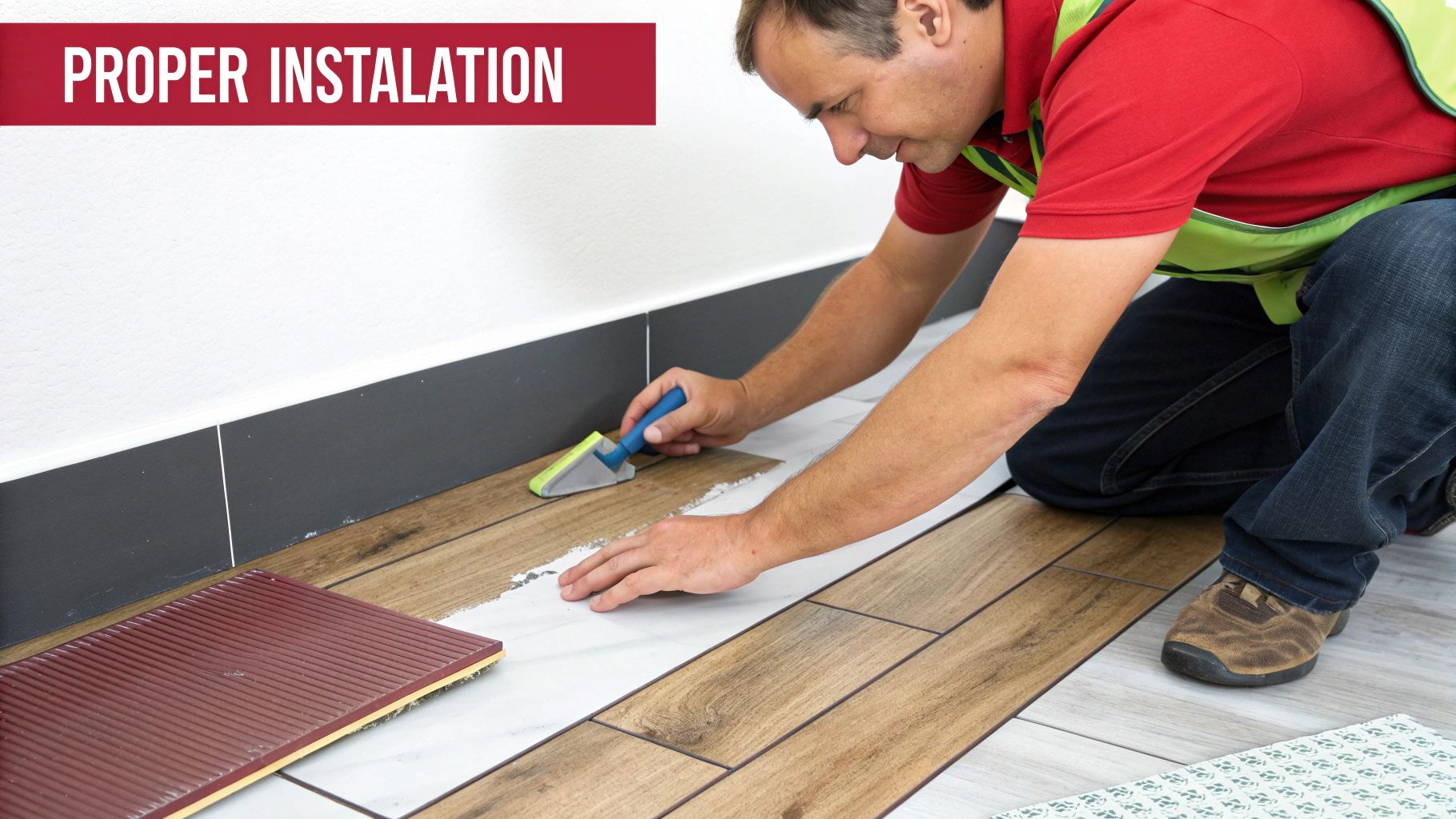
This process makes sure that if water does find a way past the surface, it has no path to your subfloor. Without this level of detail, you end up with a floor that only looks waterproof but isn't actually protecting your home's structure.
Building a Watertight Foundation
Long before the first piece of flooring is put down, the subfloor has to be flawless. An uneven subfloor is a ticking time bomb. It can cause click-lock systems to pop apart and tiles to crack underfoot, creating tiny expressways for water to seep right into the wood structure of your house.
A pro installer will always handle these three non-negotiable prep steps:
- Leveling the Subfloor: First, they make sure the surface is completely flat. This could mean sanding down high spots or pouring a self-leveling compound to fill in low areas, giving the new floor a perfectly stable base to rest on.
- Installing a Waterproof Membrane: This is especially critical for tile in wet zones like showers. A waterproof underlayment or membrane is installed, acting as the final line of defense—a true waterproof shield beneath the tile and grout.
- Checking for Moisture: An expert will always test the subfloor for existing moisture. Simply covering up a damp subfloor, especially common in basements, just traps the problem. That's a recipe for mold, mildew, and rot.
Cutting corners on these prep stages is a classic DIY mistake. It might save a little time upfront, but it almost always leads to expensive repairs down the road that cost far more than the initial savings.
Understanding Different Installation Methods
Different types of waterproof flooring for bathrooms need completely different installation approaches. Knowing what to expect helps you spot a quality job.
Floating Click-Lock Systems (LVP & SPC)
This method is popular because it's relatively fast. The planks simply click and lock together at the edges. While it looks simple, precision is everything. A pro ensures every single connection is tight and secure, leaving zero room for water to sneak between the joints. They also leave a specific expansion gap around the room's perimeter, which is then sealed with waterproof silicone caulk to finish the job.
Mortar and Grout Method (Porcelain & Ceramic Tile)
Putting in tile is a true craft. Each tile is permanently bonded to the prepared subfloor using thin-set mortar. Once the tiles are set, the gaps between them are filled with grout.
Here’s the critical part: while the tile itself is impervious to water, most grout is porous. A professional applies a high-quality grout sealer that makes the grout lines repel water, stopping moisture from soaking in and preventing stains or mildew from forming.
Sealing the Deal Against Leaks
The final—and most critical—step is sealing the perimeter. This is where most bathroom floors fail. Water is lazy; it loves to find the easiest path, which is often the tiny gaps around toilets, vanities, and tubs.
A professional installer will meticulously seal every one of these vulnerable spots using 100% silicone caulk—not painter's caulk. Silicone is flexible, durable, and completely waterproof. It creates a lasting seal that can move slightly with your house while blocking moisture for good. This finishing touch is what completes the watertight system, ensuring your beautiful new floor performs exactly as it should for years to come.
Budgeting for Your New Bathroom Floor
Let's talk numbers. This is where a dream renovation starts to feel real. When you're budgeting for new waterproof flooring for your bathroom, it's tempting to zero in on that price per square foot you see on the box. But that's only part of the story. The true cost is a mix of the materials, the skilled labor to install them, and the critical prep work that makes the whole system waterproof and built to last.
Thinking about the total investment from the get-go saves you from sticker shock later on. It helps you make a choice that works for your wallet and for the long-term health of your home.
Deconstructing the Total Cost of Your Project
The price tag on the flooring is just one piece of a much larger puzzle. To build a realistic budget, you have to account for all the other moving parts that go into a professional, leak-proof installation. These are the details that separate a quick weekend fix from a lasting investment.
A proper quote should break down all these elements:
- Materials: This is the cost of the flooring planks or tiles, typically priced per square foot. The range is huge, from affordable luxury vinyl to high-end porcelain.
- Professional Labor: Expect installation costs to run anywhere from $3 to $10 per square foot, sometimes more. A simple click-lock vinyl job will be on the lower end, while a complex herringbone tile pattern will be on the higher end.
- Removal of Old Flooring: The old floor has to go somewhere. Tearing it out and hauling it away can add $1 to $2 per square foot.
- Subfloor Preparation: This is an absolute must. If your subfloor isn't clean and perfectly level, it will need work. That might mean repairs or applying a self-leveling compound, which will factor into the cost.
- Additional Supplies: Don't forget the little things that add up—underlayment, mortar, grout, sealant, and new baseboards or trim.
Knowing these components helps you compare quotes intelligently and ensures you aren't caught off guard when the final bill comes.
Long-Term Value and Smart Maintenance
Your budget shouldn't just be about the installation day. The best waterproof flooring for your bathroom is one that fits your initial budget and your tolerance for upkeep. Protecting your investment is what gives it real longevity.
A floor's true value is measured in decades, not just dollars. Choosing a material that's easy to care for saves you time and money on repairs and replacements down the line, delivering a much higher return on your investment.
Simple, consistent care is all it takes to keep your waterproof floor looking great for years. Each material has its own quirks, but the basic idea is the same. For example, you’ll want to use a gentle, pH-neutral cleaner on luxury vinyl—harsh chemicals can wear down the protective top layer over time.
For tile floors, the grout is your first line of defense. Grout is naturally porous, meaning it can trap moisture and stains if it isn't sealed. Taking the time to seal your grout lines every year or two is the single best thing you can do to stop mildew in its tracks and prevent water from ever reaching your subfloor. It’s a small task that protects the entire waterproof system and keeps your bathroom looking fantastic.
Flooring Strategies for Southwest Michigan's Climate
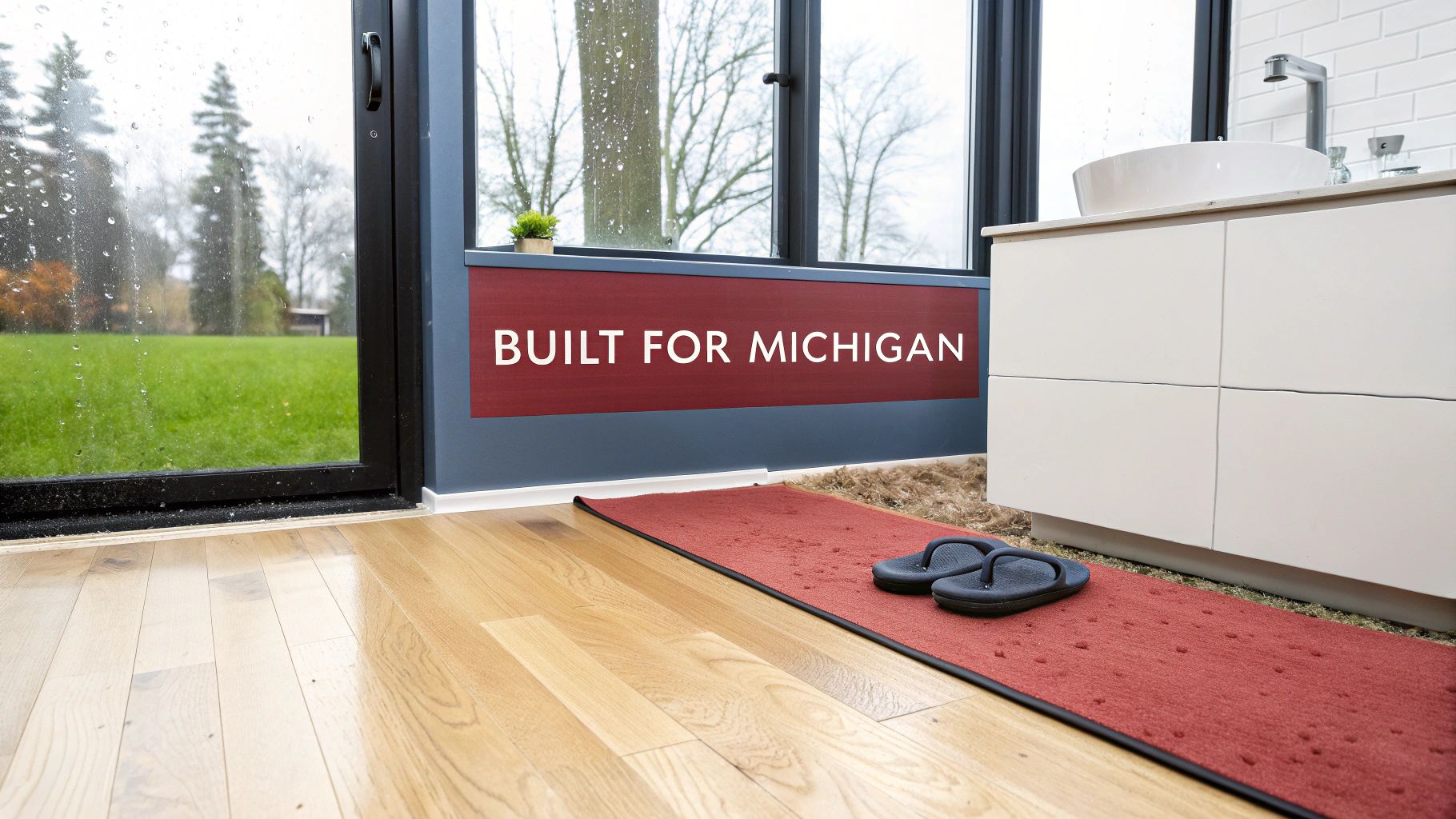
Let's be honest, a floor in Southwest Michigan has a tough job. Our region serves up some wild climate swings—from sticky, humid summers right off the lake to bone-dry, freezing winters. That constant back-and-forth between high humidity and cold air puts a serious strain on your home’s materials, and your bathroom floor feels it most.
Flooring that isn't up to the task will expand when it's hot and humid, then contract when the winter cold sets in. Over time, this subtle movement creates tiny gaps between planks or tiles. In a bathroom, even a gap you can't see is a welcome mat for water to sneak into your subfloor, setting the stage for rot, mold, and expensive repairs down the road.
Why Dimensional Stability is a Game-Changer
This is exactly why we talk so much about dimensional stability when choosing bathroom flooring around here. Think of a dimensionally stable floor like a trusty cast iron pan; it holds its shape whether you're searing on high heat or letting it cool on the stove. It simply doesn't expand and contract much with temperature changes.
For homeowners in our area, this makes Stone Polymer Composite (SPC) vinyl a particularly brilliant choice. The secret is its core, which is made from a dense limestone composite. This makes it incredibly stable. It won’t swell up during a humid July day or shrink and pull apart during a frigid January night. That stability is what keeps your waterproof seal tight and unbreachable, season after season.
A floor that can’t handle Michigan’s temperature swings will eventually compromise its own waterproof integrity. Choosing a material like SPC vinyl is a proactive strategy to ensure your bathroom floor is built for every season.
It's no surprise that homeowners are catching on. The waterproof flooring market is projected to grow by 9.4% in 2025, with bathroom renovations leading the charge. People are moving toward smart, durable options like SPC that look great and can handle real life. You can check out more insights on 2025 flooring trends to see where the industry is headed.
Protecting Your Floor from the Ground Up
Here in Southwest Michigan, another local factor comes into play: basements and crawl spaces. Many of our homes are built over them, introducing a second front in the battle against moisture. Damp air and groundwater can create a damp subfloor, causing problems from below even if your new floor is 100% waterproof on top.
Proper subfloor prep isn't just a suggestion—it's essential.
- For Basements: We always install a high-quality moisture barrier over the concrete slab. This simple step stops moisture vapor in its tracks, preventing it from getting trapped under your beautiful new floor.
- For Crawl Spaces: A damp, musty crawl space is a recipe for disaster. It needs to be properly encapsulated and ventilated to control humidity and keep moisture from soaking into the wood subfloor above.
Taking these precautions, which are tailored to our local conditions, ensures your new floor is protected from every possible angle. When you combine a dimensionally stable flooring material with a properly prepared subfloor, you get a truly waterproof system that’s built to handle anything a Michigan climate can throw at it.
Partnering with a Pro for Guaranteed Results
Choosing the right material is a huge step, but a flawless installation is where the real magic happens. Even the highest-quality waterproof flooring for bathrooms can fail if it isn’t put down with painstaking care. This is especially true when a project throws you a curveball, turning what looked simple into a real headache.
Picture this: you've just ripped out the old floor, ready for a fresh start, only to find a soft, rotting subfloor. That's a project-stopper. Or maybe you fell in love with a stunning herringbone tile pattern that demands absolute precision in every single cut and placement. These are the moments when a pro’s experience isn't just a nice-to-have—it's what saves the entire project.
When to Call a Professional
Some jobs just aren't cut out for a weekend warrior. If you run into any of these situations, picking up the phone and calling an expert is your best bet for getting it done right.
- Subfloor Damage: Finding mold, mildew, or water-logged wood isn't something you can just cover up. It needs to be handled properly before any new flooring goes down to prevent bigger problems later.
- Complex Installations: Trying to tackle intricate tile work, a seamless curbless shower, or installing in-floor heating systems requires a specific skill set that only comes with experience.
- Uneven Surfaces: Getting a subfloor perfectly flat and level is non-negotiable for vinyl and tile. A professional has the right equipment and know-how to correct dips and humps for a perfect finish.
For homeowners here in Southwest Michigan, our unique climate and older home styles add another layer to the challenge. A local, seasoned contractor knows what to look for and how to build a floor system that can handle our humid summers and freezing winters.
At Trademaster Construction, our team has spent years on the ground installing every kind of waterproof flooring imaginable. We know the ins and outs of local homes and make sure every detail, from prepping the subfloor to laying the final bead of silicone, is handled with an expert touch.
Ready to make sure your new bathroom floor is as durable as it is beautiful? Schedule a consultation with our team, and let’s get it right the first time.
Your Top Questions About Waterproof Bathroom Flooring, Answered
Even after narrowing down the options, you probably still have a few questions floating around. Let's tackle some of the most common ones we hear from homeowners trying to pick the perfect waterproof floor for their bathroom.
Can I Just Install Waterproof Vinyl Right Over My Old Tile?
It's a definite maybe! In many situations, you absolutely can. Most modern luxury vinyl plank (LVP) and SPC floors are designed to "float" right on top of existing hard surfaces, including old ceramic tile. The key is that the old floor has to be clean, level, and in solid shape.
The big catch is unevenness. If you have cracked tiles or really deep grout lines, you'll likely need to use a self-leveling compound to smooth things out first. Skipping this step can cause the new planks to flex and eventually fail, so it's a critical part of the prep work. A quick professional look-over is always a good idea here.
Is Waterproof Engineered Hardwood Really Okay for a Full Bathroom?
Yes, but it comes with a few caveats. The new generation of waterproof engineered hardwood is fantastic for handling everyday spills and moisture, thanks to its special core and tough top layer. It's an excellent, stylish choice for a half-bath or powder room.
However, for a primary bathroom that gets steamy from daily showers, porcelain tile or luxury vinyl is still the safer, more durable bet for the long haul. With any plank flooring, the ultimate goal is to make absolutely sure water never finds a way to seep underneath.
When it comes to the shower floor itself, there’s no substitute for tile. Porcelain or ceramic tile is the undisputed industry standard for shower enclosures. It's installed over a custom-sloped, fully waterproofed shower pan, guaranteeing every drop of water heads for the drain and the structure below stays bone-dry.
Ready to make sure your new bathroom floor is as beautiful as it is bulletproof? Reach out to Trademaster Construction today. We’ll schedule a consultation and make sure our expert team gets your project done right the first time. Learn more at https://www.trademasterkz.com.

