
If you've ever spent a weekend scrubbing stained, grimy grout lines in your bathroom, you know the frustration of traditional cement grout. It's a classic for a reason—it works—but its sandy, porous nature is like a sponge for spills, mildew, and grime.
Now, imagine a grout that's more like a seamless, solid piece of plastic. That’s epoxy grout.
What Is Epoxy Grout, Really?
Instead of a simple mix of cement and water, epoxy grout is a two-part system made from epoxy resin and a hardener. When you combine these two components, a chemical reaction kicks off, creating an incredibly strong, non-porous bond. It's not just filling the gaps between your tiles; it's fusing them together with a waterproof, stain-proof seal.
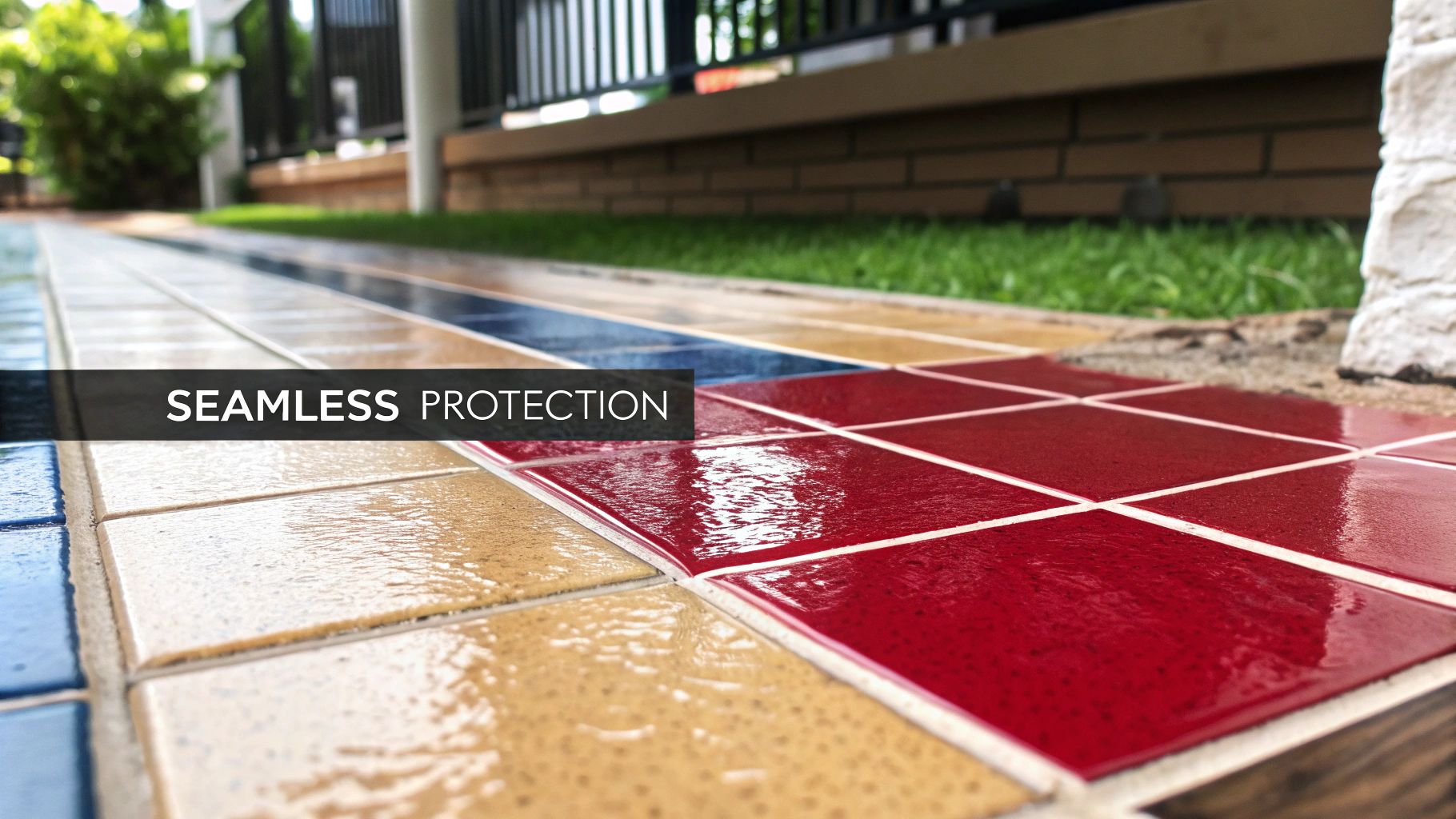
This high-tech chemistry is what sets it apart. While cement grout absorbs moisture and stains, epoxy grout repels them completely. This makes it a game-changer for any area that sees a lot of water, foot traffic, or potential messes.
The Science Behind the Strength
Think of it like mixing two liquids that harden into a rock-solid material. That's essentially the magic of epoxy. This process, called polymerization, is what gives epoxy its superpowers.
- Part A (Epoxy Resin): This is the foundation, providing the stickiness and core structure.
- Part B (Hardener): This is the catalyst. It triggers the chemical reaction that causes the resin to cure into a solid.
- Fillers: Fine aggregates, like silica, are mixed in to give the grout body, texture, and strength.
This formulation is why epoxy grout is becoming the go-to choice for savvy homeowners in Southwest Michigan, especially in kitchen and bathroom remodels. Its unmatched durability stands up to everything from dropped pans to spilled wine.
For homeowners planning age-in-place accessible showers, its hygienic properties are a huge plus. By creating a non-porous surface, it can reduce mold growth by up to 99% compared to cement-based grouts, making it perfect for clean, low-maintenance curbless designs. You can even explore more data on the epoxy grout market to see just how popular it’s becoming.
To make it even clearer, here’s a quick breakdown of epoxy grout's defining features.
Epoxy Grout at a Glance
| Characteristic | Description |
|---|---|
| Material Type | Two-part system: Epoxy resin and a hardener. |
| Porosity | Non-porous; it doesn't absorb water or liquids. |
| Stain Resistance | Extremely high. Resists stains from wine, oil, coffee, and more. |
| Durability | Exceptional. Resists cracking, shrinking, and chemical damage. |
| Water Resistance | 100% waterproof, making it ideal for wet areas. |
| Maintenance | Low. Wipes clean easily with no need for sealing. |
This table shows why epoxy isn’t just an alternative; for many applications, it’s a major upgrade.
The result is not just a filler for tile gaps but an integrated, structural component of your tile installation. Its non-porous surface provides a powerful defense against stains and moisture infiltration, offering peace of mind in busy kitchens, bathrooms, and basements.
Epoxy Grout vs. Cement Grout: A Practical Comparison
When you're picking out grout, it really boils down to two main players: old-school cement grout and the more modern epoxy grout. They both do the same basic job—filling the space between your tiles—but how they do it and how they live in your home are worlds apart. Let's break it down in real-world terms.
Imagine you’ve just finished your beautiful new kitchen backsplash and someone spills a glass of red wine. If you used cement grout, that's a five-alarm fire. Cement grout is porous, kind of like a tiny, hard sponge. The wine soaks in almost instantly, leaving a deep stain that you'll be scrubbing for ages with harsh chemicals, and even then, it might never fully come out.
Now, let's replay that scene with epoxy grout. The wine hits the backsplash and just sits there in little beads on the surface. Why? Because epoxy is non-porous; it’s essentially a solid, plastic-like material once it cures. You can just grab a paper towel, wipe it clean, and it's like the spill never happened. This one simple difference—porous vs. non-porous—is at the heart of everything.
Durability and Maintenance Over Time
Fast forward a few years. That cement grout has likely started to show its age. It’s known for shrinking a bit as it cures and can develop hairline cracks over time, especially with the shifting temperatures and humidity we get. To keep it looking decent and fighting off stains, you have to seal it. Religiously. At least once a year.
Epoxy grout is a completely different story. It forms a chemical bond with your tile, curing into a rock-solid, rigid material. It will not crack, shrink, or crumble under the stresses of a normal home. Best of all, it never, ever needs to be sealed. That’s years of maintenance you get to skip, saving you a lot of time and money down the road.
For homeowners here in Southwest Michigan, this is huge. Our basements and bathrooms go through some serious seasonal humidity swings. Epoxy’s unshakeable stability and waterproof nature means it won't break down or get grungy like cement grout often does in our climate.
Resisting Stains and Grime
Think about the bathroom shower, a true torture test for any grout. Soap scum, mildew, and everyday grime love to work their way into the tiny pores of cement grout. It’s what causes that dingy, discolored look that's so tough to get rid of, no matter how hard you scrub.
With epoxy grout, there are no pores for gunk to get into. Its surface is smooth and plastic-like, so mold and mildew have nowhere to take root. Dirt and soap residue just sit on top of the grout line instead of seeping into it. Cleaning becomes as simple as wiping down your tiles. For anyone who wants a clean, hygienic bathroom without a back-breaking cleaning routine, this is a game-changer.
To really see the difference, let’s put them side-by-side.
Head-to-Head: Epoxy vs. Cement Grout
This table cuts right to the chase, comparing the two grout types on the factors that matter most to homeowners.
| Feature | Epoxy Grout | Cement Grout |
|---|---|---|
| Stain Resistance | Excellent. Spills like coffee, oil, and wine wipe away easily. | Poor. Absorbs spills quickly, leading to permanent stains. |
| Water Resistance | 100% Waterproof. Ideal for showers, backsplashes, and wet rooms. | Water-Resistant (When Sealed). Requires regular sealing to prevent water damage. |
| Durability | Exceptional. Resists cracking, chemicals, and heavy wear. | Moderate. Prone to cracking, chipping, and crumbling over time. |
| Maintenance | Very Low. Never needs sealing and is simple to clean. | High. Requires annual sealing and frequent deep scrubbing. |
| Upfront Cost | Higher. Both material and installation are more expensive. | Lower. More budget-friendly for the initial installation. |
So, when you're deciding between what is epoxy grout and its cement-based counterpart, you're really choosing between paying less now or saving yourself a ton of work and worry for years to come.
How Epoxy Grout Actually Makes Your Life Easier
Knowing the technical specs of epoxy grout is one thing, but how does it actually show up in your day-to-day life? This is where its real value becomes clear. The benefits are about more than just strength—they add up to a home that's cleaner, looks better for longer, and gives you less to worry about.
Let’s start with my favorite part: saying goodbye to grout maintenance. Traditional cement grout is basically a hard sponge. It soaks up everything, which is why it needs to be sealed regularly to keep moisture and stains out. With epoxy, you can forget that annual chore entirely. Its surface is non-porous and almost plastic-like, so it never needs sealing. Ever. That’s a huge win for your time, wallet, and weekend plans.
This chart breaks down the core difference at a glance.
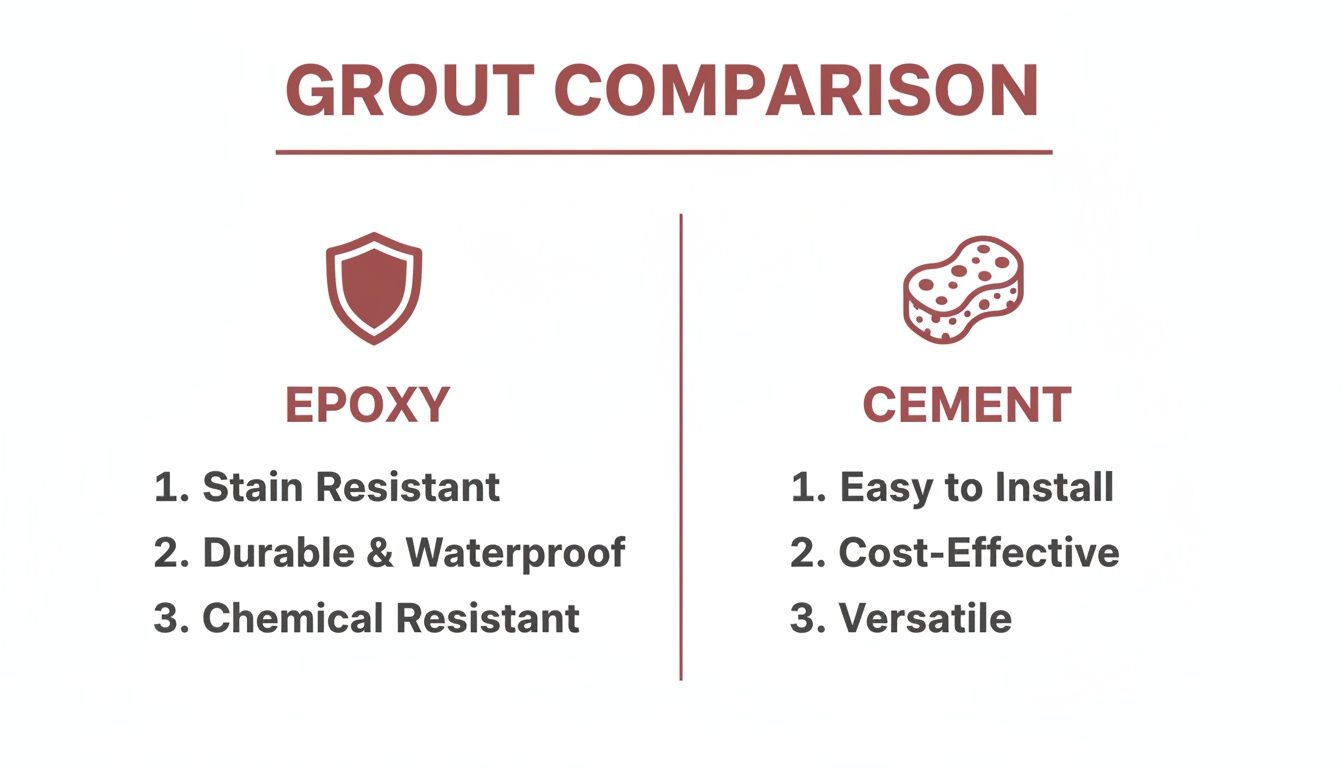
Think of epoxy as a shield, creating a solid barrier. Cement, on the other hand, is like that sponge, just waiting to absorb spills and grime.
Beauty That Doesn't Fade
Another huge plus is how great it looks years down the road. We’ve all seen it: cement grout that starts out a crisp white but eventually turns dingy and yellow, or a nice gray that gets stained and dark. Spills from wine, coffee, or sauce can leave a permanent mark.
Epoxy grout doesn’t have that problem. The color pigment is locked right into the waterproof resin, so the shade you pick on day one is the shade you'll see for years. It stands up to UV light without fading and doesn't absorb dirt, so it won't darken over time. Your tile work looks just as fresh and clean as the day it was finished.
No more scrubbing at that coffee stain next to the stove or staring at discolored grout lines in the shower. The beautiful look you paid for is preserved, keeping your home looking its best with almost zero effort.
A Healthier Environment for Your Family
Maybe the most significant benefit is how epoxy contributes to a healthier home. Because cement grout is porous, it’s the perfect place for mold, mildew, and bacteria to set up shop, especially in damp places like bathrooms, mudrooms, and kitchens.
Epoxy’s non-porous surface gives those nasty microbes nowhere to grow. It cures into a solid, impenetrable surface with an incredible 99.9% bacteria resistance. This makes it an amazing choice for wheelchair-accessible showers or kitchen backsplashes where hygiene is a top priority.
In fact, its chemical structure resists water over 95% more effectively than cement-based grouts. Over the long haul, this durability pays off. Studies show that using epoxy grout can slash long-term repair costs by 40-50% in high-traffic, wet areas. It's not just grout; it's a smart investment in your home's future. You can see more data on epoxy grout's performance if you want to dig deeper.
Where to Use Epoxy Grout for Maximum Impact
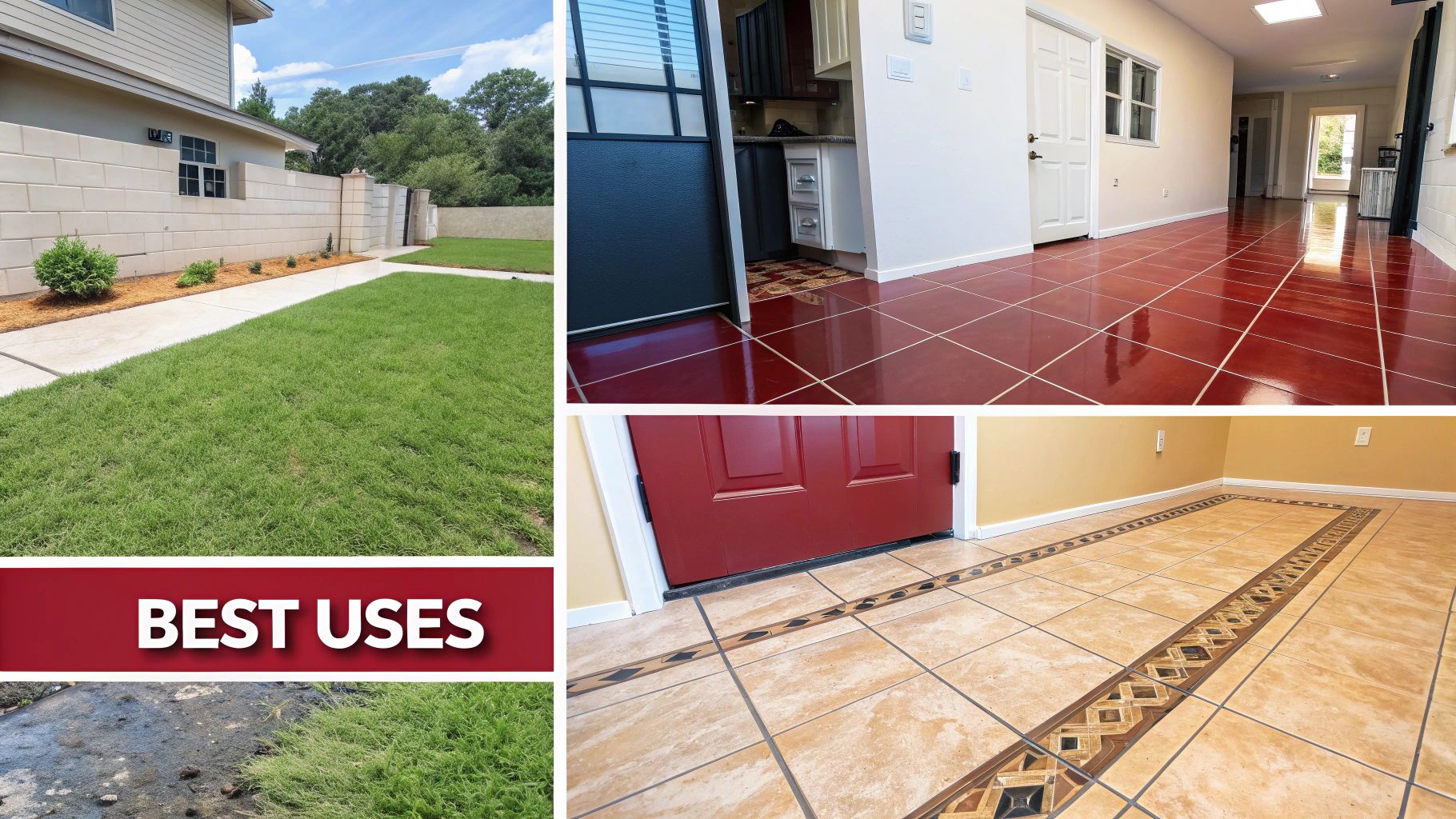
Technically, you could use epoxy grout for any tile project. But its real value shines in specific areas where moisture, stains, and daily wear-and-tear are the biggest enemies. Think of it as a strategic upgrade. You’ll see the biggest return on your investment when you use it in the hardest-working parts of your home.
It’s all about choosing the right tool for the job. You wouldn't use a tiny artist's brush to paint an entire house. In the same way, you don't really need the heavy-duty protection of epoxy for a decorative wall mosaic that never gets touched. Instead, let's focus on those high-impact zones.
The Ultimate Shield for Wet Environments
Bathrooms are, without a doubt, the number one place where epoxy grout proves its worth. Its 100% waterproof nature is a total game-changer for showers, tub surrounds, and bathroom floors.
- Shower Floors and Walls: With constant exposure to water, soap scum, and steam, showers are a notorious breeding ground for mold and mildew in porous cement grout. Epoxy creates a solid, non-porous barrier that stops grime in its tracks and makes cleanup unbelievably simple.
- Curbless and Accessible Showers: These modern designs are becoming more popular in Southwest Michigan homes, and they demand top-tier hygiene and durability. Epoxy’s smooth, impenetrable surface delivers a clean, seamless finish that’s a breeze to maintain.
Using epoxy in these high-moisture areas puts an end to the frustrating cycle of scrubbing stained grout lines. More importantly, it prevents water from ever finding its way behind your beautiful tile.
Investing in epoxy grout for your bathroom remodel is less about the material itself and more about investing in a cleaner, healthier, and lower-maintenance space for years to come.
The Kitchen’s Best Defense Against Stains
The kitchen is another battleground where epoxy grout is the clear winner. Think about it: splashes behind the stove, spills on the floor, and drips down the backsplash. Kitchen grout takes a beating every single day.
Epoxy grout isn’t bothered by common kitchen messes like grease, coffee, red wine, or even acidic tomato sauce. A backsplash behind the cooktop is a perfect example. While cement grout would quickly absorb oil splatters and become permanently stained, epoxy just wipes clean, leaving no trace behind.
This same incredible durability and chemical resistance is exactly why epoxy is so trusted in demanding business settings, as often highlighted in guides about commercial epoxy floor coatings. That industrial-grade resilience is what makes it a fantastic choice for your home.
High-Traffic Areas That Demand Durability
Finally, let’s talk about the floors that see the most action in your home. Mudrooms, laundry rooms, and front entryways are constantly under assault from dirt, grime, and heavy foot traffic.
In these spots, cement grout can quickly get ground-in dirt, making it look permanently dingy no matter how often you scrub. Because epoxy grout is so durable and completely stain-proof, it keeps these high-traffic floors looking clean and fresh. Dirt and mud simply sit on the surface, waiting to be wiped or mopped away, helping your floors look brand new for far longer.
Is Epoxy Grout Worth the Investment? Let's Talk About the Real Cost.
Let's be direct: epoxy grout costs more upfront than the traditional cement-based grout you're used to seeing. Sometimes, it's several times more for both the material and the installation, and that price difference can definitely make you think twice.
But looking at the initial receipt is only half the story. It’s more helpful to think of epoxy grout as an investment in your home—one that pays you back in durability, lasting beauty, and a whole lot less work down the road.
The higher price tag comes from two places. First, the material itself is a sophisticated two-part system with resins and hardeners, which is just more complex to manufacture than a simple bag of cement mix. The bigger reason, though, is the installation. Applying epoxy isn't like smearing on cement grout; it cures quickly and doesn't forgive mistakes. It takes a skilled, fast, and precise professional to get it right.
The True Cost of Owning Your Grout
To really see the value, you have to look past day one and consider what each type of grout will cost you over the lifetime of your tile. That cheap cement grout? It comes with a payment plan.
- Yearly Sealing: Because it’s porous like a sponge, cement grout needs to be sealed every year or so. That’s an ongoing cost and another chore on your to-do list.
- Intense Cleaning: That same porosity means it soaks up dirt, spills, and grime. Before long, you're on your hands and knees with harsh chemicals trying to scrub it back to its original color.
- Eventual Repairs: Over time, cement grout will inevitably crack, chip away, or get so stained that it needs to be completely dug out and replaced. That's a messy, expensive job.
Epoxy grout, on the other hand, makes all of that disappear. It never needs sealing. It’s non-porous, so a wipe with soap and water is all it takes to clean. And it’s built to last for decades without breaking down.
A Smart Investment That Pays You Back
When you add it all up, that higher initial cost starts to make a lot of sense. Epoxy grout is an engineered product, mixing resin, fillers, and a catalyst to create something incredibly tough. We’re talking about a material that’s 4x stronger in compression than cement options.
For busy households here in Southwest Michigan, this is a game-changer. It can withstand over 500 different chemical exposures, making it perfect for workshop floors, basements, and kitchens. In a modern curbless shower, its zero-shrinkage formula means you won't see those ugly cracks appear over time. We’ve seen installations for Trademaster Construction clients that, in the right conditions, can last for a potential 50-year lifespan. The growing popularity of this material is even tracked in the global epoxy grout market's growth reports.
When you choose epoxy grout, you're essentially buying a future free from sealing chores, scrubbing stained grout lines, and worrying about mold. You're investing in your own time while ensuring your tile looks just as good in ten years as it did the day it was installed.
DIY Installation vs. Hiring a Professional
So, should you tackle that epoxy grout job yourself? If you’re a seasoned DIYer, the thought has probably crossed your mind. But let me be frank: this isn't your weekend-warrior-friendly cement grout. The very things that make epoxy incredible—its lightning-fast curing and rock-solid bond—are the same things that make it notoriously unforgiving for a first-timer.
The second you mix the two parts, a countdown clock starts. You often have less than an hour to get the grout in place, clean up the excess, and tool the lines perfectly before it starts to harden. If you're too slow, you could be left with a permanent, cloudy haze on your beautiful new tiles or sloppy, uneven grout lines that are impossible to fix.
And the cleanup? It’s a whole other beast. Unlike cement grout that wipes away easily with a damp sponge, cured epoxy doesn't budge. Any smears or drips left behind can be a nightmare to remove without damaging the tile itself.
The Case for Bringing in a Pro
This is one of those jobs where experience truly pays off. When you hire a professional from a team like Trademaster, you're not just paying for labor; you're paying for expertise, speed, and peace of mind. They’ve done this a hundred times before.
A pro has the muscle memory and specialized tools to work efficiently within that tight time frame.
Here’s what a professional brings to the table:
- Precision Mixing: They get the ratios exactly right, every single time, which is crucial for getting a consistent color and a durable, long-lasting bond.
- Speed and Technique: An expert can apply and clean the grout before it even thinks about hardening, ensuring a smooth, uniform finish across the entire surface.
- Spotless Cleanup: Pros have the right solvents and techniques to leave your tiles sparkling and your grout lines looking sharp and clean.
If you’re still thinking about a DIY approach, it helps to understand the material's properties. For example, guides like A DIY Guide to Epoxy Resin for Boat Repair demonstrate the level of precision even experienced DIYers need when working with epoxy in other demanding applications.
It's tempting to save a few bucks on labor, but a botched epoxy grout job can cost you way more in the long run. Sometimes, it even means tearing everything out and starting over. The value of a flawless, professionally installed finish really can't be overstated.
Answering Your Top Epoxy Grout Questions
Alright, so you've seen the pros and cons, but you probably still have some practical questions buzzing around. Let's dig into a few of the most common things we hear from homeowners here in Southwest Michigan before they decide to go with epoxy.
Can You Use Epoxy Grout with Any Kind of Tile?
For the most part, yes. Epoxy grout plays well with almost everything—ceramic, porcelain, glass, and even natural stone.
The one major watch-out is that this stuff sets up fast. That's a challenge with porous materials like unsealed stone (think marble or travertine) because any stray grout can quickly stain the tile face. It's not a dealbreaker, but it does mean your installer needs to be on their A-game, working cleanly and methodically to avoid any permanent smudges.
Is Epoxy Grout a Pain to Keep Clean?
This is where epoxy truly shines. It’s actually easier to clean than traditional grout.
Think about it: cement grout is like a sponge, soaking up every little spill and bit of grime. Epoxy is the opposite—it’s a solid, non-porous plastic. Dirt, soap scum, and coffee spills just sit on the surface, waiting to be wiped away. A simple wipe-down with a pH-neutral cleaner is usually all it takes.
Best of all, you can officially say goodbye to that dreaded yearly task of sealing your grout lines. Epoxy never needs to be sealed, which saves a ton of hassle and money over the years.
Am I Stuck with Just Gray or White?
Not a chance. The days of limited grout colors are long gone. Modern epoxy grouts come in a huge spectrum of shades, so you can find the perfect match for any tile or design you can dream up, from classic whites and beiges to deep, dramatic charcoals.
If you want to add a little extra flair, some manufacturers even offer lines with metallic flecks or fine glitter mixed right in for a subtle, high-end shimmer. Since the color is an integral part of the resin, it’s also incredibly resistant to fading or yellowing, even in a sunny bathroom.
Ready to see how flawless, durable grout can transform your next project? The experts at Trademaster Construction have the skill and experience to deliver a perfect epoxy grout installation every time. Plan your Southwest Michigan remodel with us today!

