
When you hear “large format tile,” it’s easy to picture giant, unwieldy slabs of stone. But the reality is much more nuanced. While it's true that any tile with at least one side longer than 15 inches officially falls into this category, the real definition is all about the final look and feel. It’s a design choice that creates a dramatic, clean, and expansive atmosphere with far fewer grout lines.
Defining Large Format Tile Beyond Just Size
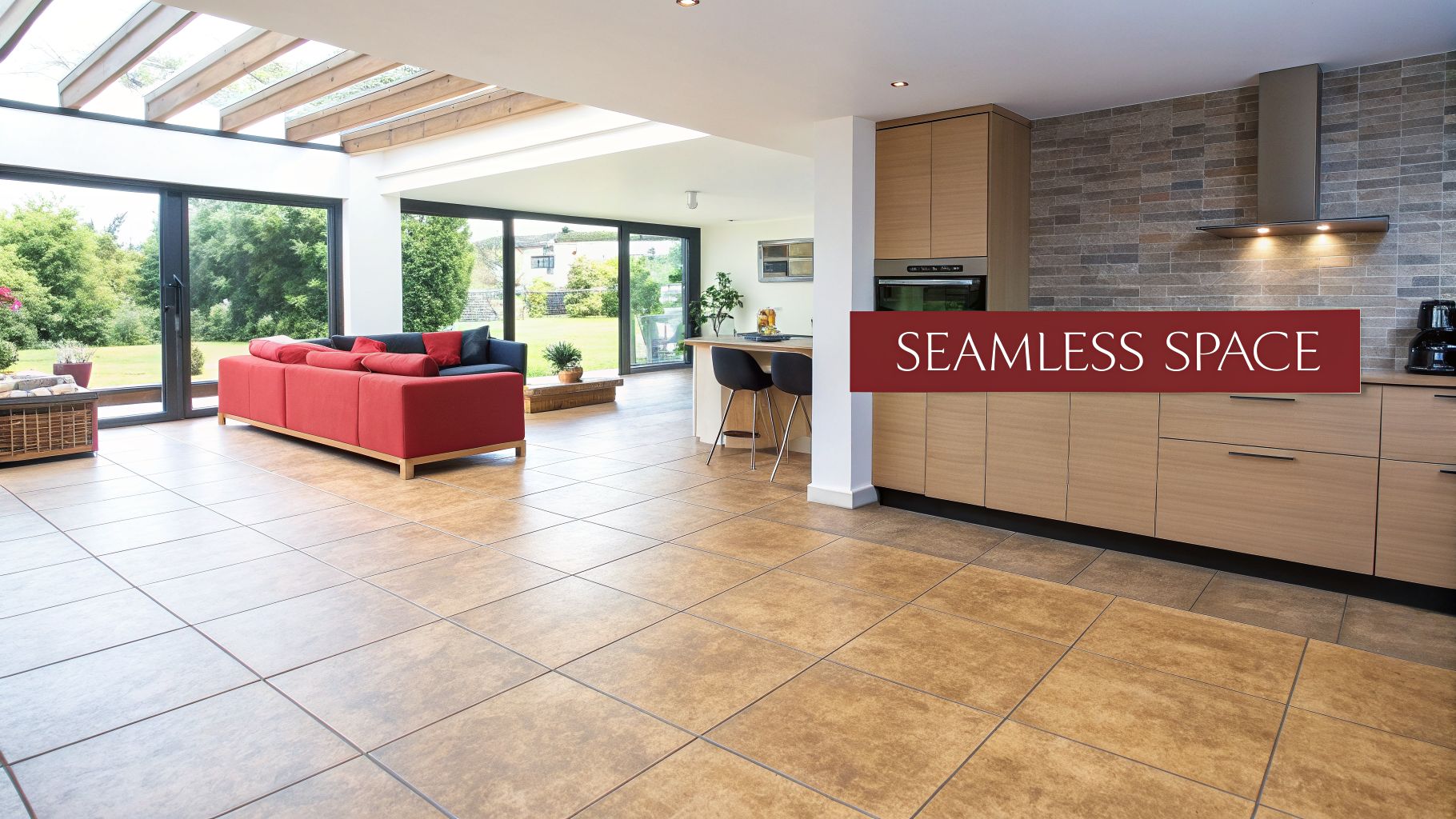
Think of it this way: a standard 12×12 inch tile creates a busy grid on your floor or wall. All those grout lines chop up the surface, making a room feel smaller and more segmented. Large format tile, or LFT, does the exact opposite. By using much bigger tiles, we drastically reduce the number of visual interruptions.
This simple change creates a powerful illusion. Your eyes see a continuous, flowing surface that makes kitchens, bathrooms, and basements feel significantly more spacious and modern. It’s less about the size of the individual tile and more about the cohesive, seamless canvas it creates for the entire room.
From Planks To Panels: A Look At Common Sizes
The term “large format” covers a huge range of sizes, each with its own ideal use and aesthetic impact. While the definition technically starts at 15 inches, most of the popular styles we install are much bigger.
To help you picture how these sizes might work in your home, here’s a quick guide to some of the most common dimensions we work with every day.
| Tile Size (Inches) | Common Name | Best For | Visual Effect |
|---|---|---|---|
| 12×24 | Plank | Bathroom floors, shower walls, backsplashes | Elongates the space; very versatile |
| 24×24 | Classic Square | Living room or basement floors | Clean, uniform, and modern |
| 24×48 | Large Plank | Feature walls, large open floors | Dramatic and grand; draws the eye |
| 48×48 and Up | Panel or Slab | Luxury showers, seamless walls and floors | Ultimate monolithic, high-end appearance |
These are just the most popular options, of course. The world of LFT is always expanding, giving homeowners even more creative freedom to achieve that perfect, uninterrupted look.
The goal with large format tile is to achieve a monolithic appearance. By minimizing grout joints, you create a surface that looks like a single, solid piece of material, whether it's designed to mimic natural stone, concrete, or wood.
More Than A Trend—It's A Design Strategy
Opting for LFT isn't just about jumping on a trend; it's a deliberate design strategy. You're choosing a clean, uncluttered foundation that allows other elements in the room—like your cabinetry, furniture, or fixtures—to really shine without competing against a busy floor pattern.
This approach works especially well in today's open-concept homes. Running the same large tile from the kitchen through the dining and living areas ties the entire space together beautifully. In a master bathroom, using the same tile on the floor and up the shower walls can create a serene, spa-like retreat that feels incredibly spacious.
As you start to imagine the possibilities, it helps to get a handle on potential costs. For a quick ballpark figure for your project, our instant pricing tool can give you a solid estimate based on your room's size and scope.
The Pros and Cons of Large Format Tile
When you're thinking about large format tile, you’re weighing a truly stunning look against some very real, practical considerations. On one hand, the benefits are huge and go way beyond aesthetics. But on the other hand, the potential drawbacks are just as important to understand before you commit. We'll walk you through both sides so you can decide if this dramatic style is the right fit for your home.
The first thing everyone loves? The near absence of grout lines. We're talking up to 75% fewer grout lines than you'd see with standard 12×12 inch tiles. For anyone who's spent a weekend scrubbing grout in a kitchen or bathroom, this is a game-changer. It makes cleaning worlds easier and faster.
Fewer grout lines also create that clean, uninterrupted look that actually makes a room feel bigger and more open. This is really the main design payoff.
The sheer scale of these tiles creates a seamless, luxurious canvas. It can turn a standard master bathroom into something that feels like a private spa, or give a kitchen an expansive, modern edge.
The Advantages of Going Big
The appeal of large format tile is about more than just easy cleaning and a spacious feel. Let's break down the key benefits you'll see.
- Elevated Aesthetics: The most immediate pro is that high-end, continuous look. Large format tile minimizes the busy, grid-like pattern of smaller tiles, making any room feel more cohesive and sophisticated.
- The Illusion of Space: By cutting down on visual clutter, large tiles trick the eye. They make a room seem larger and more open, which is a fantastic strategy for smaller bathrooms, narrow hallways, or any area where you want to maximize the sense of space.
- Better Hygiene and Easier Maintenance: Simply put, less grout means fewer places for mold, mildew, and grime to take hold. This creates a cleaner surface that's far easier to maintain over the years.
These benefits work together to give you a floor or wall that’s not only beautiful but also incredibly practical for a busy home.
Important Considerations and Potential Drawbacks
Of course, it’s not all seamless surfaces and simple upkeep. The "cons" of large format tile are real, and they mostly come down to the installation and the cost. These aren't necessarily deal-breakers, but they do require careful planning and a skilled, professional team.
The single biggest factor is your subfloor. Large format tiles demand a substrate that is almost perfectly flat and completely rigid. Any dips, bumps, or flex in the floor underneath can create stress points, which will eventually lead to cracked tiles. Imagine placing a large, stiff sheet of glass on an uneven table—the lack of uniform support makes it incredibly fragile. That's exactly what happens with large tiles on a bad subfloor.
On top of that, you can expect the cost of both the materials and the installation to be higher. Here’s a quick rundown of why:
- Heavier Materials: These tiles are big, heavy, and awkward to manage. It often takes a two-person team just to set a single tile safely and accurately.
- Specialized Tools and Mortar: Proper installation requires special tools, like tile leveling systems to prevent "lippage" (where one tile edge is higher than its neighbor). It also demands more expensive medium-bed mortars that are designed to support the tile's weight and prevent sagging.
- Labor-Intensive Work: The precision needed for prepping the subfloor and setting the tile takes more time and a higher level of expertise, and that's reflected in the labor costs.
Knowing these costs upfront is key to a successful project. To get a handle on what you might be looking at, you can use our instant pricing tool to generate a ballpark figure for your specific room. This will help you see how large format tile might fit into your overall budget.
A Flawless Finish Starts Long Before the First Tile is Laid
When it comes to a stunning large format tile installation, the real work happens long before the first tile goes down. In fact, the success of the entire project is pretty much decided by what you do before the tile even comes out of the box. Knowing the crucial steps involved helps you ask the right questions and ensures your new floor or wall is built to last, saving you from major headaches down the road.
Think about it like building a house. You’d never put up walls on a foundation that was shaky or uneven—you know it’s just asking for trouble. It's the exact same principle with large format tile. If the substrate, which is just the floor or wall surface underneath, isn't perfectly flat and solid, those big, beautiful tiles are at serious risk of cracking under pressure.
This flowchart breaks down the trade-offs you make when choosing large format tile.
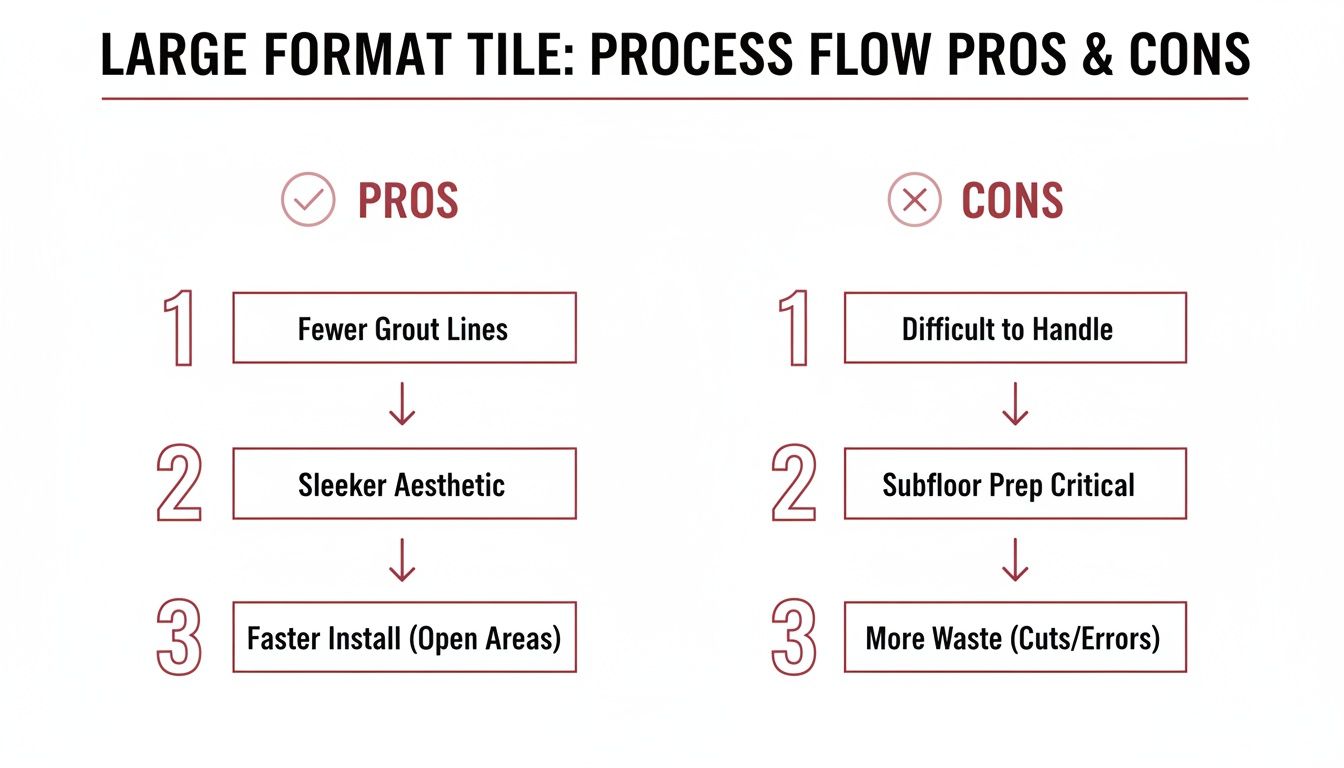
As you can see, getting that seamless, easy-to-clean look means signing up for a more demanding and technical installation process. There's no way around it.
The Unseen Heroes of a Great Installation
To get that magazine-worthy finish, professional installers depend on a few key materials and tools that are simply non-negotiable for large tiles. These components all work together to create a durable, level surface that will look great for decades. The big three are medium-bed mortar, proper troweling technique, and tile leveling systems.
This commitment to doing things right is a big reason why professional tile work is booming. The global ceramic tiles market, which includes large format tile, was valued at USD 200.81 billion in 2024 and is expected to nearly double, reaching USD 410.81 billion by 2034. The floor tiles segment alone made up a staggering 70% revenue share in 2024, showing just how many homeowners are investing in high-quality floors. You can explore more data on these market trends to see how the industry is growing.
Why Medium-Bed Mortar is a Must
Here's a common mistake we see: trying to use standard thin-set mortar for large, heavy tiles. It just doesn't work. That type of adhesive is made for smaller, lighter tiles and simply can't provide the support needed.
Using the wrong mortar is one of the most common—and costly—mistakes you can make with large format tile. Medium-bed mortar is specifically designed with a thicker consistency to hold heavy tiles without sagging and to bridge minor gaps in the subfloor.
This thicker mortar does two critical things:
- It stops sagging. The mortar holds the full weight of the tile while it cures, making sure it doesn’t slide down a wall or sink into the floor.
- It guarantees full coverage. For wet areas like showers, it's absolutely crucial to get at least 95% mortar coverage on the back of every tile. We achieve this by "back-buttering"—spreading a thin layer of mortar on the tile itself in addition to the floor. This eliminates air pockets, which are notorious weak spots that lead to cracks.
Wiping Out Lippage with Leveling Systems
Have you ever walked barefoot on a tile floor and felt the edge of one tile sitting just a hair higher than its neighbor? That annoying little ridge is called lippage, and it’s a huge problem with large format tile. Because the tiles are so big, even a tiny imperfection in the subfloor can create a noticeable and unsafe lip.
To prevent this, every professional job should use a tile leveling system. These simple but brilliant systems use a series of clips and wedges to lock adjacent tiles together, forcing their surfaces into a perfectly flat plane while the mortar sets.
- Clips are slid under the edges of each tile as it’s placed in the wet mortar.
- Wedges are then pushed into the clips and tightened, pulling the tiles flush with each other.
- Once the mortar is fully cured, the clips are simply snapped off below the tile surface, leaving a perfectly flat floor ready for grout.
This small step makes an enormous difference in the final quality and safety of your floor. It eliminates trip hazards and is the secret to achieving that truly seamless, monolithic look. Factoring in these extra steps is key for budgeting, and you can get a head start by using our instant pricing tool to estimate project costs.
Designing with Large Format Tile in Your Home
Alright, we’ve covered the technical side of large format tile. Now for the fun part—let's talk about how these tiles can completely transform the look and feel of your home. This is where their real magic happens. By creating expansive, nearly seamless surfaces, large format tiles open up incredible design possibilities for floors, walls, and especially showers.
Think about it: a kitchen floor that seems to pour right into your living room, tying the two areas together into one grand, unified space. With so few grout lines to distract the eye, you get an open, airy feeling that’s perfect for modern homes. Or, imagine a dramatic floor-to-ceiling accent wall in your basement, adding a layer of texture and sophistication that paint just can't match.
Creating The Illusion of Space on Floors
One of the best ways to use large format tile is on the floor. In a big room, it lays a grand, monolithic foundation. But it also works a kind of reverse psychology in smaller rooms. You might instinctively think a huge tile would overpower a small space, but the opposite is actually true.
With far fewer grout lines chopping up the visual plane, your brain reads the floor as a single, unbroken surface. This simple trick makes the room feel significantly larger and more open. It’s a fantastic strategy for making entryways, laundry rooms, and powder rooms feel more spacious without tearing down a single wall.
Redefining Walls with Texture and Scale
Large format tiles aren't just for walking on anymore. They make an incredible statement when installed vertically on walls. Whether you're creating a single accent or wrapping an entire room, the result is clean, contemporary, and exceptionally durable.
Here are a few ways we see them used on walls all the time:
- Feature Walls: A wall of large, textured tile behind a sofa or entertainment center can act as a permanent piece of built-in art.
- Kitchen Backsplashes: Using just two or three massive tile panels for a backsplash gives you a sleek, almost seamless look that’s a breeze to wipe clean.
- Fireplace Surrounds: Cladding a fireplace from the hearth all the way to the ceiling with large format tile creates a bold, modern focal point that commands attention.
This move from floors to walls is a huge trend. The global market for ceramic wall tiles was already US$ 138.2 billion in 2023 and is expected to grow to US$ 228.7 billion by 2031. In places like Southwest Michigan, much of that growth comes from homeowners choosing to renovate with high-impact materials like large format tile. You can read more about these ceramic tile market trends and see just how popular this choice has become.
The Ultimate Bathroom Upgrade
Nowhere does large format tile shine brighter than in the bathroom. This is where its good looks and practical benefits come together to create a space that feels both luxurious and incredibly functional.
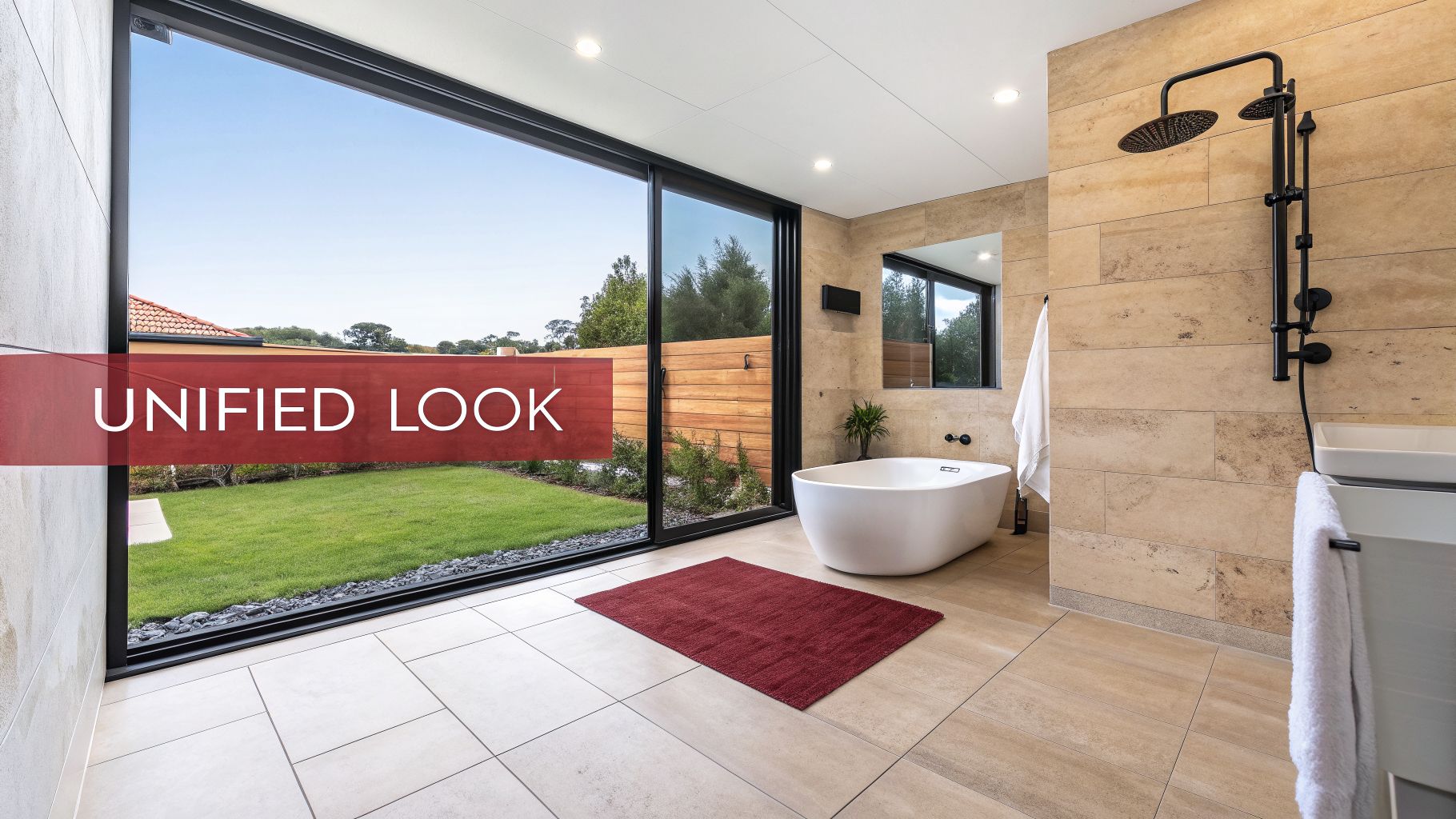
By using the same large tile on the bathroom floor and extending it up the shower walls, you can create a serene, spa-like atmosphere. This technique visually erases the room’s boundaries, making even a compact bathroom feel expansive and tranquil.
This design strategy is also the key to creating beautiful and modern curbless showers. With minimal grout lines and superior water management, large tiles offer both a high-end aesthetic and a safer, more accessible shower. That clean, uninterrupted surface isn't just stunning—it's also much easier to maintain, with significantly fewer grout lines to scrub.
Wondering how this might fit into your budget? To get an idea of what your project could cost, our instant pricing tool is a great starting point for generating an initial estimate. This versatile material can truly elevate any room in your house.
Budgeting for Your Large Format Tile Project
Let's talk about the budget. It’s no secret that large format tile projects come with a higher price tag than their standard tile counterparts. Understanding where that money goes is the key to planning a remodel without any frustrating financial surprises.
The cost really breaks down into three parts: the tile material, the specialized labor, and the all-important subfloor preparation. While the tiles themselves can be more expensive per square foot, the biggest difference you'll see on the invoice is the cost of installation.
Why Installation is a Premium Service
Setting large format tile isn't just a regular tile job—it's a specialized craft. The sheer size and weight of these tiles make it an entirely different ballgame, requiring more skill, more time, and more hands on deck.
Most standard 12×12 tiles can be set by a single installer. But you just can’t safely handle a heavy 24×48 inch tile by yourself. It’s a two-person job, at minimum, just to lift and set a single piece without it breaking. On top of that, we use specialized equipment like heavy-duty suction cups for carrying and tile leveling systems to guarantee a perfectly flat, lippage-free surface. These tools are non-negotiable for a professional finish.
The setting materials are different, too. We have to use more expensive, medium-bed mortars that are specifically designed to support the extra weight and prevent any sagging or cracking down the road. It all adds up, but every one of these steps is essential for an installation that will look amazing for decades.
Key Factors That Influence Your Project Cost
Every project is unique, and several key things will shape your final estimate. Thinking about these from the start helps create a realistic budget.
- Material Choice: The tile you fall in love with plays a big role. A high-end Italian porcelain will have a different price point than a more common ceramic option. Natural stone like marble or travertine has its own cost structure as well.
- Room Size and Complexity: It's more than just square footage. A big, open-concept floor is often more straightforward than a small, complex bathroom that needs dozens of precise cuts around a vanity, toilet, and shower niche.
- Subfloor Condition: This is a huge variable. If your subfloor is already dead flat and solid, you're ahead of the game. Most homes, however, need some work—like grinding high spots or pouring a self-leveling underlayment—to meet the strict flatness requirements for large format tile.
- Tear-Out of Existing Flooring: Don't forget the cost of what's coming out! Removing and disposing of old tile, hardwood, or carpet needs to be factored into the overall budget.
This move toward high-end, large-scale installations is happening across the globe. Large-format ceramic panels have become a massive part of the industry, valued at over US$ 21 billion in 2020. With the global construction industry making up about 6% of the world's GDP, these tiles are its biggest consumer.
A common mistake we see is when homeowners budget for the tile but get sticker shock from the labor quote. For large format tile, it’s not unusual for labor and prep to make up 50% or more of the total project cost.
To get a better handle on how all these pieces fit together, it’s helpful to research the real floor remodel cost to see a broader breakdown. Of course, the best way to understand your own project is to get numbers specific to your space. Our instant pricing tool can give you a solid ballpark estimate for your kitchen or bathroom remodel, helping you turn those "what-if" numbers into a real, workable budget.
Your Large Format Tile Questions Answered
Let's dive into some of the questions we hear all the time from homeowners who are intrigued by large format tile but still have a few lingering concerns. Getting these practical details ironed out is often the final step before you can feel truly confident in your decision.
Can I Install Large Format Tile Over My Existing Tile?
This is one of the most common questions we get, but the answer is almost always a firm "no." Tiling over existing tile is a risky shortcut, especially with large format pieces that demand a perfectly flat, unyielding surface.
When you install new tile over old, you’re introducing a host of potential problems. For one, it adds significant height to the floor, which can interfere with doors, cabinets, and transitions to other rooms. More importantly, you're gambling that the old tile surface is flawless—a bet that rarely pays off. Any dips, cracks, or loose spots in the old floor will eventually transfer through to your new, expensive tile.
The only right way to do it is to take the floor down to the subfloor. It's an extra step, but it allows a professional to properly prepare the surface and create a solid foundation. This is what prevents those heartbreaking cracks from appearing a year or two down the road.
Does Large Format Tile Make A Small Room Look Smaller?
It’s easy to think that a huge tile would overwhelm a small space, but the opposite is actually true. Large format tile is one of a designer's best tools for making a room feel more expansive.
The magic is in the lack of grout lines. A floor with lots of small tiles creates a busy grid pattern that visually chops up the space, signaling to your brain that the area is confined. With fewer grout lines, the floor reads as a single, clean surface. This seamless effect opens everything up, making it a fantastic choice for tight bathrooms, mudrooms, or any area you want to feel less cluttered.
Is Porcelain Or Ceramic Better For Large Format Tiles?
While you can find large format tiles in both materials, porcelain is the undisputed champion for this application, particularly for flooring and wet areas like showers. It all comes down to how each tile is made.
Porcelain is created from a more refined clay and fired at incredibly high temperatures. This process makes it far denser and stronger than ceramic, giving it a water absorption rate of less than 0.5%. It's built to withstand just about anything.
Here's how they stack up:
- Porcelain: Incredibly durable, highly water-resistant, and tough enough for high-traffic floors, bathrooms, and even outdoor patios in our Southwest Michigan climate.
- Ceramic: A solid option for a wall application like a kitchen backsplash, but its higher porosity makes it a poor choice for floors, where it's more susceptible to chipping and water damage.
While porcelain might cost a bit more upfront, its superior strength and resilience make it a much smarter investment for a project you want to last a lifetime.
Feeling more confident about your project? A great next step in planning is to get a handle on the potential costs. You can quickly generate a ballpark figure for your kitchen or bathroom remodel with our instant pricing tool. This no-obligation estimate helps turn your ideas into a tangible budget, empowering you to move forward with your home renovation.

