
If you’ve been house-hunting or even just scrolling through home renovation ideas lately, you've probably seen the term "LVP flooring" pop up everywhere. So what's all the buzz about? LVP, which stands for Luxury Vinyl Plank, is a game-changer in the flooring world. It’s engineered to give you the gorgeous, high-end look of natural materials like hardwood or stone, but without the demanding upkeep or worry.
Decoding LVP: Your Guide to This Popular Flooring
At its heart, LVP flooring is the smart, sophisticated evolution of old-school vinyl. It’s not your grandmother's sheet vinyl! Instead, it’s a robust, multi-layered plank designed to stand up to the chaos of a busy home. You get the rich texture and visual depth of real wood, but with a resilience that hardwood just can't offer in every situation.
This blend of beauty and brawn is exactly why Luxury Vinyl Plank has become a go-to for homeowners across Southwest Michigan. It's a perfect fit for updating kitchens, finishing basements, or creating spa-like bathrooms—all without the premium price tag of traditional materials. Its knack for handling moisture, foot traffic, and daily life is a huge part of its appeal. You can get more insights on flooring trends and market growth to see just how popular it's become.
Think of LVP as the ultimate problem-solver. It answers that age-old question for homeowners: "How can I get the stunning look of hardwood in places like my kitchen or bathroom, where spills and moisture are a reality?"
What Makes LVP Stand Out?
Unlike the rolled-out sheet vinyl of the past, LVP comes in individual planks. This small detail makes a massive difference, giving it an authentic look and feel that closely mirrors real wood floorboards. The real magic, though, is in its layered construction, which we’ll dive into more later.
For now, here’s what you really need to know about its standout benefits:
- 100% Waterproof: This is its superpower. LVP is perfect for bathrooms, kitchens, laundry rooms, and basements where moisture is a constant.
- Seriously Durable: A tough-as-nails wear layer on top protects against scratches, scuffs, and stains. It’s truly pet-friendly and kid-proof.
- Endless Style Options: From rustic barnwood to sleek, modern oak, the design possibilities are virtually limitless.
Trying to figure out a budget for your remodel can feel like a shot in the dark. If you're considering LVP and want a ballpark figure for your project, a great place to start is our instant pricing tool. It gives you a personalized estimate to help you plan.
Before we get into the nitty-gritty of how LVP is made, let's quickly recap its main features.
LVP Flooring At a Glance
| Feature | Description |
|---|---|
| Material | A multi-layered, synthetic flooring product made primarily from PVC. |
| Appearance | Realistically mimics natural wood or stone using a high-definition printed layer. |
| Core Types | Typically comes in WPC (Wood Plastic Composite) or SPC (Stone Plastic Composite) cores. |
| Water Resistance | 100% waterproof, making it ideal for wet or damp areas. |
| Durability | Highly resistant to scratches, dents, and stains thanks to a protective wear layer. |
| Installation | Usually installed as a "floating floor" with a simple click-lock system. |
| Maintenance | Low-maintenance; requires only regular sweeping and occasional mopping. |
This table gives you a bird's-eye view, but the real story is in the layers. Let's break down what actually goes into a plank of LVP.
What's a Luxury Vinyl Plank Actually Made Of?
To really get why LVP flooring is such a game-changer, you have to look at what's inside the plank itself. It’s not just a sheet of vinyl. Think of it more like a high-tech sandwich, where every single layer is engineered for a specific job.
This multi-layer construction is the secret sauce behind its performance. It’s what makes LVP both beautiful and tough as nails. Let's peel back the layers and see what makes it tick, starting from the very top.
The Layers of Design and Durability
The real magic of LVP comes from four distinct layers that are fused together with intense heat and pressure.
The Wear Layer: This is the invisible forcefield protecting your floor. It’s a clear, tough-as-nails coating that takes the brunt of daily life—scratches from dog claws, scuffs from dragged chairs, and spills from a chaotic kitchen. Its thickness is measured in mils, and a thicker layer (like a robust 20 mil) means a longer-lasting, more resilient floor.
The Design Layer: Right underneath that protective shield is where the style comes in. This is a hyper-realistic, 3D-printed image that perfectly captures the look of natural materials. The incredible detail in these prints is why modern LVP can so convincingly mimic everything from rustic barnwood to elegant marble.
The print technology has gotten so good, it's a huge reason why LVP is a go-to for today's remodels. In fact, forecasters predict that by 2026, luxury vinyl will dominate the market, capturing an 82.94% share of all vinyl flooring sales. Its unstoppable popularity is all thanks to that blend of authentic looks and unmatched durability.
The Core: Where the Real Strength Lies
The heart and soul of any LVP is its core. This is the layer that gives the plank its rigidity, its structure, and—critically—its ability to stand up to water. You'll generally run into two main types:
- WPC (Wood Plastic Composite): This core is a mix of recycled wood pulp, plasticizers, and foaming agents. It’s a bit lighter and softer underfoot, which makes it feel warmer and helps dampen sound. It’s a great choice for comfort.
- SPC (Stone Plastic Composite): Made with limestone powder and stabilizers, this core is dense, rigid, and incredibly strong. SPC is the king of durability, offering superior resistance to dents and impacts from heavy furniture or dropped objects.
Finally, you have the backing layer at the very bottom. This foundation gives the entire plank stability, keeping it from shifting or curling over time. It often provides a little extra cushion and sound absorption, too, which helps make a home feel quieter and more solid.
This diagram helps visualize how those layers translate into the benefits we all love.
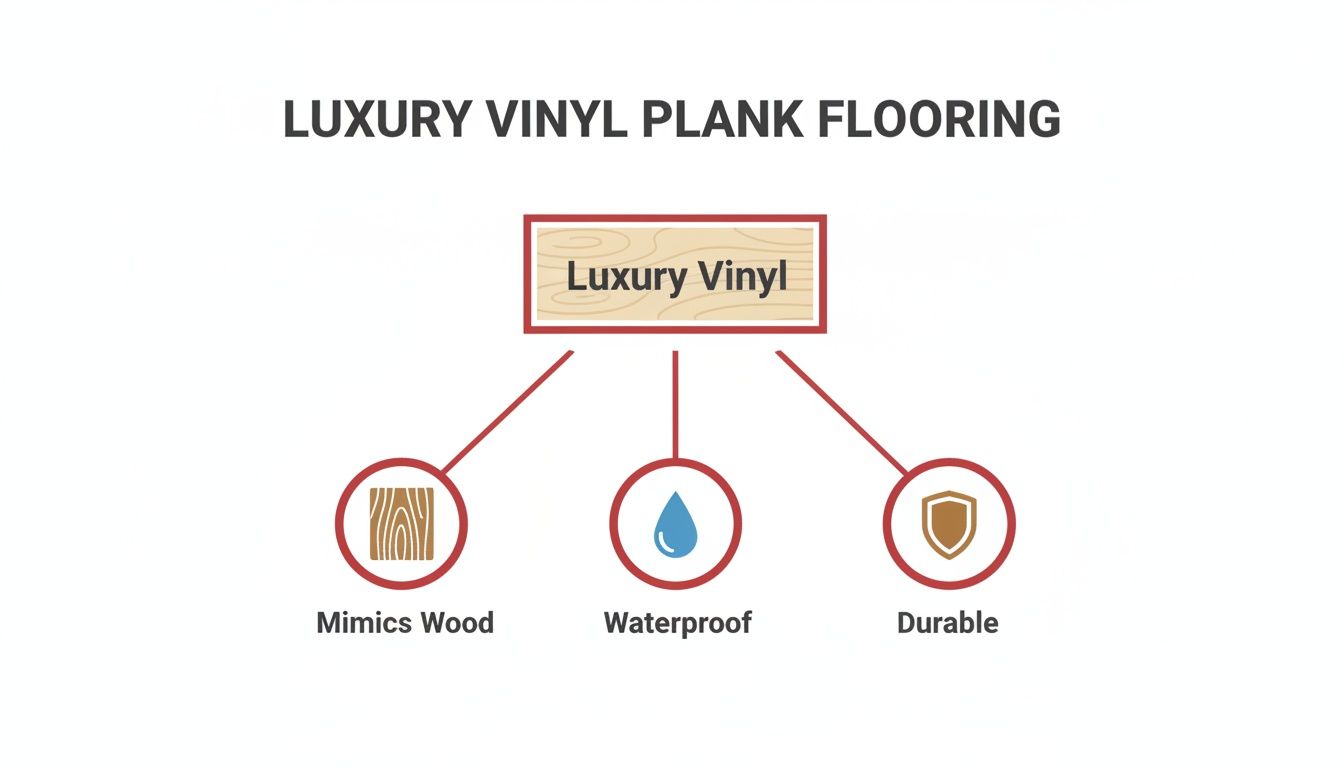
As you can see, the layered engineering is what delivers the realistic wood looks, total waterproof performance, and serious durability. When you're planning a project, knowing about these components helps you pick the right product for your space. If you're curious about costs, our instant pricing tool is a great way to get a quick estimate and see how different LVP options line up with your budget.
What Makes LVP Such a Great Choice for Your Home?
So, why are so many homeowners, especially right here in Southwest Michigan, falling in love with LVP? It’s not just a trend. The reason is simple: LVP offers a powerful mix of practical, real-world benefits that solve the kinds of problems we all face in our homes. It’s a flooring that doesn't just look amazing; it performs, day in and day out.
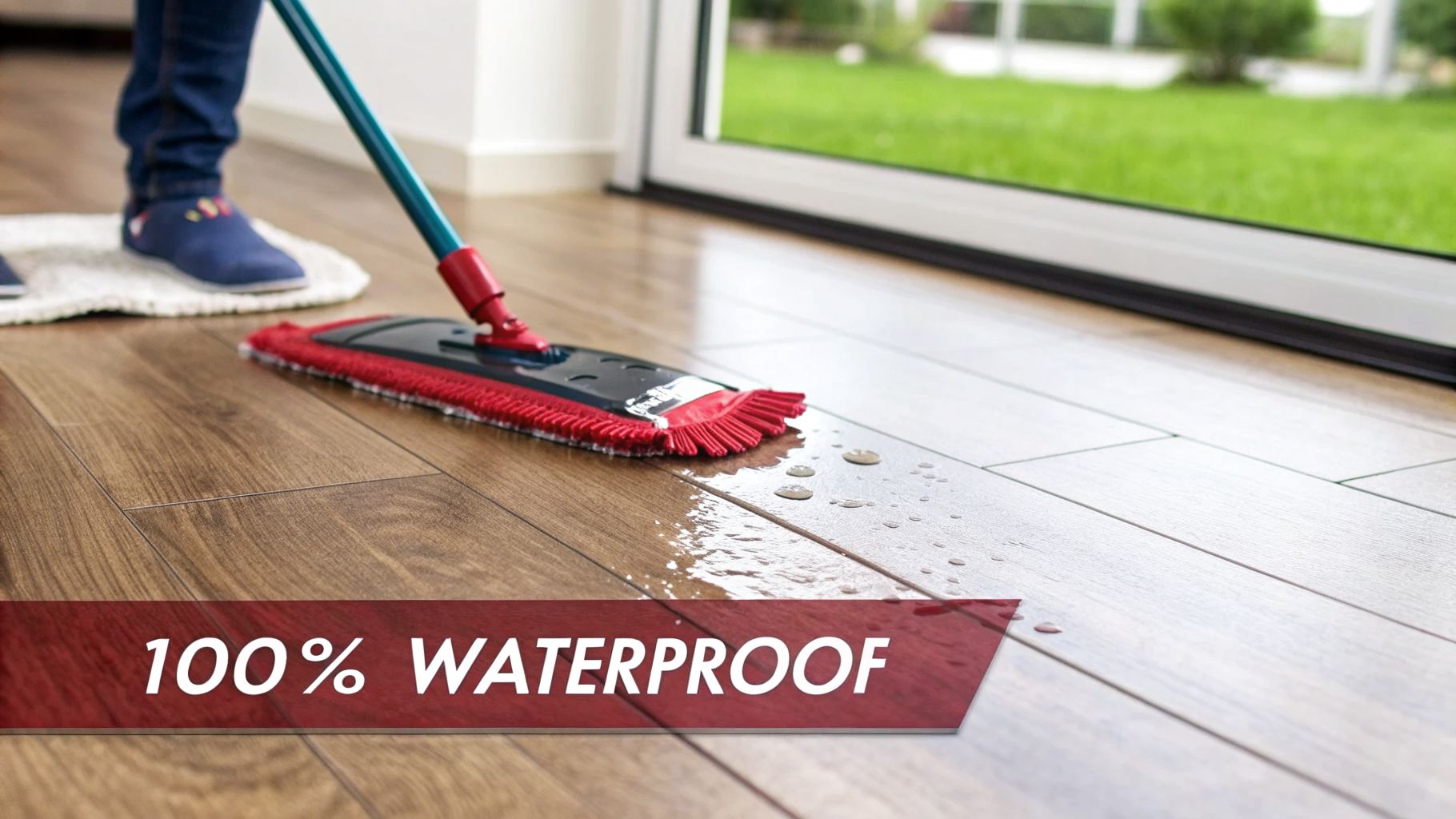
The advantages are undeniable, turning high-stress areas into beautiful, worry-free spaces. Let's dig into what makes LVP such a smart investment for a modern home.
It's Genuinely Waterproof
This is LVP's superpower, the one feature that puts it head and shoulders above many other options. Hardwood warps, and traditional laminate swells at the first sign of serious moisture. But LVP? It’s 100% waterproof. This isn’t just marketing speak; its core materials are completely impervious to water.
Think about a common household disaster: the dishwasher hose gives out, or the kids turn the bathroom into a splash park. With other floors, that’s a moment of pure panic, followed by a costly repair. With LVP, you just grab a towel. It’s that simple. This peace of mind makes it the perfect, no-stress flooring for:
- Kitchens: Daily spills from cooking and sinks are no big deal.
- Bathrooms: It handles steam from the shower and bath splashes without flinching.
- Basements: Finally, a warm, beautiful floor that can handle the inherent dampness of a below-grade space.
- Laundry Rooms: Washing machine overflows or drips won’t cause it to buckle or stain.
For us here in Michigan, this is huge for mudrooms. All that tracked-in snow, salt, and slush in the winter? LVP handles it like a champ.
Built Tough for Real Life
Life is messy. LVP gets that. Beyond being waterproof, it’s built to take a beating from a busy household. Its transparent wear layer is the unsung hero, acting like a shield against the scratches, scuffs, and dings of everyday life.
LVP is truly engineered for the chaos of a lived-in home. A dropped can of soup in the kitchen, a toy truck skidding across the living room, or the constant clicking of a dog’s nails—it’s made to withstand all of it and still look great.
This built-in resilience means you're making a fantastic long-term investment. You can finally stop worrying about every little accident and just enjoy your home.
High-End Style, Low-Maintenance Living
One of the best parts about choosing LVP is that you don’t have to sacrifice style for practicality. The design possibilities are virtually endless. Thanks to incredible high-definition printing, LVP can convincingly replicate the look of almost any natural material. You can get the warm, classic grain of oak, the rustic charm of hickory, or the cool, modern look of slate—all with the unbeatable performance of vinyl.
And the best part? It’s ridiculously easy to take care of. LVP needs no special sealants, waxes, or polishes. Just a quick sweep or vacuum and an occasional mop with a simple, pH-neutral cleaner is all it takes to keep your floors looking brand new.
When you're planning a remodel, it's incredibly helpful to know how these benefits translate into your project's budget and long-term value. If you're curious what a beautiful new LVP floor might cost for your space, our instant pricing tool can give you a solid estimate right away. It's a great first step in budgeting for a floor that will look great and last for years.
How LVP Stacks Up Against Other Flooring
Choosing the right floor can feel like a huge decision, especially with so many good options on the market. Let’s cut through the noise and see how luxury vinyl plank compares directly to the other big players: classic hardwood, laminate, and ceramic tile. Each one has its place, but you’ll see that LVP often hits that sweet spot, blending good looks, tough performance, and everyday comfort.
Let's be honest, nothing quite matches the timeless, authentic beauty of real hardwood. It’s the original for a reason. But that beauty comes with a price—and I'm not just talking about the cost. Hardwood is vulnerable to scratches and absolutely hates water, which makes it a gamble in kitchens, bathrooms, or damp Southwest Michigan basements.
Laminate flooring is another popular wood-look option and often comes with a friendly price tag. The key difference, though, is how it handles spills. Most laminate is only water-resistant, not waterproof. Its core is made of a fiberboard that can swell up and warp permanently if water sits on it for too long. That's a critical distinction from LVP's solid, waterproof core.
LVP Versus Hardwood and Laminate
When you're trying to decide between these wood-look floors, LVP’s biggest trump card is its 100% waterproof design. That alone makes it a far safer bet for any room with a sink, a tub, or a risk of humidity. While some high-end laminates have gotten better at fending off moisture, LVP is still the most dependable choice for a floor that can take a real-life spill without buckling under pressure.
The LVP and Tile Comparison
Ceramic tile is the undisputed champion of durability and water protection. You can pour a bucket of water on it, and it won't care one bit. But its toughness has a downside—it's cold and rock-hard underfoot. Dropping a glass on tile usually means you're sweeping up shards, and standing on it for long periods can be tough on your joints. LVP gives you a much warmer, softer feel, which makes the floor more comfortable and quieter to walk on.
It's no surprise that homeowners are embracing these resilient floors. The global LVT market is booming, expected to jump from USD 29.4 billion in 2025 to over USD 33.33 billion in 2026. This growth is fueled by innovations like SPC and WPC cores, which deliver that unbeatable waterproofing and even help with sound absorption. You can read up on these flooring market trends to see how technology is shaping our options.
At the end of the day, LVP gives you the gorgeous look of wood with better water protection than laminate and a much more comfortable feel than tile. As you map out your project, the next step is figuring out the budget. To get a handle on what to expect, our instant pricing tool can give you a personalized estimate for your remodel in just a few clicks.
To make things even clearer, I've put together a simple table that breaks down the key differences at a glance.
Flooring Comparison: LVP vs. Hardwood vs. Laminate vs. Tile
Here’s a quick cheat sheet comparing the main features of these popular flooring types. This should help you weigh the pros and cons based on what matters most for your home and lifestyle.
| Feature | LVP | Hardwood | Laminate | Ceramic Tile |
|---|---|---|---|---|
| Water Resistance | Excellent (100% Waterproof) | Poor (Prone to damage) | Fair (Water-resistant only) | Excellent (Waterproof) |
| Durability | Excellent (Scratch/dent resistant) | Fair (Scratches easily) | Good (Scratch resistant) | Excellent (Crack-prone) |
| Comfort | Good (Warm and soft) | Good (Natural feel) | Fair (Hard surface) | Poor (Cold and hard) |
| Maintenance | Low (Simple sweeping/mopping) | High (Requires refinishing) | Low (Simple cleaning) | Medium (Grout cleaning) |
This side-by-side view really highlights where LVP shines. It’s a true all-around performer, offering a practical solution without asking you to compromise on style or durability.
Understanding LVP Installation and Costs
Once you've picked the perfect LVP for your home, the next big question is how to get it from the box to your floor. Thankfully, one of the biggest draws of luxury vinyl plank is how straightforward the installation can be, which is a major factor in its excellent value.
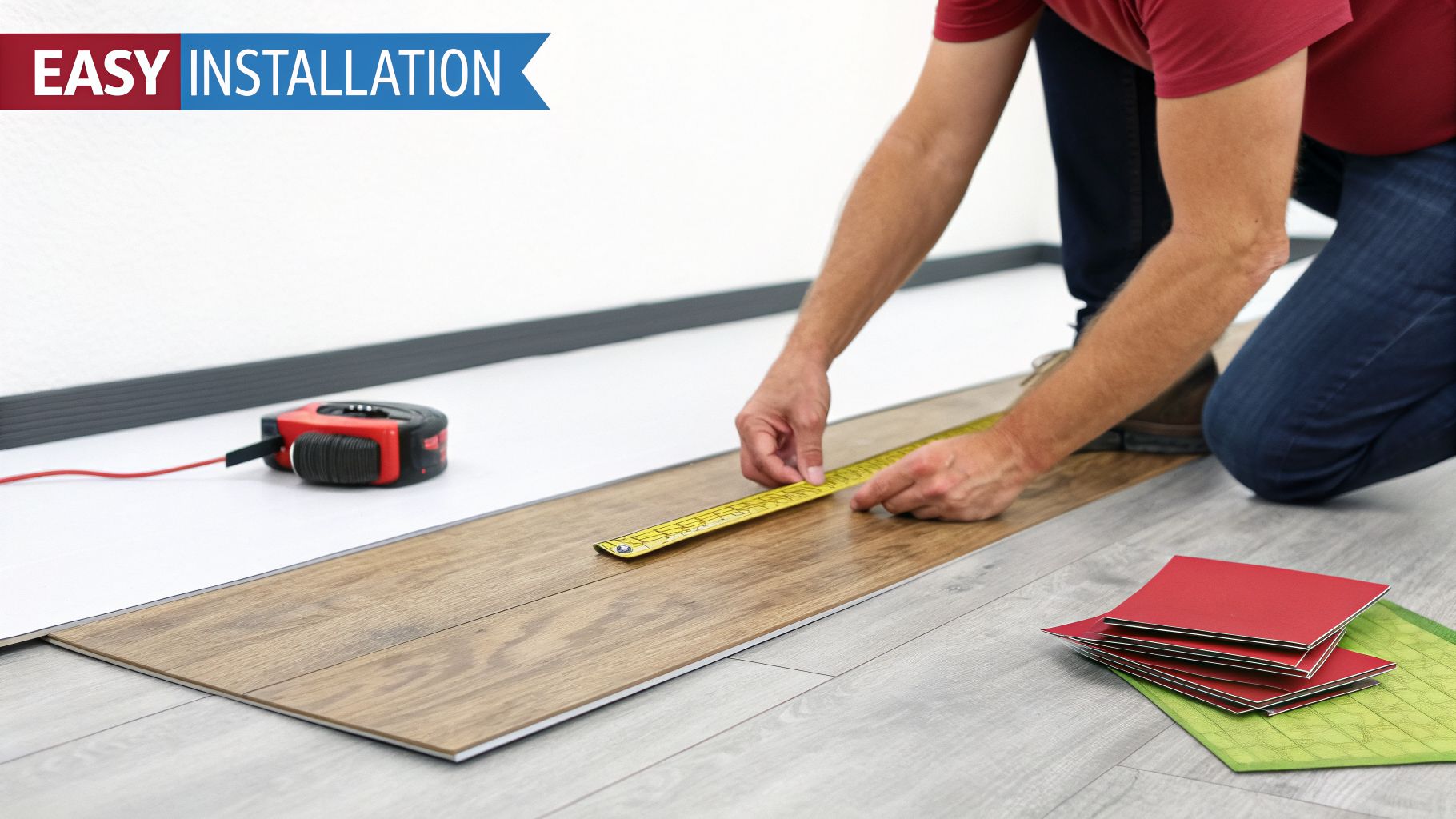
There are really two main ways to lay LVP flooring. Each has its own strengths, and knowing the difference can help you decide whether this is a weekend project for you or a job for the pros.
Common Installation Methods
By far, the most common method for homes is the floating floor system, also known as click-lock. The planks are engineered with a special tongue-and-groove edge that just clicks together. No glue, no nails. The finished floor "floats" right on top of your subfloor, making it a favorite for DIYers who love a quick and clean project.
The other option is the glue-down method. Just like it sounds, this involves using a special adhesive to glue each plank directly to the subfloor. This creates an incredibly solid, stable floor that won’t budge, which is why you see it used so often in busy commercial spaces or over massive open areas where you can’t risk any movement.
A quick word of advice from the field: no matter which installation method you choose, the final floor is only as good as what’s underneath it. A clean, flat, and completely dry subfloor isn't just a suggestion—it's essential for a beautiful, long-lasting floor that performs as it should.
Budgeting for Your LVP Project
When you're pricing out a new LVP floor, you’re looking at two main costs: the materials themselves and the labor to install them.
On the material side, you can expect to pay anywhere from $2 to $7 per square foot. The final price really depends on the quality—things like a thicker wear layer, a more rigid SPC core, and hyper-realistic designs will push you toward the higher end of that range.
If you hire a professional, installation typically adds another $2 to $5 per square foot. That price usually covers prepping the subfloor, laying the planks, and handling all the detail work. While going the DIY route can save you money on labor, a pro ensures the job is done perfectly, which is often a requirement to keep your product warranty intact. Seeing how LVP fits into the broader picture is helpful, especially when you compare it to the best flooring for a living room options out there.
Getting a handle on your budget is the best first step. If you're wondering what a project might cost for your kitchen, bathroom, or basement here in Southwest Michigan, our instant pricing tool can give you a solid estimate to get you started.
Is LVP a Smart Choice for Michigan Homes?
When you’re picking out new flooring, you have to think beyond just looks. You need something that can handle your lifestyle and, just as importantly, our local climate. Here in Southwest Michigan, luxury vinyl plank isn't just a popular trend—it's an incredibly practical choice that solves many of the common problems we face in our homes.
The biggest test for any floor in our region is the wild swing in weather. We go from sticky, humid summers that can make real hardwood swell, to bone-dry winters that cause it to shrink and gap. Our floors are constantly under stress. LVP, thanks to its stable composite core, is engineered to handle that constant expansion and contraction, keeping its tight, seamless fit year-round.
Built for Michigan Lifestyles
Our long winters bring plenty of challenges indoors, too. Think about the constant assault of snow, slush, salt, and mud tracked in day after day. This is where the 100% waterproof nature of LVP really proves its worth. You can finally stop worrying about melted snow puddling by the entryway or salty boot prints eating away at your finish. Whatever the Michigan weather drags in, a quick wipe is all it takes to clean it up.
LVP is a game-changer for the many homes in the Kalamazoo and Portage areas with basements. Because it’s completely unfazed by moisture, it’s the perfect way to create a warm, inviting living space below ground, where dampness can ruin other types of flooring.
This durability makes LVP a fantastic fit for all the hardworking parts of your house, from the mudroom and laundry room to the kitchen.
Wondering how LVP could transform a room in your own home? That’s the perfect starting point for planning a smart remodel. To get a clear idea of what your project might cost, whether it’s for a kitchen, bathroom, or basement, try our instant pricing tool. It delivers a personalized estimate in minutes and is a great way to start budgeting for a floor that's truly built for life in Michigan.
Got Questions About LVP? We’ve Got Answers.
As you get closer to making a decision, a few questions always seem to pop up. Let's tackle some of the most common ones we hear from homeowners so you can feel completely confident about choosing LVP for your home.
Can I Install LVP Flooring Over My Existing Floor?
In many cases, yes! One of the biggest perks of LVP is that its floating floor systems can often go right over existing hard surfaces like old tile, vinyl, or concrete. The key is that the original floor must be level, smooth, and in good shape. This can save you a ton of time and money on demolition.
However, you should never install it over carpet or any other soft, cushy flooring. To be certain, the best approach is to have a professional from a team like ours at Trademaster take a look. We can tell you for sure if your subfloor is ready for a successful installation.
Is LVP Flooring Safe for Families and Pets?
Absolutely. We know how important a healthy home is, which is why we only work with reputable LVP brands. These products are made to meet strict indoor air quality standards and are often FloorScore Certified, meaning they have low VOC (volatile organic compound) emissions.
Plus, that tough, scratch-resistant wear layer is a game-changer for homes with kids and pets. It means you can relax and not worry about every little spill or playful scramble. Your floors will stand up to the daily chaos and still look fantastic for years to come.
How Long Does LVP Flooring Last?
A good LVP floor is a smart, long-term investment. When it's installed correctly and you follow some basic care tips, you can expect residential LVP to last 15 to 25 years—sometimes even longer.
The real secret to its longevity is the wear layer. A thicker layer (think 12 mil or more) provides superior protection and a longer lifespan, making it the perfect choice for high-traffic spots like hallways, kitchens, and entryways.
Thinking about your budget is a huge part of any remodeling project. To get a clear, upfront look at what your new floor might cost, our instant pricing tool can give you a solid estimate for your specific room. It’s a simple way to plan your investment without any surprises. Ready to see the numbers for your project? Estimating your costs is the first step toward a beautiful new floor. Get a personalized quote in minutes with our instant pricing tool and start planning your renovation today.

