
If you've ever walked into a stunning new bathroom or kitchen, chances are you were standing on porcelain tile. But what exactly is it? At its core, porcelain is a type of ceramic tile, but it’s engineered to be exceptionally strong, dense, and almost completely waterproof.
This isn't your average tile. It's made from a very specific, highly refined clay that's fired at blistering temperatures, creating a material that’s tough enough for just about any room in your home, especially high-traffic or wet areas.
What Makes Porcelain Tile So Tough?
Think of porcelain as the high-performance cousin to standard ceramic tile. While both start out as humble clay, the ingredients and the process they go through are worlds apart. It’s like the difference between a simple, everyday bread and a dense, artisanal sourdough—the quality of the flour and the heat of the oven make all the difference.
The magic starts with a very pure, fine-grained clay mixture, often blended with kaolin, feldspar, and quartz. This isn't the reddish, coarse clay you see in standard ceramics. This special blend is then pressed with incredible force, squeezing out air pockets and creating a much denser tile body before it even sees the kiln.
Forged in Fire
Next comes the trial by fire. The pressed tiles are sent into a kiln heated to extreme temperatures, typically between 2,200 and 2,500 degrees Fahrenheit. This intense heat doesn't just bake the tile; it vitrifies it.
Vitrification is the key. It's a process where the clay and minerals fuse together, essentially turning into a glass-like material that is incredibly hard and non-porous.
The result of this high-heat manufacturing is a tile that is so dense it barely absorbs any water. To be officially classified as "porcelain," a tile must have a water absorption rate of 0.5% or less.
This near-impermeable quality is what makes porcelain a true powerhouse against moisture, spills, and stains, making it a go-to for bathrooms, kitchens, and even outdoor patios.
Here's a quick look at the core features that define porcelain tile.
Key Characteristics of Porcelain Tile
| Characteristic | Description |
|---|---|
| Material Composition | Made from a fine, dense clay blend with kaolin, feldspar, and quartz. |
| Water Absorption Rate | 0.5% or less, making it virtually waterproof and frost-resistant. |
| Firing Temperature | Fired at high temperatures (2,200-2,500°F) to achieve vitrification. |
| Density & Durability | Extremely hard, dense, and resistant to scratches, stains, and heavy foot traffic. |
These characteristics work together to create a tile that not only looks great but performs exceptionally well under pressure.
The Homeowner's Choice for Durability
It's no surprise that homeowners and builders have caught on. Porcelain's superior performance has made it the top choice in the tile world, capturing the majority of the market.
In fact, as of 2025, porcelain tile accounted for 52.4% of the entire ceramic tiles market segment. This isn't just a trend; it's a major shift showing that when people invest in a remodel, they're choosing materials built to last. You can dive deeper into this comprehensive market research to see how preferences have evolved.
Porcelain vs. Ceramic: The Showdown Homeowners Need to See
When you step into a tile store, you’re almost immediately faced with the classic choice: porcelain or ceramic. They often look alike and get lumped together, but how they perform in your home is a different story entirely.
Think of it this way: a good ceramic tile is like a sturdy raincoat. It does a great job keeping you dry in a normal downpour. But porcelain? That’s more like a deep-sea diving suit—it's engineered for extreme conditions, intense pressure, and to be completely waterproof.
While both start as clay fired in a kiln, that’s really where the similarities end. Porcelain is made from a finer, more purified clay that's pressed at immense pressure and then fired at scorching hot temperatures. This process creates a tile that is fundamentally different, and knowing that difference is key to choosing the right material for your Southwest Michigan home.
This quick visual breaks down what truly makes a tile "porcelain."
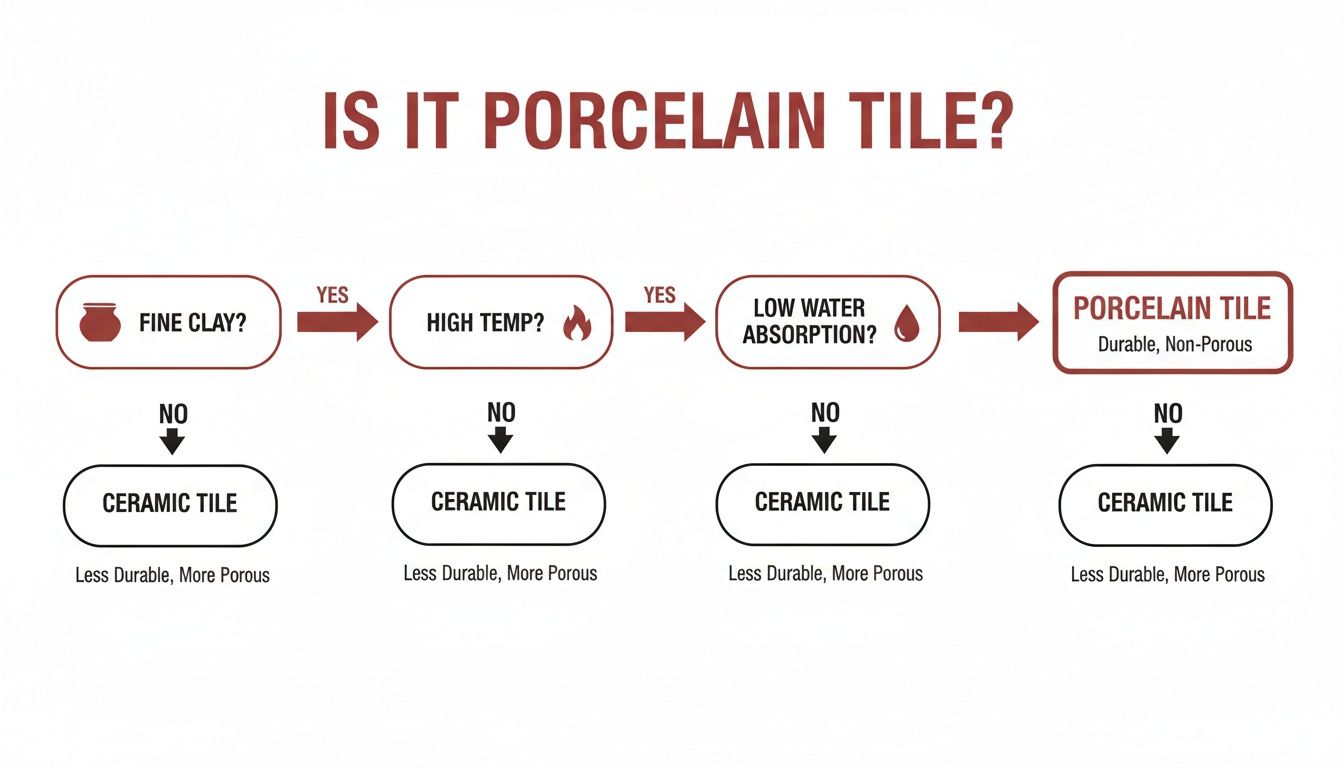
As you can see, it's that special recipe of refined clay, extreme heat, and the resulting density that gives porcelain its legendary performance.
To really understand the practical differences, let's put these two materials head-to-head on the factors that matter most in your home.
Porcelain vs. Ceramic: A Side-by-Side Comparison
| Feature | Porcelain Tile | Ceramic Tile |
|---|---|---|
| Water Absorption | Less than 0.5%. Considered "impervious." | 3% or more. More porous and susceptible to moisture. |
| Durability | Extremely hard & dense. Resists scratches, chips, and stains. | Softer & less dense. More prone to chipping and wear. |
| Best For… | High-traffic floors, showers, outdoors, kitchens, mudrooms. | Low-traffic walls, backsplashes, guest bathrooms. |
| Color Body | Often "through-body," meaning color runs all the way through. | Typically a surface glaze; a chip reveals the clay body. |
| Installation | More difficult. Requires specialized tools and mortar. | Easier to cut and install; DIY-friendly for small jobs. |
| Cost | Generally more expensive due to complex manufacturing. | More budget-friendly. |
While this table gives a great overview, a couple of these differences are so important they deserve a closer look.
The Battleground: Water Resistance
Moisture is the ultimate enemy of so many building materials, and this is where porcelain is the clear winner. The critical number to know is its water absorption rate. To be officially classified as porcelain, a tile has to absorb less than 0.5% of its weight in water.
By contrast, many ceramic tiles can have absorption rates well over 3%. That might not sound like much, but it’s a massive difference. It means porcelain is practically waterproof, making it the hands-down best choice for showers, bathroom floors, laundry rooms, and especially outdoor patios here in Michigan, where freeze-thaw cycles can destroy more porous materials.
The Durability Factor
Next up is sheer toughness. Because it’s made from finer clay and baked at much higher temperatures, porcelain is significantly denser and harder than ceramic. It just laughs off the kind of abuse that would scratch or chip other materials.
This makes it the go-to for any floor that's going to see real action—think of a busy kitchen with dropped pans, a mudroom entryway with gritty boots, or even a light commercial space.
While a quality ceramic tile is perfectly fine for a low-traffic spot like a guest bathroom wall, porcelain is the undisputed champion for any floor that has to stand up to daily life.
Another huge durability win is its color. With "through-body" porcelain, the color and pattern run all the way through the tile. In the rare event it does get a deep chip, you’ll barely notice because the color underneath is the same as the surface. Most ceramic tiles just have a printed glaze on top, so a chip glaringly exposes the different-colored clay beneath.
Installation: Toughness Comes at a Price
This incredible density does come with a trade-off: porcelain is much more challenging to install.
It’s a beast to cut. Forget about a simple score-and-snap cutter that works for ceramic; you need a powerful wet saw with a high-quality diamond blade to get clean cuts without breaking the tile.
Its non-porous surface also requires a special, high-performance thin-set mortar to get a secure bond. A standard adhesive just won’t grab on properly. This is why professional installation is so critical. A pro team like ours at Trademaster has the right equipment and understands the specific techniques needed for a perfect, long-lasting porcelain tile job—protecting your investment and preventing costly failures down the road.
What Does This Mean For Your Home? The Real-World Benefits
All that talk about density and water absorption is great, but what does it actually mean for your day-to-day life? This is where porcelain tile really shines. The benefits aren't just technical specs on a box; they're real, tangible advantages that make your home easier to live in and care for. Think of it less as just a surface and more as a worry-free foundation for your busiest spaces.
Its incredible toughness is what usually gets all the attention, and for good reason. For a busy family home here in Southwest Michigan—with kids, pets, and constant comings and goings—this means a floor that can take a beating. It stands up to dog claws, dragged furniture, and dropped toys without showing its age. This makes it one of the absolute best options if you're looking for durable flooring for high-traffic areas.
Unmatched Stain and Water Resistance
Porcelain's nearly waterproof surface is like armor against life's little messes. A spilled glass of red wine in the kitchen or muddy paw prints in the entryway are no longer cause for panic. Unlike more porous materials that soak up spills and stain almost instantly, porcelain keeps the mess right on the surface, ready to be wiped away without a trace.
This is a complete game-changer in bathrooms and laundry rooms. Because it resists moisture so well, you don't have to worry about water seeping into your subfloor, which can lead to mold, mildew, and even structural damage over time. It makes cleanup faster and contributes to a healthier home.
Here's a huge bonus: Because porcelain is so dense and non-porous, most varieties never need to be sealed. You can say goodbye to the annual chore of sealing your tile and buying special cleaners.
Design Freedom Without the Fuss
Not long ago, if you wanted the luxurious look of natural stone or the cozy warmth of hardwood, you had to accept all the demanding upkeep that came with them. Modern manufacturing has changed all that. High-definition digital printing now allows porcelain tile to flawlessly mimic almost any material imaginable.
This means you can get the stunning visual of Italian marble for your bathroom or the rustic charm of weathered oak for your kitchen—all without the headaches. No more worrying about scratches, water damage, or spending your weekends on tedious maintenance. It’s no wonder porcelain tile is one of the fastest-growing choices for home renovations.
At the end of the day, choosing porcelain gives you a powerful combination of benefits:
- Extreme Durability: It shrugs off the wear and tear of even the busiest households.
- Effortless Maintenance: A simple cleaning is usually all it takes to keep it looking brand new.
- Moisture-Proof Performance: It creates a rock-solid barrier against water in kitchens, bathrooms, basements, and mudrooms.
- Limitless Style: You get the high-end look you want with practical, real-world performance.
When you choose porcelain, you’re not just picking a beautiful floor or wall. You're investing in a surface that simplifies your life and will look fantastic for decades to come.
Where Can You Use Porcelain Tile? Let's Talk Strategy.
Alright, now for the fun part—dreaming up where porcelain tile can completely change the game in your home. It's one thing to know the technical specs, but it's another to see how those benefits play out in real life. From chaotic kitchens to steamy bathrooms, porcelain's unique blend of beauty and brawn makes it a perfect match for the most demanding spots in any house.
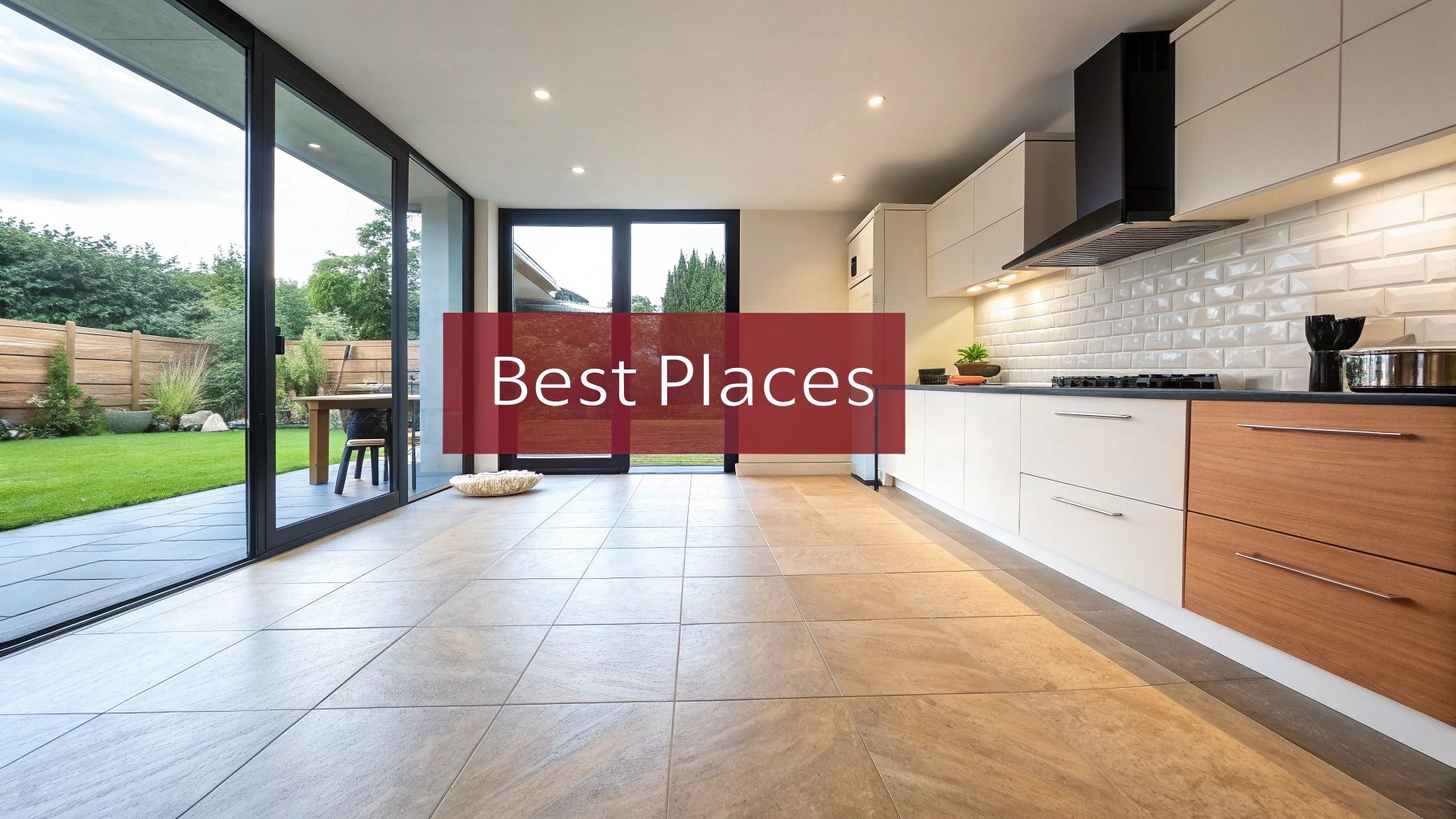
Let's walk through the rooms where this material doesn't just solve problems but truly shines.
The Kitchen: The Heart of the Home
Let's face it, the kitchen is a warzone. It’s a constant barrage of spills, high heat, and heavy foot traffic. Porcelain tile was practically made for this. Its surface laughs off stains from coffee, red wine, and spaghetti sauce, so cleanup is never a headache. You also don't have to panic if a hot pan accidentally slides off the counter onto the floor.
For kitchen floors, porcelain is a no-brainer. For a backsplash, its non-porous surface means greasy splatters from the stove wipe right off without a trace.
- Design Idea: Think about using wood-look porcelain planks. You get the gorgeous, welcoming vibe of hardwood floors without any of the anxiety about a leaky dishwasher or scratches from dropped pots and pans. It creates a seamless, elegant look that can flow right from the kitchen into your dining or living room.
The Bathroom and Shower: A Waterproof Oasis
Bathrooms are ground zero for humidity and moisture, which is exactly why porcelain is the king here. Its incredibly low water absorption rate of less than 0.5% essentially creates a waterproof shield. This protects your home’s structure—the subfloor and wall studs—from water damage, rot, and the dreaded mold and mildew. It’s the industry standard for shower walls and pans for a very good reason.
Because porcelain tile is such a top choice for its water resistance and durability in wet areas, you might also be interested in an expert guide to bathroom renovation that covers the entire process, from planning to completion.
The right tile can even trick the eye into making a small bathroom feel bigger. Using large-format tiles (think 24×24 inches or even larger) on both the floor and walls minimizes grout lines. This simple trick creates a clean, uncluttered visual that feels much more open and spa-like. For shower floors, stick with smaller porcelain mosaics or tiles with a bit of texture for crucial slip resistance.
High-Traffic Zones: Entryways and Mudrooms
Your entryway and mudroom are the welcome mat to your home, and they take a beating—especially here in Southwest Michigan. These spaces endure a constant assault of dirt, slush, snow, and corrosive salt from winter boots. Porcelain is tough enough to handle this daily grind without scratching, chipping, or fading over time.
Its dense body means it won’t be damaged by the de-icing salts that can pit and degrade other types of flooring. A quick sweep and a damp mop are all it takes to make it look brand new again, no matter what the weather throws at it.
Outdoor Living: Patios and Walkways
Porcelain isn’t just an indoor material. Because it's frost-proof, it's a fantastic choice for outdoor patios, walkways, and even pool decks. Unlike natural stone or concrete pavers that can absorb water, freeze, and crack during our harsh Michigan winters, porcelain holds its own against the thaw-freeze cycle year after year.
When you're shopping for outdoor tile, just make sure to look for products specifically rated for exterior use. You'll also want a textured, slip-resistant finish to keep everyone safe when the surface gets wet. This lets you build a stunning, durable outdoor living area that feels like a true extension of your home.
Getting a Handle on Porcelain Tile Costs and Installation
When you're figuring out the real cost of a porcelain tile project, you have to look at two big pieces: the price of the tile itself and the investment in getting it installed perfectly. Porcelain is definitely a premium material, but that higher price tag comes from its high-tech manufacturing process and the incredible performance you get in return.
The demand for top-notch tile isn't slowing down. In fact, the global market for ceramic and porcelain tiles hit nearly USD 449.86 billion in 2025, and it's only expected to keep climbing. This huge market means manufacturers are constantly innovating, giving homeowners here in Southwest Michigan more amazing designs to choose from. You can dig into the numbers and see the growth of the porcelain tile market on Custom Market Insights.
What Goes Into the Price?
The cost of porcelain tile can swing pretty dramatically. Understanding what drives the price up or down will help you set a realistic budget.
- Size & Shape: Standard 12×24 inch tiles are usually the most budget-friendly. Once you get into huge formats (like 24×48 inches) or intricate shapes, the cost goes up because they're trickier to make and handle.
- Finish & Feel: A simple matte finish is often the starting point. Tiles with a highly polished, mirror-like surface or a detailed, textured feel require extra steps in manufacturing, which adds to the cost.
- The Look: This is a big one. Tiles that convincingly replicate the look of marble, slate, or hardwood—especially those with through-body color and high-definition printing—are going to be more of an investment than a basic, solid-color tile.
All in all, you can expect the tile itself to run anywhere from $3 to over $30 per square foot.
Why Professional Installation is a Must
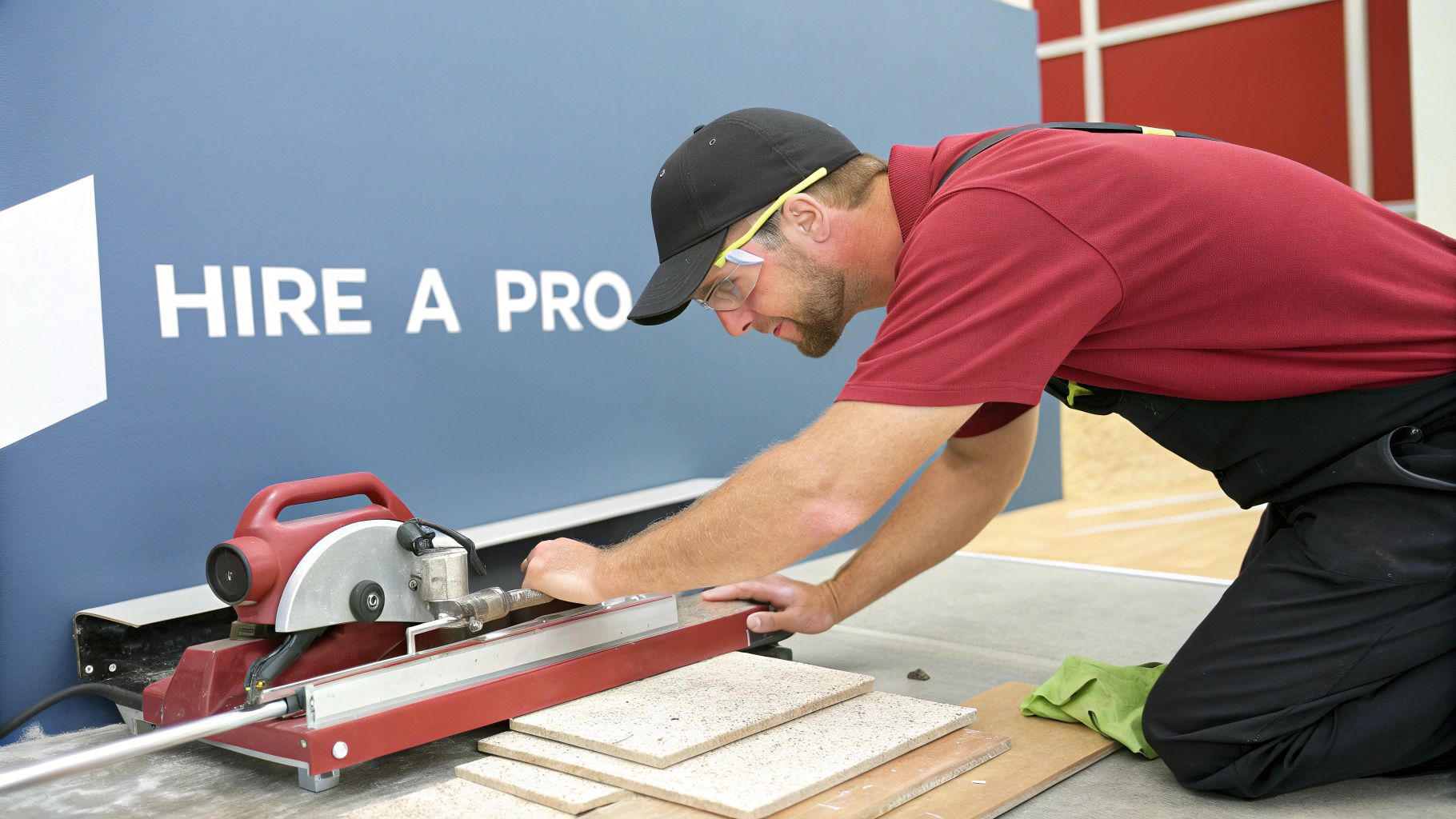
I know the temptation of a DIY project is strong, but porcelain tile installation is a different beast entirely. The very things that make it so tough and durable—its density and hardness—also make it incredibly difficult for a non-professional to work with.
You can't just score and snap porcelain like you can with some softer ceramics. Trying to cut it with the wrong tools is a recipe for chipped edges and a pile of wasted, expensive tile. It demands a powerful wet saw fitted with a quality diamond blade just to get clean, precise cuts.
The single most important factor for a tile floor that lasts is a perfectly flat, stable subfloor. A pro knows exactly how to prep that foundation to prevent the #1 cause of cracked tiles: an uneven base.
On top of that, porcelain's low porosity means standard adhesives won't stick properly. It requires a specific, high-performance mortar to create a bond that will actually last. Using the wrong stuff is a guarantee that tiles will start coming loose down the road.
Hiring a professional team like Trademaster isn't just about convenience; it's about protecting your investment. It ensures your beautiful new tile is installed to last a lifetime, saving you from the headache and expense of future repairs.
Answering Your Top Questions About Porcelain Tile
Even after weighing all the pros and cons, it's completely normal to have a few practical questions pop up before you make a final decision. Getting those last few details sorted out is what helps you feel truly confident about bringing porcelain tile into your home.
Let's walk through some of the most common questions we hear from homeowners right here in Southwest Michigan. These are the real-world concerns that matter when you start picturing this tile in your own space.
Is Porcelain Tile Slippery When Wet?
This is a big one, and for good reason—especially when you’re thinking about bathrooms, kitchens, or entryways. The honest answer? It depends entirely on the finish. A high-gloss, polished porcelain tile will absolutely be slippery, but that’s just one of many styles out there.
Thankfully, manufacturers have come a long way. You can now find tons of porcelain tiles with beautiful matte, unglazed, or textured finishes designed specifically for better grip. When you're shopping, keep an eye out for the tile's "coefficient of friction" (COF) rating. A higher COF number means more slip resistance, making it a much safer bet for any room that sees water.
Can You Install Porcelain Tile Over an Existing Floor?
It’s tempting to think about this as a shortcut, but tiling over an existing floor is almost always a bad idea. A rock-solid, beautiful tile job relies 100% on a perfectly flat, stable, and clean subfloor.
Trying to lay new tile on top of an old surface can cause all sorts of problems. You might get uneven spots that create instability, awkward height differences at doorways, or worse—your brand-new porcelain could crack under pressure. Any pro will tell you the right way to do it is to tear out the old flooring and prep the subfloor correctly. It ensures your new floor is a lasting investment, not a quick fix waiting to fail.
The number one defense against cracked tiles isn't the tile itself—it's the flawless preparation of the subfloor underneath. This is where professional expertise truly protects your investment.
How Do You Clean and Maintain Porcelain Tile?
Here’s where porcelain really shines. It is hands-down one of the easiest flooring materials to care for. Because it's so dense and doesn't absorb moisture, it naturally shrugs off stains, dirt, and spills. Best of all, glazed porcelain tile never needs to be sealed. That saves you a lot of hassle and money over the years.
Keeping it looking perfect is simple:
- Sweep or vacuum first to get rid of any loose grit or dust.
- Mop with warm water and a pH-neutral cleaner.
- Steer clear of harsh, acidic cleaners (like vinegar) or abrasive scouring pads, as they can wear down the grout over time.
That's really all it takes. A simple cleaning routine is enough to keep your porcelain floors looking like new for decades.
Does Porcelain Tile Chip or Crack Easily?
Porcelain is one of the toughest, most durable materials you can put on your floor. Under normal, everyday life, it’s incredibly resistant to chipping and cracking. That dense, rock-solid body is built to handle foot traffic, furniture, and family life without a problem.
That said, it’s not invincible. A very heavy object dropped from high enough could cause a chip. But the biggest enemy of porcelain tile isn't a dropped pot—it's a bad installation. If the subfloor has low spots or the mortar wasn't applied evenly, the tile is left unsupported and under stress. That’s what makes it vulnerable to cracking. This is exactly why getting the installation right is so critical to the floor's long-term health.
Ready to explore how porcelain tile can transform your kitchen or bathroom? The team at Trademaster Construction is here to guide you through every step, from design to flawless installation. Plan your project with confidence by visiting us at https://www.trademasterkz.com.

