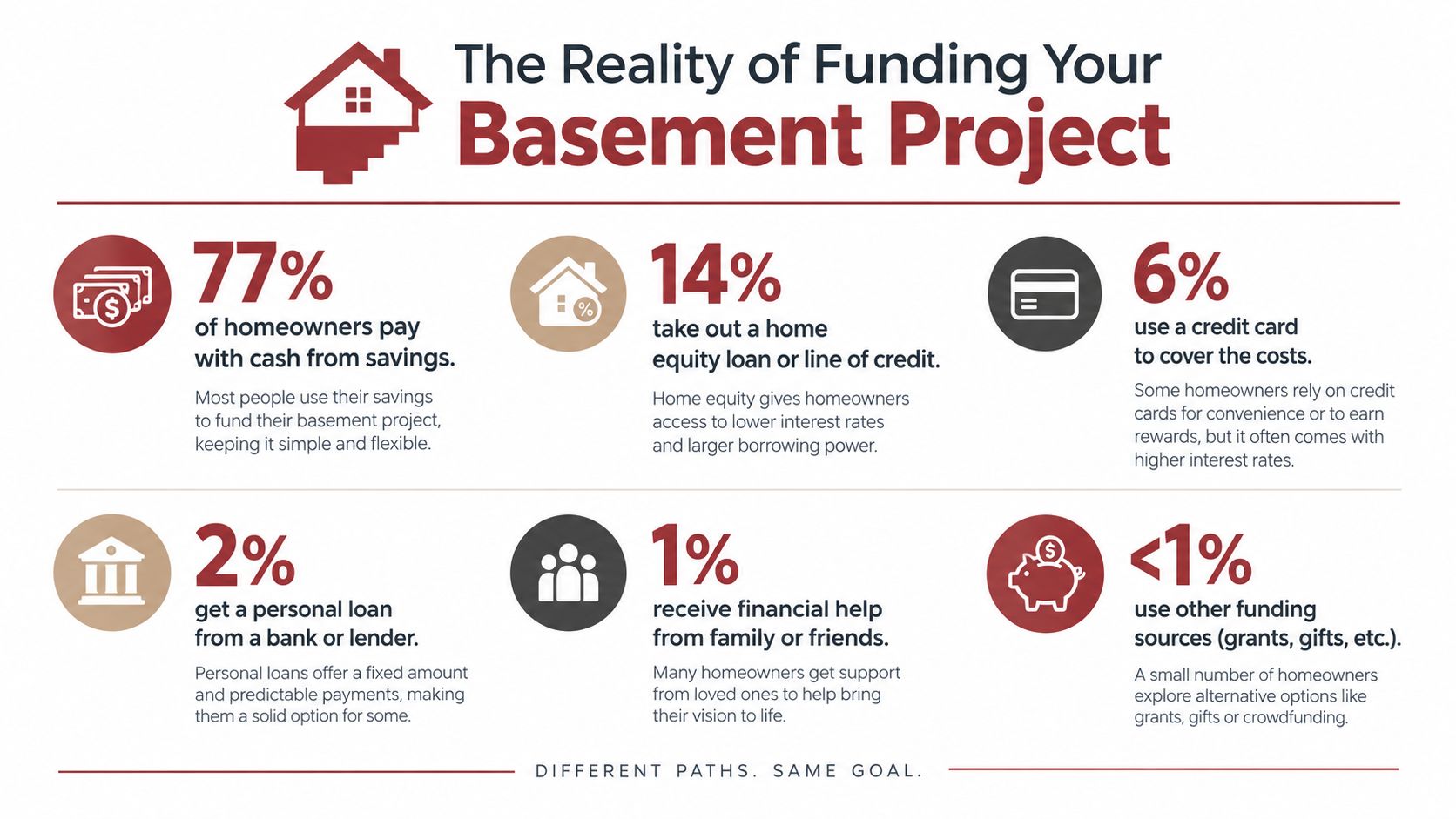
77% of homeowners fund renovations with cash from savings, but for a larger basement project, a HELOC or home equity loan is often the most cost-effective way to avoid draining your reserves. The right choice depends on whether you need a fixed payment, flexible access to funds, or financing that can absorb the hidden costs basement work routinely uncovers.
Basement renovation financing gets expensive when homeowners borrow against an optimistic estimate. A contractor's first quote may cover framing, drywall, flooring, and paint, but it may not account for a weak electrical circuit behind the wall, a plumbing problem under the slab, a structural repair, or a permit-related change.
That's why I recommend choosing the financing structure after you understand the full project risk, not just after finding the lowest advertised rate. A lower rate on too little money can leave you applying for a second loan halfway through construction. A slightly less convenient option with a controlled contingency can be the smarter financial decision.
| Financing option | Best fit | Main advantage | Main risk |
|---|---|---|---|
| Home equity loan | A defined project with a reliable scope | Fixed payment and predictable repayment | You receive a lump sum, so an incomplete budget can leave you short |
| HELOC | A phased project or one with uncertain costs | Draw funds as needed | Variable pricing and your home serves as collateral |
| Unsecured personal loan | A smaller, simpler renovation | No home collateral and less closing friction | Higher potential cost and borrowing limits |
| FHA 203(k) | A major renovation involving structural work | Renovation funding can be combined with one mortgage product | More documentation, oversight, and completion rules |
The Reality of Funding Your Basement Project
In the United States, 77% of homeowners paid for renovations with cash from savings, while only about 5.4% used cash-out refinancing or home equity loans and lines of credit, according to the Urban Institute's renovation financing analysis. For households earning under $50,000, the share using those credit-based options fell to 2.4%, which shows why many homeowners try to self-fund even when the project is larger than their available cash.
Cash makes sense when the work is small and the reserve remains healthy after payment. Basement finishing is different. Once the scope includes moisture control, insulation, electrical updates, plumbing, egress work, or structural corrections, using every dollar in savings can leave you exposed to the first surprise.
Why credit still matters
Home improvement loans made up less than 1% of total mortgage originations and carried a 44% denial rate overall, according to the Urban Institute. In 2024, more than 33% of home improvement loan applicants had household incomes below $50,000, but only 27% of those applications were approved. Basement renovation financing isn't equally accessible to every homeowner, especially when income, debt, property value, and credit history limit the available choices.
The lending market has also moved with broader housing conditions. Freddie Mac has reported that around 20% of home improvement spending has historically been financed through home loans, while Mortgage Bankers Association data cited by Eye On Housing show home improvement loan activity rising from 0.92 million loans in 2020 to 1.49 million in 2022, then easing to 1.20 million in 2024. That pattern reflects a post-pandemic surge followed by normalization, not a guarantee that credit will be easy to obtain when you need it.
For homeowners deciding whether to use cash, credit, or a combination, it helps to separate the investment question from the financing question. A finished basement may add useful living space, improve daily function, and make a home more attractive to future buyers, but the financial outcome depends on the quality of the scope and the cost of the borrowed money. A resource covering the best returns on home upgrades can help you think about the broader value of the work before you commit to a loan.
Practical rule: Don't empty your savings for a basement and then rely on a credit card when the work uncovers a problem. Protect your emergency reserve and fund the project with enough capacity to finish it properly.
Comparing Home Equity Loans and HELOCs
Home equity products are generally the cost benchmark for a substantial basement renovation because they use the home's equity as collateral. Recent market snapshots place HELOC pricing around 7% to 10% APR, while fixed-rate home equity loans sit around 7.75% to 8.22%, or about 8% on average. Both products commonly take 3 to 6 weeks to open, so neither is a good last-minute solution after demolition has already started. These figures are reported in current home improvement loan rate guidance.
The difference between the two products is less about a headline rate and more about how money leaves the account.
Home equity loan versus HELOC
| Decision point | Home equity loan | HELOC |
|---|---|---|
| Funding method | Lump sum | Draw funds as needed |
| Payment structure | Usually fixed and predictable | Often variable |
| Strongest use case | A carefully defined scope | Phased work or uncertain expenses |
| Budget control | Simple if the estimate is accurate | Better for matching borrowing to actual invoices |
| Primary concern | Borrowing too much or too little | Rate changes and extended access to credit |
A home equity loan works well when the design is complete, the contractor's scope is detailed, and the major allowances are known. You borrow once, receive the money, and make a payment that doesn't change just because the project runs through several construction stages. That predictability matters to homeowners who want a firm monthly obligation.
A HELOC gives you more control when the work unfolds in stages. You might draw for preparation, then draw again for mechanical work, and use the remaining capacity for finishes only after the basement passes the necessary inspections. You don't have to borrow the entire approved amount on the first day.
The collateral decision
Both options put your home at risk if you stop making payments. That's not a footnote. It should influence the size of the project, the amount borrowed, and your confidence in the monthly payment.
Choose a home equity loan when payment stability matters most and your budget is dependable. Choose a HELOC when scope flexibility matters most and you can tolerate variable pricing. If the project is neither well-defined nor financially comfortable, postpone construction until the plan is stronger. Borrowing against your home to begin an underdeveloped project is a poor form of basement renovation financing.
Unsecured Personal Loans for Smaller Basements
An unsecured home-improvement loan fits a basement project with a tight scope, a homeowner who wants a faster approval process, or a situation where using the home as collateral is off the table. The trade-off is plain. You avoid lien-related friction, but the lender takes more risk and usually prices that risk into the loan.
Major lenders report typical unsecured loan APRs from about 7% up to 36%, with many lenders limiting borrowing to roughly $30,000 to $50,000 and offering terms that commonly run from 2 to 12 years, as outlined in this basement remodel financing guide.
Where personal loans fit
Use a personal loan when the basement work is narrow and the price is settled. A flooring refresh, a small finished room, or a limited cosmetic update may not justify the paperwork and collateral requirements of a home equity product.
The fit gets worse fast when the basement needs several trades or the estimate keeps changing. A loan cap can force a bad choice, finish the visible work and leave the problem areas for later. That is a mistake in a basement, where moisture, electrical, and structural issues should be handled before the room is treated as done.
Homeowners comparing credit cards and personal loans unsecured should focus on the full repayment cost, not the speed of swiping or signing. A credit card can work for a small purchase you can pay off quickly. Carrying renovation debt at a high rate turns a modest project into a long obligation. Personal loans at the upper end of their published APR range can do the same thing through a different product.
A real payment illustration
For a representative $20,000 basement remodel financed at 7.99% over 6 years, the estimated payment is about $351 per month, with total repayment of about $25,241, according to the same Acorn Finance guide cited above. That is not a quote for your project. It shows how much the payment schedule adds beyond the amount borrowed.
The rate you qualify for may land well above or below the published range. Credit history, income, existing debt, loan term, and lender rules all shape the offer. Get the APR, origination charges, monthly payment, total repayment, and early payoff terms in writing before you sign.
Borrowing test: If the loan only works when every existing wall, pipe, wire, and floor performs exactly as expected, the loan is too small or the project is not ready.
For a smaller basement, an unsecured personal loan can be the practical choice. Use it for a defined scope, not as a way to hide missing budget for the work that keeps the space safe and dry.
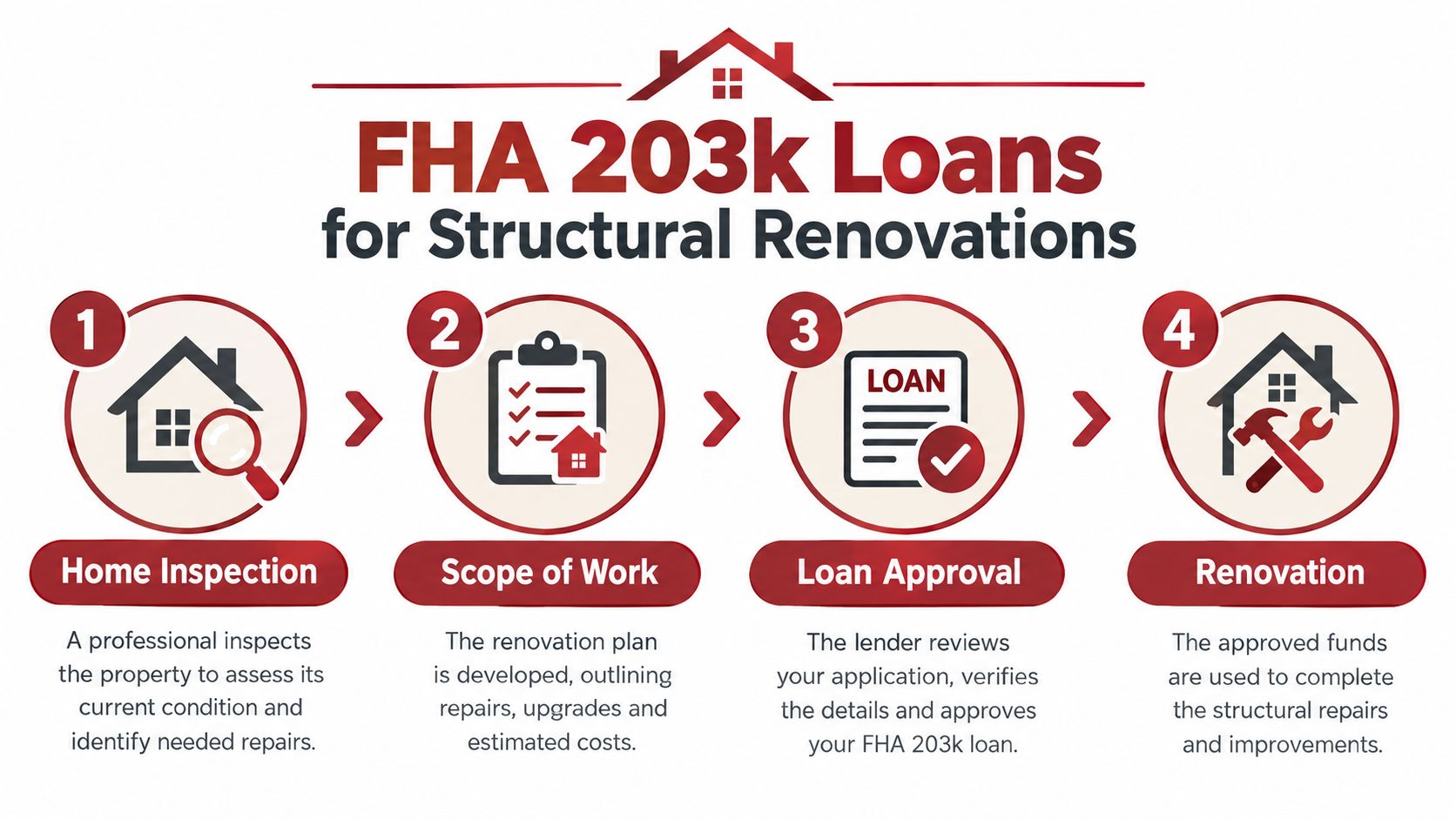
FHA 203k Loans for Structural Renovations
Older homes can present a different financing problem. A basement may need structural work, plumbing corrections, electrical improvements, or other repairs before anyone can install finishes. An FHA 203(k) loan is designed to combine renovation funding with a mortgage product, which can make it relevant when the work is too extensive for a simple personal loan or conventional equity product.
The program has two primary paths. A Limited 203(k) is intended for non-structural improvements and caps rehabilitation costs at $75,000. A Standard 203(k) is designed for larger structural work and requires at least $5,000 in repairs, according to Bankrate's overview of FHA 203(k) loans.
A practical 203(k) sequence
Inspect the home and basement. Start with the conditions that can stop the project, including water intrusion, foundation concerns, unsafe wiring, inadequate plumbing, and code-related issues. Cosmetic selections come later.
Build the scope of work. The plan needs to identify what will be repaired, what will be installed, and how the renovation will be completed. A vague wish list creates problems during underwriting and construction.
Submit the financing package. The lender reviews the borrower, property, proposed work, and project costs. The loan structure must account for the renovation rather than treating repairs as an afterthought.
Complete the renovation under the program rules. Inspections, draws, documentation, and contractor coordination become part of the process. The homeowner must treat the timeline as a requirement, not a suggestion.
HUD states that Standard 203(k) work generally can't exceed 12 months, while Limited 203(k) work can't exceed 9 months, as shown in the HUD 203(k) program comparison.
The 203(k) route can be useful, but it isn't casual renovation financing. It introduces a defined process that may involve lender-approved contractors, inspections, draw procedures, and strict documentation. Homeowners should discuss qualification, required reserves, mortgage terms, and the project schedule with an FHA-approved lender before selecting this path. A separate explanation of the FHA 3.5% down payment score may also help buyers and borrowers understand the credit considerations around FHA financing.
For a homeowner in an older Southwest Michigan house, the key question isn't whether the product sounds convenient. Ask whether the basement's structural and mechanical work can be documented, priced, scheduled, and completed within the program's rules.
The Hidden Cost Trap in Basement Budgeting
Financing guidance from Elevation Basements puts the typical basement contingency at 20% to 25% beyond the loan amount, as explained in this basement financing guidance. That buffer is the starting point for a responsible financing plan, not an optional upgrade fund.
The expensive mistake is borrowing against a clean-looking quote that ignores conditions behind the basement walls. Once demolition begins, plumbing defects, electrical repairs, structural fixes, moisture problems, and permit requirements can expand the scope. A loan sized only for visible finishes can leave you applying for more money while the project is already open and unfinished.

Why basements create budget surprises
A basement is not a blank interior box. It sits below grade, beside the foundation, and around systems that may have been installed or changed over many years. The finished design may look straightforward, but the preparation determines whether the space stays dry, comfortable, safe, and code-compliant.
Common trouble spots include:
- Moisture control: Waterproofing, drainage corrections, or sump pump work may need to happen before finishes are installed.
- Plumbing access: A bathroom, wet bar, or laundry area can require changes below the slab or inside finished walls.
- Electrical capacity: New rooms, lighting, equipment, and entertainment systems may expose limits in existing circuits or panels.
- Structural conditions: Posts, beams, foundation walls, and framing may require repair or modification before the layout proceeds.
- Permits and inspections: Local officials or trades may identify work that must be completed before approval, changing the original scope.
A low interest rate does not protect you from these costs. If the first loan covers only the attractive finishes, a second round of borrowing may bring a higher rate, added fees, or a delay that leaves the basement torn apart.
Build the buffer before you borrow
Start with the full intended scope, then divide the budget into committed work, probable allowances, and contingency capacity. Set the financing amount high enough to cover the 20% to 25% basement-specific buffer without requiring a new application when an unexpected condition appears.
Keep that money reserved for conditions you could not responsibly price before opening a wall or floor. It is not permission to upgrade cabinets, flooring, or fixtures. If the contingency remains unused, apply the balance according to your lender's terms.
Get the project price grounded before choosing the loan amount. A basement project pricing estimate can provide a practical starting point based on project type and finish level. It cannot replace a site inspection or written contractor scope, but it can expose an unrealistic budget before you commit to the wrong loan.
Contractor's rule: Never finance the pretty part of a basement while leaving water, structural, plumbing, or electrical work unfunded. The hidden work determines whether the finished space performs.
Choosing the Right Financing for Your Situation
Choose financing based on the basement's condition, the certainty of the construction scope, and the interest rate on your existing mortgage. Credit score and income affect approval and pricing, but they should not drive the decision alone. The loan must match how the work will be built and paid for.
If your first mortgage has a favorable rate, scrutinize cash-out refinancing. Replacing that mortgage to release basement funds can reset the rate on the entire balance, not just the renovation amount. Compare a HELOC or home equity loan first, because either may provide project funds without disturbing the existing mortgage.
Match the product to the project
For a phased or uncertain renovation, use a HELOC. It fits projects completed in stages or basements where the mechanical scope may change after demolition. Draw only what the contractor needs, while keeping approved capacity for the 20% to 25% basement-specific buffer. The rate can change, and your home secures the debt, so calculate the payment under less favorable conditions before signing.
For a defined renovation with a firm scope, compare a home equity loan. Fixed payments make household budgeting easier when the design, allowances, and contingency have been reviewed. This product becomes risky when the estimate is still missing plumbing, electrical, moisture, or structural work. A fixed payment does not protect you from an underfunded project.
For a smaller cosmetic project, consider an unsecured loan. It avoids home collateral and may be faster than a secured option. Compare total repayment, fees, and the full term rather than focusing on the monthly payment. Do not extend the term just to make a basement project appear affordable.
For structural work tied to a mortgage transaction, investigate FHA 203(k). The Limited and Standard versions cover different project scopes and involve different costs and completion rules. Expect more coordination with the lender, contractor, and inspections. Evaluate this option before construction starts, not after the basement has been opened.
Protect the first mortgage
Cash-out refinancing can fit when the existing mortgage terms are unfavorable, the renovation is substantial, and the complete refinance cost makes sense. It often works poorly for a homeowner with a very low first-mortgage rate who needs only renovation capital. Saving a little on the renovation rate is not worth repricing the full mortgage balance.
Ask these questions before choosing:
- Does the product preserve or replace my existing mortgage?
- Can it cover the planned work plus the basement contingency?
- Will the payment remain manageable if the project takes longer?
- Can funds be drawn in the way the contractor invoices the work?
- What happens if the scope changes before the final finish is installed?
The median planned renovation budget fell from $20,000 in 2025 to $15,000 in 2026, a 25% decrease, while 62% of remodel planners still expect to use something other than cash, according to Unison's 2026 home renovation funding coverage. With budgets shrinking, the 20% to 25% basement buffer matters more than ever. A smaller loan that funds hidden work beats a larger loan that pays for finishes while leaving the systems unresolved.
Plan before applying
Have the basement inspected and prepare a written scope before submitting applications. Separate required repairs from optional finishes, identify decisions that could change the price, and include the contingency before comparing offers. Use a basement project pricing estimate for a preliminary budget, but do not treat it as a site inspection or contractor scope.
Take the written scope and your contingency buffer to at least two lenders. Request a full cost comparison in writing, including payment, APR, fees, collateral, draw rules, rate changes, and total repayment. Then check whether the lender's draw schedule matches the contractor's invoices.
If the budget works only when the contingency is removed, reduce the scope before signing. Finish fewer rooms properly rather than financing a complete basement and leaving water control, structure, plumbing, or electrical work unfunded. The financing should support the construction plan, not force expensive borrowing halfway through it.
Trademaster Construction helps Southwest Michigan homeowners plan basement renovations through practical scope, budgeting, design, and construction guidance. Visit Trademaster Construction to discuss the project and review pricing resources before committing to basement renovation financing.