
The best grab bars for your shower are the ones you can trust completely—securely mounted, ADA-compliant, and made from durable, rust-resistant materials like stainless steel. These aren't just safety devices; they're smart upgrades that blend peace of mind with your bathroom's design.
Why the Right Shower Grab Bar Is One of the Smartest Upgrades You Can Make
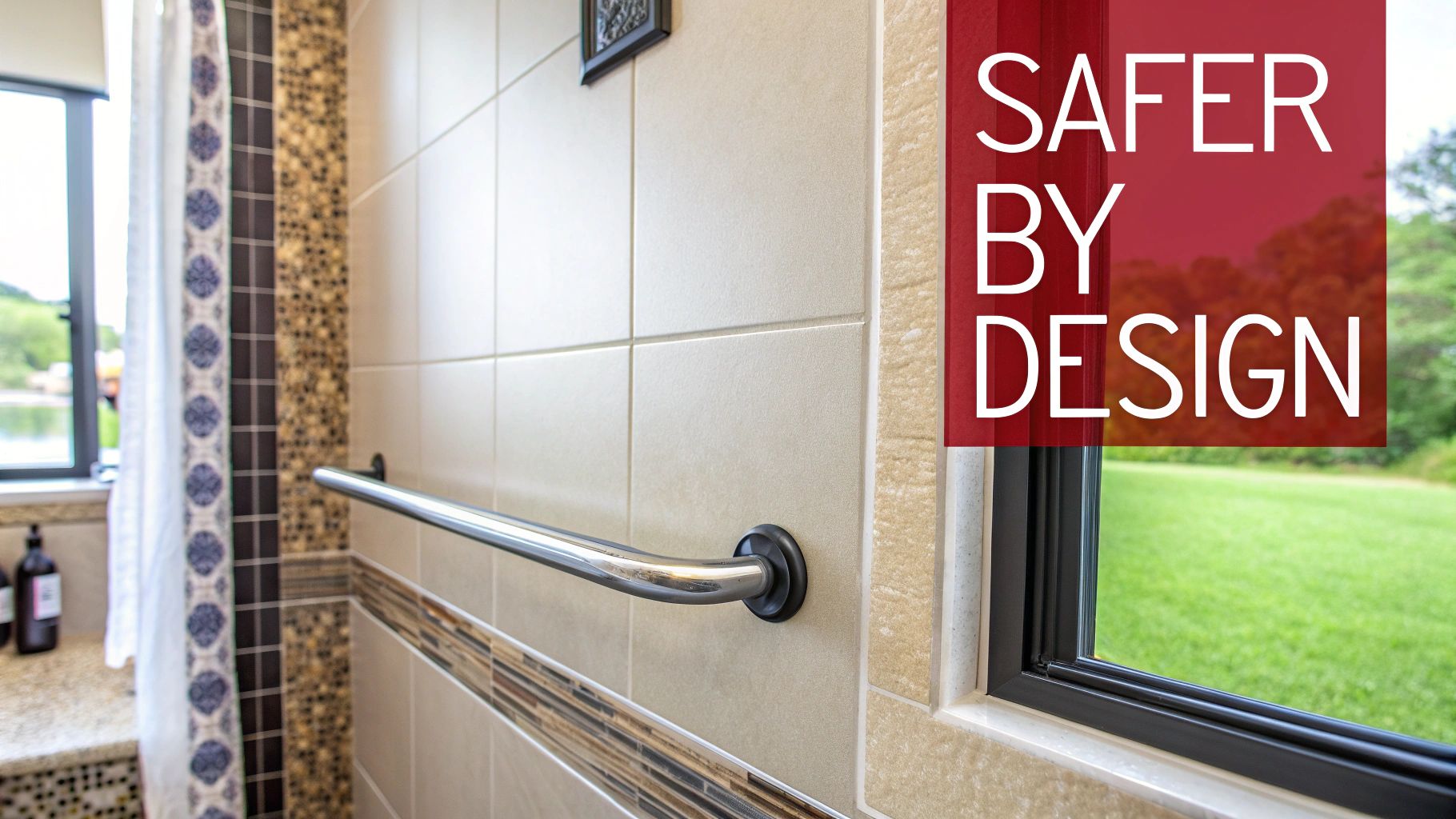
Let’s be honest, for a long time, grab bars had a reputation for looking sterile and clinical. But that's an outdated view. Today’s market is filled with options that prove safety and sophisticated design can absolutely go hand-in-hand. Installing a high-quality grab bar is genuinely one of the most intelligent and proactive improvements you can make to your home.
This isn’t just about planning for some far-off future, either. It’s about making your bathroom safer for everyone, right now. A wet, slippery shower floor is an equal-opportunity hazard, posing a risk to young kids, active adults, and visiting grandparents alike. A sturdy, well-placed grab bar offers that crucial steadying hand, turning a potential slip into a complete non-event.
A Proactive Step Toward a Safer Home for Life
Thinking ahead is the secret to creating a home that supports you comfortably and safely for the long haul. Shower grab bars are a cornerstone of smart aging in place home modifications, helping to preserve independence where it matters most.
For homeowners here in Southwest Michigan, installing one isn't just a good idea—it’s a fundamental step toward future-proofing your home. This simple addition helps create a secure environment, giving you the confidence to maintain your lifestyle for years to come.
A grab bar isn't a sign of weakness; it's a mark of smart homeownership. It’s a tool that provides stability and prevents accidents before they happen, making your daily routine safer and more comfortable.
The Sobering Reality of Bathroom Falls
If you're still on the fence, the numbers paint a stark picture. The global market for grab bars is surging and projected to reach USD 1.83 billion by 2034, a clear sign that homeowners are prioritizing safety.
Here in the U.S., shower-related slips lead to nearly 235,000 emergency room visits every single year. What's truly shocking is that a staggering 80% of household falls happen right there in the bathroom. For families in Portage and Kalamazoo, installing a reliable grab bar is a powerful, direct way to protect your loved ones from becoming part of that statistic. You can see how the industry is responding to these safety needs by exploring the latest market research on grab bars.
Choosing Your Grab Bar: Material, Finish, and Style
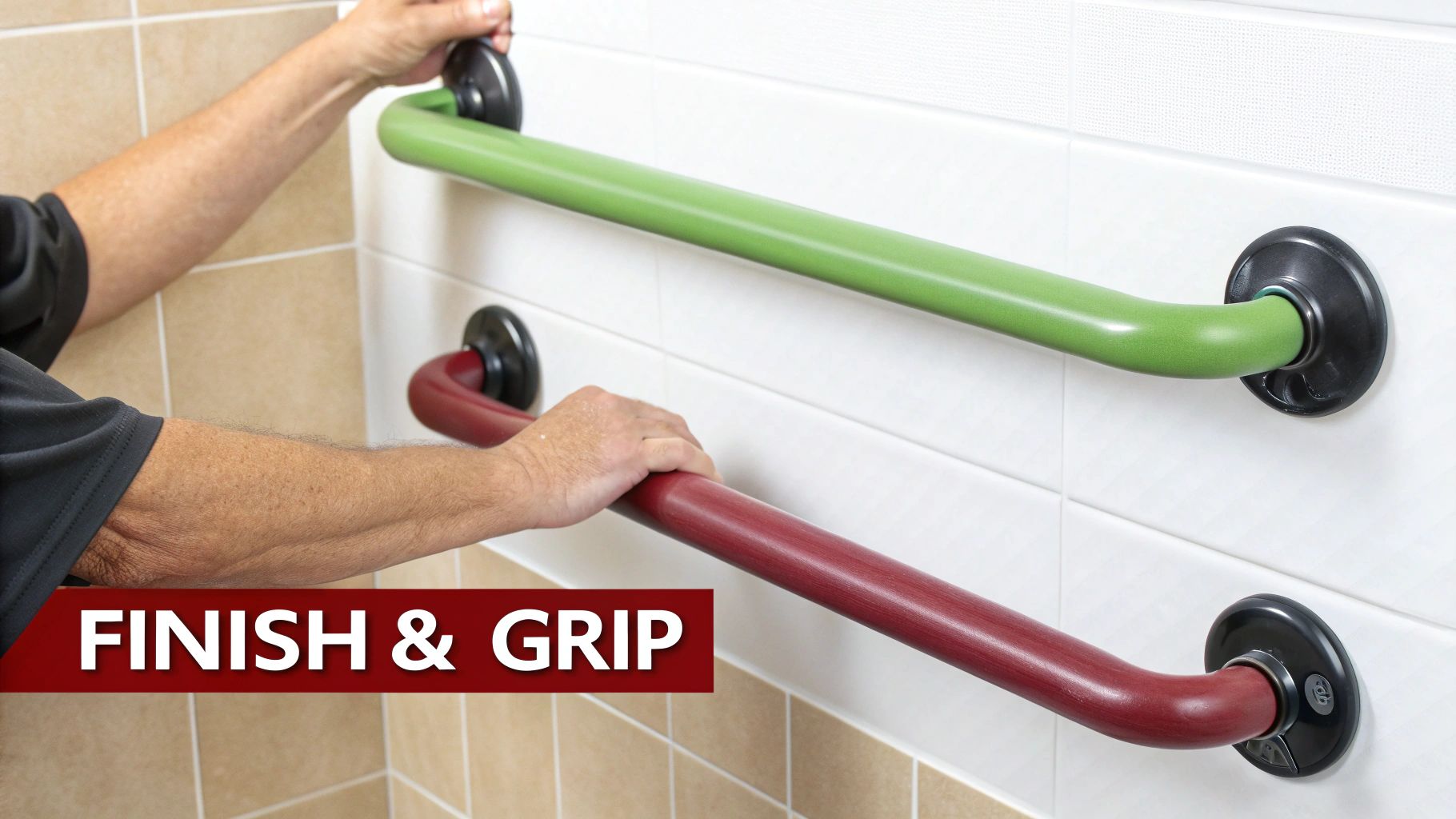
Let's get one thing straight: installing a grab bar doesn't mean your bathroom has to look like a hospital. Far from it. Today’s best grab bars are designed to blend right into your decor, proving that safety can be incredibly stylish. The material you pick is the starting point for both its durability and its aesthetic.
When it comes to the shower, stainless steel is the gold standard, and for good reason. It’s naturally resistant to rust and corrosion, which is a must-have for anything that lives in a wet, steamy environment. A quality stainless steel bar won’t pit or weaken, so you can count on it for years to come.
With that solid foundation, you can then choose a finish that ties the whole room together. Whether your faucets are oil-rubbed bronze, your showerhead is brushed nickel, or you're going for a modern matte black look, there’s a grab bar out there to match. It’s all about making safety feel like a thoughtful, integrated part of the design, not just a clinical add-on.
More Than Just Looks: How Finish Affects Grip
Aesthetics are important, but the feel of the bar—especially with wet, soapy hands—is absolutely critical. The finish you choose has a direct impact on how well you can grip it, which is where texture becomes a game-changer.
A super-smooth, polished chrome bar might look fantastic, but it can get dangerously slick when it's wet. This is why I always steer clients toward finishes designed with an extra layer of security you can actually feel.
- Peened Finish: Think of this as a very fine, hammered pattern. This dimpled, non-slip surface provides a fantastic grip that isn’t rough on the skin. It’s one of my most recommended options.
- Knurled or Fluted Grip: This is that classic diamond-patterned or ridged texture you see on professional tools. It offers an incredibly secure, aggressive grip that's nearly impossible to slip from.
- Powder-Coated or Matte Finishes: Popular finishes like matte black or white don't just look great; they naturally provide more friction than highly polished metals. This is a perfect way to blend a modern aesthetic with enhanced safety.
The texture of your grab bar is just as vital as how it's mounted. A peened or knurled surface can make a world of difference in your confidence and stability, turning a simple bar into a truly reliable anchor.
Tying It All Together for a Safe, Cohesive Design
Picture a beautiful, spa-like bathroom with large porcelain tiles and a brushed nickel rain showerhead. A grab bar with a matching brushed nickel peened finish would look like it was meant to be there all along. It wouldn’t scream “safety equipment”; it would whisper “high-end design,” adding to both the room’s sophisticated feel and its security.
Or, let’s say you’re creating a modern farmhouse vibe with black fixtures and classic white subway tile. A matte black grab bar becomes a bold, stylish accent. It adds a pop of contrast while delivering crucial support right where you need it, like by the shower entry or a built-in bench.
The trick is to think of the grab bar as a permanent fixture, just like your faucet or towel rack. When you choose a material, finish, and texture that align with your vision, you build a bathroom that is as beautiful as it is secure.
Getting Serious About Weight Capacity and Secure Mounting
A good-looking grab bar is one thing, but if it rips out of the wall when you actually need it, it’s worse than useless—it's dangerous. This is where we need to talk less about style and more about the absolute, non-negotiable bedrock of safety: weight ratings and a rock-solid installation. Frankly, a grab bar is only as strong as its mounting.
The Americans with Disabilities Act (ADA) sets the baseline here, and for a very good reason. To be ADA-compliant, a grab bar must be able to withstand at least 250 pounds of force. You'll find that many of the best grab bars on the market today are actually rated for up to 500 pounds. That number isn't just for show; it’s a guarantee of reliability when it has to handle the sudden, sharp force of a slip or a fall. Make sure you check for that rating before you buy anything.
Stud-Mounted Installation: The Gold Standard
When it comes to anchoring a grab bar, nothing beats mounting it directly into the wooden studs inside your wall. These vertical 2x4s are the skeleton of your home. Driving the mounting screws deep into a stud essentially makes the grab bar part of the wall’s very structure.
Think about it this way: screwing into drywall alone is like trying to hang a heavy mirror with a pushpin. It might stay up for a little while, but the first time it's stressed, it’s coming down. Securing it to a stud, on the other hand, is like bolting that mirror directly to the wall's frame. It’s not going anywhere. This method provides the absolute maximum strength and is always, always the first choice for a professional installation.
What to Do When Studs Don't Cooperate
Of course, in the real world, studs are rarely located exactly where you need to place a grab bar. It's a common headache, but it doesn't mean you're out of luck. Thankfully, there are professional-grade anchoring systems designed for this very situation.
And I'm not talking about the flimsy plastic anchors you'd use for a picture frame. These are heavy-duty solutions that create a powerful bracing system behind your wall surface, whether you're dealing with tile, a fiberglass surround, or plain drywall.
- Toggle Bolts: These are a classic for a reason. Their spring-loaded "wings" pop open behind the wall, spreading the load out over a much wider area than a simple screw ever could.
- WingIts or Similar Anchors: These are highly specialized fasteners made specifically for installing grab bars. They are engineered and rated to hold hundreds of pounds, making them a safe and reliable alternative when a stud just isn't there.
The single biggest mistake anyone can make is to compromise on the mount. If you can't hit a stud, using a robust, weight-rated wall anchor system isn't just a good idea—it's a mandatory safety requirement.
There’s a reason wall-mounted grab bars are the go-to, making up 60-70% of the market. It's because they are incredibly reliable when installed correctly. Top-tier brands like Moen and Kohler engineer their bars to handle a 500-pound load capacity, but that strength is completely dependent on proper anchoring. A securely installed bar can slash the risk of a fall by up to 50%—a vital statistic, especially when you learn that falls cost the U.S. healthcare system $50 billion annually. If you're interested in the data, you can review market reports to learn more about bathroom safety trends.
Finding the Perfect Placement for Your Grab Bars
Where you put a grab bar is every bit as important as what it's made of. A poorly placed bar is awkward at best and useless when you actually need it. Let's get practical and figure out exactly where these bars should go in your specific shower.
The first thing to consider is how you move around in the shower. What's the main reason you need the support?
A horizontal bar is your best friend for steadying yourself as you move side-to-side or balance on one foot. It’s a fantastic all-around support rail. If your main concern is getting in and out safely, a vertical bar right at the entrance is a game-changer. It gives you a solid, natural grip as you step over the tub edge or shower curb.
Then there's the angled bar. This one is brilliant for anyone who needs help transitioning from sitting to standing. If you use a shower bench, the diagonal angle mimics the natural motion of your arm as you push yourself up, giving you leverage right where you need it most.
Standard Heights vs. Custom Fits
The ADA guidelines are a great place to start, suggesting a height between 33 and 36 inches from the shower floor. This range works well for most adults and is designed for public accessibility.
But in your own home, you can—and should—customize it.
- For taller folks: You'll likely find that mounting the bar closer to the 36-inch mark, or even a bit higher, feels more natural and supportive.
- For shorter individuals or those using a shower chair: Sticking to the lower end of the range, around 33 inches, usually provides much better and more comfortable leverage.
The real secret? Put the bar where your hand instinctively goes for support. Have the person who will use it most stand in the shower (carefully, of course!) and reach out to a comfortable spot on the wall. That’s your sweet spot.
Common Layouts and Where to Mount
Your shower's layout is the final piece of the puzzle. Here’s a quick guide for the two most common setups I see in Southwest Michigan homes:
The Classic Tub-Shower Combo
- Getting In and Out: A vertical 18-inch bar on the wall next to the faucet controls is perfect. You can hold it as you step in and out.
- Along the Back Wall: A long horizontal bar, either 24 or 36 inches, mounted 33-36 inches up from the tub floor, provides continuous support while you're showering.
Walk-In or Curbless Showers
- At the Entrance: Place a vertical bar just inside the opening for a steady grip from the moment you step in.
- On the Control Wall: A horizontal bar mounted underneath the shower controls is great for staying balanced while you adjust the temperature.
- On the Opposite Wall: A second horizontal or an angled bar works wonders for general support while washing.
It’s no surprise that with 77% of adults 50+ wanting to age in place, getting these details right is crucial. Good placement isn't just a suggestion; it's a key safety feature. If you're interested in the nitty-gritty, you can see how home safety is influencing product design in this recent industry analysis.
Deciding Between DIY and Professional Installation
Installing a grab bar might seem like a simple weekend project, but it’s one of the few home improvements where a mistake isn't just an inconvenience—it's a genuine safety hazard. Before you break out the toolbox, it’s time for a gut check about your skills, your tools, and the walls you’re working with.
A grab bar that isn't anchored perfectly can fail when you need it most, leading to serious injury and expensive damage to your shower wall.
So, let's be honest. Do you have a good stud finder, and more importantly, do you know how to get an accurate reading through thick tile or a fiberglass surround? Do you own the right kind of drill? Drilling into a tiled shower is a whole different ballgame. You’ll need specialized equipment and a steady hand. For instance, successfully mastering diamond drill bits is a non-negotiable skill if you want to avoid a shattered tile and a much bigger problem.
The DIY Homeowner Checklist
If you’re still feeling confident about doing this yourself, run through this quick checklist. If you hesitate on any of these points, it’s a strong sign that calling a pro is the smarter move.
- Wall Material: Are you 100% sure you can drill a clean, precise hole through your wall material, whether it’s tough porcelain tile, fiberglass, or drywall with a hidden vapor barrier?
- Stud Location: Can you confidently find the dead center of a wall stud? If there isn’t a stud exactly where you need one, are you prepared to correctly install a heavy-duty wall anchor system that’s rated for the job?
- Tools and Knowledge: Do you have the right drill, the correct bits, a level, and waterproof silicone sealant? And do you know precisely how to use them to create a secure, watertight installation?
- Risk Tolerance: Are you prepared to accept full responsibility for the safety of the person relying on that bar to prevent a fall?
The peace of mind that comes from a professional installation is hard to put a price on. It’s not just about attaching a bar to the wall; it’s about knowing, without a doubt, that it will hold under the sudden, intense force of a slip.
The Value of a Professional Touch
For homeowners in Portage, Kalamazoo, and throughout Southwest Michigan, bringing in a trusted remodeler like Trademaster Construction takes all the risk and guesswork out of the equation.
A professional installation goes beyond just secure anchoring. It's about creating a flawless, waterproof seal that prevents even a single drop of moisture from seeping behind the wall, which can lead to hidden mold and structural rot down the road.
A pro also guarantees an aesthetically perfect result—no chipped tiles, no slightly crooked bars, no messy sealant. The grab bar will look like it was always meant to be there, seamlessly integrated into your bathroom’s design. At the end of the day, you're not just paying for labor; you're investing in guaranteed safety and a polished finish that protects both your family and your home.
Answering Your Top Questions About Shower Grab Bars
Even the most well-thought-out project has a few lingering questions. When it comes to something as critical as shower safety, you need clear, straightforward answers. I’ve heard these questions come up time and time again with homeowners, so let's clear the air and make sure you can move forward with confidence.
Can I Just Use a Towel Bar as a Grab Bar?
Let me be blunt: absolutely not. This is one of the most common and dangerous mistakes I see. A towel bar is designed to hold a damp towel, and that’s it. It’s usually attached to drywall with flimsy plastic anchors.
It has zero structural strength to catch a slipping person. If you grab a towel bar to break a fall, it will almost certainly rip out of the wall, likely making the fall even worse. Always, always use a dedicated, ADA-aware grab bar rated for at least 250 pounds and anchored properly.
Are Suction Cup Grab Bars a Safe Alternative?
They look like a simple, no-drill fix, but suction cup grab bars are not safe for fall prevention. They're only meant to provide a light touch point for steadying yourself—not to bear your body weight.
The real problem is that suction cups are completely unreliable in a wet, steamy shower. Temperature changes and soap residue can make them lose their grip without warning. For genuine, trustworthy fall prevention, a permanently installed, wall-mounted grab bar is the only way to go.
What Does Professional Grab Bar Installation Cost?
The cost really depends on a few things: where you live, the wall material (drilling through porcelain tile takes more time and skill than a fiberglass surround), and how many bars you're having installed. Generally, you can expect to pay a professional a few hundred dollars for a standard installation, plus the cost of the grab bar itself.
For our neighbors here in Southwest Michigan, we can give you a precise quote tailored to your bathroom. Think of it as an investment in peace of mind, knowing it was done right the first time.
How Should I Clean and Maintain My Grab Bars?
The good news is that quality grab bars are incredibly low-maintenance. Keeping them in great shape is easy.
- Regular Cleaning: A soft cloth with a bit of mild soap and water is all you need. Stay away from abrasive cleaners, harsh chemicals, or bleach, which can damage the finish over time.
- Rinse and Dry: After you clean it, give the bar a good rinse with water and wipe it dry. This prevents soap scum and water spots from building up.
- The Monthly Tug Test: About once a month, give the bar a firm pull on both ends. It should feel completely solid—no wiggling, no movement, no give whatsoever. If you feel even the slightest bit of play, the anchors may have loosened. Get it re-secured by a pro right away.
Ready to add style, safety, and peace of mind to your bathroom? The expert team at Trademaster Construction specializes in professional grab bar installation and complete bathroom remodels that are built to last. Schedule a call today to discuss your project by visiting us at https://www.trademasterkz.com.

