
For most bathroom projects, especially in a shower where moisture is a constant, epoxy grout is the best all-around choice. Its naturally waterproof and stain-proof qualities are hard to beat. While cementitious and urethane grouts certainly have their place depending on your tile, budget, and comfort level with DIY work, epoxy's sheer durability and low-maintenance nature make it a smart long-term investment.
An Overview of Your Bathroom Grout Options
Picking the right grout for your bathroom tile is far more than an afterthought. It's a crucial decision that directly affects how long your tile job lasts, how much you'll have to clean it, and the final look of the entire room. Think of grout as the silent partner to your tile—it locks everything together, provides a barrier against moisture, and prevents serious issues like water damage, mold, and mildew.
This choice is getting more attention lately as people put more care into their bathroom renovations. The global market for tile grout was valued at USD 2.73 billion in 2024 and is expected to keep climbing, mostly because homeowners want finishes that are both beautiful and built to last. You can dive deeper into these market trends and their implications for homeowners.
To make things easier, let's break down the main contenders. Each type really shines in different situations, and knowing the difference is the secret to getting your project right.
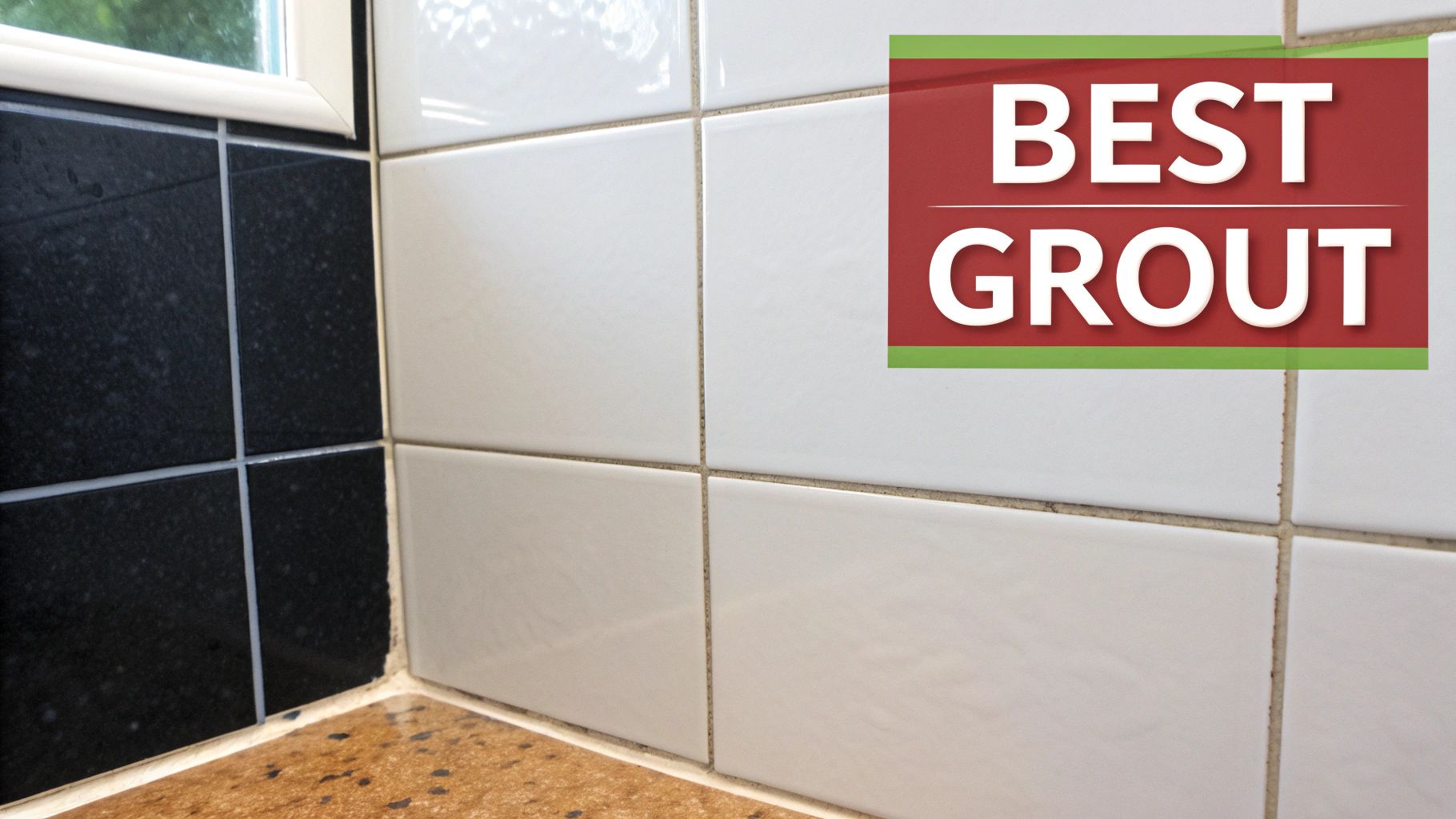
- Epoxy Grout: This is the top-tier option for bulletproof protection. It’s non-porous, which is a technical way of saying it won't soak up water or stains. This makes it the champion for shower floors and walls.
- Cementitious Grout (Sanded & Unsanded): The classic, go-to choice for decades. It's budget-friendly and gets the job done, but it absolutely must be sealed to stand a chance against water and stains.
- Urethane/Polymer-Modified Grout: A newer, pre-mixed hybrid that lands somewhere in the middle. It gives you better stain resistance and flexibility than traditional grout, closing the performance gap between old-school cement and modern epoxy.
Quick Grout Comparison for Bathroom Use
To give you a bird's-eye view, here’s a straightforward table comparing how these grout types perform in the demanding, wet environment of a bathroom.
| Grout Type | Water Resistance | Stain Resistance | Flexibility | Typical Cost |
|---|---|---|---|---|
| Epoxy Grout | Excellent (Waterproof) | Excellent | Good | High |
| Urethane Grout | Very Good | Very Good | Excellent | High |
| Sanded Cement | Poor (Requires Sealer) | Poor (Requires Sealer) | Poor | Low |
| Unsanded Cement | Poor (Requires Sealer) | Poor (Requires Sealer) | Poor | Low |
This quick comparison makes the trade-offs clear. You can save money upfront with a cement-based grout, but you're signing up for regular sealing and maintenance.
Key Takeaway: While cement-based grouts are easy on the wallet, their porous nature is a real liability in wet areas unless you're diligent about sealing. Epoxy and urethane come with built-in protection that justifies their higher price tag, saving you from future headaches and potential water damage. The right choice comes down to balancing that initial cost with long-term performance.
Diving Into the Different Types of Grout for Your Bathroom
Picking the right grout for your bathroom tile isn't just about color. It's about knowing what these materials are made of and how they'll hold up in a place that’s constantly hit with water and steam. Grout is more than just filler; it’s a critical part of your tile system that dictates how it will look, last, and how much time you'll spend cleaning it.
Let's cut through the jargon and talk about what really matters for your bathroom.
The Old Standby: Cement Grout
Cementitious grout is what most people picture when they think of grout. It's essentially a Portland cement-based powder you mix with water, and it's been the industry standard for decades. Why? It's affordable and pretty straightforward to install. The big catch, though, is that it's porous. Without a sealer, it will soak up water and stains like a sponge.
This classic category is broken down into two types, and the only difference is sand.
- Sanded Grout: Just as it sounds, this mix has fine sand in it. The sand adds strength and helps prevent the grout from shrinking and cracking as it dries. You’ll want to use this for any grout lines that are 1/8-inch to 1/2-inch wide. The sand provides the bulk needed to fill those bigger gaps, which is why it's the standard for most floor tiles or any wall tiles where you want a wider, more rustic look.
- Unsanded Grout: This version is a smooth, sand-free mix. Its creamy consistency is perfect for tight grout joints—anything 1/8-inch or smaller. More importantly, it’s the only cement-based option for delicate tile surfaces like polished marble, glass, or certain high-gloss ceramics. Trying to use sanded grout on these materials is like taking sandpaper to them; you'll leave permanent scratches.
Even though it’s easy on the wallet, the big downside for both sanded and unsanded grout in a bathroom is the need for sealing. This isn't a one-and-done task. You'll need to re-seal every year or two to keep moisture and mildew at bay.
The Heavy-Hitter: Epoxy Grout
When you need the absolute best performance, especially in a shower, epoxy grout is the champion. Forget mixing powder with water. Epoxy is a two-part system with a resin and a hardener that chemically cure into a solid, non-porous plastic.
Because of that chemical reaction, it's completely waterproof and stain-proof right out of the bucket. You never have to seal it. This feature alone makes it the best choice for the toughest spots in a bathroom—shower floors, built-in niches, and benches where water pools every single day.
Epoxy really pulls away from the pack with a few key benefits:
- Incredibly Durable: It stands up to harsh chemicals, grease, and cracking far better than any cement grout.
- Consistent, Fade-Proof Color: The color is part of the resin itself, so it won’t bleach out from cleaning or fade over time. What you see is what you get, for good.
- Mold & Mildew's Worst Enemy: Since it doesn't absorb water, there's nowhere for mold or mildew to take root. This makes keeping your shower clean a whole lot easier.
Think of epoxy grout as an investment in a low-maintenance future. Yes, it costs more and the fast-setting formula can be tricky to work with, but the payoff of having indestructible, easy-to-clean grout lines is often well worth the upfront cost.
The main hurdles are the price tag and the demanding installation. The mix sets up fast, so there’s very little room for error when applying it and cleaning the excess off the tile. For most people, this is a job best left to a pro who’s comfortable with the material.
The Modern Middle Ground: Urethane and Polymer-Modified Grout
Fitting neatly between traditional cement and high-tech epoxy are the modern, single-component grouts. Formulas like urethane or other polymer-modified grouts come pre-mixed in a tub, offering a "best of both worlds" scenario—better performance than cement, but without the intimidating two-part mixing of epoxy.
Urethane grout, for instance, is famously flexible. This makes it a fantastic option for areas that might have a little bit of movement, like a bathroom on a second floor with a wood subfloor. It’s also highly stain-resistant and doesn’t need sealing. It's generally considered water-resistant, not quite waterproof like epoxy, but still a huge step up.
Here’s where it shines:
- Simple to Use: It's pre-mixed, which takes all the guesswork out of getting the right consistency. That’s a big plus for both DIYers and professionals.
- Resists Stains: Its non-porous surface easily sheds stains from soap scum or hard water deposits.
- Flexible Strength: It can handle minor shifts in the subfloor that would cause brittle cement grout to crack over time.
This makes it an excellent choice for bathroom floors and walls outside the direct spray of the shower. While I wouldn't put it on a shower floor that’s constantly soaked, it’s a significant upgrade from cement grout everywhere else in the room.
Comparing Grout Performance in High-Moisture Areas
The bathroom is an unforgiving environment. Constant exposure to water, steam, humidity, and cleaning products creates a high-stakes test for every material, especially the grout holding your beautiful tile together. Choosing the right grout means looking past the color chip and really understanding how each type performs under the relentless pressure of daily life.
Let's skip the generic pros and cons and get into a real-world analysis. This is where you see which grout truly stands up to the challenge and which one will have you scrubbing mildew on your weekends. We'll compare them across the metrics that matter most in any wet space.
This decision tree gives you a great visual starting point, showing how basic project needs—like the size of your grout lines and your tolerance for stains—can quickly point you toward the right grout family.
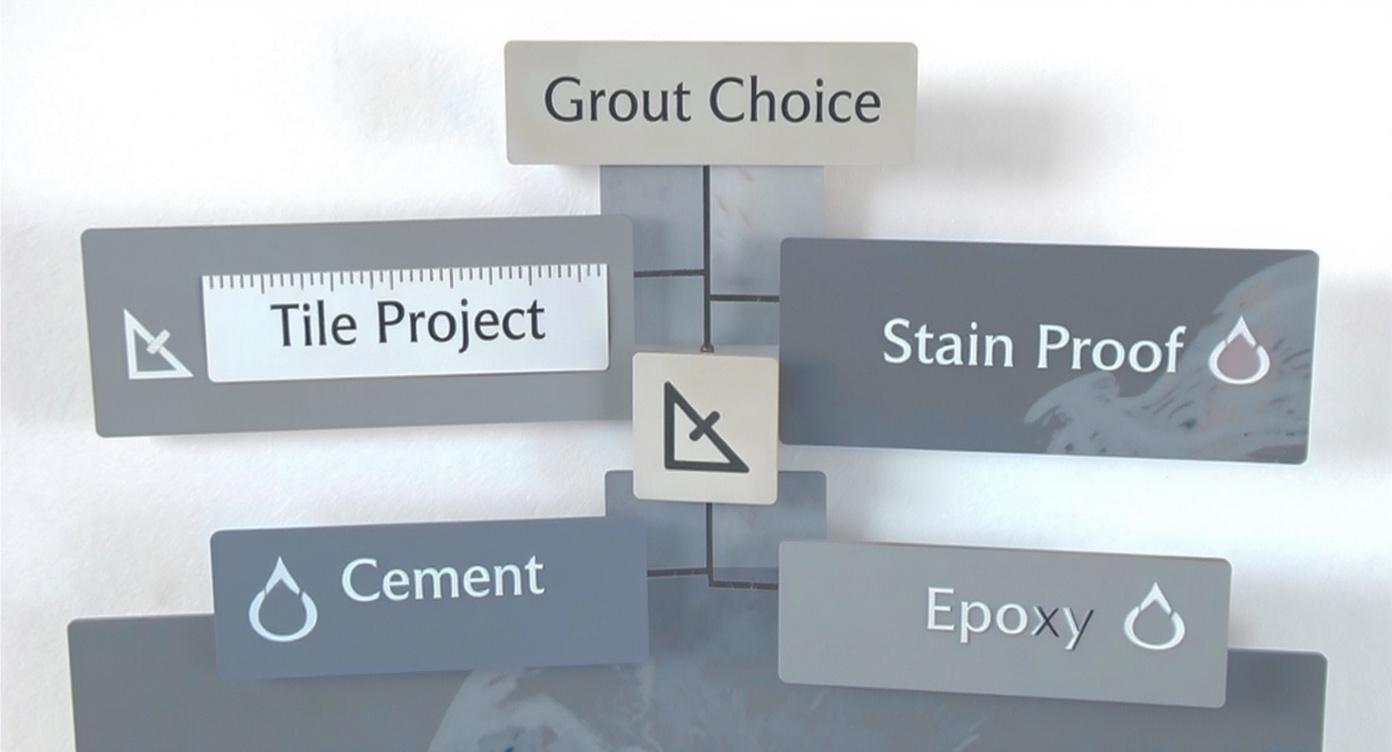
As the graphic shows, a couple of key questions can immediately narrow your options between traditional cement-based grouts and modern epoxy solutions.
The Fight Against Water and Stains
In any bathroom, water is the primary enemy. How your grout handles moisture determines its longevity and cleanliness, and this is where the difference between waterproof and water-resistant becomes crystal clear.
Epoxy grout is inherently waterproof. Its non-porous, resin-based structure forms a solid, plastic-like shield that moisture simply cannot penetrate. Water beads up on its surface instead of soaking in, which is why it's the undisputed champion for shower floors, benches, and niches—areas that are constantly saturated.
Traditional cementitious grout, on the other hand, is porous by nature. It drinks up water like a sponge. To have any chance of surviving in a bathroom, it must be sealed with a high-quality impregnating sealer. While the sealer creates a water-resistant barrier, it's temporary and needs to be reapplied every one to two years to stay effective.
Urethane grout finds a nice middle ground. It's highly water-resistant right out of the bucket and doesn't require sealing, a huge step up from cement. However, it isn't completely waterproof like epoxy, making it a better fit for bathroom floors and walls outside the direct line of fire from the showerhead.
Mold and Mildew Resistance
Where there's moisture, mold and mildew are sure to follow, and porous grout is their favorite breeding ground. For many homeowners, preventing this headache is the single most important factor in their decision.
Epoxy’s non-porous surface gives mold spores nowhere to hide. Since water can't get in, the organic matter and dampness needed for mold to thrive just aren't there. This makes cleaning incredibly simple and keeps your shower looking brand new with minimal effort.
By contrast, unsealed or poorly sealed cement grout is a magnet for mildew. Moisture sinks deep into its pores, creating the perfect dark, damp environment for mold to flourish. Once it takes hold, it can be nearly impossible to fully remove, often leading to permanent, ugly stains.
Key Differentiator: Epoxy’s resistance to mold isn't just an add-on feature—it’s baked into its chemical makeup. It actively prevents growth. Cement grout can only resist it with diligent sealing and maintenance. This proactive prevention is a game-changer for bathroom hygiene.
This superior performance is a big reason why epoxy has become a top choice for bathroom projects. Recent industry data shows that over 60% of professional contractors now recommend epoxy for bathroom tile, citing its unmatched durability and low-maintenance qualities. You can explore more about these professional tiling trends to see how the market is shifting.
Durability and Flexibility
Beyond water, your grout has to withstand physical stress. This includes tiny shifts in your home's foundation, tiles expanding and contracting with temperature changes, and the abrasion from regular cleaning.
Here’s how the different types stack up:
- Epoxy Grout: This stuff is rock-solid. It offers incredible hardness and chemical resistance, making it nearly impossible to crack or chip. It also stands up to the harshest cleaning chemicals without fading or breaking down.
- Urethane Grout: Flexibility is its superpower. Urethane allows for more movement than any other grout, making it a fantastic choice for installations over wood subfloors or in areas prone to slight shifting. This elasticity helps prevent the hairline cracks that often plague more rigid grouts.
- Cementitious Grout: This is the most brittle of the bunch. It's highly susceptible to cracking from subfloor movement or significant temperature swings. While it’s strong under compression, its lack of flexibility is a major drawback in modern homes.
Detailed Grout Performance Matrix for Bathrooms
To bring it all together, this matrix gives you a head-to-head comparison across the most important performance factors for a bathroom. It’s a quick way to see where each grout shines and where its limitations lie.
| Performance Metric | Epoxy Grout | Urethane Grout | Sanded Cement Grout | Unsanded Cement Grout |
|---|---|---|---|---|
| Water Resistance | Waterproof (No sealer needed) | Highly Water-Resistant | Poor (Sealer mandatory) | Poor (Sealer mandatory) |
| Stain Resistance | Excellent (Impervious) | Very Good | Poor (Stains easily) | Poor (Stains easily) |
| Mold/Mildew Proof | Excellent (Non-porous) | Good | Poor (Porous) | Poor (Porous) |
| Durability/Hardness | Excellent (Rock-hard) | Good | Good | Fair |
| Flexibility | Fair | Excellent | Poor (Brittle) | Poor (Brittle) |
| Color Consistency | Excellent (Fade-proof) | Very Good | Fair (Can mottle) | Fair (Can mottle) |
| Best Use Case | Shower floors, walls, benches | Bathroom floors, backsplashes | Wide joints (>1/8") on floors | Narrow joints (<1/8") on walls |
This detailed breakdown makes it clear that choosing the best grout for bathroom tile is entirely situational. For the ultimate in performance and peace of mind in the wettest areas, epoxy is the hands-down winner. However, for applications like a main bathroom floor, urethane provides a compelling, user-friendly alternative that still far outperforms old-school cement.
Matching Grout with Your Bathroom Tile and Design
Choosing the right grout is about more than just picking a color you like. It's a critical decision that balances the technical needs of your tile with the overall design you're trying to achieve. The grout has to be compatible with your tile material and the width of the joints, or you risk everything from scratched tiles to cracked, failing grout lines. Get this part wrong, and the whole project can feel like a letdown.
Before you even glance at a color chart, the first choice is made for you by your tile and joint size. This isn't about personal preference—it's about structural integrity.
Sanded vs. Unsanded: A Non-Negotiable Choice
When it comes to traditional cement-based grouts, the biggest fork in the road is whether or not it contains sand. That one simple ingredient dictates exactly where and how the grout can be used. Using the wrong one can flat-out ruin an expensive tile job.
Here’s how it breaks down:
- Unsanded Grout: Think of this as a smooth, creamy paste. It's the only choice for delicate surfaces that scratch easily, like polished marble, glass tiles, or anything with a high-gloss finish. It’s specifically designed for very tight grout joints of 1/8 inch or less.
- Sanded Grout: For any grout line wider than 1/8 inch, you need the strength that sand provides. The sand acts as an aggregate, giving the grout body and preventing it from shrinking and cracking as it cures. Without it, wider grout lines would just pull away from the tile, compromising the whole installation.
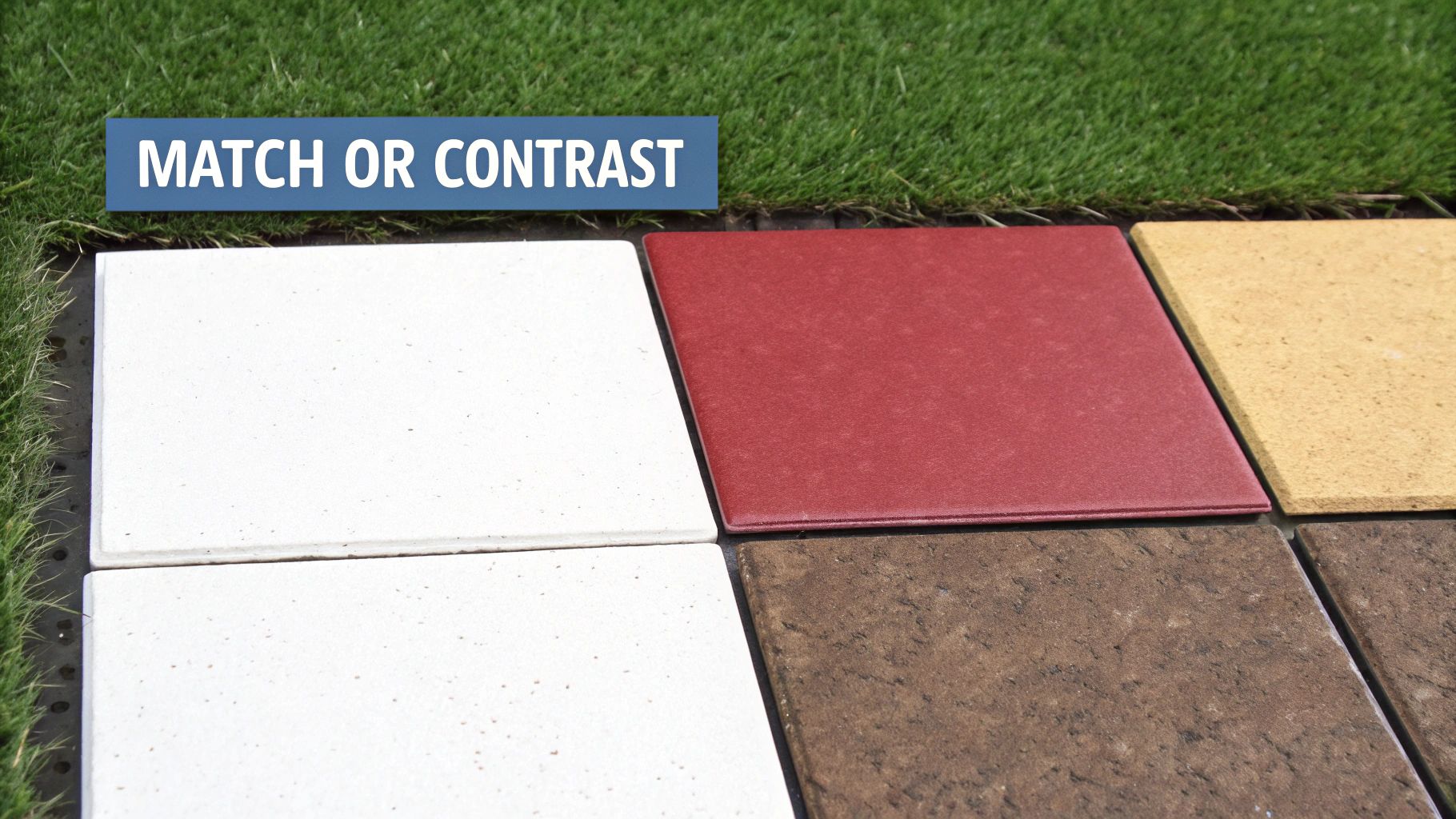
This is your technical starting point. Once you know whether you need a sanded or unsanded formula, you can move on to the fun part: color.
Using Grout Color as a Design Tool
Grout color is one of the most powerful—and most frequently overlooked—design tools you have in a bathroom remodel. It can completely change the look of your tile, making the grout lines either disappear into the background or jump out as a bold, graphic feature. There are really two ways to go.
1. Matching Grout for a Seamless Look
If you want a serene, unified surface where the tile is the hero, pick a grout color that’s a close match. This technique helps individual tiles blend together, creating the illusion of a single, continuous wall or floor. This approach works perfectly for making a small bathroom feel bigger and less cluttered, or for showcasing tile with a lot of natural variation, like marble or slate.
A light-colored grout paired with a light tile can give you that airy, spa-like atmosphere. Just be warned: keeping light-colored cement grout looking pristine on a floor takes a lot of work.
2. Contrasting Grout to Highlight Pattern
For a more dramatic effect, choose a grout that contrasts with your tile. This outlines every single tile, emphasizing its shape and the pattern you chose for the installation. Think dark grout with classic white subway tile—it turns the grid itself into a core design element.
Design Insight: A contrasting grout is a fantastic way to celebrate classic tile shapes like hexagons, penny rounds, or subway tiles. It draws the eye to the geometry and craftsmanship of the tile work, adding a ton of character and depth to the room.
Consider this strategy if you want to:
- Make a bold, high-impact statement.
- Showcase a unique tile layout, like a herringbone or basketweave.
- Lean into a vintage or industrial aesthetic.
In the end, the right color comes down to the story you want your bathroom to tell. Are you aiming for a calm, monolithic backdrop or a dynamic, patterned feature? By thinking through both the technical must-haves and the aesthetic possibilities, you’ll land on a grout that doesn’t just protect your tile—it makes the whole design sing.
Breaking Down the Real Cost: Grout Prices and Installation Headaches
When you're figuring out the budget for a tiling project, the price on the grout bucket is just the beginning. The real cost includes the material, sure, but you also have to consider how tough it is to install. A cheap grout that requires a professional to get right can end up costing more than a premium, DIY-friendly option.
Let's look at what you'll really be investing—in both dollars and sweat—for each of the main grout types.
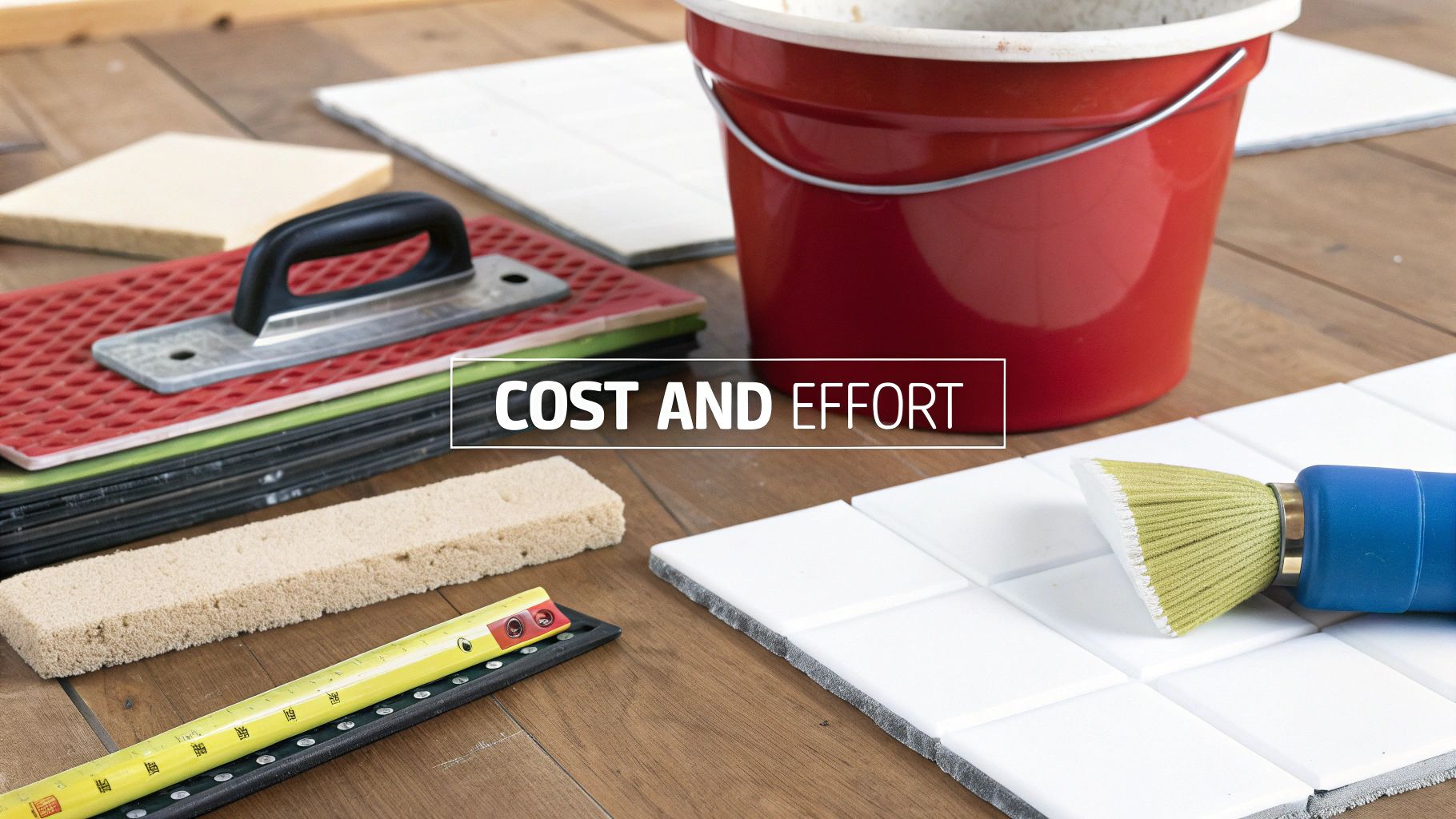
Comparing Grout Material Costs
The sticker price for grout can vary wildly. Your classic cement-based products are easy on the wallet, while high-tech options like epoxy and urethane cost more upfront because of their advanced chemistry and built-in features.
Here's a ballpark breakdown of what the material alone will set you back:
- Cementitious Grout (Sanded & Unsanded): This is your most economical route, usually landing between $0.50 to $1.50 per square foot of tile. It's a great pick for big jobs or if you're on a tight budget, but don't forget you'll also need to buy a good sealer.
- Urethane/Polymer-Modified Grout: This pre-mixed grout is a solid mid-range choice. You can expect to pay around $3.00 to $5.00 per square foot. That extra cost gets you impressive stain resistance and flexibility, and you don't have to seal it.
- Epoxy Grout: As the undisputed champ of performance, epoxy has the highest price tag. The material cost typically runs from $5.00 to $9.00 per square foot. For that price, you get a completely waterproof, stain-proof, and bulletproof finish that will never need a drop of sealer.
DIY Project or a Job for the Pros?
This is where the true cost often reveals itself. The labor and skill required for each grout are worlds apart, which is the biggest factor in deciding whether you can tackle it yourself or need to call in an experienced tile setter.
Cementitious Grout: A Classic DIY Project
Working with traditional cement grout is a rite of passage for many homeowners. You mix it up yourself, and it has a long working time, which means you won't feel rushed while you pack the joints and clean the haze off the tile faces. It’s pretty forgiving, making it a perfect starting point if you're new to tiling.
Epoxy Grout: A Pro-Level Challenge
Epoxy is a whole different beast. It's a two-part chemical mix, and the clock starts ticking the second you combine them. You have a very small window to get it applied and cleaned up before it cures.
Critical Insight: The make-or-break moment with epoxy is the cleanup. Any residue left on the tile surface has to be wiped away before it begins to harden. If you miss that window, you’ll be left with a permanent, plastic-like film that’s next to impossible to scrub off without ruining your new tile.
This race against time demands speed, a steady hand, and years of experience. That’s why we almost always recommend hiring a professional for epoxy jobs. The extra labor cost is a smart investment to prevent a permanent and expensive mistake.
Urethane Grout: The Confident DIYer's Upgrade
Urethane hits that sweet spot right in the middle. It comes pre-mixed, so you don't have to worry about getting the consistency right, and it gives you more time to work than epoxy. Cleanup is also far less stressful. If you’ve successfully used cement grout before and are feeling confident, urethane is a totally manageable step up. This makes it a fantastic choice when you're looking for the best grout for bathroom tile and want to do the work yourself.
Your Grout Solution in Southwest Michigan
If you live anywhere from Kalamazoo to the St. Joseph shoreline, you know that Southwest Michigan homes have their own unique set of challenges. Between the lake-effect humidity and our notoriously hard water, bathrooms can take a real beating. The right grout isn't just a minor detail—it's your first line of defense against our local climate.
That constant humidity can turn standard cement grout into a perfect home for mold and mildew, a problem we see all the time. On top of that, the high mineral content in our water leaves behind that chalky residue that can permanently stain and eat away at traditional grout. Choosing the best grout for bathroom tile in our area means picking a material that can stand up to these specific issues.
Your Local Bathroom Renovation Experts
This is where having a local pro in your corner really matters. Here at Trademaster, we've been remodeling bathrooms across Portage, Kalamazoo, and all the surrounding towns for years. We’ve seen firsthand how a premium, non-porous grout like epoxy holds up in local homes. It creates a waterproof barrier that moisture and mineral buildup just can't get through, keeping your tile looking brand new.
We don't just lay tile; we build lasting solutions designed for the Southwest Michigan climate. Our team walks you through the options, making sure your choice not only looks great but also delivers the kind of durability your home needs.
A bathroom remodel is a big investment in your home’s value and your everyday comfort. Choosing a grout that’s built for our region’s conditions protects that investment from staining, water damage, and premature aging, giving you a beautiful bathroom that actually lasts.
We believe a great project comes down to two things: smart material choices and perfect execution. If you’re tired of scrubbing stubborn grout lines or are planning a new bathroom that you want to stand the test of time, we're here to help. We bring meticulous craftsmanship and deep local knowledge to every job, delivering a renovation that’s as beautiful as it is functional.
Ready to start your project with confidence? Schedule a consultation with Trademaster today, and let’s build a bathroom that’s perfect for your Southwest Michigan home.
Common Questions We Hear About Bathroom Grout
Even after you've weighed all the options, a few specific questions always seem to come up just before you pull the trigger. We get it. To help you feel completely confident in your choice, let's tackle the most common things homeowners ask us about picking the right grout for bathroom tile.
Do I Really Have to Seal Bathroom Grout?
That all depends on what kind of grout you're using. If you go with a traditional cement-based grout—sanded or unsanded—then yes, sealing is an absolute must. Cement is porous by nature, meaning it will soak up water like a sponge, which is a recipe for stains and mildew. A good sealer creates a protective shield, but you'll need to reapply it every 1-2 years.
On the other hand, if you invest in epoxy grout, you can cross sealing off your to-do list for good. Epoxy isn't porous at all. It cures into a solid, plastic-like material that’s completely waterproof and stain-proof from the get-go. This is a huge part of why we consider it the hands-down winner for wet-heavy spots like a shower floor.
What’s the Best Way to Clean Grout?
Be careful here—going too aggressive with cleaning can cause more problems than it solves. Harsh chemicals like bleach or acid-based cleaners are terrible for cement grout. They'll eat away at both the grout and its sealer, leading to discoloration and permanent damage over time.
For everyday cleaning, a simple mix of warm water and a pH-neutral cleaner is all you need. Grab a soft-bristle brush (an old toothbrush is perfect) and give the lines a gentle scrub. If you've got a tougher stain, a paste made from baking soda and water is a great trick that won't be too abrasive.
Our Pro Tip: The best way to keep grout clean is to not let it get dirty in the first place. After every shower, take 30 seconds to run a squeegee over the walls. It makes a world of difference by preventing the moisture and soap scum buildup that leads to dingy, stained grout lines.
Can I Just Change the Color of My Old Grout?
You can, but the results can be a mixed bag. You've really got two paths you can take.
- Grout Paint or Stain: These are basically epoxy-based paints that you apply right over your existing grout lines. It's a decent way to cover up old stains and give the tile a fresh look. The big catch? It’s a very tedious job, and in high-traffic or constantly wet areas, the paint will eventually start to chip and peel away.
- Grout Removal and Replacement: This is the real-deal, long-term solution. It involves grinding out the old grout with a special tool and then applying fresh grout in the color you want. It's definitely more work, but the result is professional, permanent, and will last for years.
Staining can work as a short-term facelift, but for a lasting change, replacing the grout is the only way to go.
If you're mapping out a bathroom renovation and want to get every single detail right—from the tile to the perfect grout—the experts at Trademaster Construction are here to help. We bring years of hands-on experience in Southwest Michigan to every project. Schedule a consultation with Trademaster today.

