Choosing the best tile for a kitchen backsplash is all about striking the right balance between your personal style, your budget, and the realities of your daily life. While there isn't one perfect tile for every kitchen, classic choices like ceramic and porcelain subway tiles remain popular for good reason—they look great, they last, and they're easy to live with.
Finding the Perfect Backsplash Tile for Your Kitchen
A kitchen backsplash has to do two jobs, and it has to do them well. First, it must protect your walls from the inevitable splatters and spills of a busy kitchen. Second, it's a huge design feature that pulls the entire look of the room together. Making that choice can feel a bit overwhelming, but it gets a lot easier once you know what each material really brings to the table.
The trick is to find a tile that not only looks great with your countertops and cabinets but also stands up to how you actually use your kitchen. This guide cuts through the noise to give you a clear, practical way to compare your options and make a decision you'll be happy with for years to come.
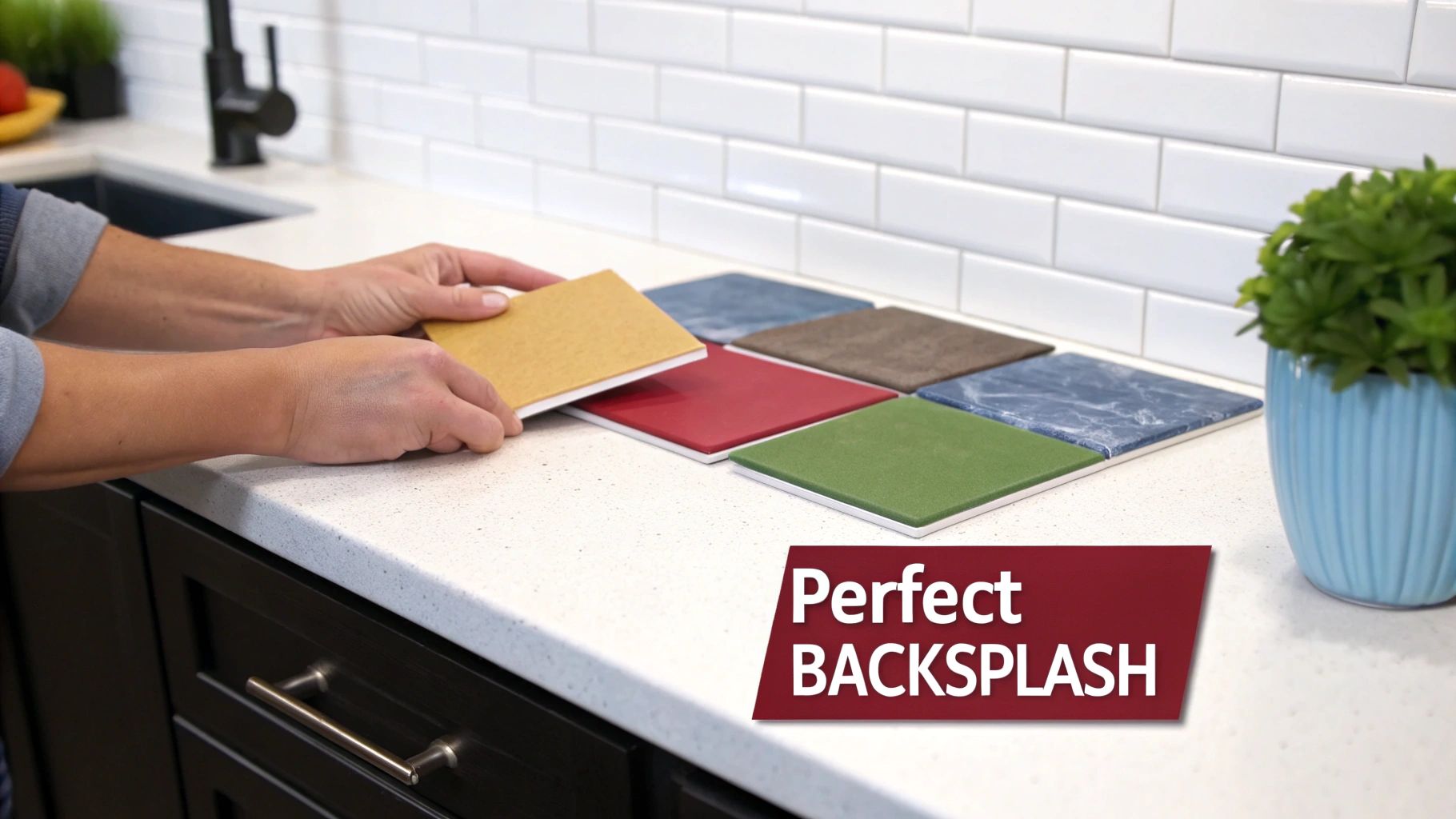
A Quick Overview of Top Choices
Let's start with a bird's-eye view. Think of this as your quick reference guide for figuring out which materials are a good fit for your main priorities, whether that's sticking to a budget, getting something incredibly durable, or creating a show-stopping visual.
- Ceramic Tile: This is the tried-and-true classic for a reason. Ceramic tile comes in an endless variety of colors, shapes, and patterns, and it's almost always the most budget-friendly option. It's the perfect canvas for nearly any design.
- Porcelain Tile: Think of porcelain as ceramic's tougher older sibling. It's fired at a higher temperature, which makes it denser and less porous. That means it’s fantastic at resisting stains, water, and heat—a real workhorse for a serious cook's kitchen.
- Glass Tile: Nothing beats glass for bouncing light around a room. If you want to make your kitchen feel brighter and bigger, this is your best bet. Plus, its non-porous surface is a breeze to wipe clean.
- Natural Stone: Materials like marble, slate, or travertine bring a unique, earthy elegance that can't be replicated. Each tile is one-of-a-kind. The trade-off is that they're porous and need regular sealing to prevent stains.
The most successful backsplash designs are those that harmonize with existing elements. Your tile should feel like a natural extension of your countertops and cabinets, not an afterthought.
The table below breaks down these key differences to help you quickly narrow down the field.
Quick Comparison of Popular Backsplash Tiles
This table gives you a high-level summary of the leading backsplash materials, comparing them across key features to help you quickly see which options align with your priorities.
| Tile Material | Average Cost (Per Sq. Ft.) | Durability Rating | Maintenance Level | Ideal For |
|---|---|---|---|---|
| Ceramic | $2 – $20 | Good | Low | Budget-friendly projects and creative designs. |
| Porcelain | $3 – $30 | Excellent | Very Low | High-traffic kitchens needing maximum durability. |
| Glass | $10 – $40 | Good | Very Low | Modern kitchens and spaces needing more light. |
| Natural Stone | $10 – $50+ | Varies | High | Luxury designs with an organic, unique aesthetic. |
As you can see, the right choice really depends on what you value most—cost, toughness, or a specific look.
A Deeper Look at Top Backsplash Materials
Now that we’ve covered the basics, let’s get into the nitty-gritty of what makes each of these popular backsplash materials work in a real kitchen. Choosing the best tile for kitchen backsplash installations means looking past the surface and understanding the subtle but crucial differences in performance, looks, and long-term care. We’re going to break down the four biggest players—ceramic, porcelain, glass, and natural stone—to give you a complete picture.
This is about more than just cost. It's about knowing how each material will handle day-to-day life in your kitchen. From shrugging off spaghetti sauce splatters to catching the morning light just right, the tile you choose can genuinely make your kitchen a better place to be.
Ceramic Tile: The Versatile and Budget-Friendly Classic
There's a good reason ceramic tile is the undisputed champ of kitchen backsplashes. Its incredible versatility means it can be shaped, glazed, and colored to fit almost any style you can dream up, from rustic, handmade tiles to sleek, uniform modern ones. That flexibility, paired with a price tag that’s hard to beat, makes it the go-to for countless homeowners.
Ceramic's secret lies in its clay-based composition, which is fired at a lower temperature than porcelain. This makes it softer and easier to cut, which can often bring down labor costs. It's also why ambitious DIYers often gravitate toward it for their own projects.
Its popularity isn’t just anecdotal. Ceramic tile consistently leads the pack in kitchen remodels across the country. In a recent industry survey, a whopping 34% of homeowners who were remodeling their kitchens chose ceramic tile for the backsplash, cementing its top-dog status. You can see more homeowner preferences broken down by Statista.
Key Takeaway: Don't mistake "affordable" for "boring." Modern glazing technology has given ceramic an immense range of finishes. You can get high-gloss tiles that brighten up a dark corner or textured matte finishes that are fantastic at hiding fingerprints and water spots. There's a ceramic solution for almost any design vision.
Porcelain Tile: The Durable Workhorse
Think of porcelain as ceramic’s tougher, more worldly older sibling. It’s also made from clay, but the clay is more refined and it’s fired at scorching-hot temperatures. This process results in a tile that is incredibly dense, far less porous, and exceptionally durable.
That density is porcelain’s superpower. With a water absorption rate of less than 0.5%, it’s practically waterproof, making it a stellar choice for that hard-working zone behind your sink and stove. It’ll laugh off stains from acidic things like tomato sauce or wine, and it won't be bothered by the heat coming off your cooktop.
Yes, it costs a bit more than standard ceramic, but that extra investment buys you serious longevity and peace of mind. Its robust nature means it’s much less likely to chip or crack, ensuring your backsplash looks brand new for decades with very little effort. For a high-traffic family kitchen where durability is everything, porcelain is often the best tile you can choose.
Glass Tile: The Modern Light-Reflecting Beauty
If your main goal is to make your kitchen feel brighter, bigger, and more contemporary, then glass tile is a fantastic choice. Its signature move is the way it plays with light. The translucent and reflective qualities capture both natural and artificial light, bouncing it around the room to create a sense of spaciousness and a touch of glamour. It can be a real game-changer in a smaller kitchen.
Glass is completely non-porous, which is a huge plus. This means it’s stain-proof and ridiculously easy to clean—a quick spritz of glass cleaner and a wipe is all it takes to handle grease and grime. It also comes in a dizzying array of colors, sizes, and formats, from tiny mosaics that form intricate patterns to large, sleek subway tiles.
There is a trade-off, though. Glass is more brittle than ceramic or porcelain, so it's more susceptible to chipping or cracking from a sharp impact. Even more critical is the installation; it really demands a skilled hand. Because the tile is transparent, every little imperfection in the adhesive behind it will show through. A flawless, professional installation is non-negotiable if you want that high-end look. For a deeper dive into all the material options, this guide on the top types of tile for backsplash is a great resource.
Natural Stone: The Unique and Luxurious Statement
When you want a look that is truly one-of-a-kind and exudes luxury, nothing comes close to natural stone. Materials like marble, travertine, slate, and granite bring an organic, earthy elegance into a kitchen that simply can't be replicated. Every single tile has its own unique veining, color variations, and texture, guaranteeing your backsplash is like no other.
Marble, with its classic and sophisticated look, has always been a favorite for high-end kitchens. Travertine offers a warmer, more rustic charm, while slate can deliver a darker, more dramatic, and textured feel.
But that undeniable beauty comes with a serious commitment to maintenance. Stone is porous, which means it will soak up liquids and stain if you’re not careful.
- Sealing is mandatory: A natural stone backsplash must be sealed right after installation and then resealed periodically—usually about once a year—to protect it from stains.
- Watch out for acids: Things like lemon juice, vinegar, or even some harsh cleaners can etch the surface of stones like marble and travertine, leaving a dull spot.
- Gentle cleaning only: Forget abrasive cleaners. You'll need to stick to pH-neutral stone cleaners to keep both the stone and its sealant in good shape.
Ultimately, choosing natural stone is a lifestyle decision. If you value its unparalleled beauty and are ready to commit to the upkeep, it just might be the perfect tile for your kitchen.
Comparing Tile Performance Head to Head
Choosing the right tile for your kitchen backsplash is about more than just what catches your eye in the showroom. It's a very practical decision. You really have to think about the trade-offs between different materials and how they'll hold up to the way you actually live and cook.
We’re going to break down the top contenders—ceramic, porcelain, glass, and natural stone—across four make-or-break categories. This direct comparison will help you figure out what truly matters for your kitchen, whether that’s bomb-proof durability, a wipe-and-go cleaning routine, or staying on budget.
Durability and Longevity
Let’s be honest, a kitchen backsplash takes a beating. It’s right there in the line of fire, dealing with heat from the stove, splatters from sizzling pans, and the occasional bump from a heavy pot. How well a material stands up to that daily wear and tear is critical.
When it comes to pure toughness, porcelain tile is the clear winner. It’s fired at incredibly high temperatures, which makes it super dense, hard, and almost completely non-porous. That process gives it amazing resistance to heat, scratches, and chips. Porcelain is a true “set it and forget it” choice that will look just as good in ten years as it does on day one.
Ceramic tile is no slouch, either. It’s plenty durable for most kitchens. However, it is a bit softer than porcelain, making it slightly more likely to chip if you hit it just right with something heavy. Glass tile handles heat well, but it can be brittle. A direct hit from a cast-iron skillet could definitely cause a crack, so it might not be the best pick for a super high-traffic kitchen.
Natural stone, like marble or travertine, is a more complicated story. While some stones are very dense and durable, softer varieties like marble can easily be scratched or etched by acidic things like lemon juice or tomato sauce. Their longevity really depends on diligent sealing and how careful you are during daily use.
Expert Insight: Durability isn't just about preventing cracks. It’s also about how the tile's finish holds up. A high-quality glaze on a ceramic tile can make its surface nearly as tough as porcelain, helping it resist stains and heat just as effectively.
Maintenance and Cleaning
Kitchens get messy. That's a fact of life. Your backsplash should be an ally in the cleanup, not another chore. The most important factor here is porosity—basically, how much liquid a material can soak up.
Glass and glazed porcelain tiles are the undisputed champions of easy cleaning. Their surfaces are completely non-porous, which makes them essentially stain-proof. A quick wipe with a damp cloth is all it takes to handle grease and food splatters. Perfect for the avid home chef.
Glazed ceramic tile is right behind them and is also a breeze to clean. The only potential headache is the grout lines, but you can get around that by using larger format tiles or upgrading to a stain-resistant epoxy grout.
Natural stone is on the complete opposite end of the spectrum. Because it's porous, it absolutely must be sealed regularly to stop oils, wine, or sauces from seeping in and leaving a permanent mark. You also have to be careful to use pH-neutral cleaners so you don't damage the stone or the sealant. It's a gorgeous look, but it demands a real commitment to upkeep.
To make this even clearer, we’ve put together a scorecard to rate how each material performs on the key metrics that matter most day-to-day.
Backsplash Material Performance Scorecard
This scorecard rates popular tile materials on a scale of 1 (Poor) to 5 (Excellent) across critical performance metrics, giving you a quick visual reference for comparison.
| Material | Durability | Stain Resistance | Ease of Cleaning | DIY-Friendliness |
|---|---|---|---|---|
| Ceramic | 4 | 4 (glazed) | 4 | 5 |
| Porcelain | 5 | 5 (glazed) | 5 | 3 |
| Glass | 3 | 5 | 5 | 2 |
| Natural Stone | 3 | 2 (unsealed) | 2 | 2 |
As you can see, porcelain and glazed ceramic offer the best all-around performance for a busy kitchen, while natural stone requires the most TLC.
Cost and Installation
The final price tag for your backsplash isn’t just the cost of the tile. You also have to factor in installation materials like adhesive and grout, plus the cost of professional labor. These costs can swing dramatically depending on the material you choose.
- Ceramic Tile: Typically the most budget-friendly option, both for the tile itself and the installation. It's softer and easier to cut, which means less time and labor expense.
- Porcelain Tile: Sits comfortably in the mid-range. The tile is a bit more expensive than ceramic, but the real cost difference comes from installation. Its hardness requires special tools for cutting, which can drive up labor costs.
- Glass Tile: Often considered a premium material with a wide price range. Installation is tricky—a pro needs to know how to hide the adhesive—so labor is a significant part of the budget.
- Natural Stone: Usually the most expensive route. The materials themselves are pricey, and the installation demands an expert who can handle, cut, and seal the stone properly, leading to higher labor charges.
There's a reason porcelain's popularity is surging. It hits a sweet spot between performance and value, making it a go-to upgrade from standard ceramic. To put its growth in perspective, porcelain is the fastest-growing segment in the U.S. ceramic tile market, which is projected to nearly double by 2034. You can dig into the U.S. ceramic tile market trends to see how its superior strength and moisture resistance are driving this shift.
Style and Aesthetics
Of course, your backsplash has to look great and tie your whole kitchen design together. Each material brings its own unique vibe to the table.
Ceramic tile is the ultimate chameleon. It comes in a limitless array of colors, patterns, and handmade-look textures that are perfect for modern farmhouse, traditional, or eclectic styles. Porcelain is a master of disguise, offering incredibly realistic wood, concrete, or stone looks without any of the maintenance headaches, making it a great fit for modern and industrial spaces.
With its ability to reflect light, glass tile is a natural choice for contemporary, coastal, or minimalist kitchens where the goal is to create a bright, airy feel. And for pure, organic beauty, nothing beats natural stone. It's ideal for luxurious, traditional, or rustic designs where its one-of-a-kind veining and texture can become a stunning focal point.
The chart below shows where homeowner preferences lie, revealing a strong tilt toward the practicality and versatility of ceramic and porcelain.
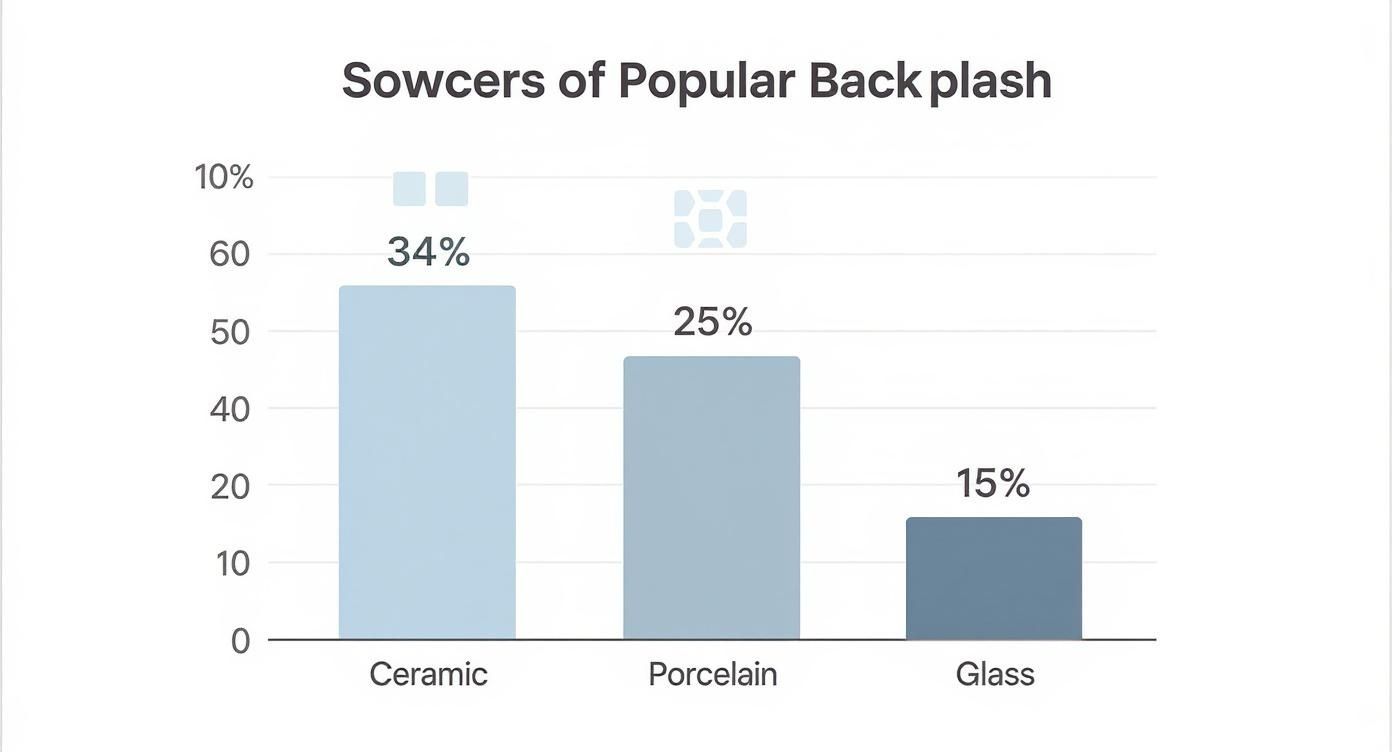
This data shows that while there are many beautiful options out there, most homeowners ultimately land on materials that provide a proven mix of style, durability, and everyday value.
Matching Your Backsplash to Your Lifestyle
The perfect kitchen backsplash isn't just about what looks good on a showroom wall. It's about finding a material that can truly live in your home. A beautiful backsplash that can't handle the reality of your day-to-day is, frankly, a design failure. The right choice should feel like a natural extension of your routine, whether you're a five-star home chef, a parent juggling a million things, or a design-forward host.
To get this right, you have to be honest about how you use your kitchen. A tile that works beautifully for a meticulous homeowner living alone might be a constant source of stress for a family with young kids. Let's walk through a few common scenarios and pinpoint the best tile for each, so you can find a solution that’s both stunning and practical.
The Busy Family Kitchen
For a kitchen that doubles as the family command center, durability and easy cleanup aren't just nice-to-haves—they're essential. This space has to endure everything from splattered spaghetti sauce and juice spills to the chaos of a rushed weekday breakfast. Your backsplash needs to be a fortress, ready to repel stains and make tidying up simple.
This is where porcelain tile really proves its worth. Its surface is incredibly dense and non-porous, making it virtually stain-proof and resistant to bacteria. A quick wipe is usually all it takes to handle most messes, which saves you precious time. Going with large-format porcelain tiles is an even smarter move, as it dramatically reduces the number of grout lines—the main place where grime loves to hide.
- Top Choice: Glazed porcelain tile, especially in a larger format like 4×12 or bigger.
- Why it Works: It offers top-tier resistance to stains, heat, and scratches, ensuring it stays looking new despite the beautiful chaos of family life.
- What to Avoid: Porous natural stone like unsealed marble. It will stain easily and demands constant, careful maintenance that most busy families just don't have time for.
The Budget-Conscious Remodel
A stylish kitchen update doesn't have to break the bank. When you're working with a tight budget, the name of the game is finding a material that delivers maximum visual punch for a minimal cost. You need a tile that's affordable, versatile, and looks far more expensive than it actually is.
The classic ceramic subway tile is the undisputed champion here. It's consistently one of the most affordable options out there, but its timeless look means it never feels cheap. With a massive range of colors and finishes available, it can slot into nearly any design, from ultra-modern to traditional.
When your budget is the main consideration, stick with timeless shapes and neutral colors. A classic white 3×6 ceramic subway tile not only saves you money on materials but also creates a clean, bright backdrop that can actually boost your home's resale value.
Because ceramic is a bit softer and easier to cut than porcelain, installation costs can often be lower, too. It’s a smart, stylish choice that keeps your project on track financially without cutting corners on design.
The Luxury Gourmet Kitchen
For the passionate home cook who treats their kitchen like a creative studio, the backsplash is an opportunity to make a serious statement. In this kind of space, high-end aesthetics and premium performance are equally important. The goal is to select a material that signals a real commitment to quality and elevates the entire room.
This is where options like a full-height marble slab or an intricate glass mosaic create an unforgettable focal point. A seamless slab of veined marble is pure luxury, completely eliminating grout lines for a clean, dramatic sweep of stone. While it does require sealing and mindful cleaning, its unique, organic beauty is simply unmatched for a high-end design.
Alternatively, a custom glass mosaic can serve as a true piece of art, adding texture, color, and a shimmering quality that plays beautifully with light. These materials tell a story—that this kitchen is more than just a functional room; it’s a curated environment built for creating and entertaining at the highest level.
The Modern Farmhouse Aesthetic
The modern farmhouse style is all about that perfect balance of rustic charm and clean, contemporary lines. The backsplash is critical for getting this right, acting as a bridge between weathered wood tones and sleek, modern finishes. The trick is to choose a tile with a bit of texture and a sense of history.
Handmade-look ceramic tiles are a fantastic choice for this. Their subtle imperfections—the slightly uneven edges and minor variations in the glaze—give them a warm, artisanal character that you just don't get from mass-produced tiles. When laid in a classic subway pattern, they provide a textural backdrop that feels both authentic and sophisticated.
Another great option is a beadboard-style tile. This choice mimics the look of traditional wood paneling but gives you the durability and water resistance of ceramic or porcelain. It perfectly captures that cozy, rustic feeling while being practical enough for a real kitchen, hitting that modern farmhouse sweet spot.
Getting the Grout and Finishing Touches Right
You've picked the perfect tile for your kitchen backsplash—that's the big decision. But the project's real success? That comes down to the details. The grout, the sealer, and the edge treatments are what elevate a good tile installation into a great one that looks polished and stands up to daily life.
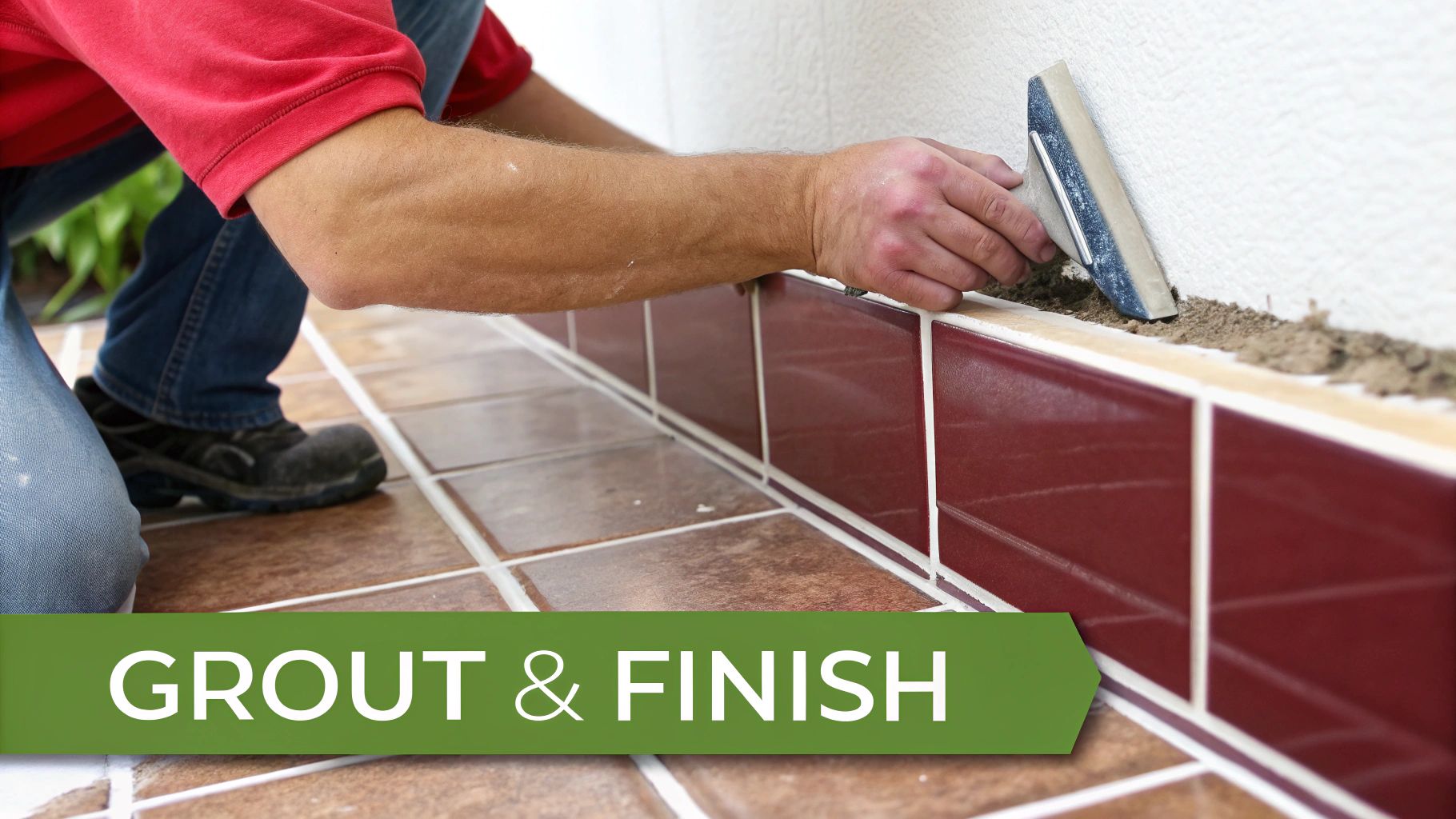
Don't treat these as an afterthought. Skimping here can seriously undermine your beautiful new tile, leading to cleaning headaches and a less-than-professional finish.
Choosing the Right Grout
Grout isn't just filler; it's the structural glue that locks your tiles in place and completes the overall aesthetic. You're generally looking at two main players: traditional cement-based grout and modern epoxy grout.
Cementitious grout is the classic, go-to option. It's affordable and familiar to most installers. However, it's naturally porous, meaning it will soak up spills and stains unless it's sealed. For a kitchen, I always recommend springing for a high-performance formula with built-in stain resistance.
Then there's epoxy grout. This stuff is a game-changer. It's a resin-based system that is completely non-porous, so it never needs sealing. It’s practically bomb-proof against stains and harsh cleaning chemicals, making it a fantastic choice for that hard-working area behind the stove. The trade-off is a higher price tag and a more demanding installation process, but the long-term performance is often worth it.
Pro Tip: Grout color can completely transform the look of your tile. Want the tile pattern to pop? Use a contrasting color, like a dark gray grout with white subway tile. Prefer a more subtle, unified look? A matching color will blend the grout lines, creating a seamless feel that can make a small space appear larger.
Sealing and Protecting Your Tile
For some tile materials, sealing isn't just a suggestion—it's absolutely critical. This is non-negotiable for natural stone like marble, travertine, or slate. These materials are naturally porous and will act like a sponge for things like wine, oil, and coffee, leaving you with permanent stains.
A quality impregnating sealer works by penetrating the stone to block liquids without altering the finish. This needs to be done right after installation and then re-applied periodically, usually about once a year, to keep the protection strong. Over time, even the best tiles can show wear; knowing the top solutions for discolored kitchen tiles can help you keep your investment looking its best.
Even some matte-finish ceramic or unglazed porcelain tiles can benefit from a sealer. It just makes them that much easier to wipe clean. When in doubt, always follow the tile manufacturer's specific guidelines.
Professional Finishing and Edge Treatments
The way a tile job ends is just as important as how it begins. Leaving tile edges exposed looks unfinished and leaves them vulnerable to chipping. A professional installer will always use a finishing piece for a clean, durable border.
- Bullnose Trim: A timeless choice where the tile edge is factory-finished with a gentle curve. It provides a soft, complete look.
- Metal Edging: For a more modern and clean-lined aesthetic, metal profiles (often called Schluter strips) are fantastic. They come in finishes like chrome, brass, and matte black to coordinate with your fixtures.
- Caulking: The joint where your backsplash meets the countertop isn't grouted—it's caulked. Using a flexible, waterproof silicone caulk allows for the natural, tiny movements between the two surfaces and prevents water from seeping behind your cabinets.
Paying attention to these final steps ensures your backsplash doesn't just look amazing on day one, but performs flawlessly for years to come.
Frequently Asked Questions About Kitchen Backsplashes
It's one thing to fall in love with a tile, but it's another to live with it every day. Once you start getting serious about a kitchen backsplash, the practical questions always start to surface. Let's tackle some of the most common ones we hear from our clients.
What Is The Easiest Backsplash To Keep Clean?
If you’re looking for a wipe-and-go solution, your best friends are glazed porcelain and glass tiles. Their non-porous, slick surfaces mean that spaghetti sauce and grease splatters have nowhere to hide and can’t soak in. A simple wipe-down is usually all it takes.
Want to make it even easier? Think about the grout. Using larger tiles means fewer grout lines to deal with in the first place. And if you really want to level up, ask us about epoxy grout. It's waterproof and stain-proof, which means you'll never find yourself on your hands and knees scrubbing dirty grout behind the stove.
A large-format porcelain tile paired with epoxy grout is the ultimate combination for a backsplash that's practically indestructible and effortless to clean. It's my go-to recommendation for busy family kitchens.
Are Subway Tiles An Outdated Choice?
Not a chance. It’s easy to think of the classic white 3×6 subway tile as a trend that’s had its moment, but it’s really more of a design staple. Like a great pair of jeans, it’s all about how you style it.
Here’s how we’re keeping the look fresh and modern for today’s kitchens:
- Creative Layouts: Moving beyond the standard brick pattern to a herringbone or a vertical stack bond instantly elevates the look.
- Color and Finish: We're seeing beautiful installations in soft grays, deep greens, and even tiles with a handcrafted, textured finish that adds a ton of character.
- Varied Sizes: Playing with proportions is key. A longer, skinnier tile or a larger format like a 4×12 gives a subtle, contemporary twist to the classic.
How Much Should A New Backsplash Cost?
Thinking about the cost of a backsplash means looking beyond the price tag on the tile. To get a realistic picture of your investment, you need to account for the whole project.
Your total cost will include the tile itself, installation labor, grout, adhesive, and any prep work your walls might need. A straightforward ceramic tile installation might start around $20 per square foot, all in. But if you’re looking at a detailed glass mosaic or a high-end natural stone, that figure could easily climb past $60 per square foot once everything is said and done.
Bringing Your Kitchen Vision to Life
You've made it this far, which means you're well on your way to picking a backsplash that truly fits your home—balancing aesthetics, daily life, and your budget. But choosing the tile is just the first step. The real magic happens in the execution.
Getting the details right, like picking the perfect grout color or ensuring a perfectly level finish, is what separates a decent DIY job from a professional-grade renovation. These final touches are what make your kitchen not just look amazing on day one, but also hold up beautifully for years to come.
A thoughtfully chosen backsplash is the heart of a kitchen’s design. It ties together cabinets, countertops, and your personal style, creating a space that feels uniquely yours.
This is where we come in. At Trademaster Construction, we live for these details. We've spent years guiding homeowners through the final, crucial steps of their kitchen projects, making sure the end result is exactly what they imagined. It all starts with a simple conversation where we get to know you and your vision. From there, we handle the technical side, guaranteeing a flawless installation that lasts.
Let us worry about the complexities. You just focus on how you'll enjoy your stunning new kitchen.
Ready to get started? The expert team at Trademaster Construction is here to help you create the kitchen of your dreams. Contact us today to schedule your consultation.