You're standing in a Portage kitchen that still works, technically. The cabinets are dated, the bathroom down the hall feels tired, and every contractor website starts to blur together after ten minutes. That's usually when homeowners make the first bad move, they call whoever's easiest to find instead of whoever can handle the job.
If you want a remodel that holds up in Southwest Michigan, you need a real plan before you start dialing. Kitchen and bathroom specialists are not interchangeable with general handymen, and they're not all equal on scheduling, permits, or finish quality. The difference shows up later, when the dust settles, the invoices arrive, and you find out whether you bought a clean project or a long headache.
The market is real and established. NKBA estimated about 10.2 million kitchen remodel or replacement projects and 14.2 million bathroom remodel or replacement projects in 2015, and roughly 66% of kitchen projects and 58% of bathroom projects were hired out to professionals, which tells you specialists do the heavy lifting on these jobs (NKBA survey coverage). That matters here in Kalamazoo and Portage, where a remodel lives or dies on execution, not showroom photos.
Before You Call Anyone
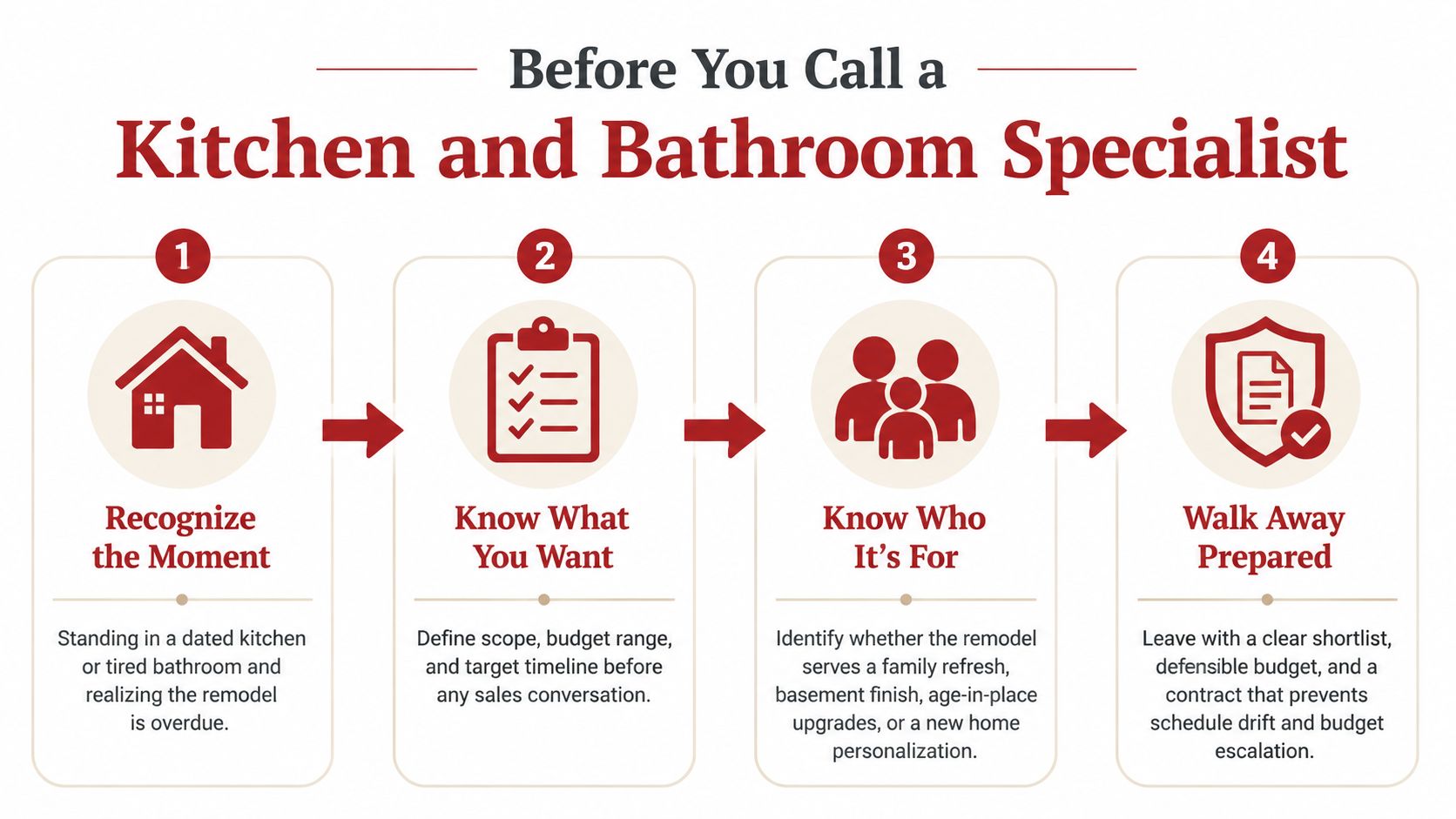
Standing in a dated bathroom or a kitchen that's missing storage in all the wrong places, it's tempting to start with Google. Don't. Start with your own house, your own budget, and the exact problem you're trying to solve.
Write down what's actually broken
A cosmetic refresh is one thing. A layout change is another. A full gut is a different animal entirely, and it pulls on plumbing, electrical, scheduling, and often permits. If you can't say which one you want, every estimate you get will be muddy.
Use this simple filter before you contact anyone:
- Scope: What's staying, what's changing, and what has to go.
- Budget range: Not a fantasy number, a real range you can live with.
- Timeline: When you want work to start, and how flexible you are if materials run slow.
That first bit of homework keeps you from getting sold on features you don't need. It also keeps the conversation honest when a specialist starts talking labor, lead times, and finish choices.
Know who the project is for
A remodel for a family with young kids doesn't look like a remodel for someone planning to age in place. A basement finish doesn't need the same kitchen-level finish decisions. A new buyer personalizing a house has different priorities than someone trying to stay put for the long haul.
Practical rule: if you can't describe the homeowner in one sentence, you're not ready to hire yet.
That clarity saves money and frustration later. It also helps you speak like a serious client instead of a shopper with a vague wishlist, and specialists notice the difference immediately.
Plan the Project Before You Plan the Hire
A good remodel starts with numbers that make sense. For bathrooms, a 2026 benchmark puts the national average at about $16,500, with most projects ranging from $8,000 to $45,000 (USAA Cabinet Store bathroom remodeling benchmark). Kitchens usually require more capital than bathrooms, which is no surprise if you've ever priced cabinets, counters, appliances, and labor together, and a separate market survey found kitchens averaged over £30,000 while bathrooms averaged a little over £9,000 (KBB industry survey).
That gap is useful because it keeps wishful thinking out of the room. If your kitchen budget is built off bathroom math, you're already off track. If your bathroom budget assumes it's just tile and paint, you'll get whiplash when the scope hits.
Set the scope before you set the mood board
Read the room in your own house first. Decide whether you're changing cabinets and tops only, opening walls, relocating plumbing, or doing the whole thing. Then decide what you're willing to live without during construction, because every serious remodel takes over part of your life.
A smart planning stack looks like this:
- Define the project type. Cosmetic, partial, or full gut.
- Set your ceiling budget. Not your preferred budget, your actual ceiling.
- Build in slack. Materials, surprises, and small changes always happen.
- Pick a target window. Then expect some adjustment if the job is real.
If you want a quick ballpark before you call in a specialist, use Trademaster Construction's instant pricing tool and compare that estimate to the scope you wrote down. That's a better first move than asking three companies to guess in three different ways.
For more planning discipline, The Cabinet Coach planning advice is worth reading because it pushes the same basic truth, plan the job before you shop the job.

Don't let lead times ambush you
In Southwest Michigan, the calendar matters. If you wait until you're ready to start before you think about ordering materials, you've already surrendered control. Cabinets, tile, fixtures, and specialty items can turn a tidy schedule into a stalled one if you haven't planned around them.
Write your project down in plain English, then write your money down in plain English. If those two things don't match, don't hire yet.
Build a Shortlist Worth Calling
A real shortlist is three to five names, not fifteen. More than that, and you're not screening contractors, you're collecting noise. Start with local reputation, not lead-gen platforms that hand you anybody with a paid profile.
Look for evidence, not polish
You want kitchen and bathroom specialists who work in homes like yours, in Portage, Kalamazoo, and the surrounding area. Check recent reviews, local projects, supplier relationships, and whether they can show proof of the licenses and insurance required in Michigan. If a company talks well but can't document the basics, move on.
Use this as your first-pass filter:
- Recent local work: Ask to see kitchens or baths they've completed nearby.
- Insurance documentation: Don't accept a verbal promise.
- Scope clarity: Vague scope language usually means vague accountability.
- Deposit requests: Be wary of anyone pushing for a big upfront hit before you've even agreed on details.
That shortlist isn't about finding the cheapest name. It's about finding people who can finish the job without drama.
Ask for one thing that matters
If you're considering painting or refinishing cabinets instead of replacing them, paint choice for kitchen cabinets is a useful reference point for understanding how much finish decisions matter to the long-term look of the room. That kind of detail is exactly why the shortlist has to be built around fit, not just price.
Don't confuse busy with good. A contractor who's booked out can still be disorganized, and a contractor who answers fast can still be weak on follow-through.
The goal here is simple. You want enough confidence to invite a specialist into your house for an estimate, not enough uncertainty to waste your afternoon on a sales pitch.
Interview Questions That Reveal How They Actually Work
A polished estimate can hide a messy process. The test is how a contractor talks about delays, changes, and decisions that come up once the work starts. The remodels that go sideways usually don't fail because the final cabinet door was ugly, they fail because nobody controlled the middle of the job.
Ask about process, not just price
When you interview a specialist, ask these questions directly:
- How do you handle change orders? If the answer is vague, expect confusion later.
- What happens when material lead times slip? Good contractors have a plan, not a shrug.
- Who manages the crew schedule? You want one accountable person, not a rotating cast of excuses.
- How do you protect the home during demo and install? Kitchens and baths are disruptive enough already.
- What's included in your written scope? If it isn't written, it isn't included.
The point is to hear how they think when the project gets difficult. Anyone can sound competent when nothing has broken yet.
Check references like a grown-up
Don't ask past clients whether they “loved everything.” That question tells you almost nothing. Ask whether the job finished close to the expected sequence, whether surprise costs were explained before the bill arrived, and how the contractor handled the stressful middle stretch.
Good reference checks sound boring. You're listening for calm, clear answers about scheduling, communication, and how changes were handled.
The consumer reality is simple. A survey on kitchen and bath satisfaction reported an average overall satisfaction of 8/10, but 55.2% of respondents still ran into unanticipated problems, led by unexpected delays at 53.4%, added costs at 15.5%, conflicts with the designer, dealer, or installer at 13.8%, product shortcomings at 10.3%, and disruption of home life at 8.6% (Kitchen & Bath Design satisfaction survey). That's the playbook right there. The final room can be good and the process can still be messy, which is why you interview for process discipline first.
Permits, Inspections, and the Southwest Michigan Calendar
In Kalamazoo and Portage, the permit question isn't optional if you're doing real work. Licensed contractors usually handle permits, and that's how it should be. If someone suggests skipping that step to save time, they're asking you to buy future problems with your resale and your insurance.
Plan around the calendar, not against it
Winter and spring matter in remodeling because everyone wants the same skilled people at the same time. A smart homeowner assumes the schedule will tighten before it loosens. That doesn't mean panic, it means ordering earlier, approving faster, and giving your contractor room to sequence the work properly.
A typical kitchen or bathroom gut often moves through a rough-in stage, then inspection, then finish work, then final inspection. If one trade falls behind, the rest of the schedule feels it. That's why you should expect the contractor to talk about inspections as part of the job, not as a surprise later.
What you should hear in the first meeting
If the contractor knows the area, they'll speak plainly about local approval steps and inspection timing. They'll also tell you which parts of the project are likely to slow the calendar, and they won't pretend that a demo date automatically means a finish date.
A kitchen table conversation should sound like this:
“We pull the permit, schedule the rough-in, wait for sign-off, then move to finishes.”
If you don't hear that kind of straightforward process, keep looking.
For a visual walkthrough of the permit-and-inspection mindset, watch the embedded video here and compare it to the schedule discussion you're having with each bidder.
The bottom line is simple. A remodel that ignores permits or inspections isn't efficient, it's sloppy. In Southwest Michigan, that sloppiness tends to come back later when you least want it.
Don't Overlook the Age-in-Place Conversation
Bathroom planning in 2026 needs more than a tile board and a fixture list. Homeowners are thinking harder about staying in their homes, and accessibility has moved from niche idea to mainstream remodeling driver. The smart money is on building those features in while the walls are open.
Put the function in early
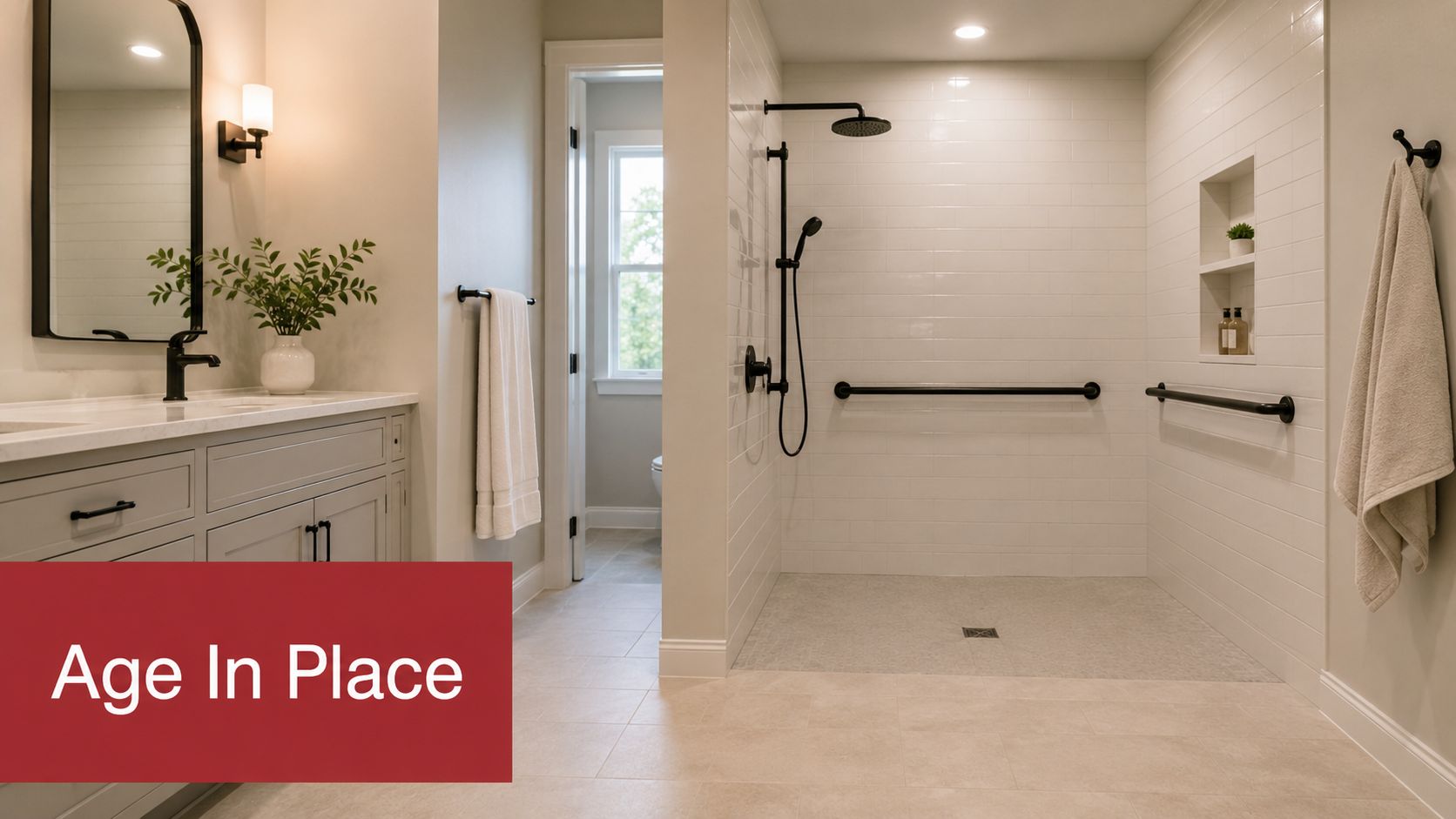
Curbless showers, wider clearances, grab-bar blocking, and comfort-height fixtures are easiest to handle during construction. Waiting until later usually means paying again to open finished surfaces. That's why I'd rather see the blocking in the wall now, even if the bars go in later.
The mistake is treating accessibility like a separate project. It isn't. It's part of a good bathroom design, especially if you want the space to work for aging homeowners, parents helping kids, or anyone who doesn't love stepping over a high curb every morning.
Budget for the future without making it look clinical
You don't need a hospital bath to make a bath safer and easier to live with. You can choose cleaner tile, better lighting, thoughtful shower entry, and sturdy placement for future hardware without making the room look cold. Good specialists know how to hide the utility inside a normal-looking design.
That planning matters because the national benchmark for bathroom remodeling already sits around $16,500, with most projects ranging from $8,000 to $45,000 (USAA Cabinet Store bathroom remodeling benchmark). If you're already spending real money, don't leave the future off the list.
Build for the life you expect, not just the photo you want. That one choice can spare you a second remodel later.
If you're weighing which upgrades deserve budget space, accessibility usually belongs higher on the list than another decorative finish swap. It's quieter, but it pays off longer.
Your Next Step Toward a Remodel You Can Trust
By now you should have three things in hand. A defined scope. A budget that isn't fantasy. A shortlist of specialists worth talking to. That's the point where the project stops being an idea and starts becoming a plan.
Bring that package to the first conversation. Ask for a written estimate that breaks out labor, materials, allowances, and change-order terms. If a specialist won't spell those things out, you're not comparing bids, you're comparing guesses.
If you want a fast starting number before you book an in-home visit, use Trademaster Construction's instant pricing tool and anchor your budget to something concrete. Then call the company, talk through the scope, and see whether their process matches what your house needs.
Trademaster Construction handles kitchen remodeling, bathroom remodeling, and custom tile work for homeowners in Portage, Kalamazoo, and nearby Southwest Michigan communities. If you want a remodel conversation that starts with scope, budget, and real scheduling, visit Trademaster Construction and get your project moving the right way.