A Portage homeowner may be comparing three very different tile decisions at once: a dramatic backsplash for the kitchen, a safer floor for a curbless bathroom, and a durable accent for a finished basement. The most eye-catching mosaic isn't automatically the right choice. Pattern scale, grout contrast, material porosity, slip resistance, cleaning demands, lead time, and total installation cost all need to work together.
These ten mosaic tile design ideas cover kitchens, bathrooms, entryways, basements, and smaller accent spaces across Southwest Michigan. Each one includes practical guidance on scale, grout, durability, accessibility, installation, maintenance, and relative budget tier. The tiers are value, midrange, premium, and custom, not unsupported dollar estimates.
Start with five questions. Which room and surface are you changing? How much natural and artificial light reaches the tile? Will the surface face water, tracked-in grit, food splashes, or heavy foot traffic? How much grout cleaning will your household tolerate? Does anyone need a steadier walking surface, a wheelchair-friendly transition, or a low-contrast pattern?
For broader renovation sequencing, this 2026 home improvement planning guide can help organize the work. Homeowners planning project costs can also use Trademaster Construction's instant pricing tool before discussing scope, materials, and installation.
1. Classic Mediterranean Mosaic Pattern
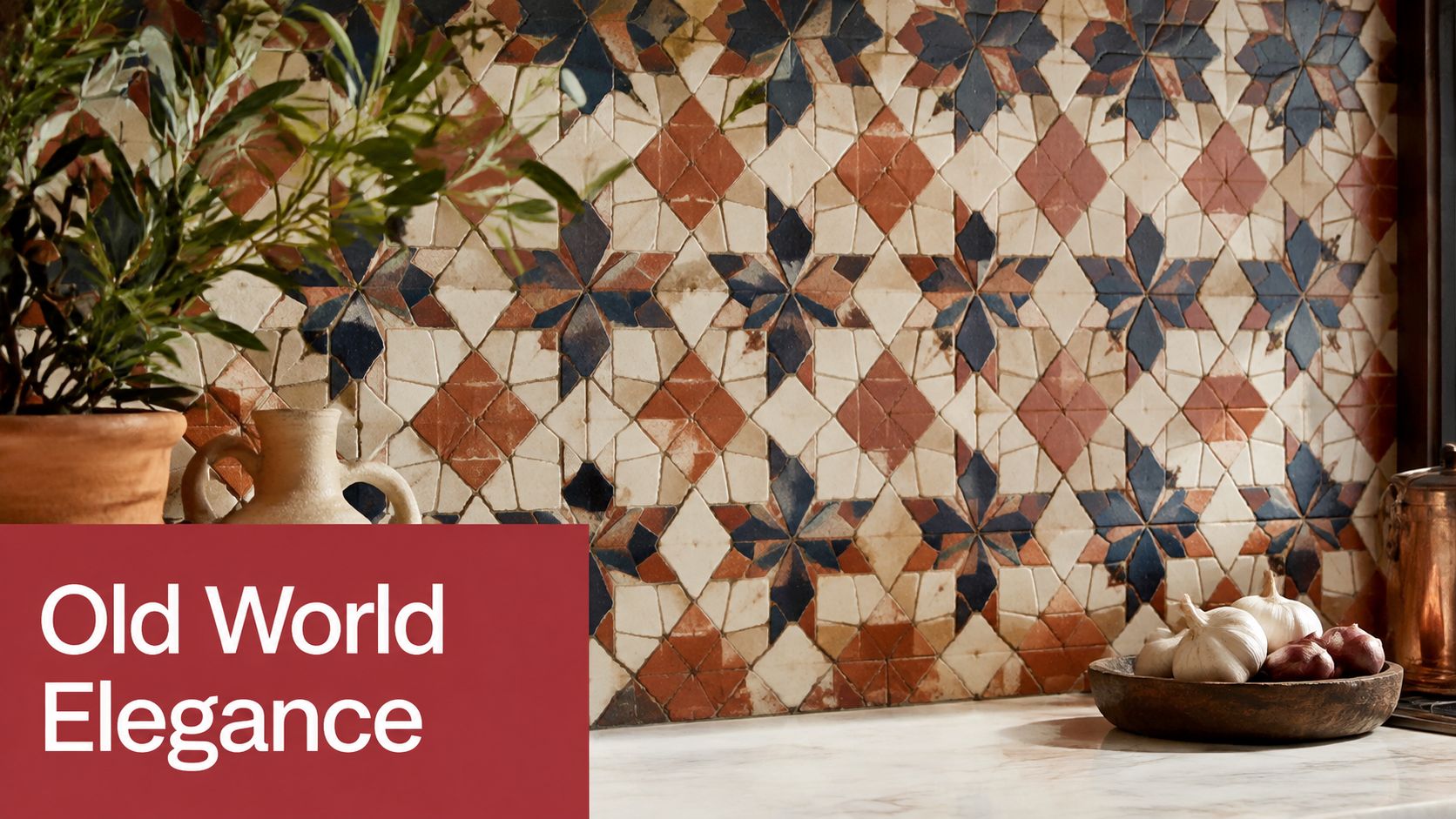
In a Portage kitchen, terracotta, cream, deep blue, and aged stone can turn the backsplash behind a range into a grounded focal point. Roman- and Greek-inspired geometry also suits a Kalamazoo bathroom, especially when the remaining finishes stay restrained. The pattern supplies character without forcing every surface to compete.
Use it where the eye already stops. A range wall, shower niche, decorative floor border, or entryway inset usually gives the design enough presence without covering an entire room. In a finished-basement wet bar, a framed panel adds warmth while keeping installation and cleaning manageable.
Set the layout up for real use
Intricate mosaics demand accurate measuring, dry layout, and careful alignment. The installer should center the motif on the range, vanity, or doorway, then plan edge cuts before setting tile. That preparation matters more with a custom pattern, where an awkward sliver can distract from the whole design.
Neutral grout keeps the geometry clear and reduces visual noise. Porous stone and cementitious grout need an appropriate sealer, followed by prompt cleanup of food splashes and bathroom residue. A lighter grout shows soil sooner, while a dark contrasting grout makes every joint and alignment decision more visible.
For a family bathroom floor, choose honed or textured tile rather than a highly polished surface. It offers a calmer appearance and a more practical walking surface when wet. Keep the strongest Old World detail on the wall or border if accessibility and steady footing are priorities.
Expect a midrange to premium budget. Standard ceramic keeps the cost more controlled, while natural stone, custom colors, and made-to-order layouts increase fabrication and installation time.
Practical rule: Let the Mediterranean pattern lead, then pair it with quiet walls, cabinetry, and plumbing finishes.
2. Subway Tile With Colored Grout
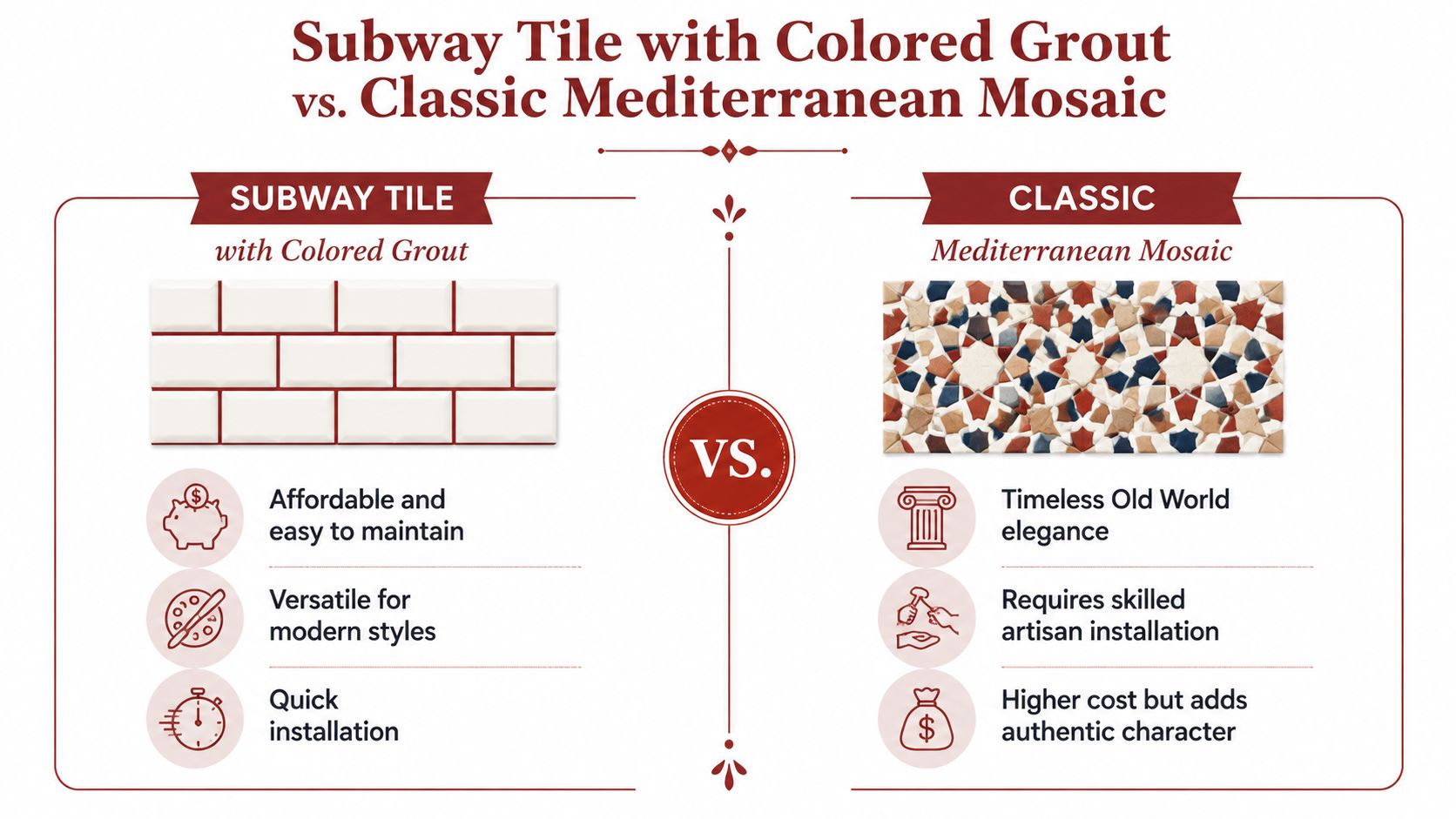
A familiar rectangular tile becomes more expressive when the grout does the visual work. White subway tile with charcoal grout can sharpen a modern kitchen, while soft blue tile with white grout creates a quieter spa-like bathroom wall. Black tile with a metallic-looking grout can suit a contemporary backsplash, but it needs careful sampling because lighting changes how both tile and grout appear.
This idea fits a Kalamazoo kitchen where the cabinets already provide color and the backsplash needs structure rather than another competing pattern. It also works around a bathroom vanity, where a modest rectangular format can feel refined without requiring a complex mosaic layout.
Treat grout as a design material
Contrasting grout emphasizes every joint, edge, and irregularity. That can be useful when you want a strong brick layout, but it also makes uneven spacing more noticeable. Ask for a mounted sample and view it beside the countertop, cabinet finish, and actual lighting before approving the full installation.
In a high-moisture area, an epoxy grout can offer stronger stain resistance, but installation requires a crew familiar with the product and its working time. Cementitious grout may be more forgiving to install, though it needs appropriate sealing and routine care. Grout width should suit the tile and layout, not just the color decision.
This is often a value to midrange choice when standard subway formats are readily available. The labor can rise when the layout includes many outlets, window returns, shelves, or changing directions.
3. Hexagonal and Geometric Tile Arrangements
Hexagons have become a mainstream geometric choice rather than a niche experiment. Industry analysis reports that hexagonal mosaic tiles held a 15% share in 2024, supporting their use as a familiar contemporary option for feature walls, shower niches, backsplashes, and bathroom floors (Business Research Insights).
A black-and-white hex floor can give a modern Portage bathroom a crisp architectural feel. A mixed geometric backsplash can define the wet bar in a finished basement, while a larger hex format can make a spacious shower surround feel less busy than a tiny honeycomb sheet.
Scale matters more than the shape
Small mosaics create more grout joints and can help break up the visual field, but they also demand more cleaning. Larger geometric pieces reduce joint density and can look calmer in a generous bathroom. On a compact floor, an oversized pattern may create awkward slivers at the walls, so the installer should dry-lay the sheets and plan the cuts before setting tile.
Keep the palette controlled. Two or three coordinating colors usually give the geometry enough definition without turning the room into visual noise. Light grout highlights the pattern, while a closer grout color softens it.
For wet floors, choose the surface based on actual use, not shape alone. A widely used U.S. benchmark for wet interior walking surfaces is a dynamic coefficient of friction of at least 0.42 under ANSI A137.1, commonly applied to bathroom floors, entries, and kitchens (tile slip-resistance guidance).
4. Hand-Painted Decorative Tile Accents
Hand-painted tiles bring personality to a farmhouse kitchen backsplash, a powder room, or a shower niche. A botanical border featuring local Michigan flora could give a Kalamazoo renovation a sense of place, while Moroccan-inspired pieces can support an eclectic bathroom without requiring a full custom installation.
The best use is usually selective. Place painted tiles behind the range, inside a niche, along a vanity wall, or in a framed entryway panel. A full wall of detailed imagery can become expensive and visually demanding, especially when the household's style may change later.
Plan the artwork before ordering tile
Custom production needs lead time, and the design should be documented before fabrication. Confirm the exact dimensions, edge treatment, color intent, image orientation, and installation sequence. A contractor and tile supplier should agree on how the pattern will align at corners, outlets, niches, and trim.
Sealants matter in kitchens and bathrooms, but the correct product depends on the tile body and painted surface. Ask the manufacturer whether the finish can tolerate routine splashes and which cleaners are acceptable. Avoid assuming that a decorative coating has the same performance as a dense porcelain tile.
This approach ranges from midrange to custom. A small accent run can protect the budget, while an artist-designed border or fully personalized installation moves into the custom tier.
For an aging-in-place bathroom, keep the most important visual contrast away from the walking path if it creates glare or visual clutter. Use the artwork where it adds identity without making floor edges, transitions, or drainage changes harder to read.
5. Marble Mosaic With Waterjet Precision Cutting
Waterjet cutting allows marble pieces to form precise medallions, borders, and complex geometric arrangements. In a luxury master bathroom, a Carrara medallion can anchor the floor or sit inside a shower niche. In a high-end kitchen, a waterjet-cut backsplash can create a focal area behind the range, while Calacatta marble paired with dark slate can give a shower surround strong contrast.
This is a premium to custom direction, and the installation plan needs to start early. The designer, fabricator, installer, plumber, and cabinet team should coordinate the field dimensions before the pattern is ordered. A small discrepancy around a hood, window, or niche can disrupt a design that depends on precision.
Put premium material where it earns attention
A focal area usually delivers more value than full-wall coverage. Use the marble in a framed backsplash, shower niche, entryway medallion, or vanity wall, then surround it with a simpler field tile. That reduces visual overload and limits the amount of stone that needs sealing and ongoing care.
Polished marble can show etching, water marks, and reflections. A honed finish often makes more sense in a kitchen or other location where maintenance and footing matter, though the homeowner should still confirm the specific product's intended use. Natural stone needs a cleaning routine that avoids harsh chemicals and abrasive tools.
A costly mosaic shouldn't be the first material chosen. Confirm the layout, waterproofing, substrate, drainage, and maintenance plan before approving the centerpiece.
Use a neutral or stone-matched grout to keep the veining in control. Strongly contrasting grout can divide an intricate waterjet pattern into too many separate visual pieces.
6. Encaustic and Cement Tile Patterns
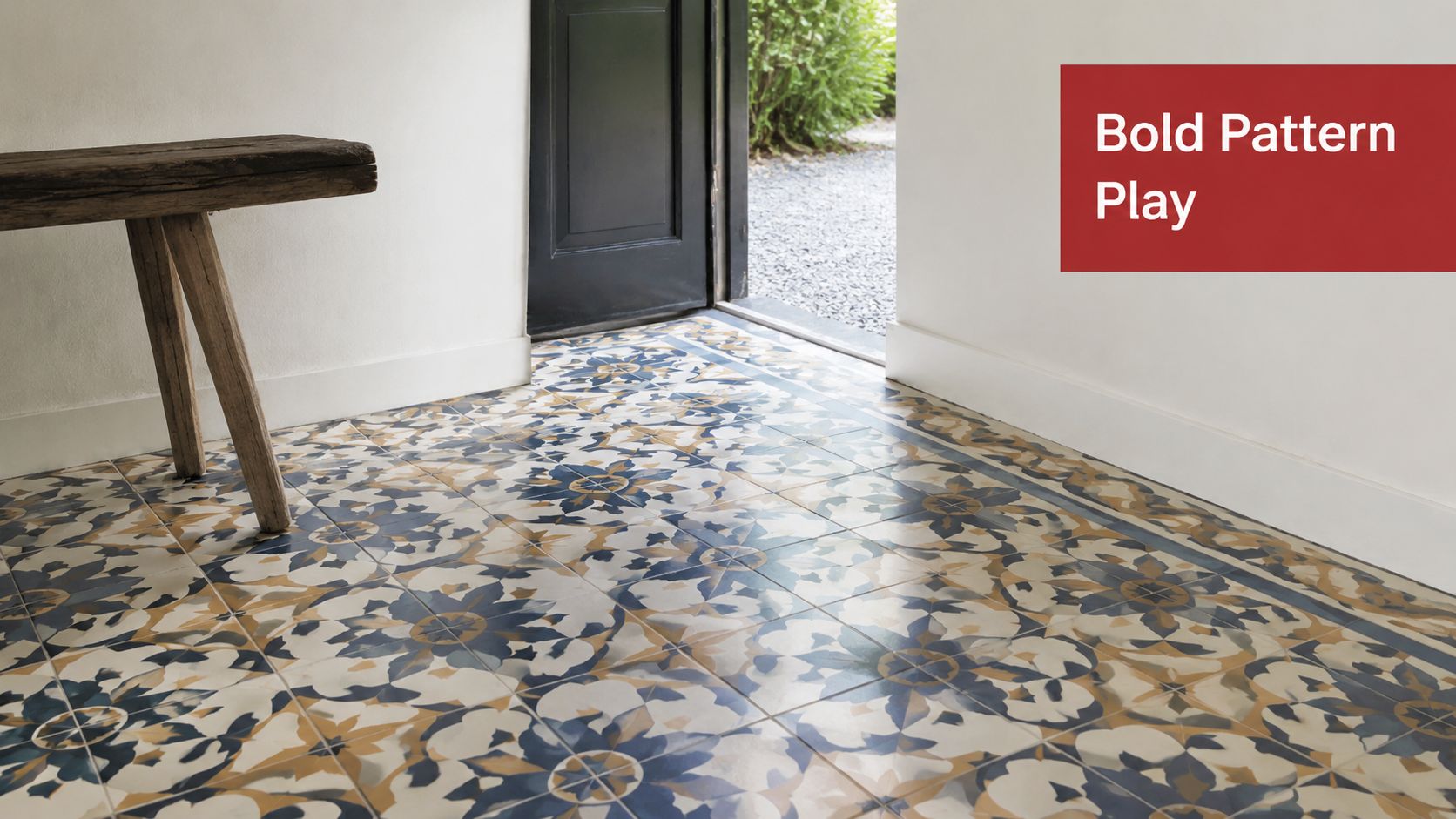
Encaustic and cement tiles suit homeowners who want a bold floor, a Moroccan-inspired bathroom, or a Spanish geometric accent in an entryway. Their color and pattern can bring warmth to a basement powder room or wet bar, especially when the surrounding cabinetry and walls remain restrained.
The material has presence, so placement matters. A patterned floor in a small powder room can work because the room has limited competing surfaces. A complete kitchen backsplash may be more successful when the pattern stays in a framed zone rather than continuing behind every cabinet and appliance.
Respect the material's maintenance needs
Cement-based products are porous and should be sealed with a professional-grade product after installation. The installer must also protect the surface during construction, align the pattern carefully, and use grout that supports rather than fights the design. Neutral white or gray grout usually keeps the pattern legible without introducing a fourth visual statement.
Before purchase, review the expected variation from tile to tile. Hand-applied pigments, surface character, and natural variation can make the installed result different from a small showroom sample. That character is part of the appeal, but it needs to be an informed choice.
This is generally a midrange to premium option, with labor increasing when the pattern has a strict repeat or the floor includes many corners and penetrations. For a busy entryway, compare the tile's porosity, sealing requirements, and tolerance for tracked-in moisture before choosing it over a dense porcelain mosaic.
7. Glass Mosaic Tile With Iridescent and Metallic Finishes
Iridescent and metallic glass mosaics change as the light moves across the room. That makes them effective behind kitchen cabinets, inside a bathroom niche, or on a feature wall in a contemporary powder room. Under-cabinet lighting can bring out color shifts in a Portage kitchen, while a softer bathroom light can make blue glass feel calmer and less reflective.
A sample viewed only under showroom lighting isn't enough. Take samples home and inspect them in daylight, evening light, and the room's planned fixtures. A surface that looks subtle in the store may produce glare beside a mirror or feel too active behind glossy cabinets.
Install glass where it can stay protected
Glass works particularly well on backsplash and accent surfaces because those areas are easier to clean than a heavily trafficked floor. Pair a reflective mosaic with monochromatic cabinetry, solid countertops, and simple furnishings. Light grout can reduce the visual interruption of the sheet layout, but the substrate must be flat because unevenness can telegraph through reflective tile.
The adhesive and setting system should match the glass manufacturer's requirements. Transparent or translucent pieces may reveal shadowing, inconsistent coverage, or substrate color, so surface preparation is part of the finished appearance.
This is a midrange to premium choice depending on the finish and pattern. It's visually efficient in a small area, but less forgiving when the layout includes many outlets, inside corners, or exposed edges.
The reflective surface can be especially attractive in a small bathroom, but it shouldn't replace practical lighting or create confusing glare for someone with low vision.
8. Natural Stone Mix With Tumbled and Split Finishes
A mix of slate, limestone, travertine, and marble can give a Southwest Michigan bathroom, entryway, or basement accent wall an organic, established feel. Tumbled edges, split faces, and honed surfaces create texture that standard smooth ceramic can't reproduce. A travertine and slate combination can suit a rustic bathroom floor, while tumbled limestone and marble can soften a shower surround.
Variation is both the feature and the risk. Review samples from multiple boxes so you understand the range of color, veining, edge shape, and surface texture. If the homeowner wants a calm, consistent backdrop, a mixed natural-stone mosaic may create more visual movement than expected.
Protect texture without making cleaning difficult
Natural stone should be sealed after installation, and a penetrating sealer is often appropriate for tumbled finishes. The exact maintenance schedule depends on the stone and sealer, but the homeowner should expect periodic resealing rather than a maintenance-free surface. Use stone-safe cleaners and avoid products that can etch limestone, marble, or travertine.
In a shower, drainage and slope deserve as much attention as the tile selection. Smaller pieces can follow a properly formed slope more easily, but irregular textures may collect soap residue and make cleaning harder. The installer should verify that water moves to the drain without pooling.
This design usually sits in the midrange to premium tier. It can be a strong choice for a feature wall or bathroom floor, but porcelain with a stone look may be more practical where low maintenance is the primary goal.
9. Personalized Photo Transfer and Image Mosaic Tiles
A family photo grid in a kitchen backsplash, children's artwork in a bathroom, or a destination image inside an entryway can turn tile into a personal story. Digital printing allows images and artwork to move onto ceramic or porcelain surfaces, either as a unified grid or as a focal panel surrounded by solid-colored tile.
This approach fits a basement renovation particularly well. A family could use artwork, local scenery, or a meaningful image in a bar backsplash or media-room feature wall, where the tile is visible but protected from constant direct water exposure.
Protect the image and control the composition
Use a high-resolution source image, with 300 dpi minimum recommended for crisp printing by the specified design plan. Crop the image with the tile grid in mind, and check where grout joints will cross faces, text, or important details. A matte finish can reduce glare when nearby lighting or backlighting would make a glossy image difficult to see.
Keep printed pieces away from direct shower spray and water streams. A shower niche can work if the product is rated for that environment and properly sealed, but a dry accent wall or backsplash is usually the safer long-term placement.
This is a custom option, and replacement planning matters. Keep the final artwork file, tile map, product information, and installer notes in your project records. If one piece is damaged later, that documentation may make a matching replacement possible.
Pair the image with a plain field tile. Too many competing colors, textures, and photos can make a small room feel crowded and reduce the impact of the central image.
10. Sustainable and Recycled Material Mosaic Tiles
Recycled glass, reclaimed stone, recycled ceramic, and other lower-waste materials give homeowners a way to combine distinctive appearance with environmental priorities. Recycled glass can bring saturated color and light reflection to a modern kitchen, while reclaimed slate or limestone can add patina to a bathroom or basement renovation.
Consumer interest is moving toward both design flexibility and sustainability. Search interest in mosaic tiles rose 42% from a level of 65 in October 2024 to 95 in September 2025, with recurring peaks in March 2025 at 83 and September 2025 at 95, according to the mosaic tile trend report. The same report projects 20% to 30% annual growth in eco-friendly mosaic tile sales through 2026, so homeowners may see more recycled and sustainability-focused options as manufacturers expand their ranges.
Evaluate the whole material story
Recycled content is only one part of the decision. Ask for documentation about recycled content, certifications, manufacturing, transport, expected service life, and cleaning requirements. A durable tile that remains in place for years can make more practical sense than a product that sounds sustainable but needs frequent replacement.
This is typically midrange to custom, depending on sourcing, color matching, and availability. Specialty materials may require more lead time, especially when the design combines several recycled or reclaimed products.
Use these mosaics in a kitchen backsplash, bathroom accent, entryway panel, or basement wet bar where their character is visible. Combine them with other durable choices, such as low-VOC paint or responsibly sourced cabinetry, but don't sacrifice waterproofing, footing, or cleanability for the sustainability story.
Comparison of 10 Mosaic Tile Design Ideas
| Style | 🔄 Implementation Complexity | ⚡ Resources & Cost | ⭐ Expected Outcomes | 📊 Ideal Use Cases | 💡 Key Advantages & Tips |
|---|---|---|---|---|---|
| Classic Mediterranean Mosaic Pattern | High, artisan hand-cut work and intricate layout | High cost; longer lead times; skilled labor | Timeless Old‑World elegance and strong craftsmanship presence | Backsplashes, accent walls, decorative borders, entryways | Adds authentic character; use as an accent, hire professionals, seal grout |
| Subway Tile with Colored Grout | Low, standard tile install; DIY possible | Low–Moderate; widely available; fast installation | Clean, minimalist backdrop with clear personality from grout | Kitchen backsplashes, bathroom walls, high‑traffic areas | Affordable and easy to maintain; test grout color, use epoxy grout and sealer |
| Hexagonal and Geometric Tile Arrangements | Medium, precise layout and careful cuts | Moderate–High; more costly than standard rectangles | Modern, architectural depth and bold visual movement | Bathroom floors, shower surrounds, accent walls | Strong contemporary impact; limit colors to 2–3 and plan scale/layout carefully |
| Hand‑Painted Decorative Tile Accents | High, custom art production and careful placement | High cost; long lead times (≈8–12 weeks); artist capacity | One‑of‑a‑kind, artisanal focal elements with emotional value | Accent borders, niche features, statement backsplashes | Highly personalized; commission early, seal painted finishes, use as accents |
| Marble Mosaic with Waterjet Precision Cutting | High, advanced tech and specialist installers | Very high cost; long lead times (≈12–16 weeks) | Ultra‑precise, premium aesthetic that increases perceived value | Luxury bathrooms, entryway medallions, statement backsplashes | Exceptional precision and detail; reserve for focal areas, choose finishes for function |
| Encaustic and Cement Tile Patterns | Medium–High, careful alignment and sealing required | Moderate–High; porous material needs sealing | Bold, vintage or Mediterranean statement with rich color variation | Floors, entryways, powder rooms, accent zones | High visual impact; use sparingly, seal regularly, pair with neutral surroundings |
| Glass Mosaic Tile with Iridescent/Metallic Finishes | Medium, glass handling and experienced setter needed | High cost; premium material; non‑porous (easier maintenance) | Luxurious, light‑reflective shimmer that brightens spaces | Backsplashes, accent walls, niches, glamorous bathrooms | Brightens small areas; test samples in lighting, use light grout, avoid overuse |
| Natural Stone Mix with Tumbled & Split Finishes | Medium–High, stone specialists recommended | High cost; sealing and batch variation management | Warm, organic texture with authentic dimensional character | Bathrooms, showers, entryways, rustic or spa‑style spaces | Durable and non‑slip; seal immediately and annually, sample from multiple boxes |
| Personalized Photo Transfer & Image Mosaic Tiles | Low–Medium, standard install but careful placement/design | Moderate; quick turnaround (≈2–4 weeks) | Strongly personal, sentimental focal points with photographic detail | Backsplash accents, niches, entryway statements | Affordable personalization; use high‑res images (300 dpi), protect from direct spray |
| Sustainable & Recycled Material Mosaic Tiles | Medium, sourcing and occasional specialist installation | Moderate; limited availability, may require certifications | Distinct, eco‑conscious aesthetic with authentic variations | Eco‑friendly kitchens, bathrooms, feature walls, LEED projects | Reduces environmental impact; request recycled content docs and samples, work with experienced contractors |
Turn a Favorite Mosaic Into a Workable Plan
Start with the room and surface. A backsplash, shower floor, shower wall, entryway, basement wet bar, and bathroom niche all place different demands on tile. A decorative wall can prioritize color and reflection, while a wet floor must address footing, drainage, grout upkeep, and the needs of everyone who will use the room.
Measure the visual field rather than relying only on total square footage. Note cabinet runs, windows, niches, doors, plumbing fixtures, floor penetrations, and transitions. A pattern that looks balanced across a sample board may need adjustment when it reaches a narrow wall beside a vanity or a backsplash interrupted by several outlets.
Choose scale after reviewing the room's proportions. Small mosaics can create traction and help follow a shower slope because their many grout joints add friction underfoot, a reason designers often use smaller mosaics on shower floors (flooring guidance on mosaic traction). They also create more grout to scrub. Larger mosaic-look porcelain formats can preserve geometric impact while reducing grout and cleaning burden, an approach discussed in current tile trend coverage.
Confirm performance before appearance
For wet interior floors, verify the product's intended use and slip-resistance information. The commonly used U.S. benchmark is a DCOF of at least 0.42 under ANSI A137.1, but the specific tile, installation, slope, footwear, and maintenance routine still matter. In a curbless or aging-in-place shower, select stable footing, manageable texture, clear transitions, and drainage that won't leave standing water.
Grout deserves its own decision. The joint width should never be less than 1/16 inch, and Tile Council of North America guidance says mosaic grout joints should generally be at least twice the difference between the largest and smallest tile dimensions (ANSI-related grout joint guidance). Follow the tile and grout manufacturer's requirements rather than forcing an ultra-narrow joint for appearance.
Order samples and inspect them under actual lighting. Compare the tile with the countertop, cabinets, flooring, paint, trim, and plumbing finishes. Check how reflective glass behaves beside a mirror, how dark grout reads under under-cabinet lights, and whether a heavily patterned floor makes the room visually overwhelming.
Lead time can change the entire schedule. Hand-painted pieces, waterjet marble, photo transfers, and specialty recycled products need earlier approval than readily available subway formats. Confirm quantities, trim, corners, matching dye lots, setting materials, sealers, and replacement information before demolition begins.
Match the tier to the room
Value options often include readily available ceramic or subway formats with straightforward layouts. Midrange choices may add colored grout, glass accents, standard stone, or geometric sheets. Premium projects often use larger decorative areas, natural stone mixes, specialty finishes, or more demanding installation. Custom work includes hand-painted designs, waterjet medallions, personalized image tiles, and unusual material sourcing.
Budget the complete installation, not just the tile. A practical workflow measures net area, adds a waste factor, includes material, trims, setting products, labor, freight, and a 5% to 10% contingency, as outlined in this tile budgeting guide. You can use Trademaster Construction's instant pricing tool to estimate project costs before discussing your preferred mosaic and overall scope with the team.
Trademaster Construction serves Southwest Michigan homeowners with remodeling support for kitchens, bathrooms, basements, and custom tilework. The right mosaic should look personal, install correctly, remain manageable to clean, and support safe everyday use in Portage, Kalamazoo, and surrounding communities.
Trademaster Construction helps homeowners plan kitchen backsplashes, bathroom floors, accessible showers, basement accents, and custom tile layouts around real installation requirements. Visit Trademaster Construction to explore remodeling services and start shaping a mosaic plan that fits your home, routine, and budget.