A steam shower installation cost usually lands between $2,800 and $7,100, with a national average near $4,300. If you want a prefab kit, you can stay closer to the middle, but a custom build can climb fast once the enclosure, waterproofing, and generator size change.
You're probably standing in a bathroom that already works fine and wondering why anyone would pay spa money for steam. The answer is simple, the steam itself is rarely the expensive part. The bill comes from building a tight, waterproof, properly powered shower that can hold steam without turning the room into a maintenance problem.
Steam Shower Installation Costs in 2026
The cleanest way to think about steam shower installation cost is simple, the market gives you a band, not a single number. For a basic project, most homeowners are looking at roughly $2,800 to $7,100 with an average near $4,300, which lines up with the installed averages reported by Angi, HomeAdvisor, and This Old House (Angi steam shower cost guide). If you are comparing broader project scopes, HomeGuide's range runs from $3,000 to $10,000, with prefab units around $2,900 to $6,800 and custom steam showers around $4,000 to $16,500 (HomeGuide steam shower cost guide). If you are building a full bath around the steam feature, the complete home renovation cost guide is the better budget frame.
Read the price band the right way
A straight conversion is an upgrade. A bigger enclosure, premium tile, frameless glass, or a barrier-free layout pushes the job into major remodel territory. The number moves because steam showers need a sealed enclosure, waterproofing, tile or other non-porous surfaces, electrical work, and the right generator sizing for the space, not because the steam unit itself is the hard part (HomeAdvisor steam shower installation cost).
Practical rule: if the quote looks close to a regular shower remodel, ask what is missing. Steam work that skips the hidden technical pieces usually shows up later as leaks, poor performance, or both.
What the table should tell you
| Source | Typical Range | Average |
|---|---|---|
| Angi, HomeAdvisor, This Old House | $2,800 to $7,100 | $4,300 |
| HomeGuide | $3,000 to $10,000 | not stated in the brief |
| HomeGuide prefab units | $2,900 to $6,800 | not stated in the brief |
| HomeGuide custom steam showers | $4,000 to $16,500 | not stated in the brief |
That range gives you the decision tree for the rest of the project. If your bathroom is small, your plumbing is staying put, and you are not chasing premium finishes, you are probably in the lower half of the band. If you are reworking the layout, changing the enclosure, or building a spa-style shower, you are not shopping for a minor add-on anymore, you are planning a remodel.
The Cost Drivers That Move Your Final Number
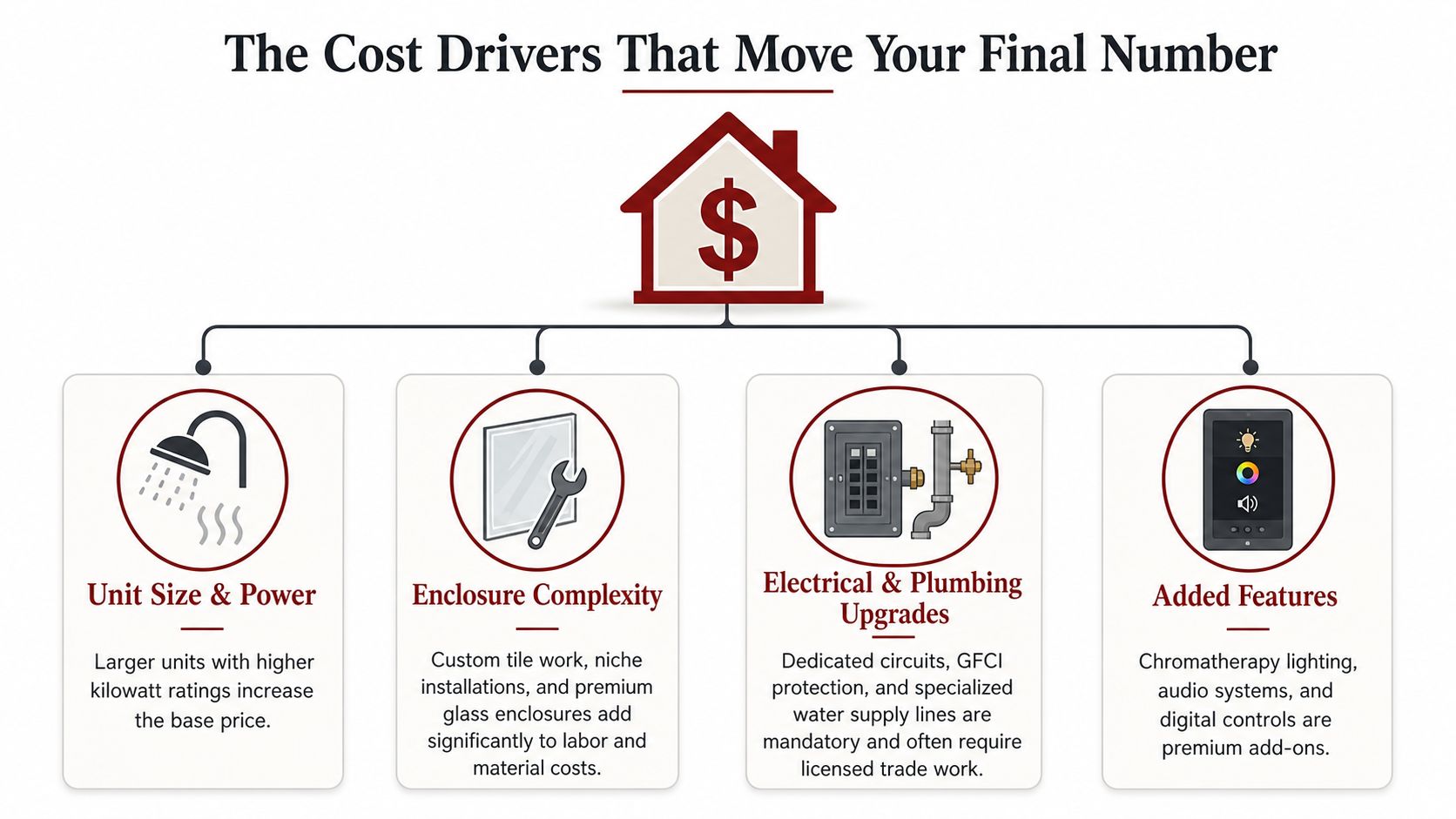
The price moves because steam showers are a bundle of separate jobs, and each one can drag the total in a different direction. The generator matters, but so do the enclosure, the waterproofing, and the trades needed to power and plumb the system correctly. Mr. Steam says a steam shower typically costs 20% to 35% more than a regular shower, and labor alone often takes 25% to 35% of the shower remodel budget (Mr. Steam pricing guidance).
The parts that actually matter
The steam generator is the engine, and it has to match the enclosure volume and heat loss, not just the footprint. A bigger or leakier shower needs more output, which means more equipment cost and often more electrical support. The enclosure is the next big lever, because tile, glass, niches, and custom framing all change both material and labor costs.
Waterproofing is where cheap projects get exposed. A steam shower needs a tight steam envelope, so the walls, ceiling, and joints have to be built like a system, not a surface finish. Electrical upgrades also matter because the generator usually needs a dedicated circuit, and plumbing rough-in can become expensive when the existing lines aren't where they should be.
What to scan for in a quote
If a contractor gives you a lump sum, break it apart. You want to see the generator, enclosure materials, waterproofing, plumbing, electrical, controls, and labor called out separately. That makes it easier to tell whether a bid is low because it's efficient or low because something important got left out.
For a broader remodeling context, the complete home renovation cost guide from Task Masters Inc. is useful because it shows how specialty projects like this fit inside a whole-house budget instead of living in isolation. That matters, because steam work often gets approved only when the homeowner understands the shower is one line item inside a bigger bath remodel.
My advice: never compare steam shower bids by the bottom line alone. Compare what's included in the enclosure, the waterproofing, and the electrical work, because that's where the real difference lives.
Prefab Kits Versus Custom Steam Shower Builds
This is the decision that tells you whether the project stays controlled or turns into a full bathroom rebuild. Prefab modular steam showers usually land around $2,900 to $6,800, while custom steam showers generally run about $4,000 to $16,500 and can climb higher once premium finishes and larger dimensions enter the picture. Prefab is the budget discipline play. Custom is the design freedom play.
The Parts That Matter Most
Prefab makes sense when the space is small, square, and predictable. If you are converting an existing shower alcove and want a faster install with fewer surprises, prefab keeps the scope tighter. It also helps when you want a more dependable budget, because the parts are standardized and the labor is easier to control.
Custom is worth the money when the bathroom layout is awkward, the finish level matters, or you are building around accessibility. If you need a curbless entry, a larger bench, or tile that matches the rest of the bathroom, custom is the right answer. It gives you control over the ceiling slope, the glass layout, and how the steam envelope ties into the room.
That difference shows up fast in budget planning. Homewyse estimated steam shower installation at $3,817 to $8,523 in January 2026, while Fixr placed the national average at $8,000 to $15,000, with a typical project around $11,000 and luxury builds reaching $25,000 (Mr. Steam pricing guidance). Those wider ranges matter because they show the gap between a mid-range conversion and a high-end spa build without dressing it up.
Here's the clean decision.
- Choose prefab if you want speed, a smaller footprint, and a more predictable install.
- Choose custom if the bathroom layout is odd, the finish level is high, or the shower has to serve aging-in-place needs.
- Expect the custom route to cost more because the enclosure and labor stop being standardized.
Later, when you price the whole project, separate the steam-system budget from the bathroom-build budget. That keeps the choice grounded in the actual scope instead of a glossy catalog picture.
DIY Versus Hiring a Licensed Contractor
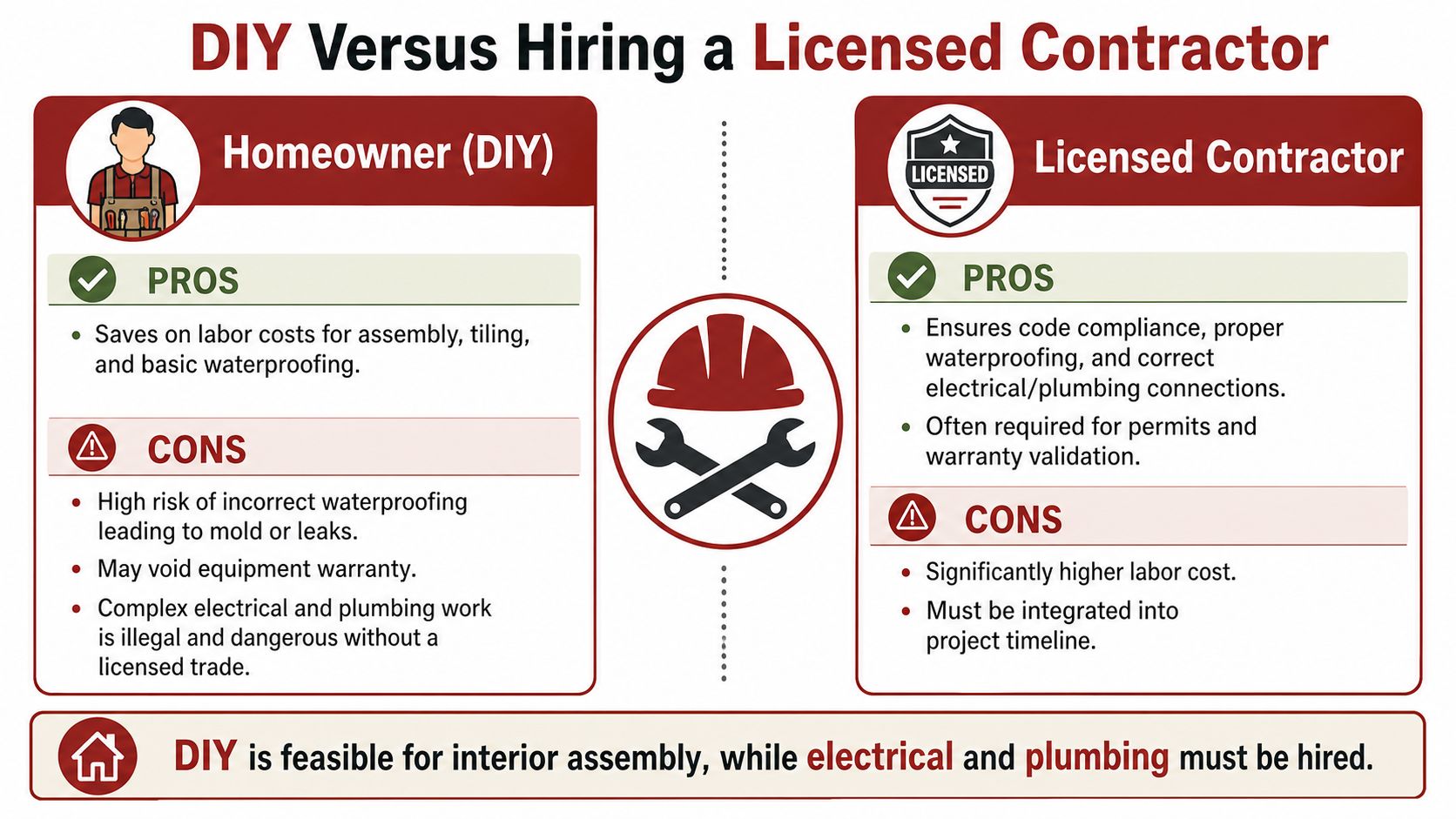
A homeowner can do more than they might think, but not the parts that keep a steam shower safe and legal. A competent DIYer can assemble a prefab kit, paint, and handle some straightforward tile work on a simple wall. The problem is that steam systems are unforgiving, and the expensive mistakes are usually the hidden ones.
What a homeowner can realistically tackle
If the shower is a prefab unit with clear instructions, an experienced DIYer can handle assembly and some finish work. That can trim labor where the work is repetitive and visible. It can also make sense if the project is staying in a simple footprint and the homeowner already has tile experience.
What belongs to a licensed trade
The generator usually needs a dedicated 240V circuit, and the plumbing changes need to be done cleanly. The vapor barrier, sloped ceiling, glass fitting, and inspections are not optional details. If those are wrong, the shower may still look finished, but it won't perform like a steam shower for long.
Short version: DIY is fine for assembly and basic finish work. Electrical and plumbing need licensed professionals, and the waterproofing has to be right the first time.
Insurance and code issues are the reason I'd be careful here. A self-wired steam generator is the kind of shortcut that can cost more later than the labor would've cost up front. If you want to save money, save it on finish labor where the risk is manageable, not on the trades that protect the shower from failure.
A DIY-heavy approach can reduce the budget on paper, but once you still bring in an electrician and plumber, the savings narrow fast. A fully licensed install costs more, yet it buys code compliance, correct steam containment, and fewer warranty headaches.
Three Realistic Budget Scenarios for Homeowners
Homeowners do not need a foggy average. They need to know which budget bucket matches the bathroom in front of them. A steam shower can stay relatively modest if you are only converting a compact existing shower, or it can become a full bathroom rebuild once you add premium finishes, custom glass, and more involved waterproofing. The range that matters is the gap between a steam-system add-on and a bigger bathroom project, not a single headline number.
Scenario A, prefab conversion in a compact alcove
This is the homeowner who already has a workable shower footprint and wants steam without tearing the room apart. The budget stays lower because the plumbing runs are shorter, the enclosure stays simple, and the finish package does not try to carry the whole project on style alone. If your plan is a straightforward converted shower in the lower budget range, prefab is usually where the math makes sense.
Scenario B, mid-range custom shower with solid finishes
This is the standard serious remodel. You are paying for porcelain tile, frameless glass, a properly sized generator, and the waterproofing work that keeps the shower performing the way it should over time. A steam shower budget in this tier is less about the novelty of the feature and more about doing the room correctly so you are not chasing repairs later.
Scenario C, luxury spa layout with accessibility built in
This is the full commitment. Curbless entry, a bench, chromatherapy, custom glass, and universal-design features push the project into high-end territory fast. Once premium materials are paired with extra structural work and drainage changes, a luxury budget stops being a surprise and starts being the price of a bathroom that is built around the steam shower.
If you want a real budget, set the numbers before you start picking finishes. Koru's renovation budget template helps separate base scope, upgrades, and contingency so the steam shower does not eat the whole bathroom allowance (Koru renovation budget template).
My read: do not ask, “What does a steam shower cost?” Ask, “Am I buying a small steam upgrade, a solid mid-range bath, or a luxury rebuild?” That is the question that tells you where the money actually goes.
Timeline, Permits, and Maintenance You Should Plan For
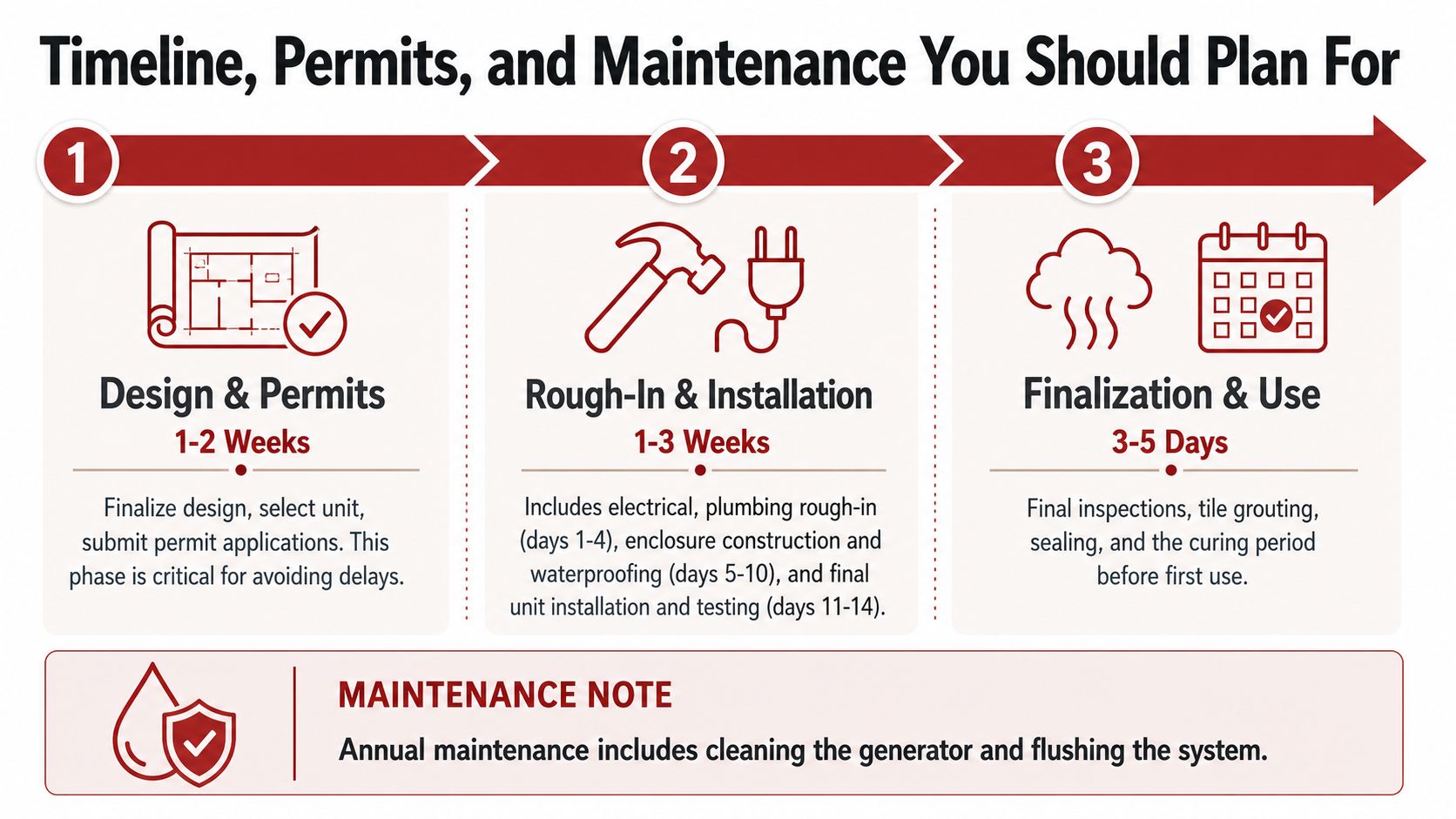
The work doesn't end when you pick a shower model. A steam shower is a sequence, and each step affects both the schedule and the final bill. Plan for 1 to 2 weeks of design and quoting, 1 to 3 weeks of rough-in work, 1 to 2 weeks for tile and enclosure, then final generator, glass, trim, and testing.
Where permits usually get triggered
In Southwest Michigan, permit attention usually starts when the job includes new electrical circuits, plumbing changes, or structural modifications in a load-bearing wall. Steam showers often touch all three. If the work is unpermitted and something later fails, that can create an insurance problem you don't want.
What keeps the system healthy after install
The maintenance side is boring, which is exactly why people skip it. Don't skip it. The generator needs annual descaling, seals and gaskets need inspection, and tile and grout need care because the room lives in a humid environment.
A few habits protect the investment:
- Flush and clean the generator on a regular maintenance schedule.
- Inspect seals and glass joints for wear before moisture sneaks into the wall assembly.
- Watch grout and caulk lines because small failures become bigger water problems fast.
If the installer recommends a specific service interval, follow it. Steam equipment lasts longer when the owner treats it like a mechanical system, not just a fancy shower.
Pairing Steam With Aging in Place and Accessibility Upgrades
A steam shower can fit into a bathroom that needs to work harder for the homeowner. A curbless entry, wheelchair-friendly layout, or grab-bar-ready setup can all live in the same remodel if the plan is drawn correctly from the start. The right move is to separate the steam-system budget from the accessibility budget, because those are not the same line item.
The money usually goes into the structure, not the steam. A curbless shower often means reworking the floor build, adjusting waterproofing, and making sure the drain handles water the way it should. Grab bars are cheaper when the wall is already open, because the blocking can go in without extra demolition later.
If accessibility might matter down the road, build it now. Doing the steam shower and the barrier-free upgrades together costs less than opening the room twice and paying for the same finish work again.
That's why the gap between a basic conversion and a larger custom build matters. A wider budget can absorb accessibility features if they are planned from day one, and that is easier to see once you look at the broader cost ranges in the HomeGuide steam shower cost guide. Accessibility still costs money, but it is far cheaper to fold it into the remodel than to treat it as a separate project later.
Here's my take. A steam shower is not just a luxury feature. In the right bathroom, it becomes part of a safer setup that still feels good to use, and that is the kind of remodel that earns its keep in a real house.
Budgeting With Confidence and Next Steps
Keep the budget in three buckets. Start with a basic prefab conversion at the lower end of the market, then move up to a mid-range custom build where tile, glass, and generator sizing push the price higher. The top tier is a luxury project where premium finishes, custom construction, and accessibility features can drive the total into the $25,000+ range.
The core cost factors remain consistent. The enclosure, the waterproofing, the generator size, and whether accessibility is built into the plan decide most of the final number. Steam is the feature people talk about, but the structure around it is what makes the quote climb. That is the model I would use before I approve any estimate.
If you are pricing a Portage or Kalamazoo-area remodel, use the instant pricing tool to get a working number before you start selecting tile and glass. Then compare that figure with your renovation budget, and if you need help structuring the money side of the job, the renovation financing by New American Funding resource is worth reviewing before you sign a contract.
Trademaster Construction handles bathroom remodels, custom tile work, and steam shower projects for Southwest Michigan homeowners who want straight answers and clean execution. If you are ready to turn the numbers into a real plan, visit Trademaster Construction and start with a project conversation grounded in your actual bathroom, not a generic estimate.